How to Calculate Steps & Stairs Cinder Blocks
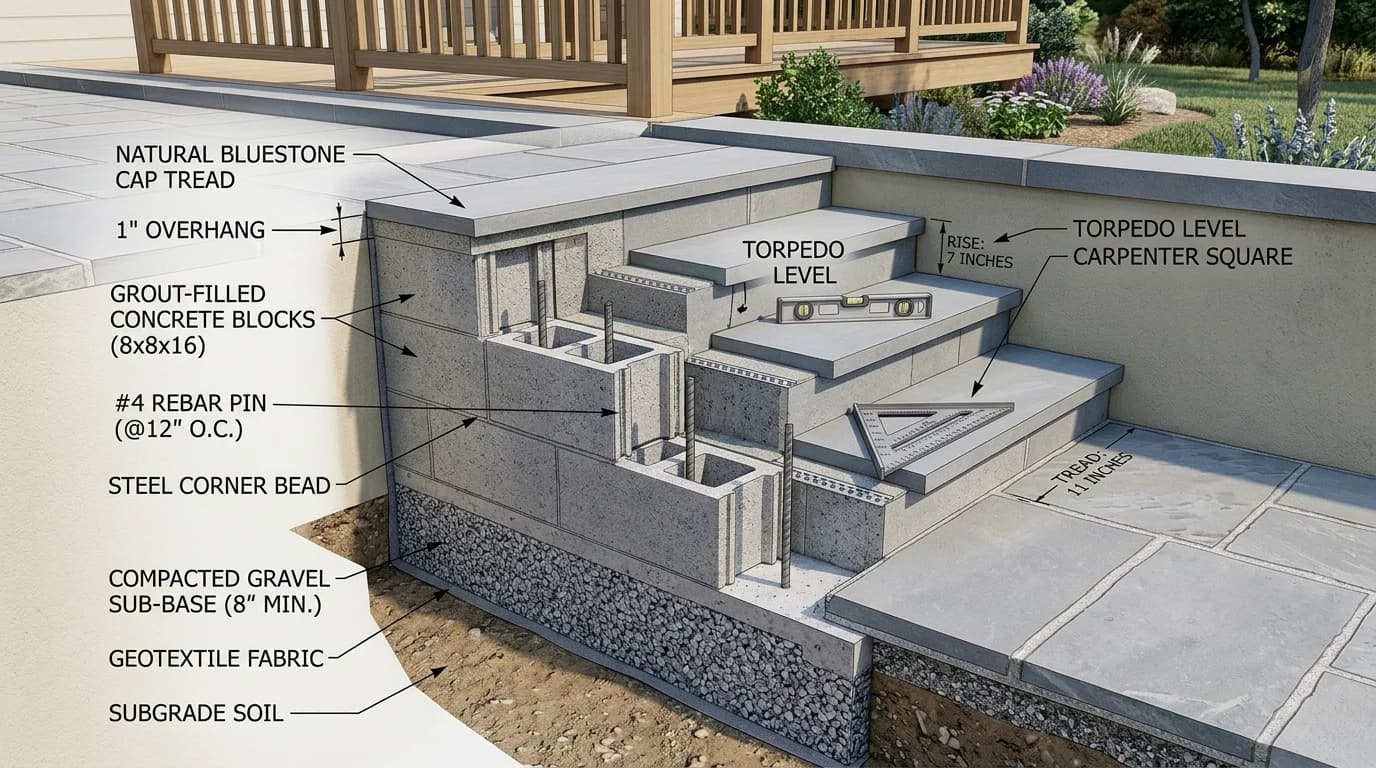
Stairs built from CMU blocks must provide comfortable riser steps and stable tread depths. Calculating them correctly requires establishing total rise and choosing the best building method:
Calculate exact material requirements for building outdoor masonry steps. Supports solid block pyramids or cost-effective hollow box stairs with gravel fill.
Masonry Steps & Stairs Material Takeoff Proposal
cinderblockscalculator.com • Inquiries: cindercalc@gmail.com
Date: 10/22/2026
Standard: IRC Section R311 (Stairways)
Config: Porch Entry (3 Steps, 4ft Wide)
| Total Steps / Risers | 3 Risers (8" course height) | Total Elevation Rise | 24" Total Rise (2.00 ft) |
| Stair Width | 4 Feet Wide | Total Horizontal Run | 48" Total Run (4.00 ft) |
| Tread Depth Spec | 16" Tread Depth | Construction Method | Solid Block Pyramid |
| Tread Finish Caps: | 9 Solid Cap Blocks Included | ||
| Material Item | Industry Specification | Takeoff Quantity | Packaging / Logistics |
|---|---|---|---|
| Cinder Blocks (CMU) | 8"×8"×16" ASTM C90 Structural | 20 blocks | ~1 Pallet(s) |
| Solid Cap Blocks | 2"×8"×16" Tread Cap Stones | 9 pcs | Finished Masonry Caps |
| Masonry Mortar | ASTM C270 Type S (1,800 PSI) | 1 bags | 80 lb pre-blended bags |
| Total Shipping Weight | Standard Delivery Load | 868 lbs | ~0.4 tons |
| Estimated Turnkey Cost Range (Materials + Installation): | $327 – $482 | ||
Prepared By (Contractor / Estimator):
Signature & Date
Client Acceptance & Authorization:
Signature & Date
Stairs with 4 or more risers (or 30"+ rise) require IRC-compliant handrails. Takeoff does not include handrail hardware or excavation.
CinderCalc Verified Takeoff
CMU estimates use nominal face dimensions and illustrative mortar yields (30 standard 8-inch units per 80-lb premix bag before waste; thickness adjustments apply). Confirm product yields, unit core volumes, supplier pack sizes and local prices before ordering. Reinforcement quantities are material allowances; laps, hooks, embedment and engineered design are excluded.
Garden 3-Step Solid
Porch 4-Step Solid
Utility 2-Step Solid
Long 6-Step Hollow
| Step Configuration | Dimensions | Total Rise | Est. Blocks (waste incl.) | Tread Cap Stones |
|---|---|---|---|---|
| Garden 3-Step Solid | 3 Steps, 4' Wide | 24 inches | ~20 pcs | 9 pcs |
| Porch 4-Step Solid | 4 Steps, 5' Wide | 32 inches | ~44 pcs | 16 pcs |
| Utility 2-Step Solid | 2 Steps, 3' Wide | 16 inches | ~10 pcs | 6 pcs |
| Long 6-Step Hollow | 6 Steps, 4' Wide | 48 inches | ~66 pcs | 18 pcs |
Stairs built from CMU blocks must provide comfortable riser steps and stable tread depths. Calculating them correctly requires establishing total rise and choosing the best building method:
Find the elevation difference between the top landing and the bottom landing in inches. Divide by 8 to find the step count.
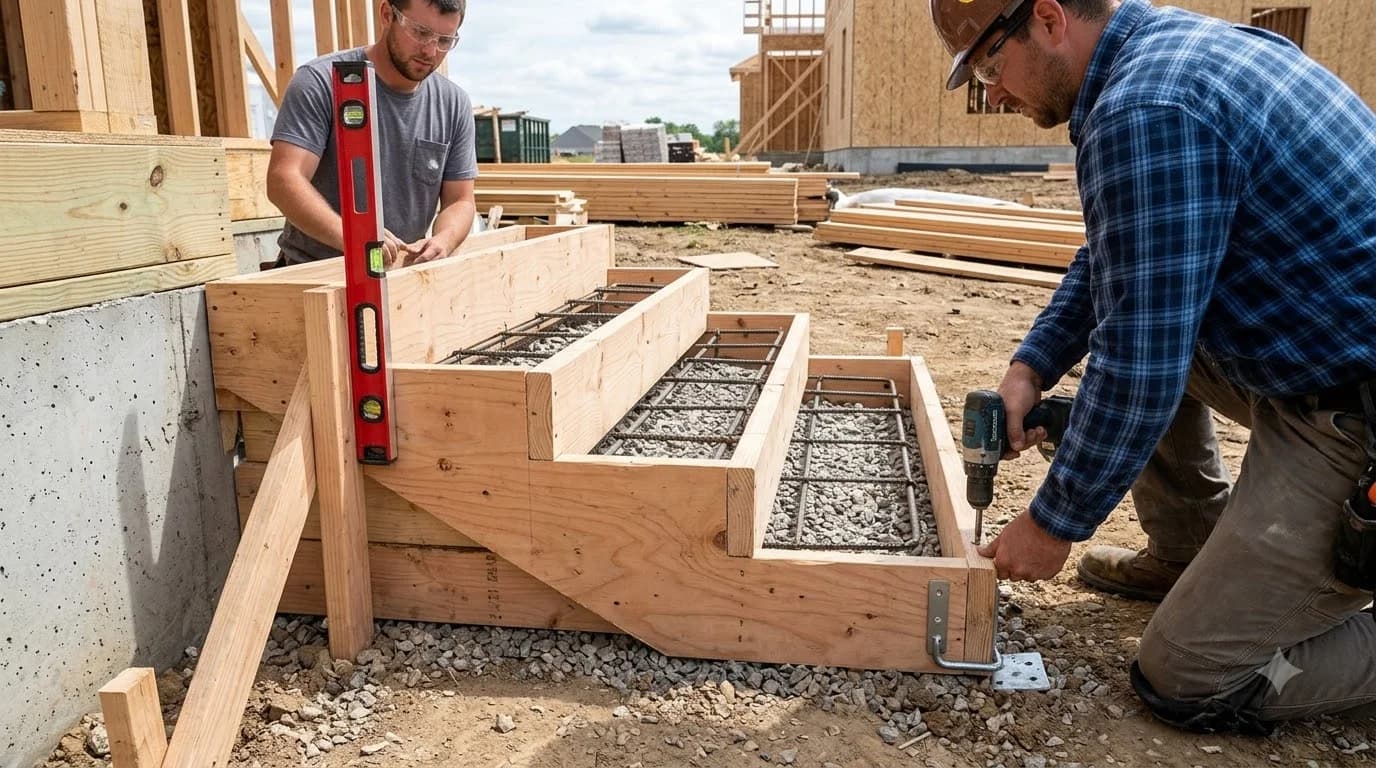
Select a solid block pyramid structure for maximum strength, or a hollow block frame structure to minimize material costs.
Standard residential walkways call for steps between 3 feet and 5 feet wide to allow two people to walk comfortably.
Raw cinder block surfaces are abrasive. Calculate standard 2" concrete tread cap stones to cover the block cores.
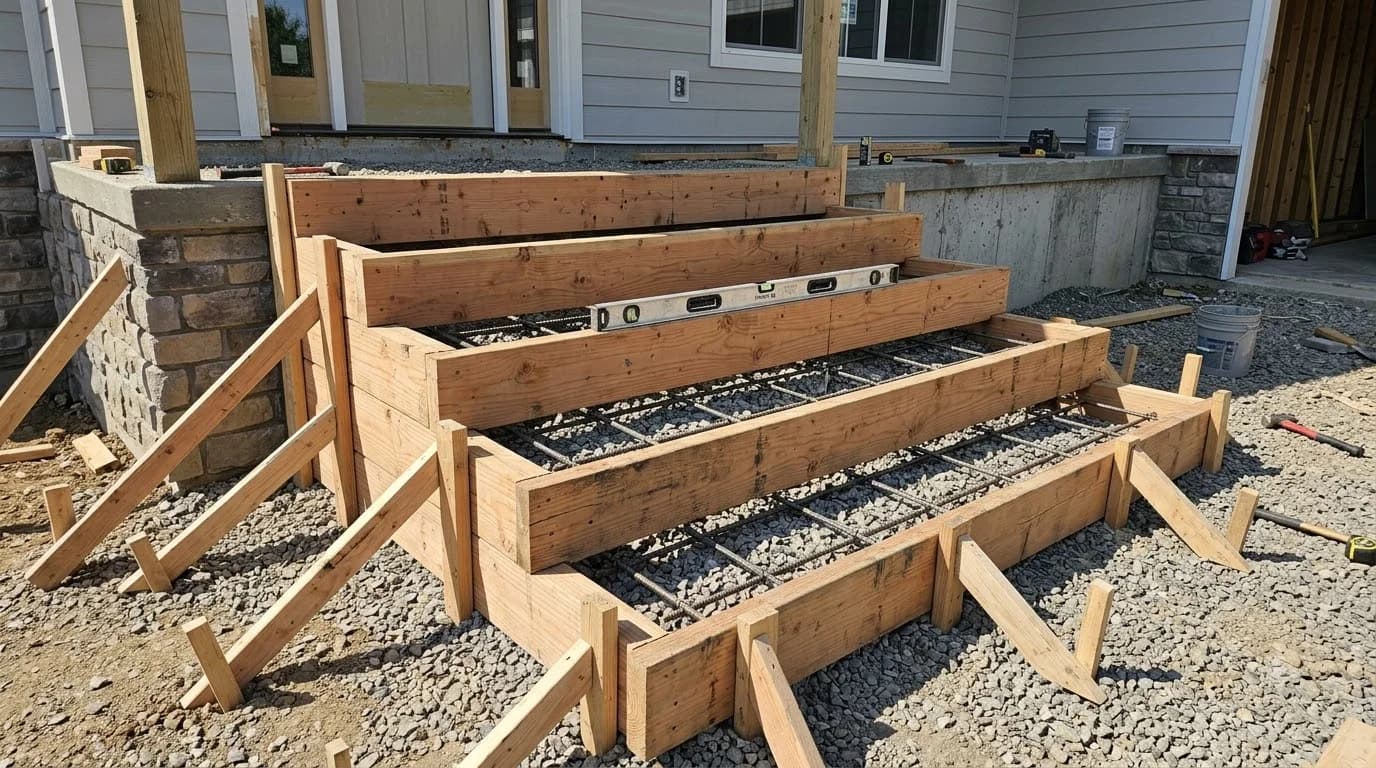
Pour a flat 4" gravel or concrete sub-slab below the steps. Block staircases are heavy and will settle on uncompacted soils.
Local residential codes usually mandate installing continuous safety handrails for structures containing 4 or more steps.
Choosing the correct block configuration affects structural capacity, stability, and cost:
8-inch Standard CMU
2-inch Cap Stone
| Block Sizing | Stairway Application | Load & Strength Profile | Unit Weight |
|---|---|---|---|
| 8-inch Standard CMU | Standard outdoor garden steps, patio entries, porch staircases | Excellent standard load, stable, easy to align | 38 lbs |
| 2-inch Cap Stone | Placed flat on top of step courses to seal the block cores and provide a sleek tread | Decorative and highly functional waterproof seal | 12 lbs |
Building clearances & mandatory engineering
Stairways attached to structures must comply with standard residential trip hazard guidelines. Consult local building code offices before starting construction.
Material estimates depend on the selected dimensions, product yields, and waste allowance.
Expert engineering guidance on step risers, cap treads, frost line footings, and mortar requirements.
Illustrative takeoffs with stated assumptions; verify project quantities
Example 30 blocks per 80-lb bag; check product yield
Example: 0.22 ft³ cores × 1/6 fill; excludes waste
Enter bed dimensions, block size and soil depth
Large perimeter enclosure or garage structure
Specialized tools for foundation, core fill, and budgeting
Straight and multi-wall runs with mortar and waste allowances
Cubic yards, bags, and slab volume for flatwork and footings
Core grout volume in cubic yards and 80-lb pre-mix bags
Patio and driveway interlocking pavers with base sand
Practical guides to block sizing, material estimates and project planning