Cinder Block Calculator

Planning estimate•100% Free

Instant concrete blocks, mortar bags, core grout, and rebar estimation.

Presets:
Wall Dimensions
Gross: 160 sq ft
ft
ft
3/8" Mortar Joint factored
%
Live Estimate
198Blocks(2 pal)
Details
Project Estimation
Total Blocks Required+10% Waste

198

blocks
Net required: 180•Cut reserve: +18

Net Wall Area

160 sq ft

Mortar (80lb)

7 bags

Core Grout

0 yd³

Rebar (20ft)

9 sticks

Materials Budget:Blocks: $366.30 + Mortar: $52.50
Total Material Cost:$490.80
💡 Yield: 8×8×16 CMU covers 0.89 sq ft with 3/8" mortar joint.Planning estimate • confirm project specifications →

CMU estimates use nominal face dimensions and illustrative mortar yields (30 standard 8-inch units per 80-lb premix bag before waste; thickness adjustments apply). Confirm product yields, unit core volumes, supplier pack sizes and local prices before ordering. Reinforcement quantities are material allowances; laps, hooks, embedment and engineered design are excluded.

Reduce Material Waste

Avoid over-ordering and repeated hardware trips with precise block & mortar ratios.

Standard 3/8" Joint Math

Accounts for nominal dimensions (15 5/8" × 7 5/8") ensuring exact physical fit.

Rebar & Grout Ready

Calculates core fill cubic yards and 20ft rebar sticks for solid reinforced walls.

What is a Cinder Block Calculator?

A cinder block calculator is a specialized masonry estimation tool designed for contractors, structural engineers, and DIY builders. Instead of tedious hand calculations, it automates the geometry by dividing the total net wall surface area by the nominal surface area of a single block (accounting for standard 3/8" horizontal and vertical mortar joints).

How to Use This Calculator (Step-by-Step)

01Step 01

Enter Dimensions

Measure total horizontal length and footing-to-top height in feet.

02Step 02

Select Block Size

Choose the nominal thickness × height × length. A 4×8×16 unit is 4 inches thick, not half-height.

03Step 03

Deduct Openings

Add doors and windows in the 'Openings' tab to subtract non-masonry area.

04Step 04

Get Estimates

Review instant counts for blocks, 80lb mortar bags, grout, and material cost.
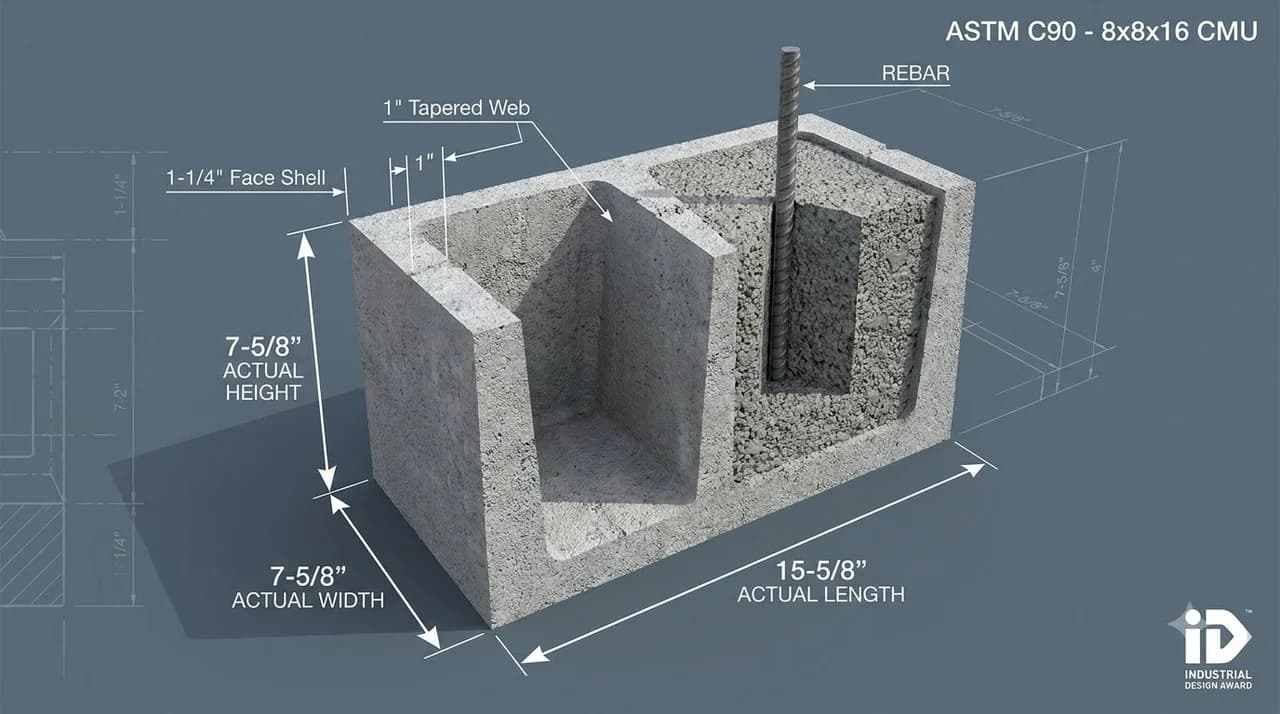
Standard Cinder Block Dimensions & Sizing Chart

ASTM C90 standard CMU specifications: nominal vs. actual dimensions, 3/8" mortar bed joint physics & weights

The Universal Masonry Rule

Why Are Cinder Blocks 7-5/8" Instead of 8"?

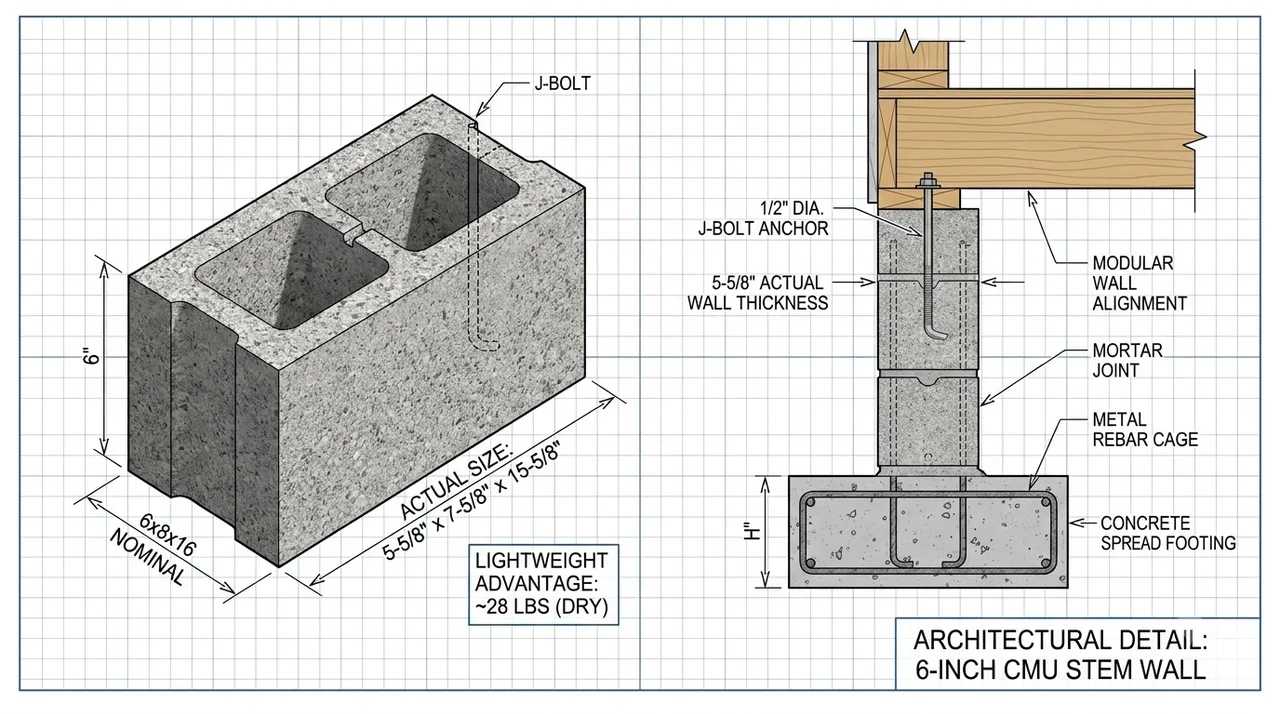
Blocks are sold by their Nominal Size (the space they occupy in a completed wall including mortar joints). To account for the standard 3/8-inch (0.375") mortar joint, every block is manufactured exactly 3/8" smaller in thickness, height, and length:

Actual Size (7-5/8" × 7-5/8" × 15-5/8") + 3/8" Mortar Bed = Nominal Modular Grid (8" × 8" × 16")
Wall Face Area per Block

0.89 sq ft

1.125 Blocks / Sq Ft
ASTM C90 Standard CMU Sizing Chart
Scroll ↔
Nominal Size (W×H×L)Actual Manufactured SizeDry WeightPallet Count
8" × 8" × 16"Most Popular
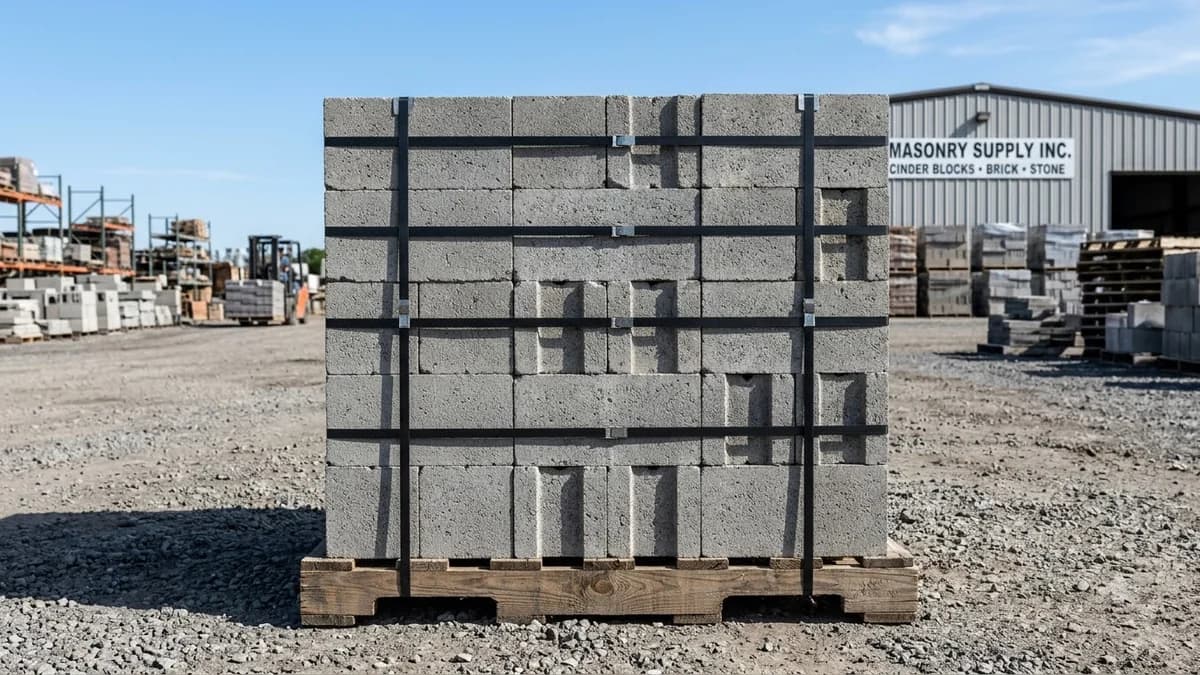
7-5/8" × 7-5/8" × 15-5/8"38–42 lbs108 example; supplier varies
4" × 8" × 16"Half-Width
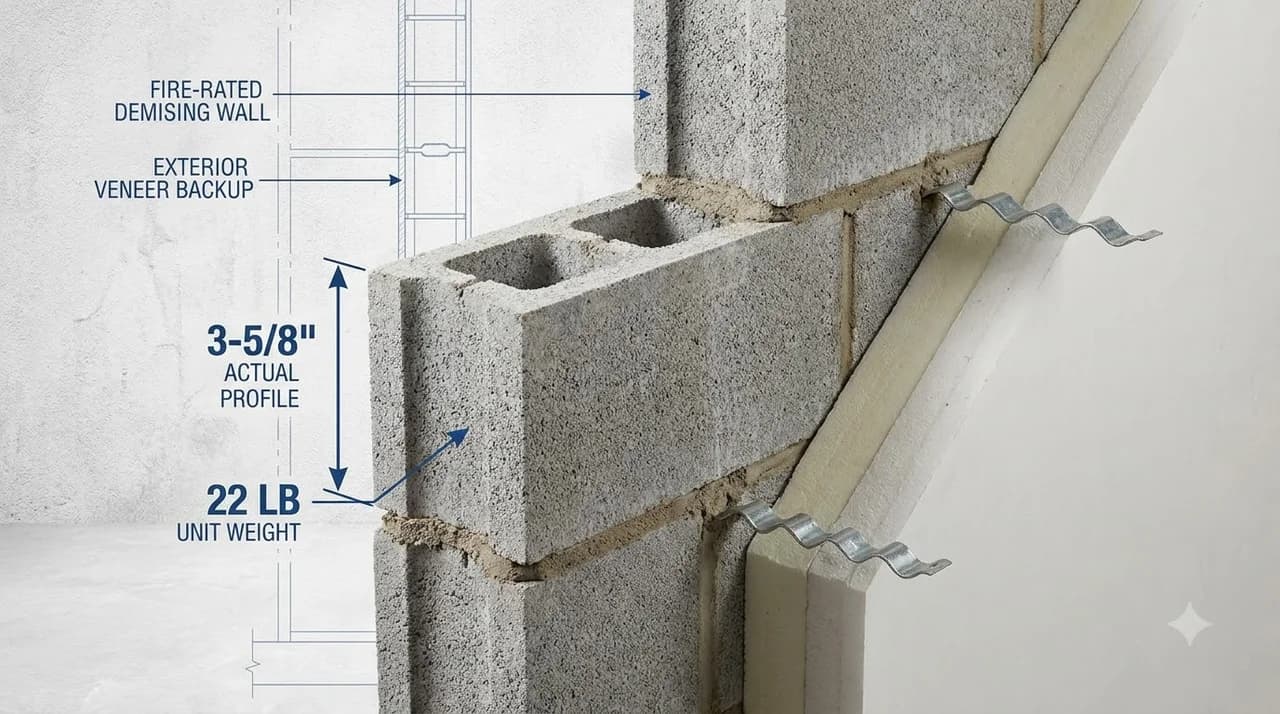
3-5/8" × 7-5/8" × 15-5/8"20–24 lbs150–180 units
6" × 8" × 16"Lightweight
5-5/8" × 7-5/8" × 15-5/8"28–32 lbs100–120 units
10" × 8" × 16"Basement
9-5/8" × 7-5/8" × 15-5/8"44–48 lbs60–75 units
12" × 8" × 16"Heavy Duty
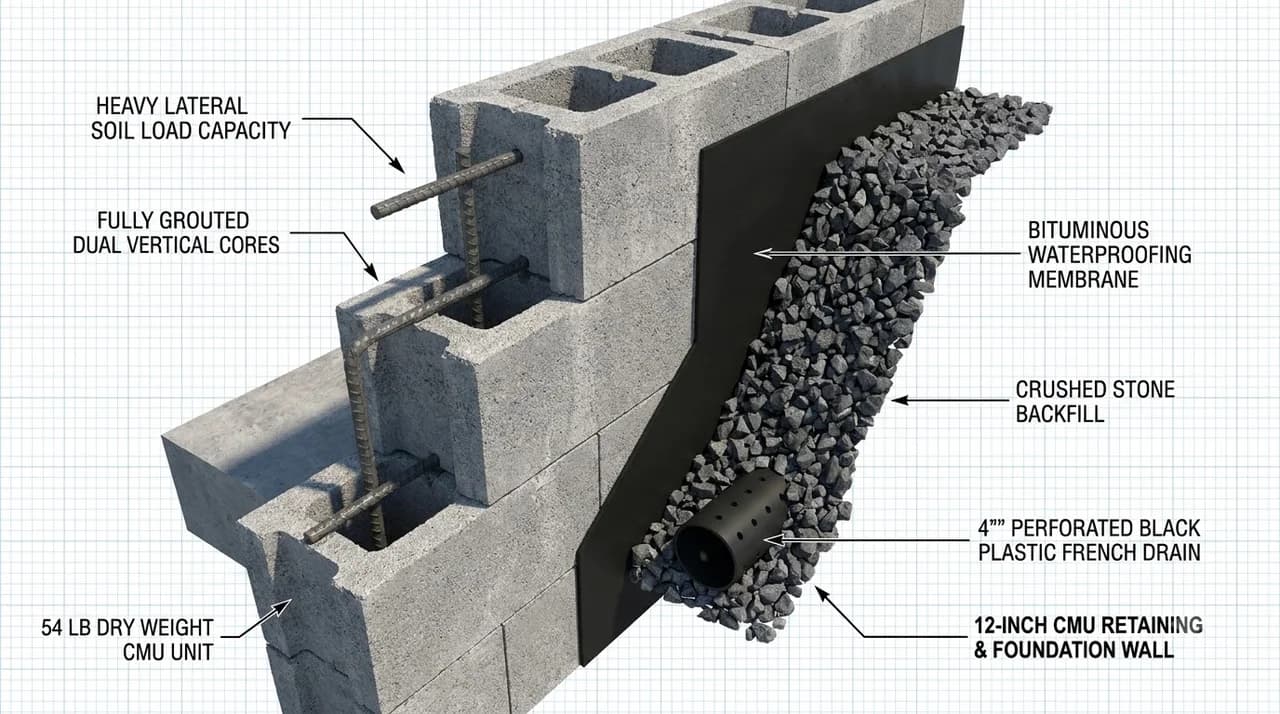
11-5/8" × 7-5/8" × 15-5/8"52–58 lbs45–60 units
8" × 4" × 16" (Half-High)Decorative
7-5/8" × 3-5/8" × 15-5/8"24–28 lbs120–140 units

* Nominal and actual inch dimensions use a 3/8-inch joint convention. Metric-market modular sizes are not exact inch conversions. Weights and packaging are examples, not ASTM requirements; confirm the selected manufacturer and project design.

Need Complete CMU Specifications & ASTM Standards?

Explore our comprehensive directory of actual dimensions, specialty bond beam units, corner blocks, and core grout volumes.

Open Dimensions Hub
Illustrative Price Inputs

Example Cinder Block Costs

For a planning scenario, try standard 8×8×16 blocks at $1.50–$3.00 per unit, then replace the examples with a dated local quote. Prices below are illustrative, not market averages.

Per Block

$1.85

Example input

Per Pallet

$199.80

108 × $1.85 example

Labor / Install

$10 - $15

per sq ft

Delivery

$50 - $150

flatbed

Check actual and nominal block dimensions, confirm supplier pallet quantities, and enter local quotes in the material and labor cost calculator.

Calculation Assumptions & References Planning Reference

Material estimates depend on the selected dimensions, product yields, and waste allowance.

Content date: October 21, 2026
Related references: ASTM C90 (Standard Specification for Loadbearing CMU), ASTM C270 (Standard Specification for Masonry Mortar), ASTM C476 (Standard Specification for Grout for Masonry), Locally adopted IRC edition and project-specific design requirements. Confirm the applicable edition and local requirements.
A material estimate is not a structural design or code approval.
Quick Answers

Frequently Asked Questions

Essential insights into block coverage, mortar ratios, pallets, and project budgeting.

For a standard 8×8×16 block, there are approximately 1.125 blocks per square foot (accounting for 3/8" mortar joints). If you use 4-inch high half-blocks, you'll need 2.25 blocks per sq ft.

The Ultimate Guide to Cinder Block Construction

Concrete Masonry Units (CMUs) are the backbone of modern residential and commercial masonry. Their strength and thermal mass support many foundation, wall, and fence applications. Fire resistance and structural suitability depend on the tested assembly, unit properties, and project design.

The Standard Masonry Formula

A nominal 8×8×16 block face covers 128/144 square feet (about 0.89) when laid with 3/8" mortar. To find blocks needed:

Net Wall Area (sq ft) × 1.125 blocks/sq ft
= Net Block Count (+ 10% Waste)

Common Estimation Pitfalls

  • Forgetting Waste: Never order exact counts; corner cuts demand 5-10% extra.
  • Ignoring Footings: The first course of blocks is frequently submerged below ground.
  • Underestimating Mortar: Example yield: 30 standard 8-inch CMUs per 80-lb premix bag before waste; confirm the bag label.