How to Calculate Cinder Blocks for a Garage
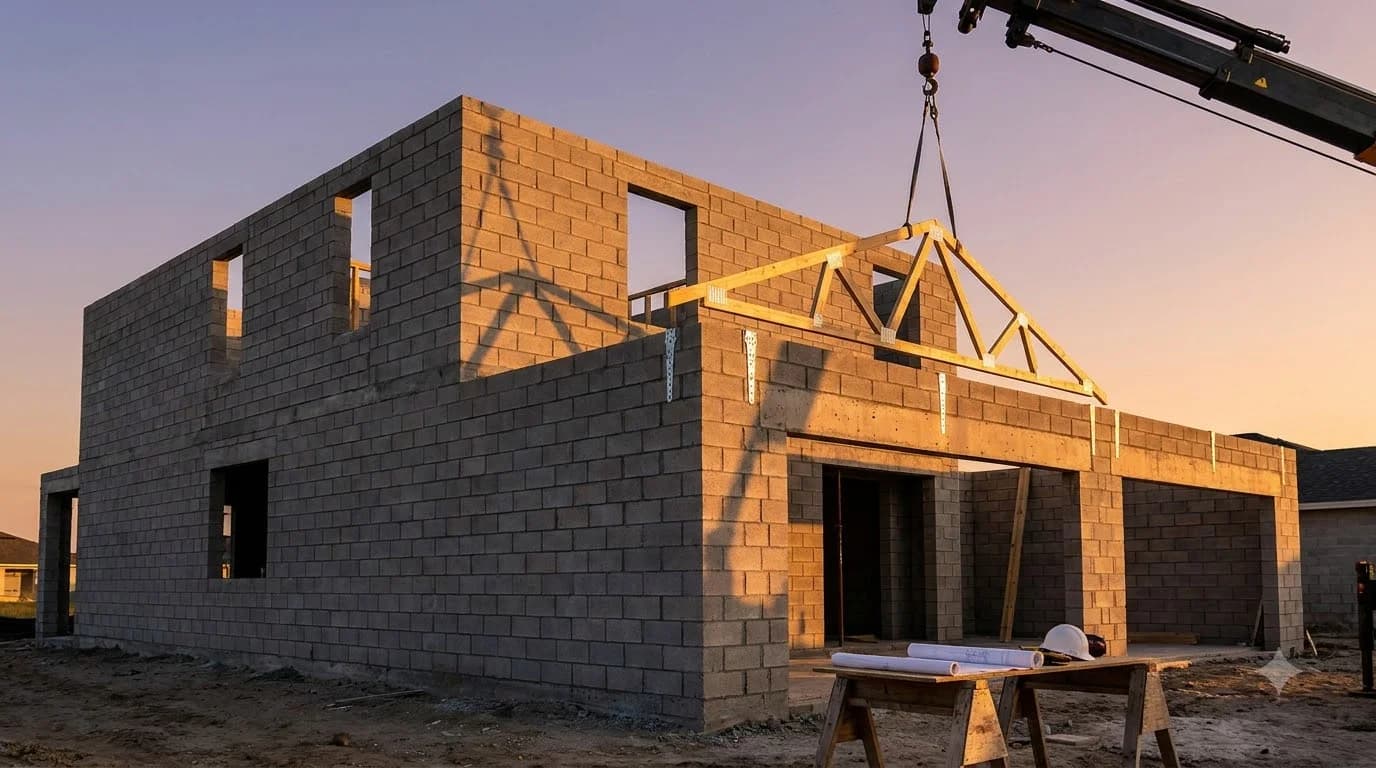
Concrete block garages provide superior fire resistance, sound damping, and structural wind security compared to wood framing. Follow this structural estimation process:
Plan and estimate blocks, Type S mortar, rebar, core grout, and concrete footings for standard single, double, and triple car block garages under IRC Section R606 codes.
Garage Masonry Material Takeoff & Proposal
cinderblockscalculator.com • Inquiries: cindercalc@gmail.com
Date: 10/22/2026
Spec: ASTM C90 & IRC R606
Preset: 2-Car Standard (24x24x9)
| Dimensions | 24' Length × 24' Width × 9' Wall Height | Wall Perimeter | 96 Linear Feet |
| Gross Wall Area | 864 sq ft | Opening Deductions | -156.4 sq ft (1 dbl, 0 sgl, 1 walk, 2 win) |
| Net Masonry Wall Area: | 707.6 sq ft | ||
| Material Item | Industry Specification | Takeoff Quantity | Packaging / Unit |
|---|---|---|---|
| Concrete Masonry Units (CMU) | 8" ASTM C90 Standard | 877 blocks | ~9 Pallets (108/pal) |
| Pre-Mixed Masonry Mortar | Type S / M (ASTM C270) | 30 bags | 80 lb bags |
| Reinforcing Steel Rebar (#4) | Grade 60 (Spacing: 32" O.C.) | 34 sticks | 20 ft standard lengths |
| Core Concrete Grout | ASTM C476 Ready-Mix Core Fill | 7.67 yd³ | Cubic Yards |
| Continuous Poured Footing | IRC R403 (16" W × 8" D) | 3.17 yd³ | Ready-Mix Concrete |
| Estimated Material Cost Range: | $4,128 – $5,728 | ||
Prepared By (Contractor / Estimator):
Signature & Date
Client Acceptance & Authorization:
Signature & Date
Estimates based on 2026 regional construction pricing and NCMA guidelines. Final quotes subject to site conditions.
CinderCalc Verified Takeoff
CMU estimates use nominal face dimensions and illustrative mortar yields (30 standard 8-inch units per 80-lb premix bag before waste; thickness adjustments apply). Confirm product yields, unit core volumes, supplier pack sizes and local prices before ordering. Reinforcement quantities are material allowances; laps, hooks, embedment and engineered design are excluded.
| Garage Size | Perimeter & Height | Blocks (Deductions incl.) | 80lb Mortar Bags | Est. Material Cost |
|---|---|---|---|---|
| 1-Car Detached (12' × 24') | 72 lin ft @ 8' H | ~530 blocks | ~46 bags | $2,200–$3,100 |
| 2-Car Standard (20' × 20') | 80 lin ft @ 9' H | ~660 blocks | ~58 bags | $2,800–$3,900 |
| 2-Car Oversized (24' × 24') | 96 lin ft @ 9' H | ~745 blocks | ~65 bags | $3,400–$4,600 |
| 3-Car Workshop (24' × 36') | 120 lin ft @ 10' H | ~1,080 blocks | ~95 bags | $4,800–$6,800 |
Concrete block garages provide superior fire resistance, sound damping, and structural wind security compared to wood framing. Follow this structural estimation process:
Sum all exterior wall runs: 2 × (Length + Width). A 24' × 24' garage has a 96-foot linear perimeter.
Multiply perimeter by intended wall height (e.g. 96 ft × 9 ft = 864 sq ft gross).
Deduct garage overhead door (16' × 7' = 112 sq ft), pedestrian door (21 sq ft), and windows.
Divide net square footage by 0.89 sq ft per block and add a 10% cutting waste buffer.
Incorporate reinforced bond beam blocks or precast concrete lintels across all door openings.
Embed 1/2-inch J-bolts every 4 feet along the top bond beam to secure wood roof trusses.
In 2026, building a 24x24 detached cinder block garage shell costs $18,000 to $34,000 turnkey (materials + contractor labor). Complete garage builds including concrete slab floor, electrical, roof trusses, and overhead doors range from $35,000 to $58,000.
Material estimates depend on the selected dimensions, product yields, and waste allowance.
Verified answers on garage block counts, lintel spans, and turnkey construction costs.
Illustrative takeoffs with stated assumptions; verify project quantities
576 ft² × 5/12 ft ÷ 27; excludes waste and design
Large perimeter enclosure or garage structure
Example: 0.22 ft³ cores × 1/6 fill; excludes waste
Illustrative coverage; use the selected coating label
Specialized tools for foundation, core fill, and budgeting
Cubic yards, bags, and slab volume for flatwork and footings
Straight and multi-wall runs with mortar and waste allowances
Complete 4-wall structures, sheds and masonry workshops
Primer, acrylic block filler and topcoat paint gallons
Practical guides to block sizing, material estimates and project planning