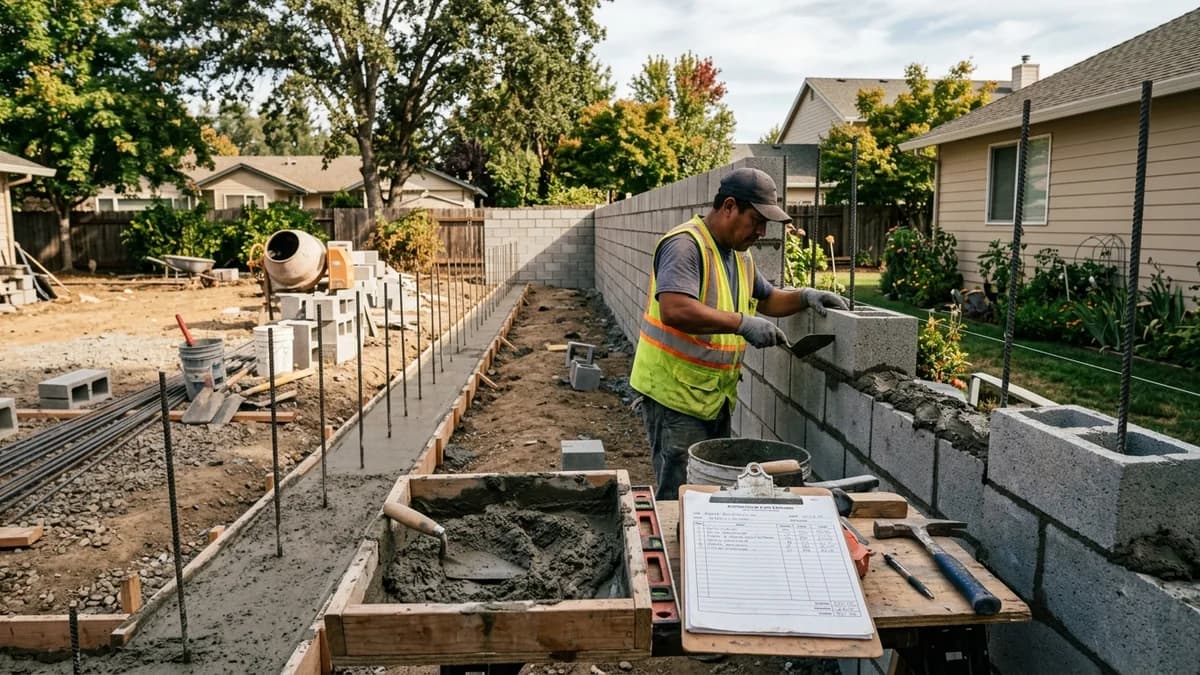
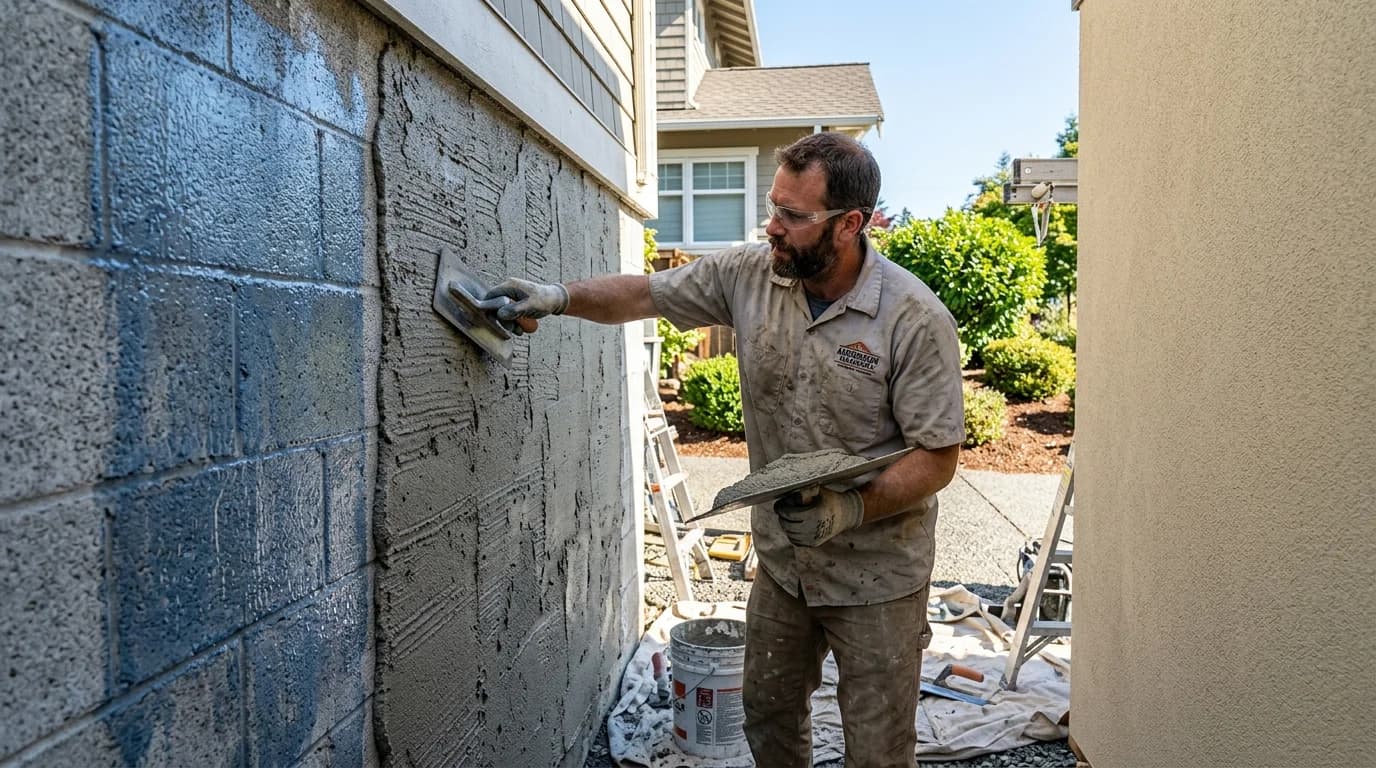
Professional Masonry Tool

Cinder Block Wall
Calculator

Instantly estimate blocks, mortar, rebar, grout, and total material costs for any concrete block wall — from garden borders to load-bearing structures.

Section 1

Wall Estimate

Add wall dimensions to see estimates

Wall Calculator Tip

Add multiple wall sections for multi-wall projects. Door openings deduct 21 sq ft each (3×7 ft) and windows deduct 12 sq ft each (3×4 ft).

Quick Wall Estimation Reference

Wall SizeArea (sq ft)Blocks NeededMortar BagsEst. Cost
10 × 4 ft40504–5$130–$180
20 × 8 ft16019816–18$500–$700
40 × 8 ft32039632–35$950–$1,350
60 × 8 ft48059347–52$1,400–$2,000
100 × 8 ft80098978–86$2,300–$3,200

* Based on standard 8×8×16 CMU with 10% waste. Costs reflect 2026 national averages.

How to Calculate Blocks for a Wall

Every block wall project starts with accurate material estimation. Whether you are building a garden wall, a privacy fence, or a structural partition, the formula is straightforward once you know your wall dimensions and the block size you are using.
1

Cinder Block Wall Calculator (2026)

Record the total length and height of the wall in feet. For walls with multiple sections, measure each separately.

2

Cinder Block Wall Calculator (2026)

Multiply length × height to get gross area. Subtract the area of any doors, windows, or openings.

3

Cinder Block Wall Calculator (2026)

Standard 8×8×16 covers 0.89 sq ft. Half-high 4×8×16 covers 0.44 sq ft. Select the right block for your project.

4

Cinder Block Wall Calculator (2026)

Divide your net wall area by the coverage of one block to get the base block count.

5

Cinder Block Wall Calculator (2026)

Add 5–10% for cuts, breakage, and corners. Corners and pilasters require extra blocks.

6

Cinder Block Wall Calculator (2026)

Plan for 6–9 bags of 80 lb mortar per 100 standard blocks. Our calculator does this automatically.

Standard Wall Formula

(Wall Length × Wall Height − Openings) ÷ 0.89 × 1.10 = Total Blocks

0.89 = coverage of one standard 8×8×16 CMU in sq ft  |  1.10 = 10% waste factor

Types of Cinder Block Walls

Different wall applications require different construction approaches, reinforcement levels, and material quantities. Understanding the type of wall you are building ensures accurate estimation.

🌿

Garden Walls

Low-height decorative walls (2–4 ft) for flower beds, borders, and yard features. Minimal reinforcement needed.

🔒

Privacy Walls

Tall walls (6–8 ft) designed to block sight lines and reduce noise. Require vertical rebar every 48 inches.

⛰️

Retaining Walls

Engineered walls that hold back soil and resist lateral earth pressure. Require full reinforcement and drainage.

🏗️

Structural Walls

Foundation and partition walls for buildings, garages, and sheds. Must meet local building codes for reinforcement.

Contractor Pro Tips

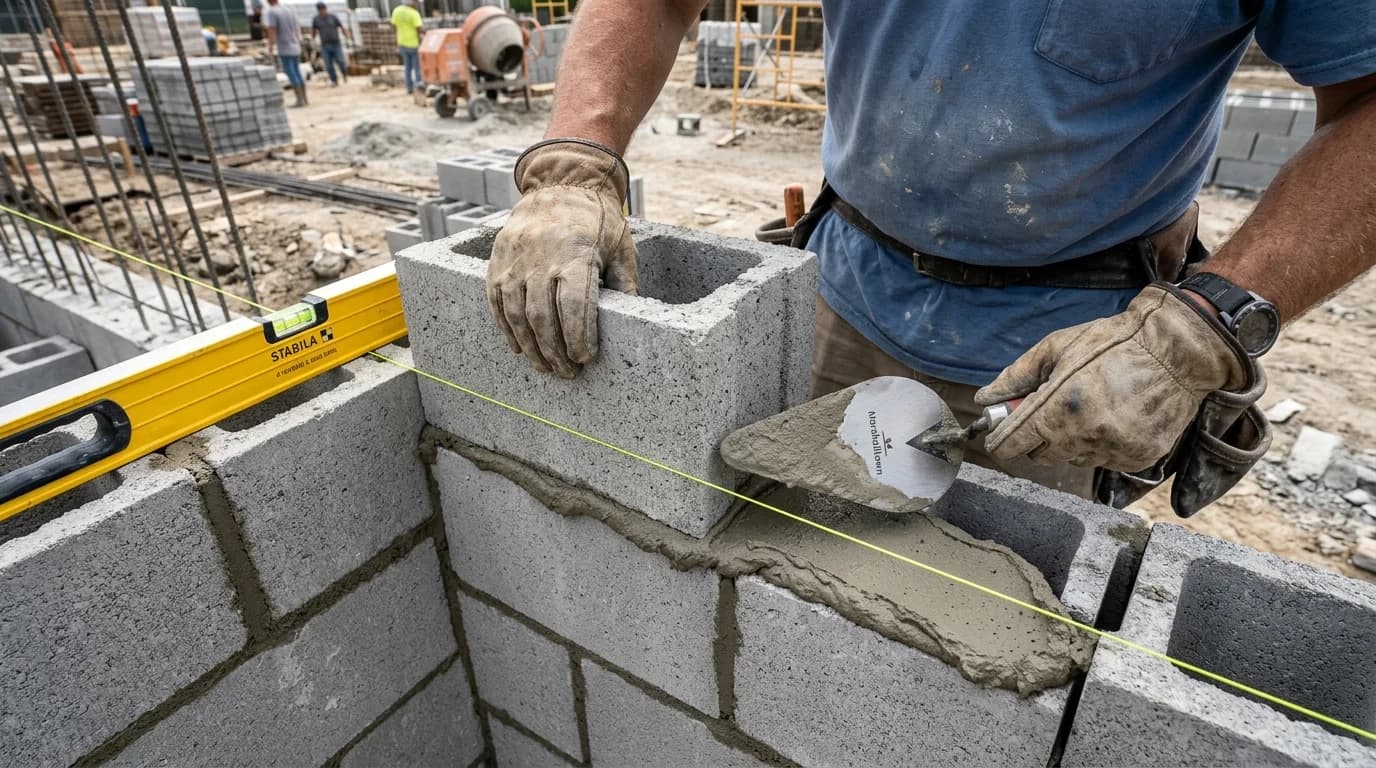
  • Always dry-lay your first course to verify spacing before mixing mortar.
  • Use Type S mortar for structural and below-grade walls; Type N for above-grade non-load-bearing walls.
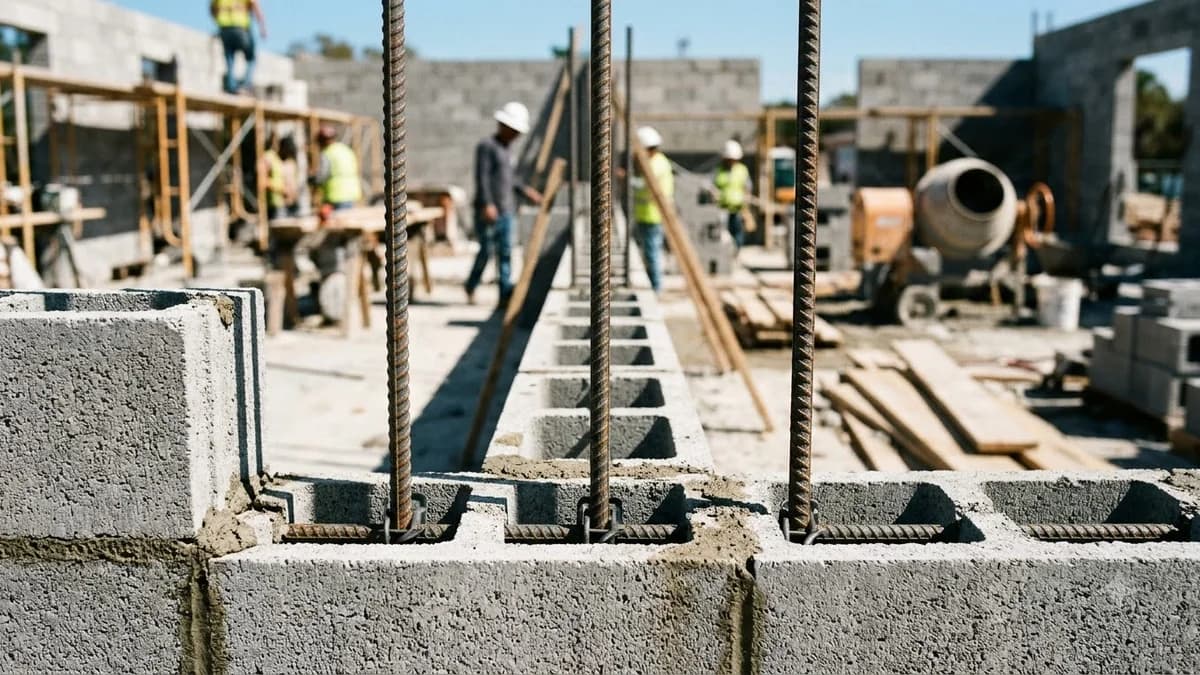
  • Walls over 4 ft tall should have vertical rebar every 32–48 inches and horizontal bond beam every 3–4 courses.
  • Check local building codes before starting — permits are typically required for walls over 4 feet or retaining walls.

Mortar & Material Requirements

For every 100 standard 8×8×16 cinder blocks, you will need approximately 8.5 cubic feet of mortar, which equals:

  • 6–9 bags of pre-mixed mortar (80 lb each)
  • Or 2 bags of masonry cement + 500 lbs of sand

If you are grouting cores (filling with concrete), plan for 0.22 cubic feet of grout per block for standard 8-inch CMUs. Fully grouted walls use approximately 0.8 cubic yards of grout per 100 blocks.

Block Size Comparison

Block TypeNominal SizeActual SizeCoverageWeight
Standard8" × 8" × 16"7⅝" × 7⅝" × 15⅝"0.89 sq ft~38 lbs
Half-High4" × 8" × 16"3⅝" × 7⅝" × 15⅝"0.44 sq ft~24 lbs
6-Inch6" × 8" × 16"5⅝" × 7⅝" × 15⅝"0.89 sq ft~28 lbs
12-Inch12" × 8" × 16"11⅝" × 7⅝" × 15⅝"0.89 sq ft~55 lbs

How Much Does a Cinder Block Wall Cost?

Material costs for a cinder block wall typically range from $5 to $8 per square foot. Here is a breakdown of average 2026 pricing:

  • Cinder blocks: $1.50–$2.50 per block (standard 8×8×16)
  • Mortar: $7–$10 per 80 lb bag
  • Rebar: $6–$10 per 20 ft stick (#4 rebar)
  • Grout concrete: $130–$170 per cubic yard

Labor costs add $10–$17 per square foot if you hire a mason. A professional 20×8 ft wall installation typically costs $2,500–$4,500 including materials and labor.

Always verify local building codes

Most municipalities require permits for walls over 4 feet tall or any retaining wall. Structural walls may need engineered plans. Contact your local building department before starting construction.

Cinder Block FAQs

Everything you need to know about calculating masonry materials.

For a standard 8x8x16 block, there are approximately 1.125 blocks per square foot. This includes the standard 3/8" mortar joint. If you are using 4-inch high blocks, you will need 2.25 blocks per square foot.

A standard pallet typically holds 75 to 90 blocks, depending on the manufacturer and the block size. An 8x8x16 pallet usually has 75 blocks, weighing approximately 2,800 lbs.

As a general rule, you will need about 8 to 10 cubic feet of mortar for every 100 standard 8x8x16 blocks. This translates to roughly 3 to 4 bags of pre-mixed mortar (80lb bags).

While the terms are used interchangeably, concrete blocks (CMUs) are made of crushed stone and sand, making them very heavy and strong. True cinder blocks use coal cinders as an aggregate, making them lighter and less structural. Most modern 'cinder blocks' are actually concrete blocks.

Yes, always add 5% to 10% for waste. This accounts for blocks that arrive broken, mistakes during cutting for corners or ends, and any architectural adjustments needed on-site.