How to Calculate Cinder Blocks for 100 Sq Ft
Whether your 100 sq ft wall measures 10' × 10', 25' × 4', or 50' × 2', standard mathematical formulas allow for exact material estimation:
Find exactly how many blocks, joint mortar bags, horizontal rebar sticks, vertical spacing rebar sticks, core concrete grout, and pricing budgets are required for 100 square feet.
CMU estimates use nominal face dimensions and illustrative mortar yields (30 standard 8-inch units per 80-lb premix bag before waste; thickness adjustments apply). Confirm product yields, unit core volumes, supplier pack sizes and local prices before ordering. Reinforcement quantities are material allowances; laps, hooks, embedment and engineered design are excluded.
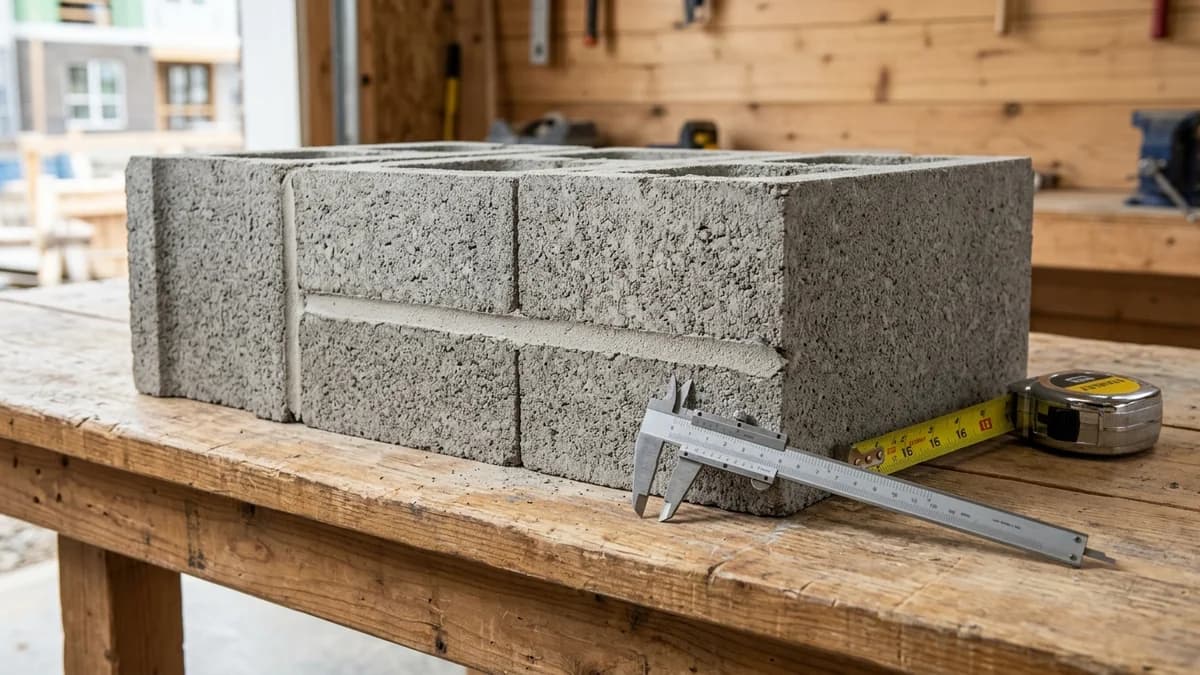
Standard 8x8x16 CMU
Half-High 4x8x16
Heavy 12x8x16 CMU
| Block Unit Profile | Blocks (10% Waste) | Type S 80lb Mortar | Reinforcement Rebar | Core Grout Volume |
|---|---|---|---|---|
| Standard 8x8x16 CMU | 113 net (125 w/ waste) | 11 bags (80 lb) | 8 sticks #4 (20 ft) | 0.9 yd³ (if grouted) |
| Half-High 4x8x16 | 225 net (250 w/ waste) | 16 bags (80 lb) | 8 sticks #4 (20 ft) | 0.45 yd³ |
| Heavy 12x8x16 CMU | 113 net (125 w/ waste) | 14 bags (80 lb) | 10 sticks #5 (20 ft) | 1.4 yd³ |
Whether your 100 sq ft wall measures 10' × 10', 25' × 4', or 50' × 2', standard mathematical formulas allow for exact material estimation:
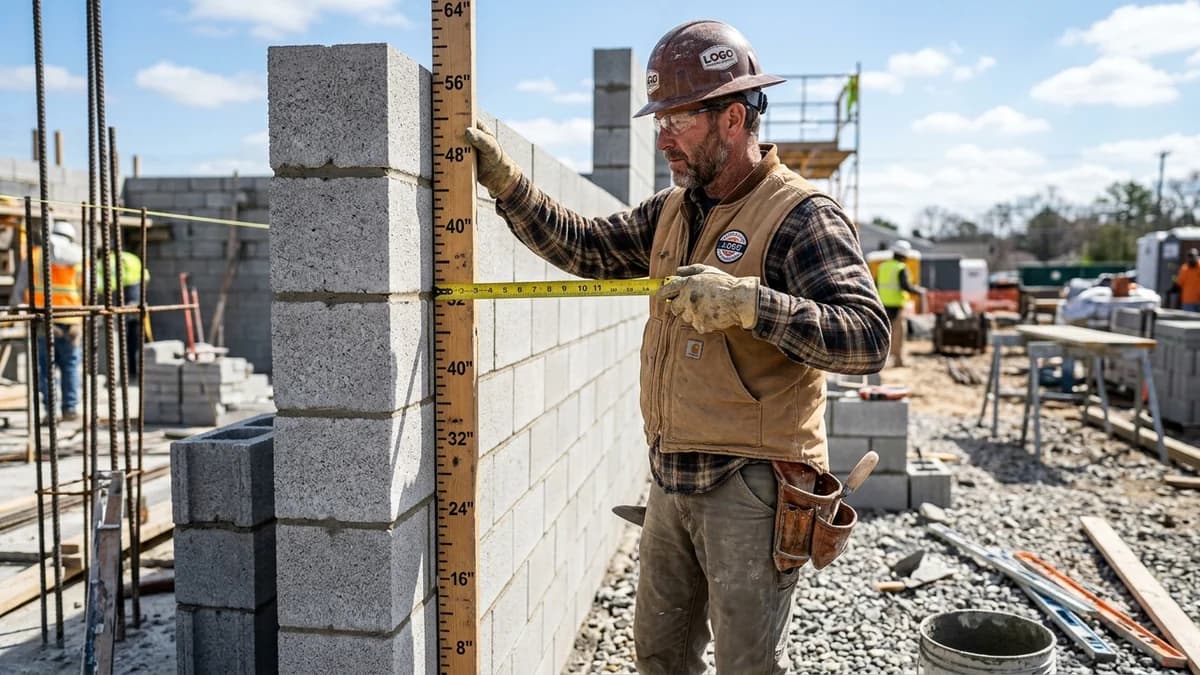
100 square feet gross wall face area represents approximately 12.5 horizontal courses of 10 feet length.
Divide 100 by 0.8889 sq ft per block (or multiply 100 × 1.125) to arrive at 112.5 exact blocks.
Add 12 blocks to cover cutting splits and corner half-blocks, establishing a firm order of 125 blocks.
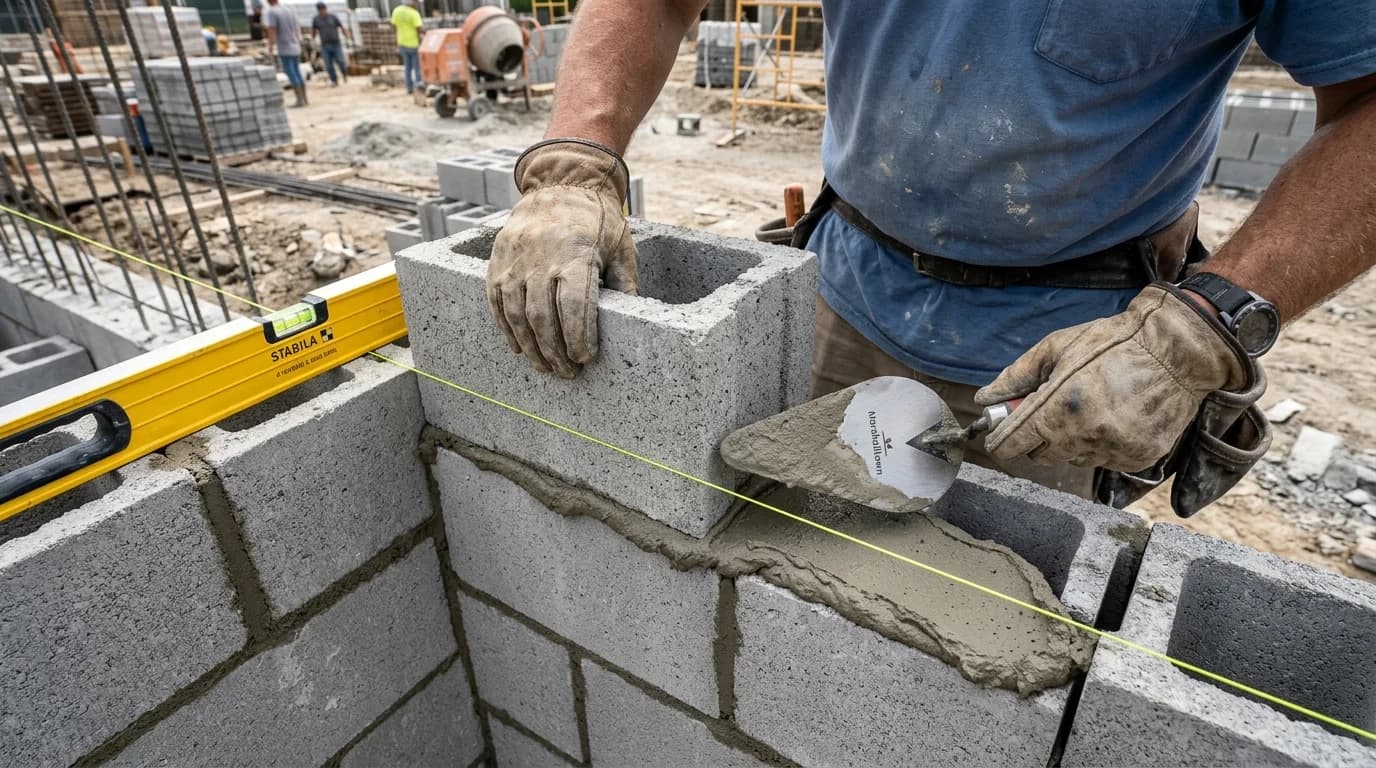
Allocate 10 to 11 bags of pre-mixed 80lb mortar mix based on 11.5 blocks coverage per bag.
For structural walls, place vertical #4 rebar every 32-48 inches on-center into the foundation footing.
If grouting hollow cells solid, budget for 0.9 to 1.0 cubic yard of ASTM C476 concrete grout.
In 2026, material costs to build a 100 sq ft concrete block wall average $350 to $550 for DIY projects. If you hire a professional masonry crew, total installed turnkey cost averages $1,200 to $2,200 ($12 to $22 per square foot including labor, mortar, footing prep, and waste disposal).
Material estimates depend on the selected dimensions, product yields, and waste allowance.
Verified answers on block calculations, pallet requirements, and weight for a 100 sq ft wall.
Illustrative takeoffs with stated assumptions; verify project quantities
Standard residential yard & garden wall run
Example 30 blocks per 80-lb bag; check product yield
Illustrative hollow-unit range; check supplier specs
High-volume logistics & bulk pallet freight
Specialized tools for foundation, core fill, and budgeting
Surface area converted into standard 8x8x16 block totals
Standard nominal 8x8x16 block takeoff with mortar joints
Direct wall dimensions with window and door deductions
Step-by-step masonry formulas and corner waste rules
Practical guides to block sizing, material estimates and project planning