How to Calculate Materials for 1,000 Sq Ft
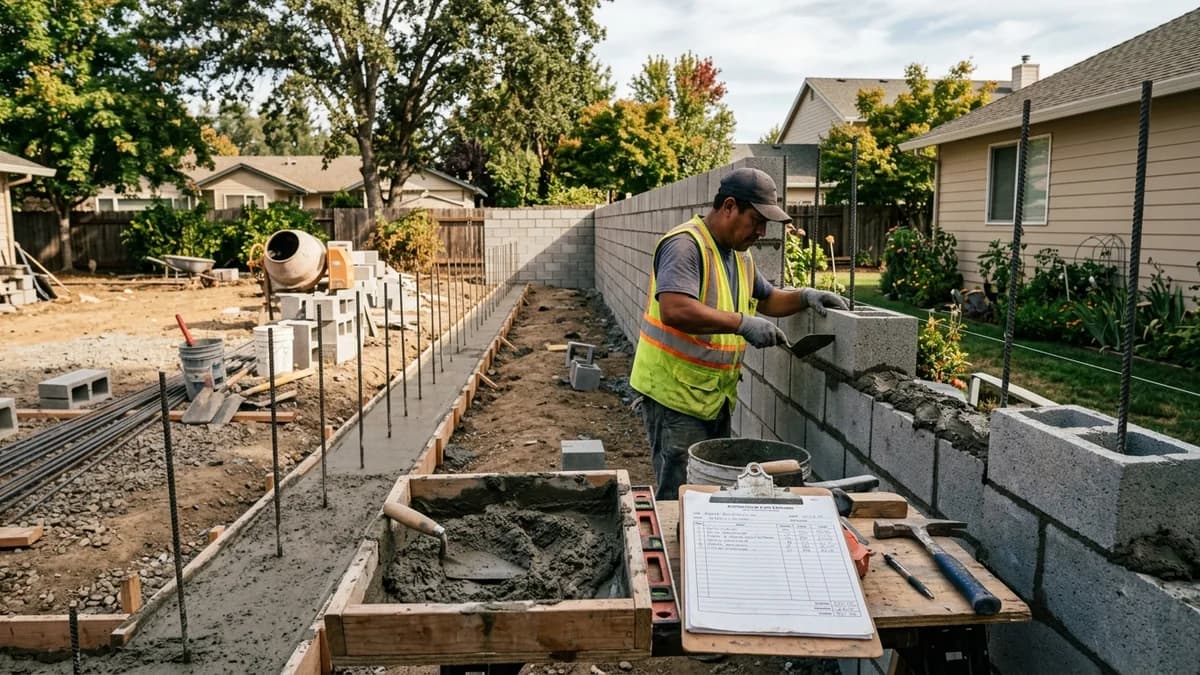
Managing a 1,000 square foot commercial or residential masonry takeoff requires phased delivery planning and structural reinforcement scheduling:
Find exact material takeoffs for 1,000 square feet of masonry. Calculates total block units, pallet deliveries, Type S mortar bags, rebar tonnage, and ready-mix grout.
CMU estimates use nominal face dimensions and illustrative mortar yields (30 standard 8-inch units per 80-lb premix bag before waste; thickness adjustments apply). Confirm product yields, unit core volumes, supplier pack sizes and local prices before ordering. Reinforcement quantities are material allowances; laps, hooks, embedment and engineered design are excluded.
| Material Item | Net Requirement | Recommended Order (w/ Waste) | Pallet Packaging | 2026 Material Cost |
|---|---|---|---|---|
| Standard 8x8x16 CMU | 1,125 blocks | 1,238 blocks | 17 pallets (75/pallet) | $2,600–$3,400 |
| Type S 80lb Mortar | 98 bags | 105 bags | 3 pallets (35/pallet) | $800–$1,100 |
| #4 (1/2") Steel Rebar | 75 sticks (20 ft) | 82 sticks (20 ft) | Jobsite bundle (~1,100 lbs) | $550–$750 |
| Core Grout Concrete | 9.2 cu yds | 10.0 cu yds | Ready-mix truck delivery | $1,400–$1,750 |
Managing a 1,000 square foot commercial or residential masonry takeoff requires phased delivery planning and structural reinforcement scheduling:
1,000 square feet represents approximately 125 linear feet of 8-foot tall walling, or 100 linear feet of 10-foot tall commercial partitions.
Divide 1,000 by 0.8889 sq ft per block (or multiply 1,000 × 1.125) to arrive at 1,125 base CMU units.
Add 113 blocks for corner leads, window returns, bond beams, and transit breakage, establishing a firm 1,238 unit order.
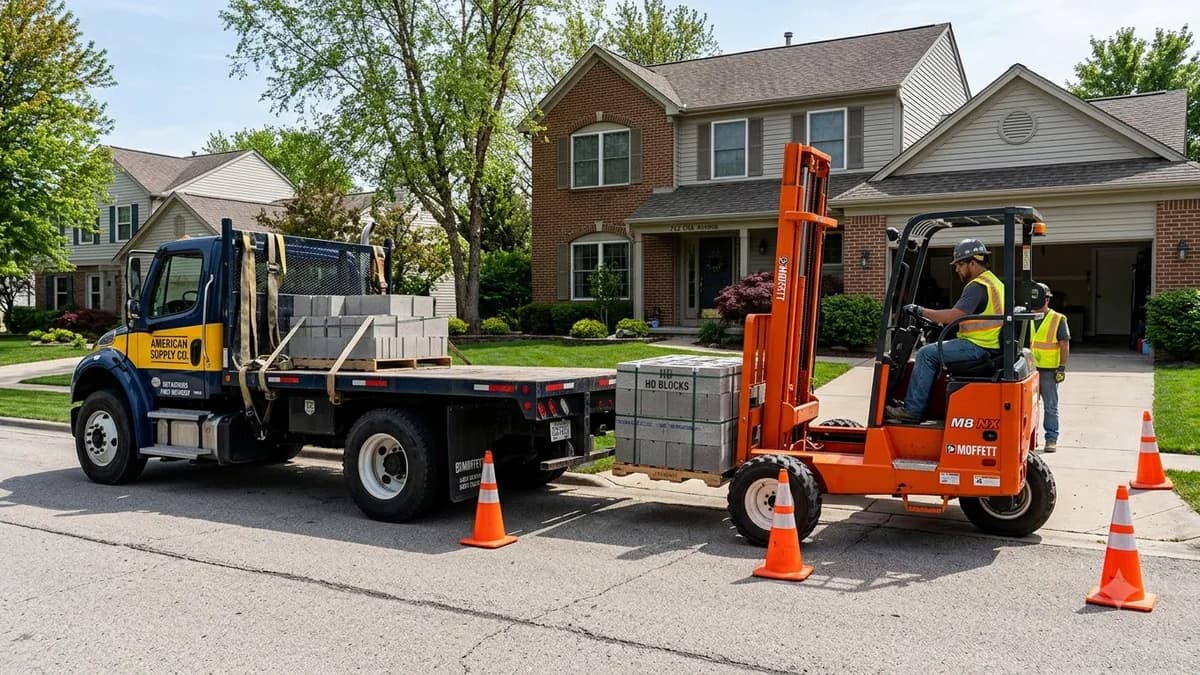
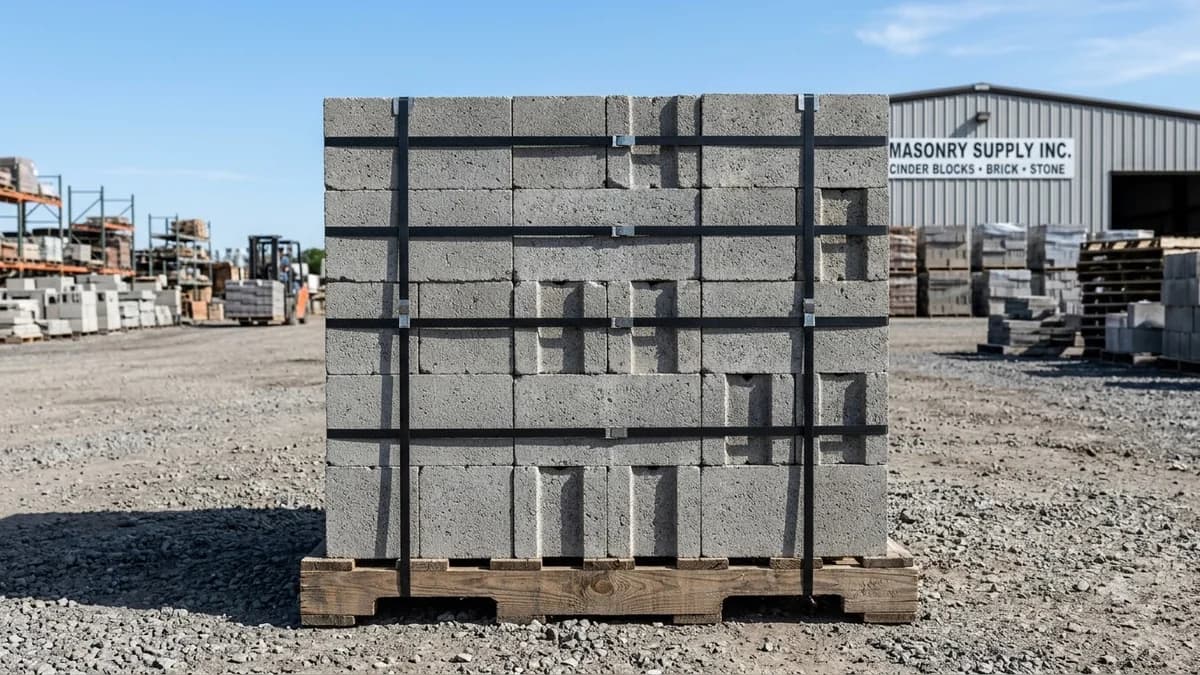
At 75 blocks per pallet, round up to 17 full pallets (1,275 blocks) to secure bulk flatbed delivery discounts.
Order 3 full pallets (105 bags total) of 80lb Type S pre-mixed mortar to lay the full 1,000 square feet.
Book 10 cubic yards of ASTM C476 pea gravel grout via boom pump truck for efficient core filling.
In 2026, contractor installation for a 1,000 sq ft concrete block wall ranges from $12,000 to $22,000 including labor, equipment rental (scaffolding and mixer), mortar, rebar, and cleanup. Purchasing materials wholesale directly averages $3,200 to $4,600.
Material estimates depend on the selected dimensions, product yields, and waste allowance.
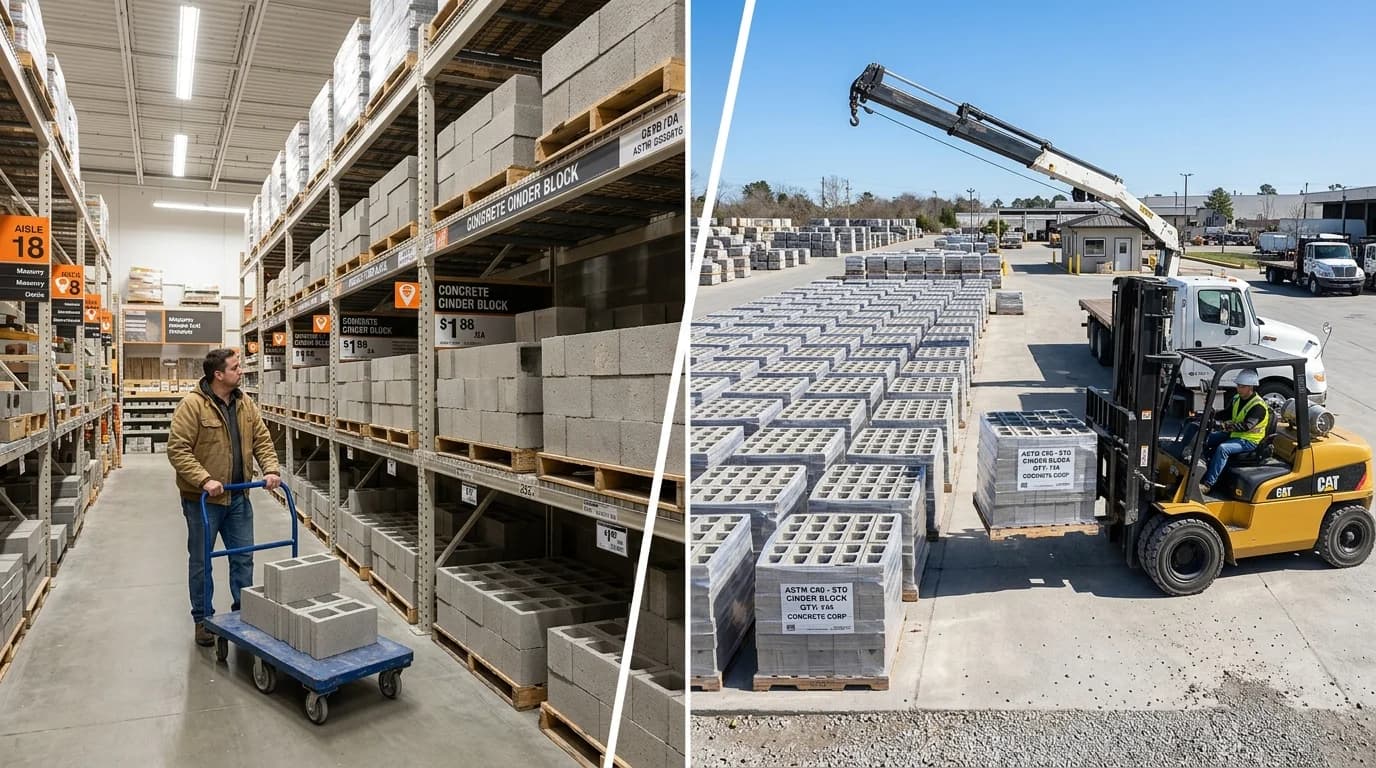
Verified answers on pallet shipping weights, mortar staging, and commercial block logistics.
Illustrative takeoffs with stated assumptions; verify project quantities
Large perimeter enclosure or garage structure
Illustrative hollow-unit range; check supplier specs
Example: 0.22 ft³ cores × 1/6 fill; excludes waste
Standard 8x8x16 nominal coverage benchmark
Specialized tools for foundation, core fill, and budgeting
Commercial load-bearing concrete masonry units
Turnkey material costs, rebar, delivery and mason labor
Straight and multi-wall runs with mortar and waste allowances
Direct wall dimensions with window and door deductions
Practical guides to block sizing, material estimates and project planning