How to Calculate Standard 8x8x16 CMU Blocks
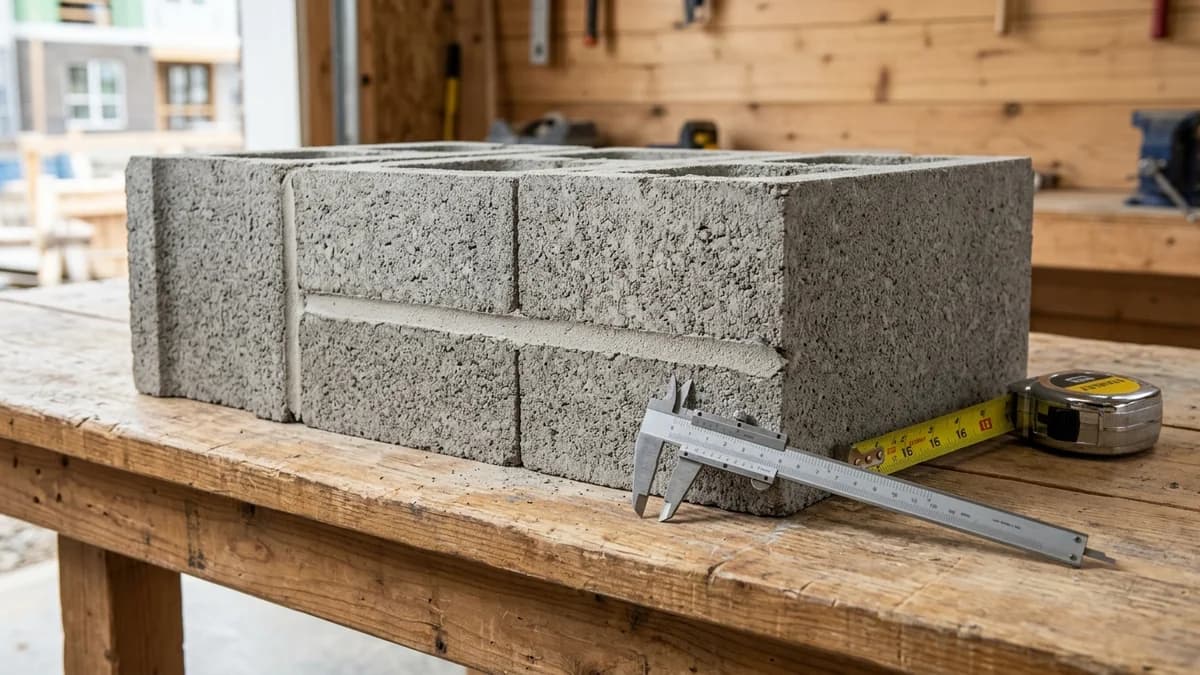
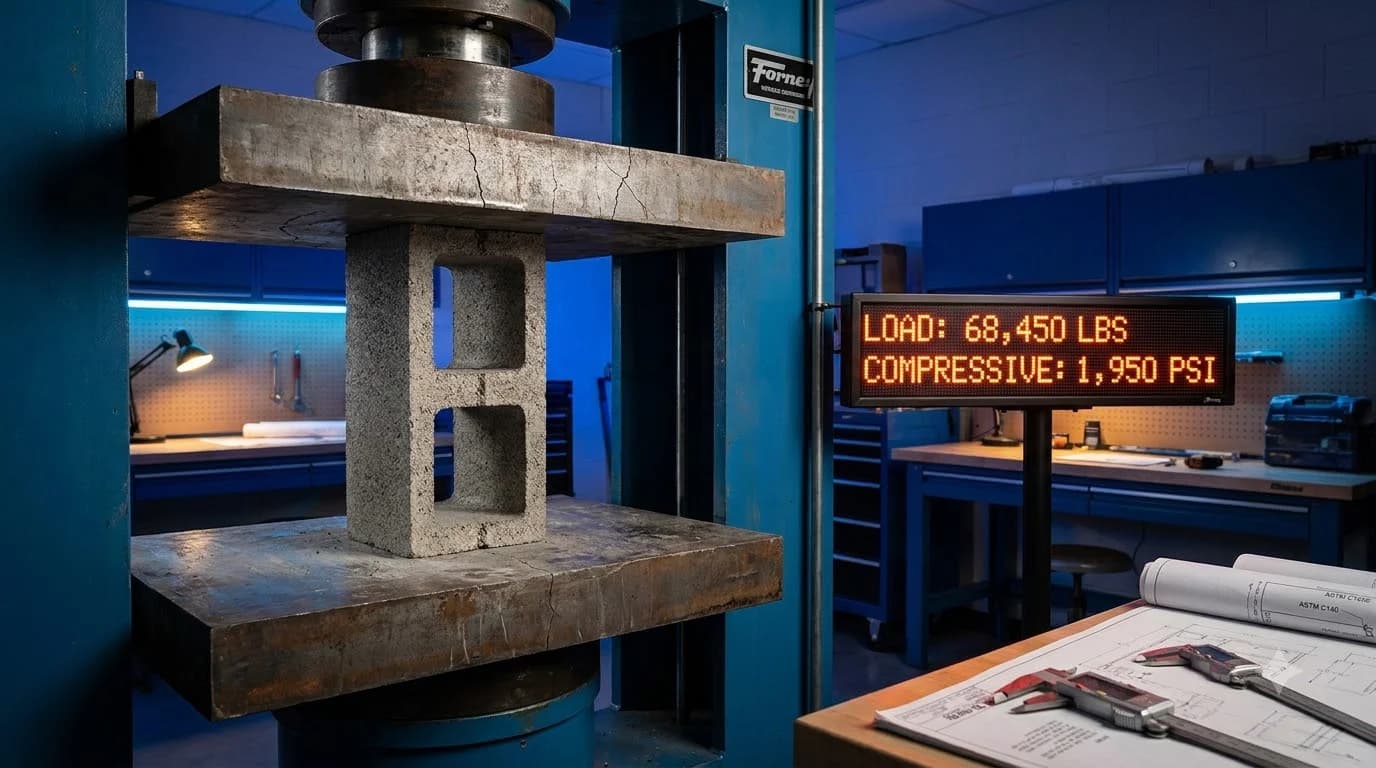
Standard 8x8x16 concrete masonry units are manufactured to ASTM C90 loadbearing standards. Here is the exact calculation workflow used by commercial masonry estimators:
Precision material estimates optimized for standard 8x8x16 Concrete Masonry Units (CMU). Factors in rebar reinforcement, Type S mortar, and ASTM C476 core grout.
Contractor Material Order Sheet & Jobsite Bill of Materials
cinderblockscalculator.com
Date: 10/22/2026
Planning estimate • confirm project specifications
| Wall Dimensions: | 20 ft (L) × 8 ft (H) |
| Block Type & Size: | 8x8x16 CMU |
| Net Wall Surface Area: | 160 sq ft |
| Waste Allowance Buffer: | +10% (Cut & Breakage Reserve) |
| Material Item | Specification | Order Quantity | Est. Cost |
|---|---|---|---|
| Cinder Blocks (CMU) | ASTM C90 Standard | 198 blocks (2 pallets) | $366.30 |
| Pre-Mixed Mortar | 80 lb Bags (Type S / M) | 7 bags | $52.50 |
| Deformed Rebar (#4) | 20 ft Standard Lengths | 9 sticks | $72.00 |
| Estimated Total Materials Cost: | $490.80 | ||
Pallet count based on 75 standard blocks per pallet. Footings must comply with local frost depths.
CBC Calc • Verified
CMU estimates use nominal face dimensions and illustrative mortar yields (30 standard 8-inch units per 80-lb premix bag before waste; thickness adjustments apply). Confirm product yields, unit core volumes, supplier pack sizes and local prices before ordering. Reinforcement quantities are material allowances; laps, hooks, embedment and engineered design are excluded.
| Wall Application | Dimensions (Area) | Blocks (10% Waste) | 80lb Mortar Bags | Grout Volume |
|---|---|---|---|---|
| Garden Divider Wall | 20' × 4' (80 sq ft) | 100 pcs | 9 bags | Optional Dry Stack |
| Standard 10x10 Wall | 10' × 10' (100 sq ft) | 125 pcs | 11 bags | 1.1 yd³ Grout |
| Standard Garage Wall | 30' × 8' (240 sq ft) | 297 pcs | 26 bags | 2.66 yd³ Grout |
| Structural Foundation | 40' × 8' (320 sq ft) | 396 pcs | 35 bags | 3.55 yd³ Grout |
| Commercial Perimeter | 100' × 8' (800 sq ft) | 990 pcs | 87 bags | 8.88 yd³ Grout |
Standard 8x8x16 concrete masonry units are manufactured to ASTM C90 loadbearing standards. Here is the exact calculation workflow used by commercial masonry estimators:
Multiply wall length by height in feet, and deduct all door, window, and pass-through areas.
Multiply net square footage by 1.125 (accounting for 3/8" bed and head joints).
Add 10% for cuts around window jambs, half-blocks, bond beams, and transport chips.
Order 7 to 9 bags of 80lb pre-mixed mortar per 100 blocks (8.5 cu ft of mixed mortar).
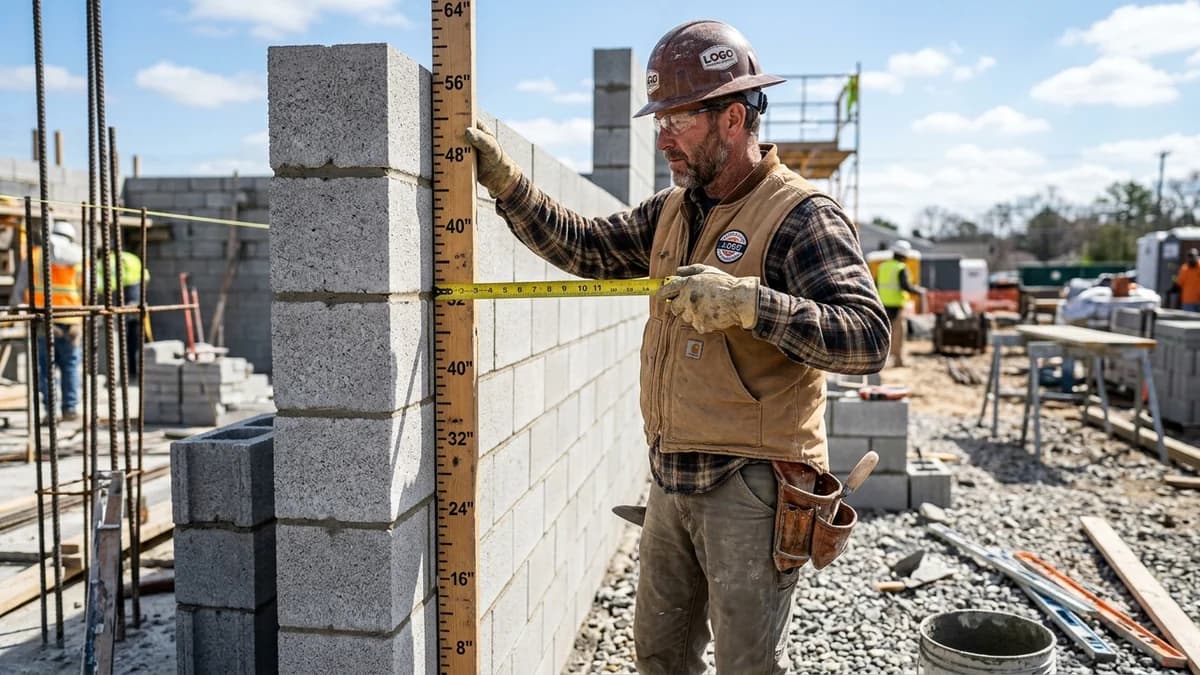
Space #4 or #5 rebar vertically every 32" or 48" on-center anchored into footing dowels.
Calculate 0.22 cubic feet of pea gravel concrete grout per filled cell (ASTM C476).
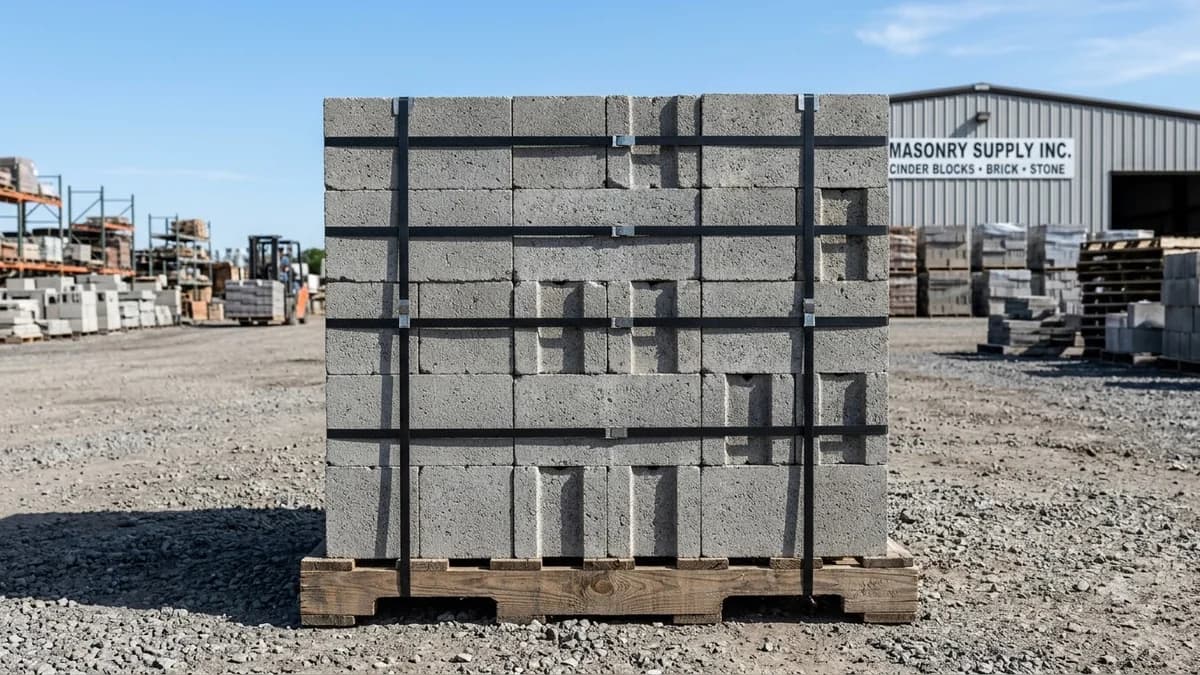
In 2026, individual 8x8x16 CMU blocks retail for $1.75 to $2.85 each. Wholesale contractor pricing for full pallets (75 units) ranges between $160 and $210 per pallet delivered.
Material estimates depend on the selected dimensions, product yields, and waste allowance.
Verified answers on standard modular block dimensions, pallet counts, and mortar coverage.
Illustrative takeoffs with stated assumptions; verify project quantities
Standard 8x8x16 nominal coverage benchmark
Standard residential yard & garden wall run
Illustrative hollow-unit range; check supplier specs
Example 30 blocks per 80-lb bag; check product yield
Specialized tools for foundation, core fill, and budgeting
Commercial load-bearing concrete masonry units
Straight and multi-wall runs with mortar and waste allowances
Dry block weight, filled core weight and hauling loads
Heavyweight structural blocks and bond beam units
Practical guides to block sizing, material estimates and project planning