Full Structure Estimator

Cinder Block Building
Calculator

Estimate CMU blocks, mortar, rebar, grout, and footing concrete for houses, cabins, garages, and sheds. Fully supports door and window deductions.

Material Estimate

Enter structure envelope dimensions to calculate

Contractor Tip

Footing estimates are based on a continuous 16" × 8" trench under all outer walls. Openings reduce the block count but may require lintels and extra rebar jambs.

Building Presets Quick Reference

Shed / Workshop

Footprint:10' × 12'Wall Height:8 ftEst. Blocks:~250 pcsRebar Spec:Vert. every 48"

Single-Car Garage

Footprint:12' × 20'Wall Height:8 ftEst. Blocks:~500 pcsRebar Spec:Vert. every 32"

Double-Car Garage

Footprint:24' × 24'Wall Height:9 ftEst. Blocks:~745 pcsRebar Spec:Vert. every 32"

Small Cabin / Cottage

Footprint:16' × 24'Wall Height:9 ftEst. Blocks:~680 pcsRebar Spec:Vert. every 32"

How to Calculate Cinder Blocks for a Full Structure

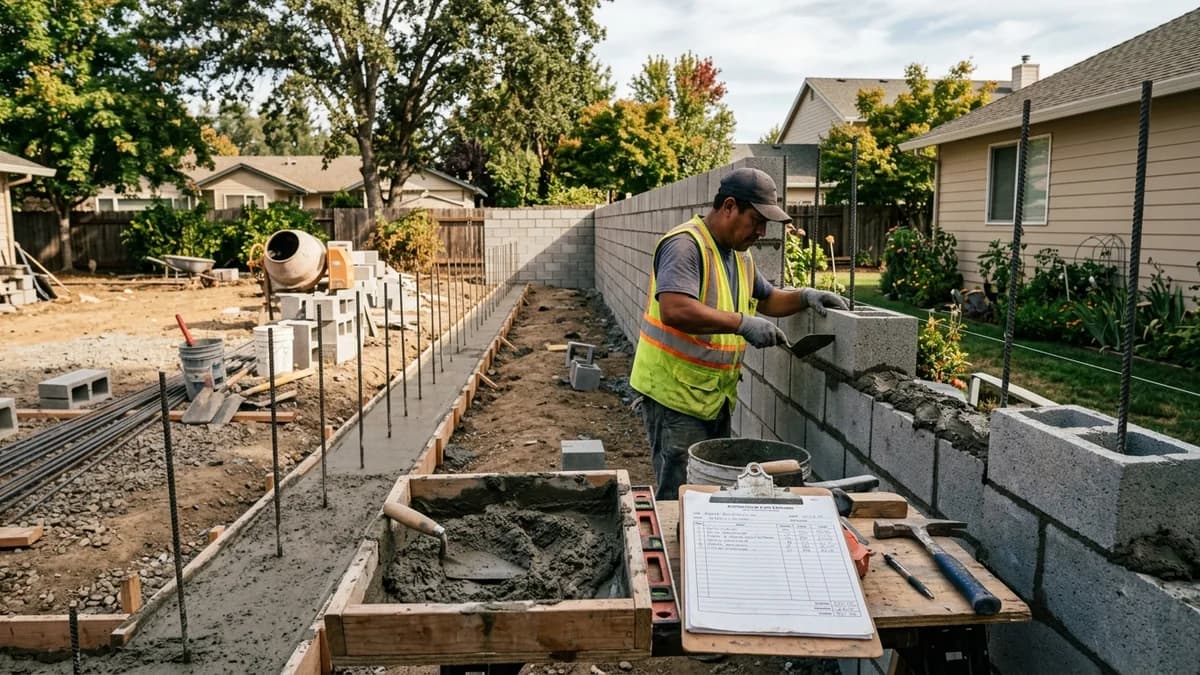
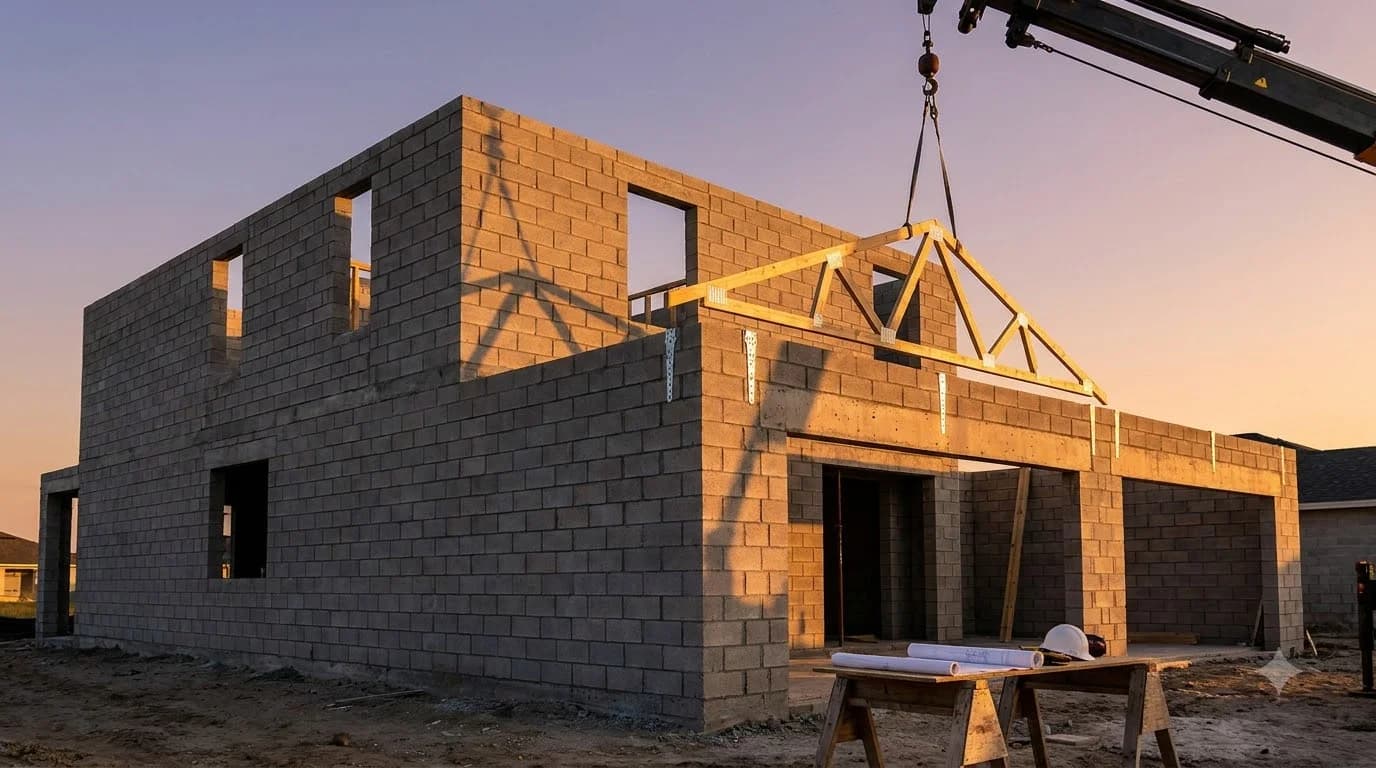
Designing a building with concrete block masonry requires calculating three dimensions: the total length of outer walls, any interior load-bearing partition walls, and the planned doors and windows.
1

Cinder Block Building Calculator (2026)

Add all external wall lengths together. For a simple rectangle, the perimeter is 2 × Length + 2 × Width.

2

Cinder Block Building Calculator (2026)

Multiply the total perimeter by your building's wall height. This gives you the gross square footage of the exterior shell.

3

Cinder Block Building Calculator (2026)

Doors, garage doors, and windows represent open space without blocks. Calculate their area and subtract them from the gross area.

4

Cinder Block Building Calculator (2026)

If you have interior block walls (e.g. firewalls or structural partitions), calculate their area and add it to the net area.

5

Cinder Block Building Calculator (2026)

Divide the net wall area by 0.89 (standard 8x8x16 CMU block face area). Add a 10% waste factor for cuts, corners, and breakage.

6

Cinder Block Building Calculator (2026)

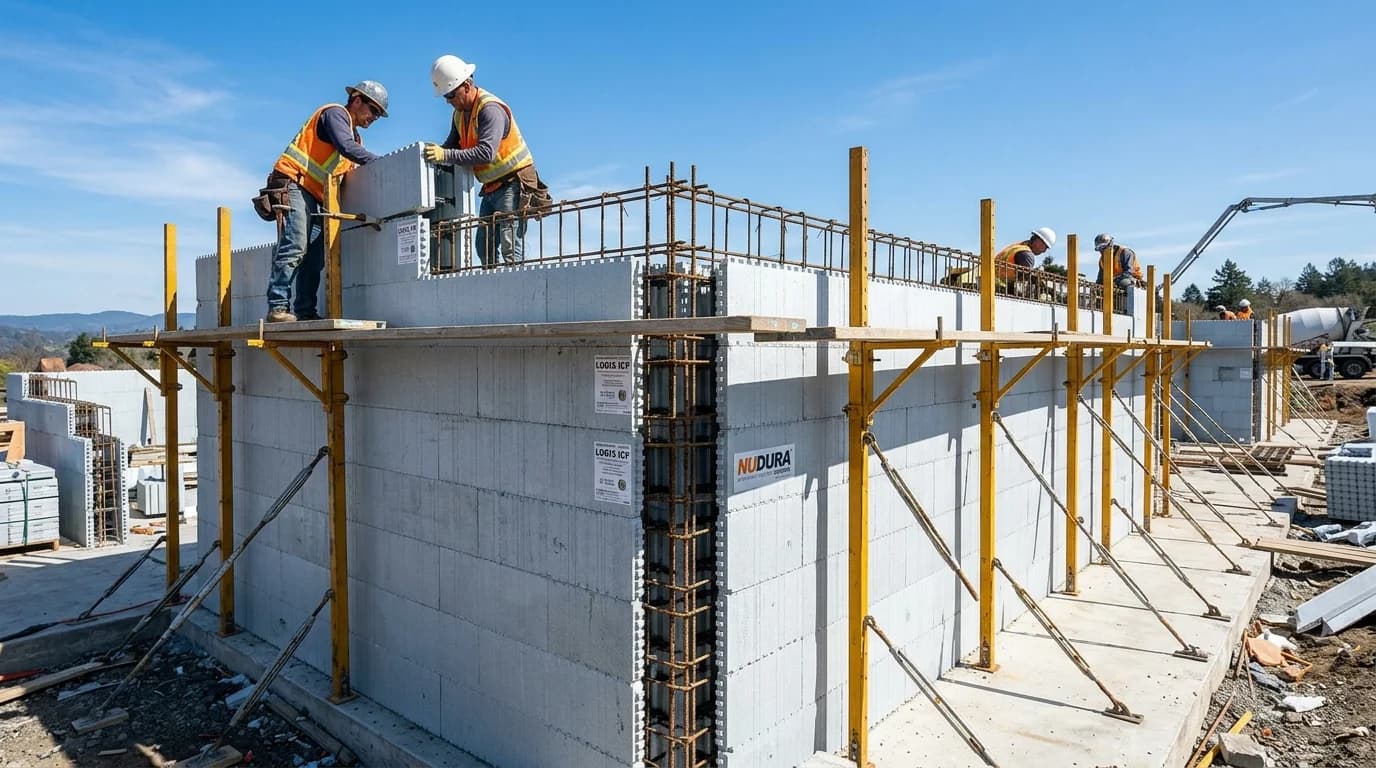
Calculate rebar sticks (20 ft) and concrete core fill grout. Taller walls and load-bearing structures require more vertical reinforcement.

Pro Tips: Building with Block

  • Lintel Blocks (U-Blocks): Always use horizontal steel-reinforced concrete lintels above window and door openings to support the load above.
  • Joint Reinforcement (Ladder Wire): Install horizontal joint reinforcement wire every two courses (16 inches) to control thermal and drying shrinkage cracks.
  • Vertical Grout Jambs: Cores on both sides of all doors and large openings must be reinforced with a vertical rebar and completely filled with concrete grout.
  • Control Joints: Plan control joints every 20–25 feet in straight walls to allow natural expansion and contraction without cracking.
  • Local Codes: Below-grade foundations and habitable spaces have strict regional codes for insulation, waterproofing, and structural engineering. Obtain necessary building permits first.

Block Wall Specifications Comparison

Choosing the right thickness of block is crucial for load-bearing capacity and stability. Refer to the table below for standard structural recommendations:

8-inch CMU

Best For:Standard single-story garages, residential houses, storage shedsLoad Capacity:Moderate load, standard structural capacityStandard Weight:38 lbs

10-inch CMU

Best For:Multi-story load bearing walls, deep crawl spaces, tall garage wallsLoad Capacity:High load capacity, excellent lateral strengthStandard Weight:43 lbs

12-inch CMU

Best For:Commercial buildings, full basement walls, heavy industrial structuresLoad Capacity:Maximum load bearing and extreme lateral soil resistanceStandard Weight:55 lbs

Building inspections & professional engineering

Structural masonry houses and garages must always be built on a soil-verified footing to prevent settlement and structural failure. Ensure your design complies with the local International Building Code (IBC) guidelines.