How to Calculate Planter Bed Materials
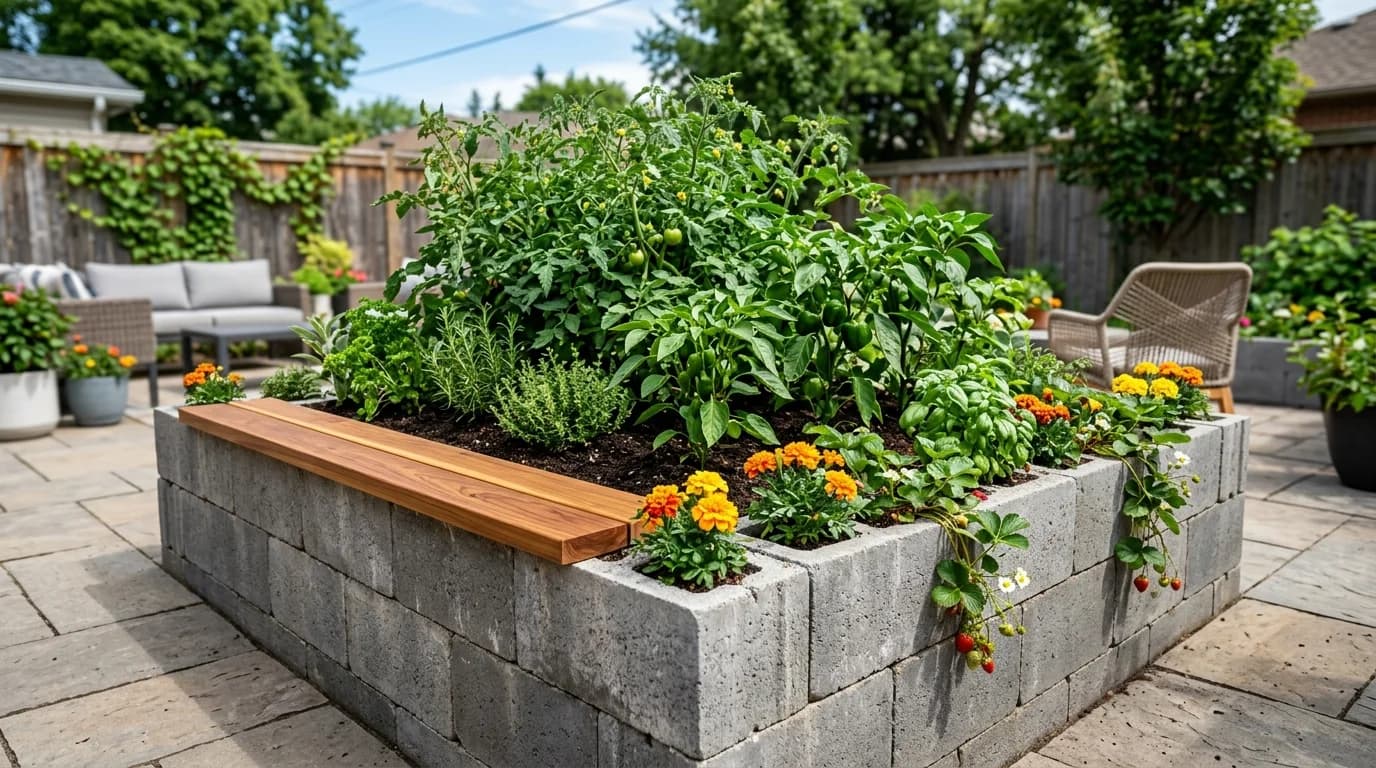
Designing raised garden beds with CMU blocks is a fantastic weekend DIY project. Keep your plants thriving by planning the structure and fill correctly:
Plan your raised planter boxes and garden beds. Estimate blocks, capping stones, masonry glue, and potting soil volumes with precision.
CMU estimates use nominal face dimensions and illustrative mortar yields (30 standard 8-inch units per 80-lb premix bag before waste; thickness adjustments apply). Confirm product yields, unit core volumes, supplier pack sizes and local prices before ordering. Reinforcement quantities are material allowances; laps, hooks, embedment and engineered design are excluded.
Herb Raised Bed
Standard Planter Bed
Deep Raised Planter
Corner L-Bed Planter
| Planter Bed Setup | Dimensions | Bed Height | Est. Blocks (waste incl.) | Organic Soil Fill (1.5 cu ft bags) |
|---|---|---|---|---|
| Herb Raised Bed | 4' × 4' Square | 16 inches | ~18 pcs | ~8 bags |
| Standard Planter Bed | 4' × 8' Rectangular | 16 inches | ~36 pcs | ~21 bags |
| Deep Raised Planter | 4' × 8' Rectangular | 24 inches | ~54 pcs | ~31 bags |
| Corner L-Bed Planter | 10' × 6' L-Shape | 16 inches | ~36 pcs | ~14 bags |
Designing raised garden beds with CMU blocks is a fantastic weekend DIY project. Keep your plants thriving by planning the structure and fill correctly:
Select a 4 ft width so you can comfortably weed the center of the bed from both sides without stepping on the garden soil.
Standard heights are 16 inches (2 courses). Deep root crops like carrots and potatoes benefit from 24 inches (3 courses).
Use standard 8" blocks. They offer excellent structural weight and double as comfortable seating blocks.
Always calculate block counts with a 10% waste buffer to account for cracked corners or cutting layout blocks.
Use heavy polyurethane masonry adhesive tubes to glue courses. It provides a secure bond without messy cement mixes.
Our calculator automatically subtracts block thickness to estimate exact potting soil cubic yards and retail bags.
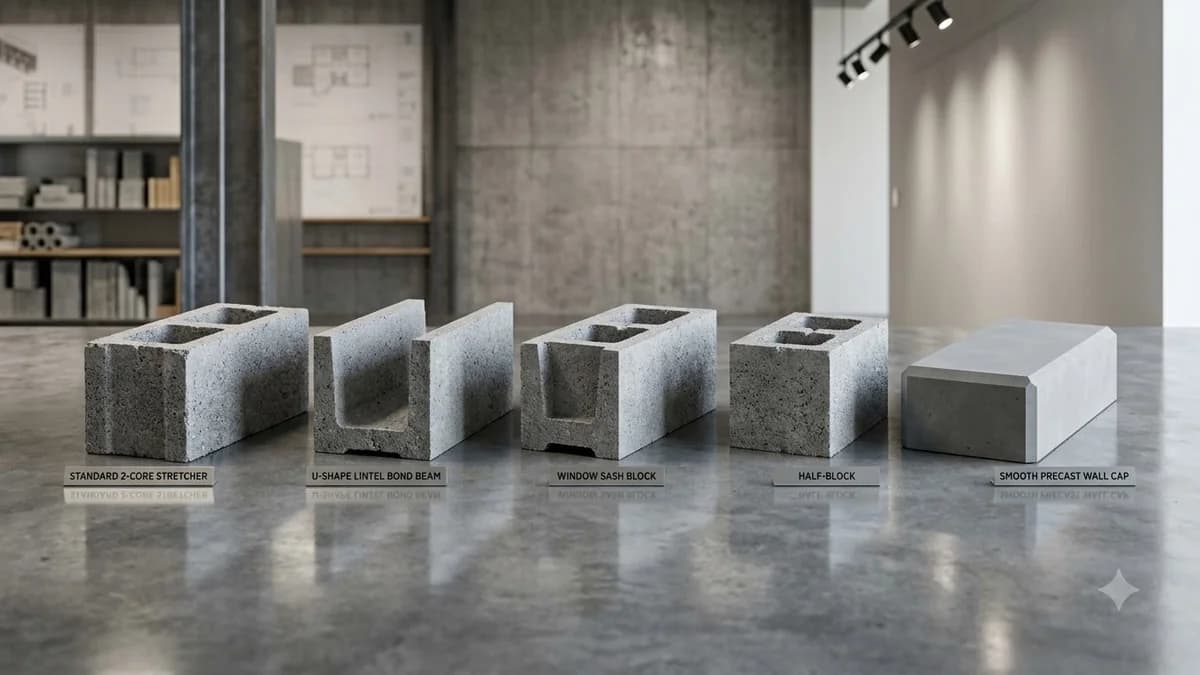
Choosing the correct block configuration affects stability, comfort, and cost:
4-inch Standard CMU
6-inch Standard CMU
8-inch Standard CMU
| Block Sizing | Planter Bed Application | Stability Profile | Unit Weight |
|---|---|---|---|
| 4-inch Standard CMU | Shallow border flower beds under 12 inches high, decorative dividers | Partition only, lightweight, easy handling | 22 lbs |
| 6-inch Standard CMU | Standard raised vegetable beds under 18 inches high, patio boxes | Moderate lateral pressure support | 28 lbs |
| 8-inch Standard CMU | Deep raised vegetable beds (2 ft high or more), heavy backyard terracing | High structural stability and perfect seating width | 38 lbs |
Building permits & footer requirements
Raised vegetable planter beds under 3 feet high do not require continuous concrete footers, allowing them to be laid directly over flat turf or base sand safely.
In 2026, building a standard 4' × 8' double-course (16" high) garden bed costs $110 to $180 total for materials. This includes 36 standard 8-inch CMU blocks ($1.75–$2.25 each), capping paver stones ($1.50 each), landscape polyurethane adhesive ($12–$18), and organic bulk garden blend soil ($35–$65 per cubic yard).
Material estimates depend on the selected dimensions, product yields, and waste allowance.
Verified guidance on soil bag counts, plant safety, and garden planter assembly.
Illustrative takeoffs with stated assumptions; verify project quantities
Example 30 blocks per 80-lb bag; check product yield
Standard residential yard & garden wall run
Enter area and bedding depth; verify product coverage
Standard 8x8x16 nominal coverage benchmark
Specialized tools for foundation, core fill, and budgeting
Patio and driveway interlocking pavers with base sand
Straight and multi-wall runs with mortar and waste allowances
Standard modular bricks, mortar joints and wythe layouts
Dry block weight, filled core weight and hauling loads
Practical guides to block sizing, material estimates and project planning