How to Calculate Structural Weight
Estimating the total dead load of a masonry structure is critical to prevent shifting foundations. Use these systematic steps to compute total weights:
Calculate the total weight of your masonry materials. Essential to specify footing load depths, concrete piers, and delivery flatbed limits.
CMU estimates use nominal face dimensions and illustrative mortar yields (30 standard 8-inch units per 80-lb premix bag before waste; thickness adjustments apply). Confirm product yields, unit core volumes, supplier pack sizes and local prices before ordering. Reinforcement quantities are material allowances; laps, hooks, embedment and engineered design are excluded.
4" Partition CMU
6" Medium CMU
8" Standard CMU
12" Heavy CMU
| CMU Dimension | Lightweight Class | Heavyweight Class | Est. Mortar / Joint | Concrete Core Fill (Full) |
|---|---|---|---|---|
| 4" Partition CMU | 18 lbs | 24 lbs | ~3 lbs | ~12 lbs (full) |
| 6" Medium CMU | 22 lbs | 30 lbs | ~4 lbs | ~22 lbs (full) |
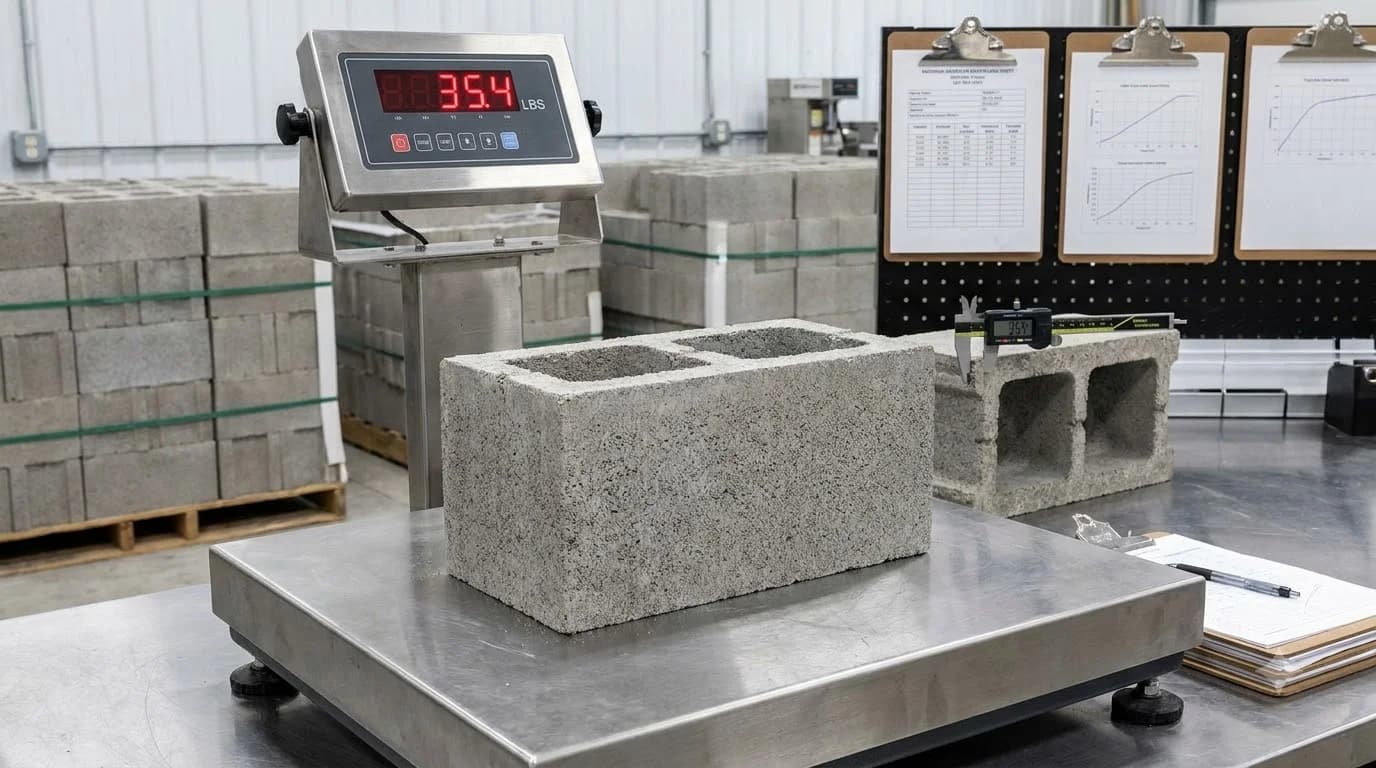
| 8" Standard CMU | 28 lbs | 38 lbs | ~5 lbs | ~32 lbs (full) |
| 12" Heavy CMU | 43 lbs | 55 lbs | ~7 lbs | ~51 lbs (full) |
Estimating the total dead load of a masonry structure is critical to prevent shifting foundations. Use these systematic steps to compute total weights:
Look up unit weight under ASTM C90 (Standard normal-weight: 38–42 lbs; medium: 31–35 lbs; lightweight: 26–28 lbs).
Multiply total wall blocks (including 5–10% waste) by dry block weight. For example, 200 standard units equal ~7,600 lbs.
Add approximately 5 lbs of dry masonry mortar mix per standard 8x8x16 block laid to bond elements together.
Standard 8" blocks have an internal cell capacity of 0.22 cu ft. Select solid fill or 32"/48" core spacing.
Core grout weighs ~145 lbs/cu ft (~32 lbs per filled cell). Multiply filled blocks by 32 lbs to find concrete dead load.
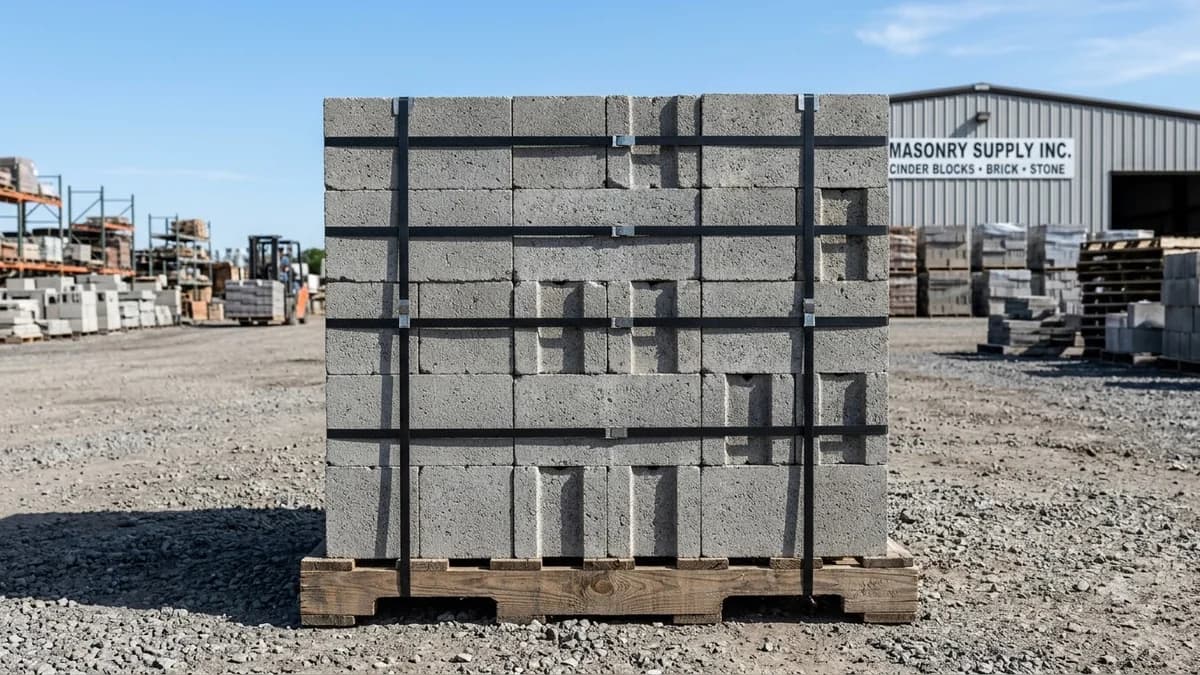
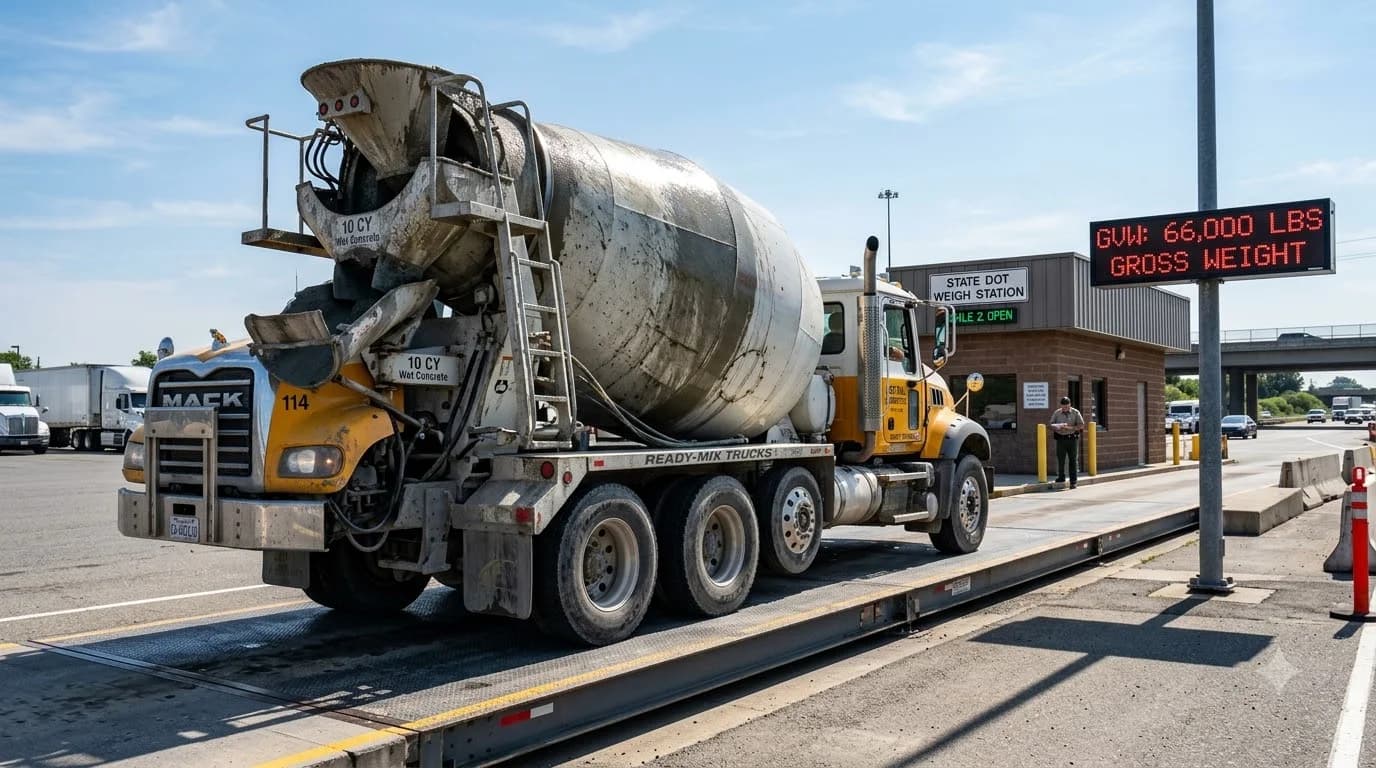
Standard banded pallets hold 108–120 blocks (4,100–4,600 lbs). Verify truck bed payload before loading.
Masonry Transportation & Delivery
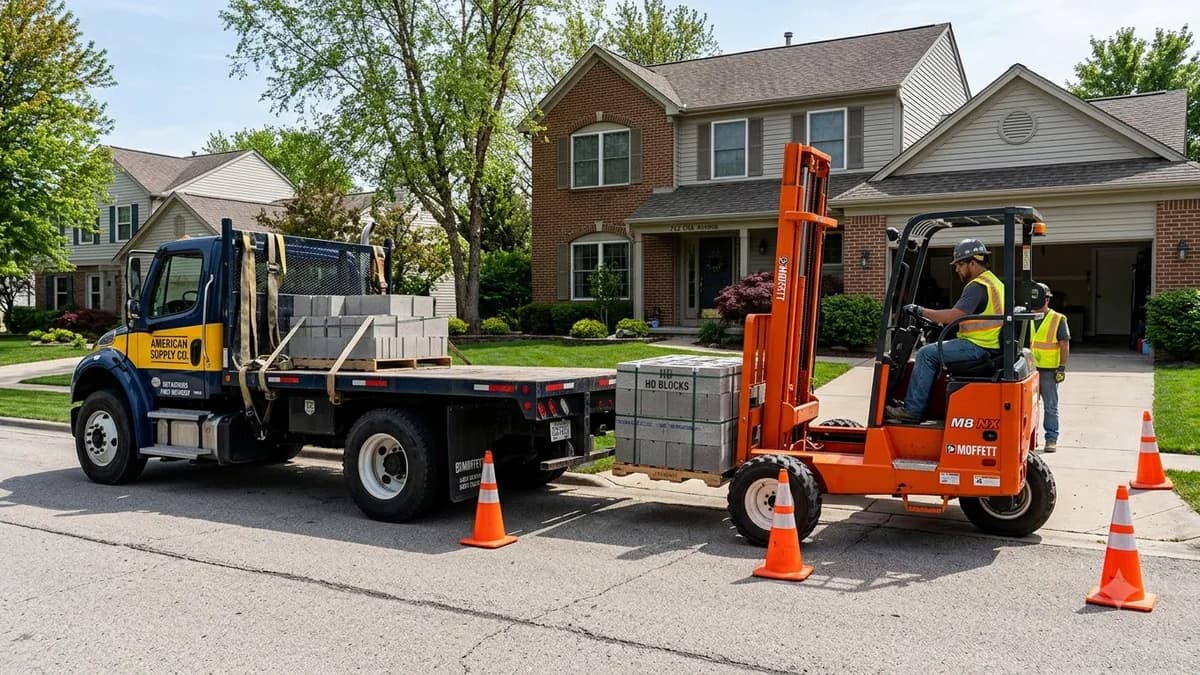
A standard heavyweight 8x8x16 pallet contains 108 to 120 blocks and weighs between 4,100 and 4,600 lbs dry. A standard 1/2-ton pickup (F-150 / Silverado 1500) can safely haul only 35 to 45 blocks per trip. A full pallet requires a 1-ton truck or flatbed trailer with forklift offload.
Material estimates depend on the selected dimensions, product yields, and waste allowance.
Verified technical data on block density tiers, grout dead loads, and hauling capacities.
Illustrative takeoffs with stated assumptions; verify project quantities
High-volume logistics & bulk pallet freight
Example: 0.22 ft³ cores × 1/6 fill; excludes waste
Standard residential yard & garden wall run
Standard 8x8x16 nominal coverage benchmark
Specialized tools for foundation, core fill, and budgeting
Commercial load-bearing concrete masonry units
Heavyweight structural blocks and bond beam units
Actual vs nominal dimensions and ASTM C90 specifications
Turnkey material costs, rebar, delivery and mason labor
Practical guides to block sizing, material estimates and project planning