Direct Benchmark: Cost of a Full Concrete Truck in 2026
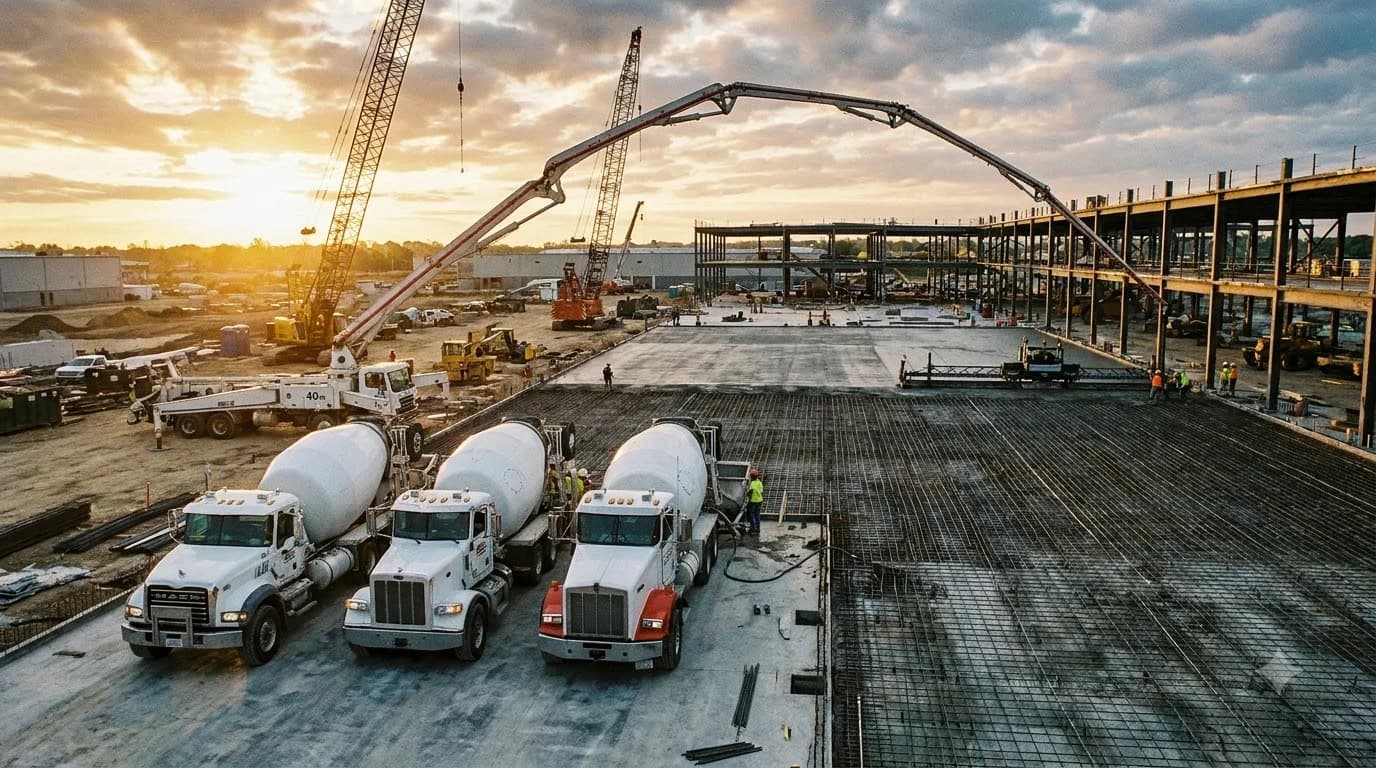
In 2026, ordering a full 10-cubic-yard truck of standard 3,500–4,000 PSI concrete costs between $1,450 and $1,750 total out-of-pocket ($135 to $165 per cubic yard base price + $35–$50 environmental/fuel fee + sales tax). If ordering less than 5 yards, expect a $60 to $150 short-load fee. Unload times are capped at 50–70 minutes before demurrage standby penalties ($2.00–$3.50/min) begin.
1. Ready-Mix Concrete Pricing by Compressive Strength (PSI)
The cost of concrete from a ready-mix batch plant is determined primarily by the cementitious content required to hit specified compressive strengths (pounds per square inch at 28 days, per ASTM C94):
Best for: Footings, fence post collars, retaining wall trenches, and interior residential basement floors not subject to vehicular traffic or outdoor freezing. Contains 5.0 sacks of Portland cement per cubic yard.
Best for: Patios, walkways, exterior driveways, and garage slabs (IRC Section R506 requirement in moderate-to-severe freeze zones). Contains 5.5 to 6.0 sacks of cement plus air-entrainment (5%–7% microscopic air voids for freeze-thaw protection).
Best for: Commercial aprons, heavy RV pads, barn floors, and suspended structural decks. Formulated with high-early strength cement and superplasticizers for rapid set and abrasion resistance.
- Fiber Mesh Reinforcement: +$8.00 to $12.00 / yd
- Non-Chloride Accelerator (Winter): +$10.00 to $16.00 / yd
- Retarder (Hot Summer): +$6.00 to $10.00 / yd
- Hot Water Heating: +$8.00 to $14.00 / yd
2. Master Delivery Invoice Breakdown: 10-Yard Concrete Truck
When you review a real invoice from a ready-mix supplier (e.g., Cemex, Martin Marietta, Heidelberg, or local independent plants), line items extend well beyond basic cubic yardage:
| Invoice Item | Rate / Metric | Total Cost | Contractor Notes |
|---|---|---|---|
| 4,000 PSI Air-Entrained Mix | 10.0 cu yd @ $148.00 / yd | $1,480.00 | Standard 4-inch slump residential mix |
| Environmental & Washout Fee | EPA compliant disposal flat fee | $38.00 | Standard mandatory batch plant charge |
| Fuel Surcharge | Distance indexed (12 miles) | $24.00 | Covers diesel freight to jobsite |
| Free Discharge Time (60 Min) | 6 min × 10 cu yd | $0.00 | Included in base yardage price |
| Demurrage Overtime (20 Min) | 20 min @ $2.50 / min | $50.00 | Assessed if crew unloads slowly (80 min total) |
| State & Local Sales Tax (7.0%) | 7.0% on taxable material | $103.60 | Exempt for certified tax-exempt builders |
| Total Turnkey Delivered Cost | 10.0 Cubic Yards | $1,695.60 | Effective rate: $169.56 / cu yd delivered |
3. Short-Load Fees: Why Small Orders Cost More per Yard
A commercial transit mixer costs approximately $110 to $140 per hour to operate (driver wages, diesel, insurance, and equipment depreciation). When a truck is dispatched with only 2 or 3 yards, the plant cannot cover its trucking overhead on yardage alone. Consequently, plants enforce a Short-Load Fee Schedule:
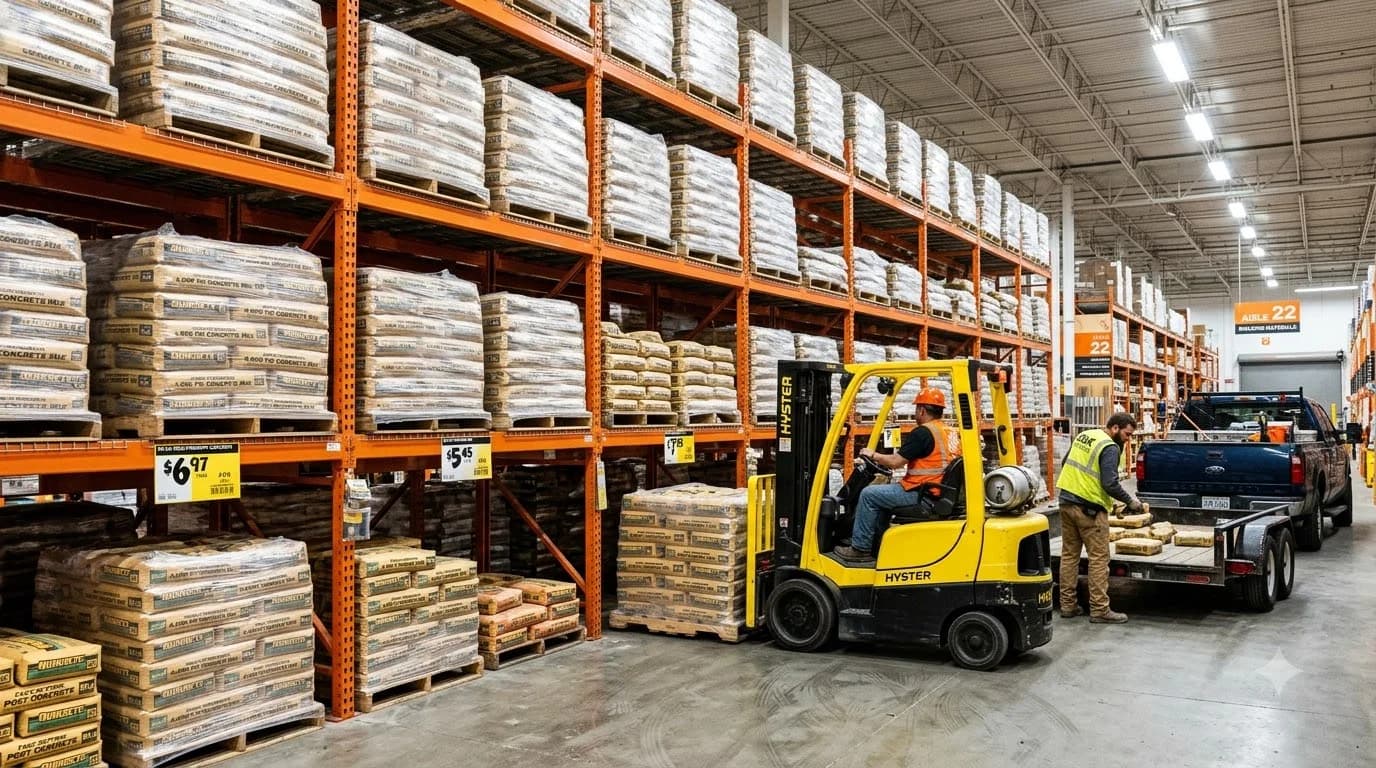
The Breakeven Threshold: If you only need 1.5 cubic yards, you will pay roughly $225 for concrete plus a $160 short-load fee ($385 total). Mixing 68 bags of 80-lb concrete purchased at Home Depot for $6.25 per bag costs $425. For anything over 1.5 yards, ordering ready-mix is almost always cheaper than buying individual bags.
4. Unloading Time Limits & Demurrage Standby Penalties
Under ASTM C94 guidelines, the maximum allowable time between initial plant batching and complete discharge into forms is 90 minutes. Beyond 90 minutes, hydraulic hydration causes internal crystal knitting; continuing to agitate the drum breaks these bonds, resulting in severe compressive strength loss.
Ready-mix companies grant 5 to 7 minutes of free discharge time per cubic yard. For a 10-yard delivery, your free window is 60 minutes from the time the truck arrives at your curb. If you attempt to wheelbarrow 10 yards of concrete with a 2-man crew, it takes an average of 140 minutes (200 wheelbarrow loads). You will incur 80 minutes of standby overtime at $2.50 per minute, adding $200.00 in penalties to your bill!
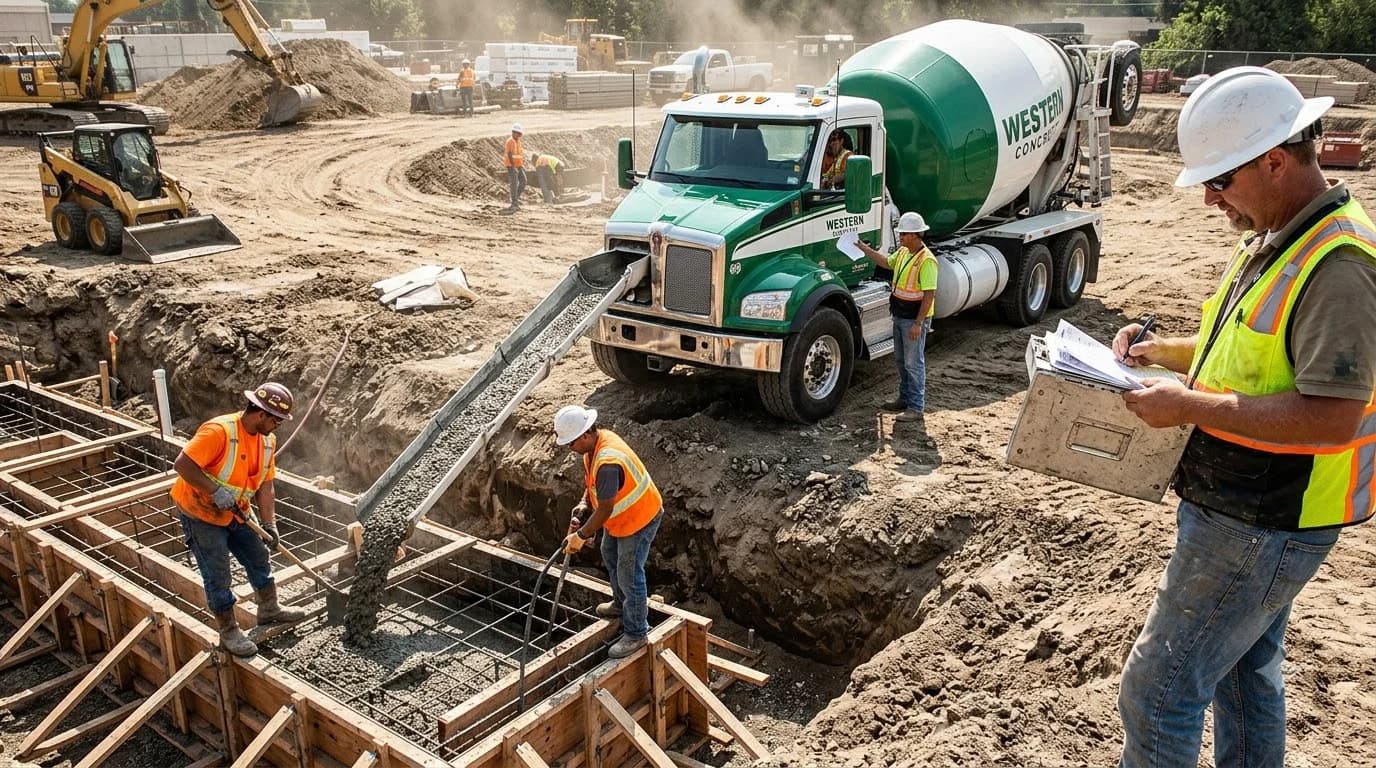
To pour 10 yards directly from the truck chute within 60 minutes, you need at least 4 to 5 experienced workers equipped with two wheelbarrows or power buggies, two concrete rakes/come-alongs, and screed boards ready to work simultaneously.
5. Do You Need a Concrete Pump Truck? ($ Cost Comparison)
Ready-mix truck chutes extend only 12 to 16 feet from the rear bumper. If your backyard patio or pool deck is 60 feet behind your house with no truck access, you must choose between manual buggies or renting a concrete pump:
Trailer Line Pump (Ground Pipe)
- Cost: $550 to $750 for 4-hour minimum ($2.00 to $3.00 per yard pumped).
- Reach: Flexible 2-inch to 4-inch rubber hoses run up to 300 feet through gates and around landscaping.
- Pumping Rate: Discharges a 10-yard truck in 25 to 35 minutes, eliminating demurrage fees entirely.
Boom Pump Truck (Hydraulic Crane)
- Cost: $900 to $1,400 for 4-hour minimum.
- Reach: Articulated 32-meter (105 ft) or 40-meter boom lifts high over house roofs, fences, and trees.
- Pumping Rate: Empties a full 10-yard truck in under 15 minutes. Mandatory for elevated walls and second-story slabs.
6. Five Costly Mistakes When Ordering a Concrete Truck
If your math calculates exactly 8.0 yards, never order 8.0 yards. Subgrade compaction dips, formwork flexing, and residual concrete left inside the drum hopper will leave you 10 to 15 square feet short of finishing your slab. Calling a second truck for a 0.5-yard “clean-up balance” incurs a $180 short-load fee plus 2 hours of crew downtime. Always add 10% to your order.
A loaded concrete truck weighs over 33 tons. Placing that concentrated load onto a residential 4-inch concrete driveway or asphalt path will instantly crush buried sewer pipes, collapse drainage culverts, and shatter the concrete slab.
Every concrete truck driver is legally required by EPA clean-water regulations to wash out their discharge chutes before driving on public highways. If you do not provide a designated plastic-lined washout pit or wheelbarrow for excess rinse slurry, the driver cannot clean their equipment, leading to cleanup disputes and potential EPA fines.
Failing to specify desired slump results in receiving whatever batch consistency the plant technician sets. Always request a 4-inch or 5-inch slump for standard flatwork. Avoid late Friday afternoon dispatch times when highway traffic jams cause transit delays that push mix age near the 90-minute expiration limit.
Telling the driver to “wash it down” with 15 gallons of truck water makes concrete easier to rake, but drastically alters the water-cement ratio. Every 1 gallon of extra water added to a cubic yard reduces 28-day compressive strength by 200 PSI and increases drying shrinkage cracking.
Need Exact Yardage for Your Project?
Calculate total cubic yards, number of truckloads, and local ready-mix delivered costs in seconds.
Frequently Asked Questions
How many cubic yards does a concrete truck hold?
Most commercial transit mixer drums have a maximum volumetric capacity of 9 to 11 cubic yards. However, because 10 cubic yards of concrete weighs roughly 40,500 lbs (pushing total gross vehicle weight to 66,000–72,000 lbs), state DOT highway bridge weight limits usually cap delivery loads at 9.0 to 10.0 cubic yards per truck.
What is the average cost of a full 10-yard truck of concrete in 2026?
In 2026, a full 10-yard truck of 3,500 to 4,000 PSI ready-mix concrete costs between $1,450 and $1,750 delivered, including base material ($135–$160/yd), environmental fuel fees ($35–$50), and local sales tax. Saturday deliveries or cold-weather hot-water batching add $100 to $200 in surcharges.
What is a short-load fee for concrete?
Ready-mix batch plants assess a short-load surcharge when you order less than their minimum profitable truck capacity (usually 4 to 6 cubic yards). Fees range from $60 to $180 per delivery. For example, ordering 2 cubic yards at $150/yd may incur an additional $120 short-load fee, bringing your actual cost to $210 per yard.
How much time do you get to unload a concrete truck?
Ready-mix suppliers include 5 to 7 minutes of free unloading time per cubic yard ordered. For a full 10-yard truck, you have approximately 50 to 70 minutes to discharge the drum. Once that free window expires, dispatch bills demurrage (standby fees) at $2.00 to $3.50 per minute ($120 to $210 per hour).
Can a loaded concrete truck drive on a residential driveway?
Never let a loaded concrete truck drive onto a typical 4-inch residential concrete or asphalt driveway. A fully loaded mixer weighs 66,000 to 74,000 lbs—far exceeding the 8,000 to 10,000-lb limit of residential slabs. Drivers will ask you to sign a property damage waiver before crossing your curb. Keep the truck in the street and use buggies or a pump.
Building Codes & Primary Standards Cited
Standard Specification for Ready-Mixed Concrete
Defines batch plant tolerances, slump measuring criteria, time-to-discharge limits (90 minutes), and compressive strength testing.
Guide for Measuring, Mixing, Transporting, and Placing Concrete
Establishes best practices for chute discharge, pump line operations, and preventing segregation during transit delivery.
Federal Highway Administration (FHWA) Regulation 23 CFR 658.17
Governs legal gross axle and vehicle weight ratings (GVWR) for commercial multi-axle concrete transit mixers.
Estimations adhere to standard North American modular 3/8-inch mortar joint physics and 5% to 10% material waste factors. Local municipal building inspectors, stamped architectural blueprints, and local frost depth requirements supersede general reference guidelines.
Popular Quick Estimates
Pre-engineered takeoffs & benchmarks matched to this project
Related Calculators
Specialized tools for foundation, core fill, and budgeting
Cost per square foot, material prices and excavation budget
Turnkey material costs, rebar, delivery and mason labor
Installed cost per square foot and full budget forecast
Heavyweight structural blocks and bond beam units
Blogs & Construction Guides
Technical articles, IRC code standards, rebar schedules & freight logistics
How Much Does a Bag of Concrete Cost? (2026 Prices)
How Much Do Concrete Blocks Cost? (2026 CMU Prices)
How Much Does a Yard of Concrete Cost? (2026 Pricing)