How to Calculate Privacy Fence Blocks
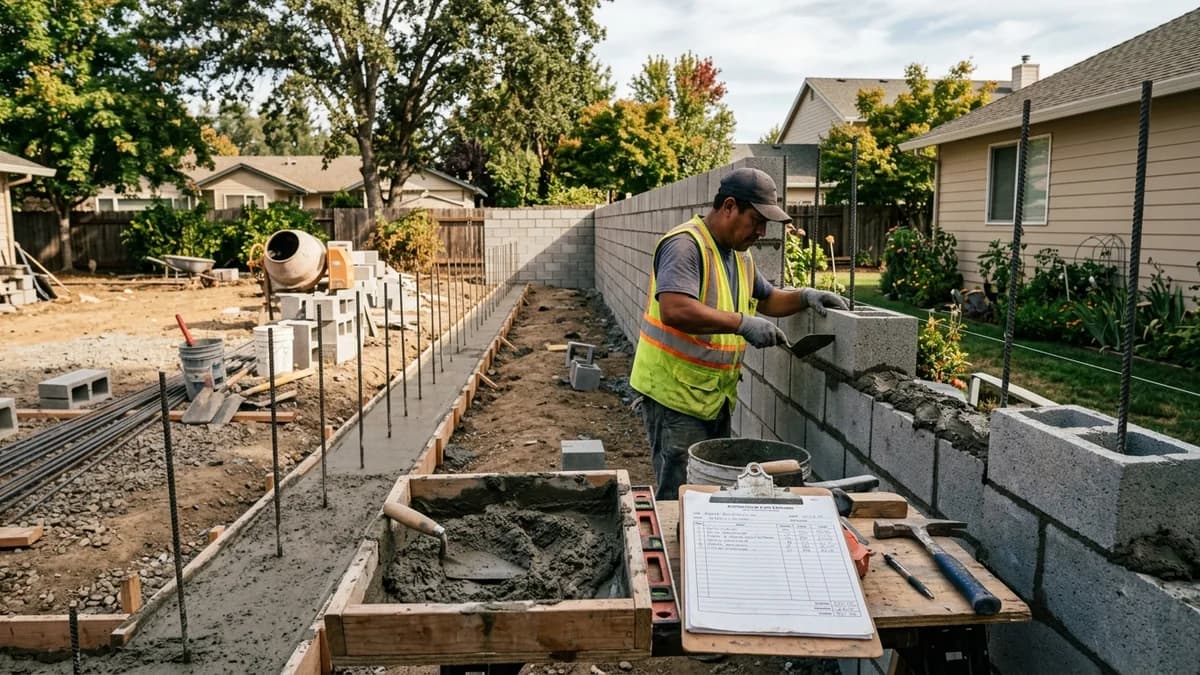
Free-standing masonry walls are exposed to severe wind forces (lateral load). Planning a fence demands proper reinforcement and choosing the best structural design:
Plan and estimate materials for residential privacy boundary walls. Supports standard uniform walls or decorative wind-resistant pilaster & panel designs under IRC Section R606.
Masonry Perimeter Fence & Screen Wall Takeoff Proposal
cinderblockscalculator.com • Inquiries: cindercalc@gmail.com
Date: 10/22/2026
Code: IRC Section R606 & NCMA TEK
Wind Rating: Standard (Sheltered)
| Total Fence Run | 100' Linear Feet | Wall Height | 6' Finished Height |
| Design Architecture | Uniform Flat Wall | Pilaster Piers | None (Flat Continuous) |
| Gross Masonry Area & Footing: | 600 sq ft • 16" × 8" Continuous Footing | ||
| Material Item | Industry Specification | Takeoff Quantity | Packaging / Logistics |
|---|---|---|---|
| Fence Panel CMU | 8" ASTM C90 Structural | 675 blocks | Standard wall running bond |
| Total Wall Units (with Waste) | +10% Cuts & Breakage | 743 units | ~7 Pallets (~25,650 lbs) |
| High-Bond Masonry Mortar | ASTM C270 Type S (1,800 PSI) | 25 bags | 80 lb bags |
| Reinforcing Steel Rebar (#4) | Grade 60 (Vertical & Bond Beam) | 14 sticks | 20 ft standard lengths |
| Core Concrete Grout | ASTM C476 Ready-Mix Core Fill | 3.08 yd³ | Cubic Yards |
| Poured Continuous Footing | 3,000 PSI Ready-Mix (16"×8") | 3.3 yd³ | Cubic Yards |
| Estimated Turnkey Cost Range (Materials + Masonry Labor): | $9,017 – $12,585 | ||
Prepared By (Contractor / Estimator):
Signature & Date
Client Acceptance & Authorization:
Signature & Date
Free-standing masonry walls require continuous poured concrete footings beneath local frost depth. Local wind zone engineering may require additional rebar dowels.
CinderCalc Verified Takeoff
CMU estimates use nominal face dimensions and illustrative mortar yields (30 standard 8-inch units per 80-lb premix bag before waste; thickness adjustments apply). Confirm product yields, unit core volumes, supplier pack sizes and local prices before ordering. Reinforcement quantities are material allowances; laps, hooks, embedment and engineered design are excluded.
Standard Privacy (Flat)
Wind-Resistant (Pilaster)
Low Garden Boundary (Flat)
Tall Security Wall (Pilaster)
| Fence Setup Style | Dimensions | Est. Blocks (waste incl.) | Structural Columns |
|---|---|---|---|
| Standard Privacy (Flat) | 100' Long × 6' High | ~745 pcs | No column columns |
| Wind-Resistant (Pilaster) | 100' Long × 6' High | ~745 total | Pilasters every 10 ft |
| Low Garden Boundary (Flat) | 50' Long × 4' High | ~250 pcs | Simple garden partition |
| Tall Security Wall (Pilaster) | 120' Long × 8' High | ~1,230 total | Pilasters every 10 ft |
Free-standing masonry walls are exposed to severe wind forces (lateral load). Planning a fence demands proper reinforcement and choosing the best structural design:
Select flat walls for low garden heights (under 5 ft). Select decorative pilaster columns for standard 6 ft or 8 ft privacy walls.
Multiply total linear length by planned height to find gross area. 100 ft length at 6 ft height yields 600 square feet.
If building columns every 10 ft, calculate standard 12" square blocks for columns first, then deduct their widths from panels.
Divide net panel area by 0.89 to obtain standard panel blocks. Add 10% waste buffer to cover corners and cuts.
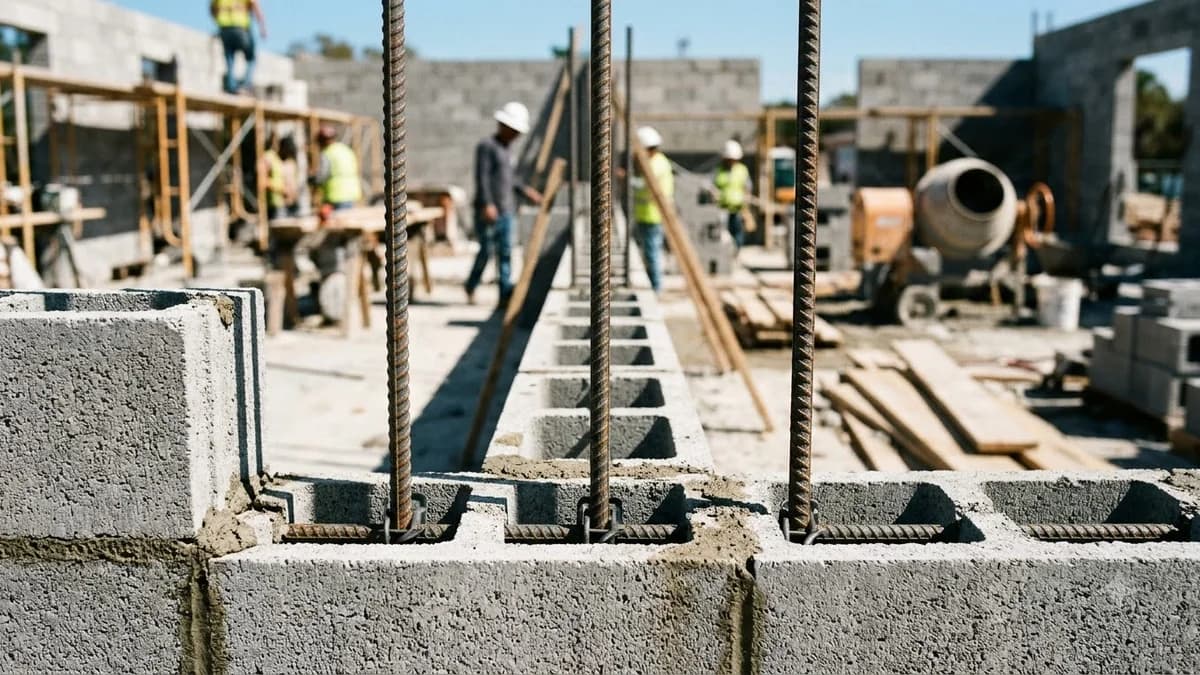
Privacy fences require vertical steel rebar every 48 inches and horizontal tie courses. Pilaster cores are always solid grouted.
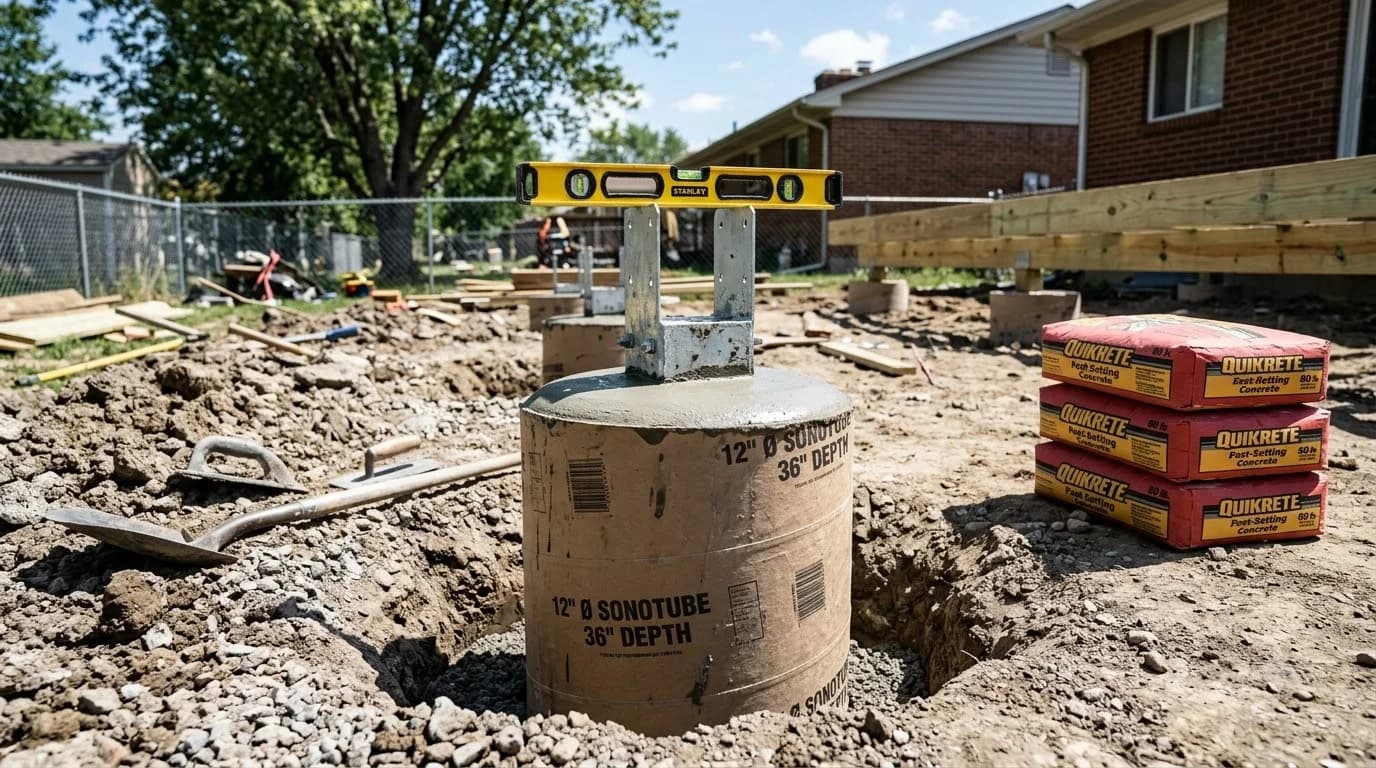
A continuous 16" wide × 8" deep concrete perimeter footing is standard to anchor the heavy fence shell below local frost lines.
Choosing the correct block thickness affects structural capacity, lateral wind load resistance, and cost:
6-inch CMU Panel
8-inch CMU Panel
12-inch Pilaster
| Block Type | Fence Application | Structural Wind Load Profile | Unit Weight |
|---|---|---|---|
| 6-inch CMU Panel | Lightweight privacy panels built between thick columns | Excellent cost savings, moderate load rating | 28 lbs |
| 8-inch CMU Panel | Standard flat boundary walls, heavy panel walls between columns | High structural load & lateral wind capacity | 38 lbs |
| 12-inch Pilaster | Thick structural columns placed every 8 to 12 feet to anchor panels | Maximum lateral support, wind-resistant anchors | 50 lbs |
Building clearances & zoning guidelines
Free-standing boundary walls are highly regulated by municipal zoning rules regarding maximum height limitations (typically 6 ft maximum in residential areas) and setbacks. Check local bylaws before beginning construction.
Building a masonry privacy fence in 2026 typically costs $55 to $85 per linear foot turnkey (including continuous concrete trench footing, ASTM C90 units, Type S mortar, vertical steel rebar, and professional masonry labor). DIY homeowners purchasing materials directly spend approximately $15 to $25 per linear foot.
Material estimates depend on the selected dimensions, product yields, and waste allowance.
Expert contractor answers on fence block counts, wind load pilasters, and 2026 costs.
Illustrative takeoffs with stated assumptions; verify project quantities
Standard residential yard & garden wall run
Large perimeter enclosure or garage structure
Example: 0.22 ft³ cores × 1/6 fill; excludes waste
Example 30 blocks per 80-lb bag; check product yield
Specialized tools for foundation, core fill, and budgeting
Straight and multi-wall runs with mortar and waste allowances
Estimate block quantities; structural design is separate
Core grout volume in cubic yards and 80-lb pre-mix bags
Installed cost per square foot and full budget forecast
Practical guides to block sizing, material estimates and project planning