1. Parging vs. Stucco: Which Technique Do You Need?
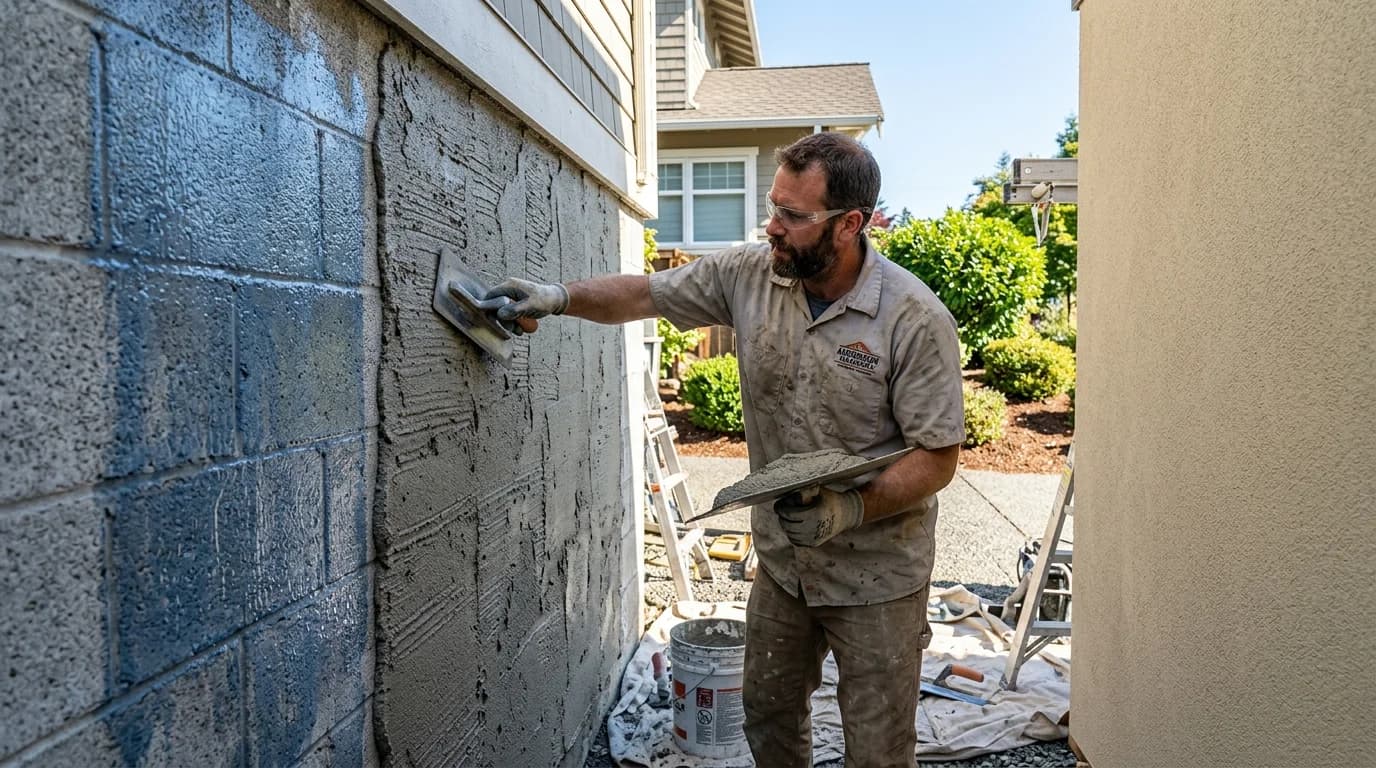
Parge Coating (1/4" to 3/8")
A dense leveling slurry of Portland cement, fine sand, and water applied in a thin coat with a rectangular steel trowel. Its primary purpose is functional protection: sealing foundation stem walls, eliminating mortar voids, and providing a clean gray barrier before applying tar damp-proofing.
Architectural Stucco (1/2" Total)
A structural 2-coat system comprising a 3/8" leveling base coat followed by an integral color coat or sand-float texture finish. Stucco completely conceals the block matrix and creates a seamless Mediterranean, Spanish, or contemporary smooth wall finish.
2. Surface Prep: Preventing Delamination & Cracks
Ninety percent of stucco failures over concrete masonry stem from inadequate surface preparation. Concrete blocks must be preconditioned before a single trowel of plaster touches them:
A. Pressure Wash & Remove Efflorescence
Pressure wash the wall at 2,000 to 2,500 PSI to blast away dirt, moss, and form oils. If white mineral efflorescence salts are present, scrub with a solution of 1 part muriatic acid to 10 parts water, followed by a thorough fresh water rinse. Stucco cannot bond to chalky salt deposits.
B. Flush the Mortar Joints (Stop Ghosting)
Standard masonry features 3/8-inch concave tooled mortar joints. If you plaster directly over concave joints, the stucco will be thicker over the joints and thinner over the block faces. Because thick plaster dries slower than thin plaster, the mortar grid will "telegraph" through your finish as faint outlines. Trowel mortar flush into all concave joints 24 hours in advance.
C. Bring Blocks to SSD (Saturated Surface Dry) Condition
ASTM C90 blocks have an extremely high suction rate. If you apply wet stucco to dry blocks, the concrete acts like a dry sponge, instantly sucking water out of the plaster. Without water, the cement cannot complete its chemical hydration, causing the stucco to dry into a fragile, crumbly powder. Mist the wall with a hose 30 minutes before plastering; the surface should be dark and damp, with zero standing puddles.
3. The 2-Coat Direct Application Process (ASTM C926)
Roll or Brush the Acrylic Bonding Agent
Roll a coat of non-re-emulsifiable acrylic concrete bonding adhesive (e.g., Quikrete Concrete Bonding Adhesive or SikaLatex) across the damp block wall. You can plaster directly into the tacky adhesive, or mix the bonding liquid directly into your stucco mixing water for maximum chemical tenacity.
Apply the 3/8" Base Scratch Coat
Using a 12x4-inch stainless steel plastering trowel held at a 30-degree angle, scoop mixed stucco from your hawk and apply upward pressure against the wall, spreading a uniform 3/8-inch thick layer. Once the plaster loses its wet sheen and becomes thumb-print hard (roughly 30 to 45 minutes), comb horizontal grooves across the surface using a notched scarifier rake. These horizontal ridges provide mechanical tooth for the finish coat.
Moist-Cure the Base Coat (48 Hours)
Do not rush the finish coat! Spray the scratch coat with a fine water mist twice daily for 48 hours. Proper moist-curing allows Portland cement crystals to intertwine, developing maximum tensile strength and preventing micro-cracks.
Apply the 1/8" Texture Finish Coat
Apply a thin 1/8-inch decorative finish coat. For a classic sand-float finish, rub a damp green sponge float in circular motions across the semi-firm plaster to bring the aggregate grains to the surface. For a modern skip-trowel finish, hold a flexible trowel flat and skip small mounds of plaster across the wall.
4. Cinder Block Stucco Cost Comparison (2026)
| Application Method | Materials Included | DIY Cost / Sq Ft | Contractor Turnkey / Sq Ft |
|---|---|---|---|
| 1-Coat Foundation Parge | Type S cement + sand + bonding liquid (1/4") | $0.75 – $1.20 | $4.50 – $7.00 |
| 2-Coat Direct Portland Stucco | 3/8" scratch coat + 1/8" sand float finish | $1.40 – $2.10 | $7.50 – $11.00 |
| 3-Coat Traditional Stucco with Lathe | Metal lath + scratch + brown + color coat (7/8") | $2.60 – $3.80 | $11.00 – $16.50 |
Need to calculate block wall square footage for stucco bags?
Use our square footage calculator to estimate cement bags, sand tons, and bonding gallon needs.
Frequently Asked Questions
Can you apply stucco directly to cinder blocks without metal lathe?
Yes! Because unpainted ASTM C90 concrete masonry units have a rough, open-pore texture and high aggregate suction, stucco can be applied directly to the block without metal diamond lath (known as direct-applied 2-coat stucco). However, you must apply an acrylic bonding agent or pre-dampen the blocks to SSD (saturated surface dry) condition to prevent delamination.
What is the difference between parging and stucco?
Parging is a thin single-coat or two-coat Portland cement application (1/4 to 3/8 inch thick) used primarily to smooth, seal, and waterproof below-grade foundation stem walls and basement blocks. Stucco is a multi-coat architectural plaster system (often 1/2 to 7/8 inch thick) featuring textured sand floats, skip-trowel finishes, or synthetic acrylic color coats designed for aesthetic exterior facades.
Why does stucco crack or fall off cinder block walls?
Stucco delaminates from cinder blocks for three main reasons: (1) The blocks were bone-dry when plastered, sucking the mix water out before the cement could chemically hydrate; (2) The blocks were previously painted or covered in slick efflorescence salts; or (3) The mortar joints were not struck flush, causing differential drying shrinkage cracks along the grid lines (known as 'ghosting').
How thick should stucco be on a concrete block wall?
Under ASTM C926 standards for direct masonry application, a 2-coat system requires a base scratch/brown coat of 3/8-inch thickness, followed by a finish coat of 1/8-inch thickness, for a total nominal thickness of 1/2-inch (12.7 mm).
Building Codes & Primary Standards Cited
Standard Specification for Application of Portland Cement-Based Plaster
Specifies proportions, base coat thicknesses (3/8 in), and moist-curing times for direct masonry plaster.
Standard Specification for Aggregate for Job-Mixed Portland Cement-Based Plaster
Governs clean washed plaster sand sieve gradations required for crack-free scratch and float coats.
Standard Specification for Plastic (Stucco) Cement
Regulates plasticized cement formulations incorporating air entrainment for workability and freeze-thaw durability.
Estimations adhere to standard North American modular 3/8-inch mortar joint physics and 5% to 10% material waste factors. Local municipal building inspectors, stamped architectural blueprints, and local frost depth requirements supersede general reference guidelines.
Popular Quick Estimates
Pre-engineered takeoffs & benchmarks matched to this project
Related Calculators
Specialized tools for foundation, core fill, and budgeting
Straight and multi-wall runs with mortar and waste allowances
Standard 8-inch series wall and reinforcement estimates
Dry block weight, filled core weight and hauling loads
Turnkey material costs, rebar, delivery and mason labor
Blogs & Construction Guides
Technical articles, IRC code standards, rebar schedules & freight logistics
How to Cover Interior Cinder Block Walls (Top 5 Ways)
How to Paint Cinder Block Walls: Primer & Sealer Guide
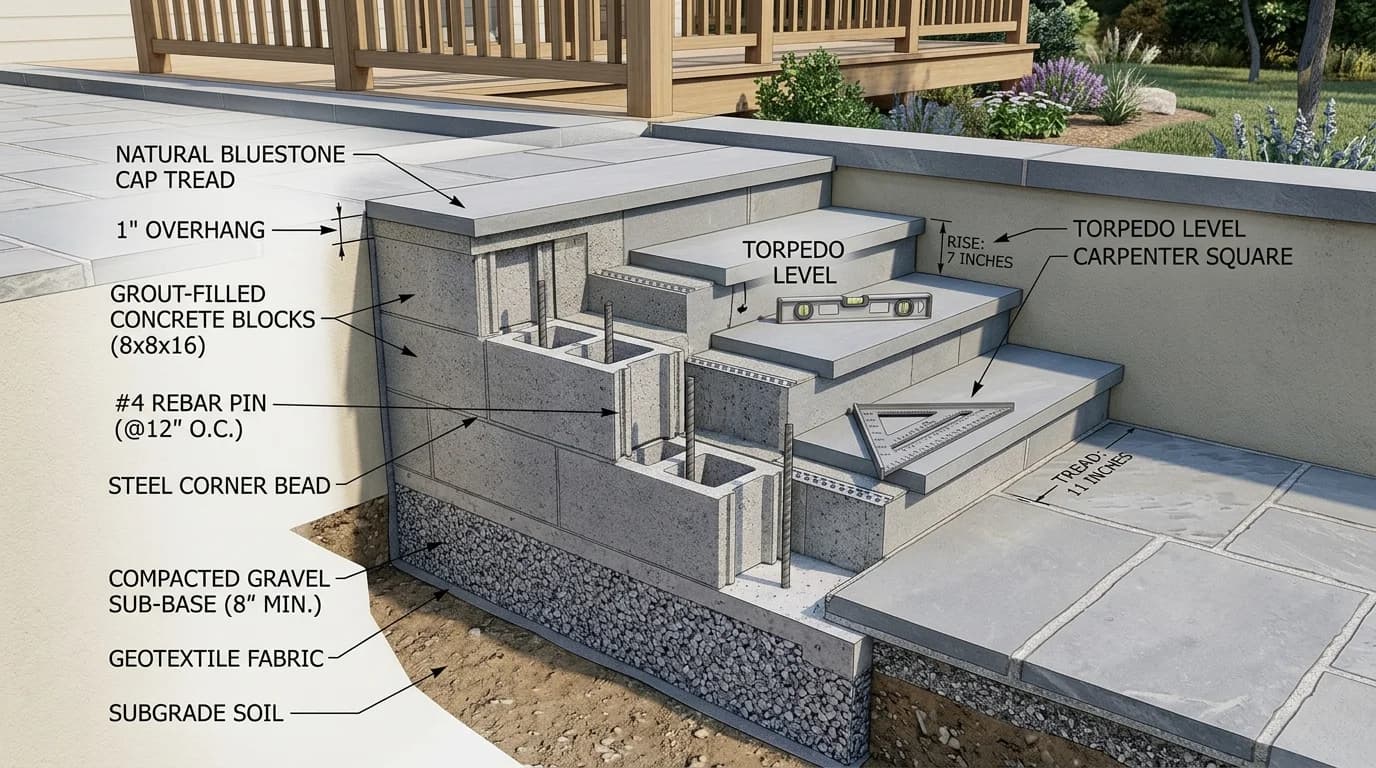
How to Build Outdoor Cinder Block Steps & Stairs