2026 Turnkey Driveway Price Benchmarks
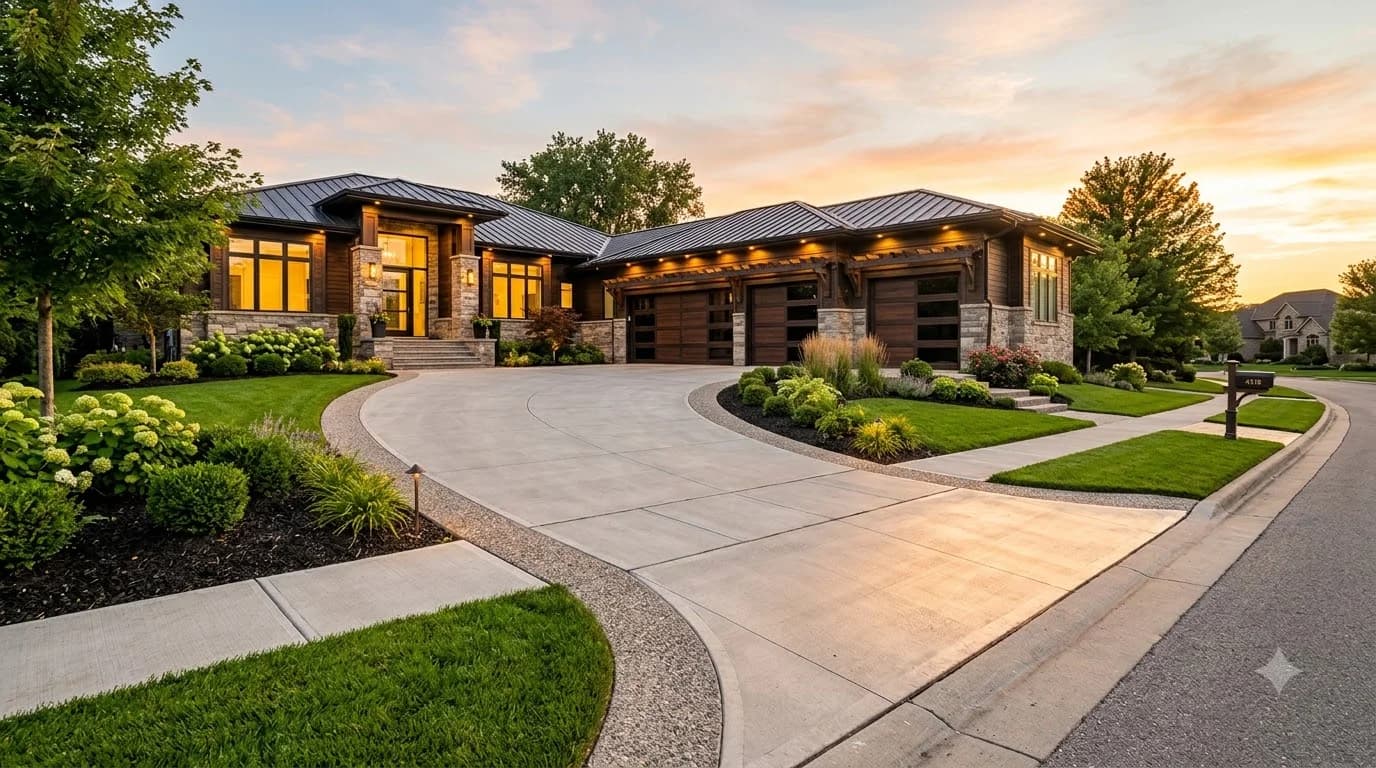
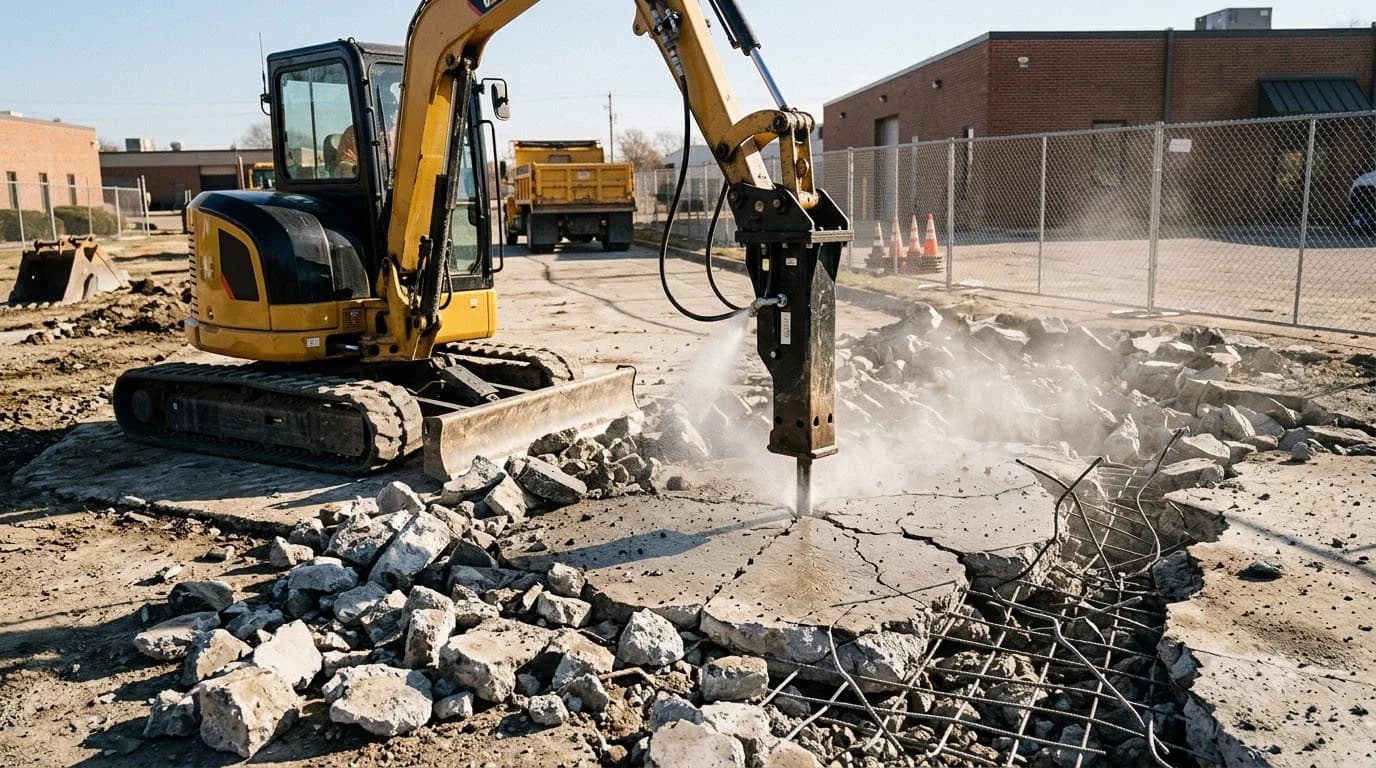
In 2026, a standard broom-finished concrete driveway costs $7.00 to $11.00 per square foot fully installed ($4,500 to $7,000 for a typical 600 sq ft 2-car driveway). Decorative stamped finishes average $14.00 to $20.00 per sq ft ($8,500 to $13,000). If tearing out an existing damaged slab, add $1.75 to $2.75 per sq ft ($1,100 to $1,700) for machine demolition, hauling, and landfill tipping fees.
1. Cost Breakdown per Square Foot (Labor vs Material)
To evaluate contractor bids accurately, review what goes into the typical $7.00 to $11.00 per square foot standard broom-finished driveway installation:
- 4,000 PSI Concrete (4″ slab): $1.80 – $2.25 / sq ft ($145–$165 per cubic yard delivered).
- Crushed Aggregate Subbase (4″ #57/CR-6): $0.75 – $1.10 / sq ft delivered and spread.
- Reinforcement: $0.55 – $0.85 / sq ft (#4 Grade 60 rebar grid on 18″ centers with chairs).
- Forms & Curing: $0.30 / sq ft (lumber stakes, expansion felt, and curing sealer).
- Excavation & Grading: $1.00 – $1.75 / sq ft (skid steer operator, laser grading, and plate compactor).
- Formwork & Rebar Tying: $0.90 – $1.50 / sq ft (setting 2×4/2×6 edge forms and pinning).
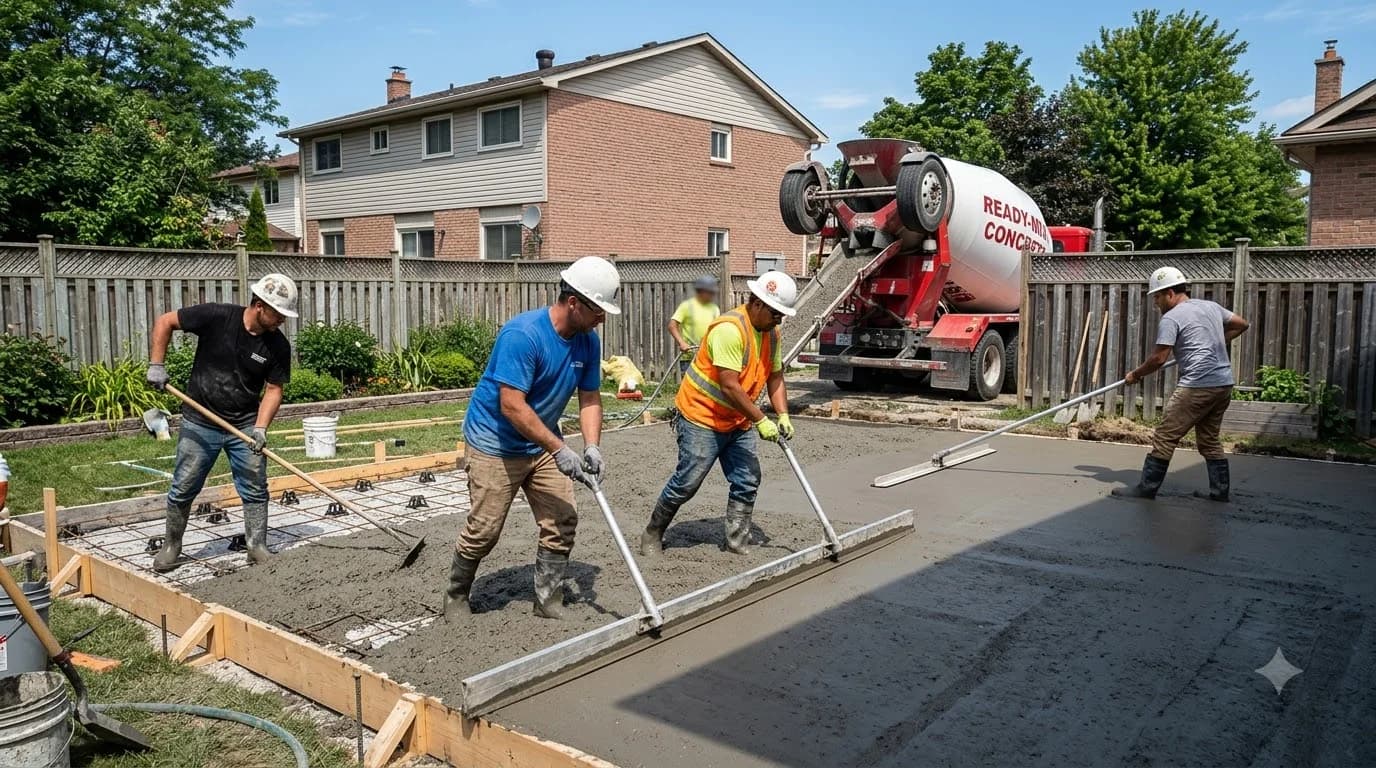
- Pouring, Screeding & Floating: $1.25 – $2.00 / sq ft (chute handling, come-alongs, bull float).
- Joint Tooling & Broom Finish: $0.75 – $1.25 / sq ft (cutting joints at 1/4 depth and non-slip broom).
2. Master Sizing, Yardage & Pricing Matrix (2026)
Review total material yardage and turnkey project budgets across typical residential driveway dimensions:
| Driveway Type & Size | Sq Footage | 4″ Concrete (Cu Yd) | 5″ Concrete (Trucks) | Standard Broom Finish | Stamped Decorative | Full Replacement* |
|---|---|---|---|---|---|---|
| 1-Car Small (10 ft × 20 ft) | 200 sq ft | 2.5 yd³ | 3.1 yd³ | $1,600 – $2,300 | $2,800 – $4,000 | $2,100 – $3,000 |
| 1-Car Long (12 ft × 35 ft) | 420 sq ft | 5.2 yd³ | 6.5 yd³ | $3,150 – $4,600 | $5,800 – $8,400 | $4,100 – $6,000 |
| 2-Car Standard (18 ft × 35 ft) | 630 sq ft | 7.8 yd³ | 9.7 yd³ | $4,700 – $6,900 | $8,800 – $12,600 | $6,100 – $8,900 |
| 2-Car Extended (20 ft × 50 ft) | 1,000 sq ft | 12.3 yd³ | 15.4 yd³ | $7,500 – $11,000 | $14,000 – $20,000 | $9,800 – $14,200 |
| 3-Car Suburban (24 ft × 45 ft) | 1,080 sq ft | 13.3 yd³ | 16.7 yd³ | $8,100 – $11,900 | $15,100 – $21,600 | $10,600 – $15,300 |
| Circular Estate Driveway | 1,800 sq ft | 22.2 yd³ | 27.8 yd³ | $13,500 – $19,800 | $25,200 – $36,000 | $17,600 – $25,500 |
*Full replacement includes old slab jackhammer demolition, removal, disposal fees, and new subbase re-compaction.
3. Engineering Specifications: Thickness, Rebar, & Control Joints (ACI 330R)
Driveways endure dynamic wheel axle loads that basement and patio slabs never experience. To achieve a 40-year lifespan under American Concrete Institute (ACI 330R) site pavement guidelines, insist on the following engineering specs in your contractor agreement:
A 4-inch slab has a load capacity of approximately 8,000 lbs. If you park 3/4-ton or 1-ton trucks, an RV, or a boat trailer, increase thickness to 5 or 6 inches. Increasing thickness from 4″ to 5″ boosts structural load capacity by nearly 50% while adding only 15% to your concrete material cost.
Concrete cannot bridge soft, uncompacted subgrade. Excavate 8 to 10 inches deep. Install a 4 to 6-inch layer of crushed stone aggregate (#57 washed gravel or dense-grade CR-6) and compact it in 2-inch lifts using a vibrating plate compactor to 95% Modified Proctor density.
Welded wire fabric (WWF) is cheap, but workers routinely step it down to the dirt during the pour, rendering it useless. Specify #4 (1/2-inch) Grade 60 rebar on 18-inch centers supported by plastic or concrete chairs 1.5 inches above the gravel base.
ACI 330R mandates that joint spacing in feet must not exceed 2 to 2.5 times the slab thickness in inches. For a 4-inch slab, joints must be cut every 8 to 10 feet in both directions. Joint depth must be at least 1/4 the slab thickness (1.0 inch deep), cut within 6 to 12 hours before internal tensile shrinkage cracks form.
4. Decorative Finishes: Stamped, Colored, & Exposed Aggregate
Homeowners looking for high curb appeal often upgrade beyond standard white-gray broom finishes:
Integral Color ($9 – $13/sq ft)
Synthetic iron oxide pigments are mixed into the ready-mix truck drum, coloring the concrete all the way through. Resists scratching and fading.
Exposed Aggregate ($10 – $14/sq ft)
Surface chemical retarder is sprayed after floating. The following morning, top cement paste is pressure-washed off to reveal colorful river gravel. Highly slip-resistant.
Stamped Patterns ($14 – $20/sq ft)
Polyurethane texture mats imprint slate, ashlar, or cobblestone textures into the plastic concrete, highlighted with contrasting antique release powder and high-gloss sealer.
5. Five Costly Mistakes That Ruin Concrete Driveways
Pouring on top of uncompacted topsoil or clay ensures that the driveway will sink, crack, and buckle after the first wet spring. Subgrade soil swells when saturated and shrinks when dry. A 4 to 6-inch compacted gravel base is non-negotiable.
Rock salt (sodium chloride) and calcium chloride force water to freeze and thaw dozens of times per day inside microscopic surface pores, scaling and spalling the top 1/8 inch of your new driveway. Use coarse sand for winter traction during the first two years, and seal the driveway with a penetrating silane/siloxane water repellent.
Cutting joints every 15 or 20 feet guarantees that the concrete will develop ugly diagonal shrinkage cracks right down the middle of each panel. Never exceed 10 feet between joints on a 4-inch slab.
Parking an SUV or truck on concrete on day 3 or 4 will induce hairline micro-fractures in the green concrete that manifest as full-depth structural cracks months later. Keep yellow caution tape up and barricade the driveway for at least 7 full days.
A driveway must have a minimum drainage slope of 1/8 to 1/4 inch per foot (1% to 2% grade) away from the house and garage door. A dead-level driveway allows rain to pond, which freezes into black ice sheets and causes subgrade saturation.
Planning a Driveway Project?
Calculate total concrete cubic yards, gravel base tonnage, rebar needs, and 2026 contractor costs.
Frequently Asked Questions
How much does it cost to replace a 2-car concrete driveway?
Replacing a standard 2-car concrete driveway (18x35 ft, or roughly 630 square feet) costs between $5,600 and $8,800 turnkey in 2026. This includes $1,100 to $1,800 for jackhammer demolition, hauling, and dump fees ($1.75 to $2.75/sq ft), plus $4,500 to $7,000 for subbase grading and pouring a new 4-inch 4,000 PSI slab ($7.00 to $11.00/sq ft).
How thick should a concrete driveway be?
A residential driveway should be at least 4 inches thick for standard passenger cars and SUVs. If you park heavy duty pickup trucks (F-250/3500), large delivery vehicles, boat trailers, or RVs, the driveway should be poured 5 to 6 inches thick with #4 rebar reinforcement on 18-inch centers.
How long before you can drive on a new concrete driveway?
You can walk on new concrete after 24 to 48 hours. However, you must wait at least 7 full days before parking standard passenger vehicles, and at least 14 to 28 days before parking heavy trucks or RVs. Concrete reaches approximately 70% of its design compressive strength at 7 days and full design strength at 28 days.
Is concrete cheaper than asphalt for a driveway?
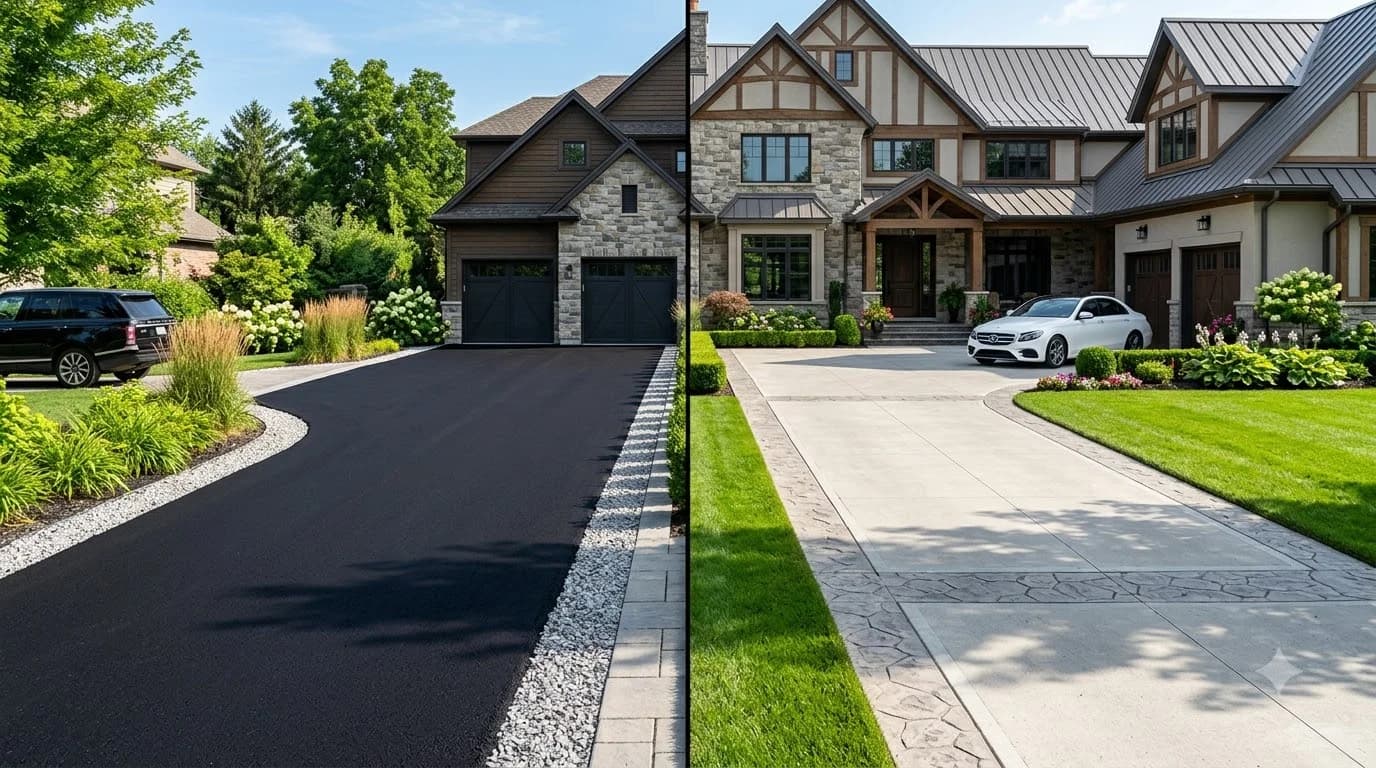
Asphalt has a lower upfront cost ($4.00 to $7.00 per square foot versus $7.00 to $11.00 for concrete). However, concrete lasts 30 to 50 years with minimal maintenance, whereas asphalt requires sealcoating every 3 to 5 years and complete repaving every 15 to 20 years. Over a 30-year lifecycle, concrete is frequently more cost-effective.
Why do concrete driveways crack?
Concrete shrinks approximately 1/16 inch per 10 feet as moisture evaporates during hydration. Without properly spaced control joints (spaced no more than 8 to 10 feet apart for a 4-inch slab), random shrinkage cracking will occur. Other causes include poorly compacted subgrades, tree roots, and subfreezing water expansion.
Building Codes & Primary Standards Cited
Guide for the Design and Construction of Concrete Site Paving
American Concrete Institute guidelines establishing subgrade compaction, slab thickness, and control joint spacing.
Standard Specification for Ready-Mixed Concrete
Governs compressive strength testing, batch consistency, and minimum 5% to 7% air entrainment for freeze-thaw durability.
International Residential Code - Concrete Floors (on Ground)
Mandates minimum 3.5-inch slab thickness, base material preparation, and compressive strengths for residential flatwork.
Estimations adhere to standard North American modular 3/8-inch mortar joint physics and 5% to 10% material waste factors. Local municipal building inspectors, stamped architectural blueprints, and local frost depth requirements supersede general reference guidelines.
Popular Quick Estimates
Pre-engineered takeoffs & benchmarks matched to this project
Related Calculators
Specialized tools for foundation, core fill, and budgeting
Turnkey material costs, rebar, delivery and mason labor
Cost per square foot, material prices and excavation budget
Installed cost per square foot and full budget forecast
Cubic yards, bags, and slab volume for flatwork and footings
Blogs & Construction Guides
Technical articles, IRC code standards, rebar schedules & freight logistics
Cost to Pour Concrete per Square Foot (2026 Price Guide)
Asphalt vs Concrete: Cost, Lifespan & Driveway Guide
How Much Does Concrete Removal Cost? (2026 Price Guide)