1. 2026 Concrete Removal Cost by Slab Type & Thickness
The cost to demolish concrete depends primarily on slab thickness, presence of steel reinforcement, site accessibility, and hauling distance to a recycling facility.
| Project Type | Thickness | Demo Labor | Hauling & Dump Fees | Total Turnkey / Sq Ft |
|---|---|---|---|---|
| Sidewalk / Walkway | 3.5" – 4.0" | $1.75 – $2.75 | $1.00 – $1.75 | $2.75 – $4.50 |
| Backyard Patio (Plain) | 4.0" | $2.00 – $3.50 | $1.25 – $2.00 | $3.25 – $5.50 |
| Driveway (Reinforced Wire/Rebar) | 4.0" – 5.0" | $3.00 – $5.50 | $1.50 – $2.50 | $4.50 – $8.00 |
| Garage Slab (Heavy Mesh/Rebar) | 5.0" – 6.0" | $3.50 – $6.00 | $2.00 – $3.00 | $5.50 – $9.00 |
| Footings / Foundation Walls | 8.0" – 12.0" | $6.00 – $12.00 | $3.50 – $5.50 | $9.50 – $17.50 |
2. Weight Calculation & Heavy Debris Dumpster Logistics
The biggest financial mistake homeowners and rookie contractors make during demolition is severely underestimating the weight of broken concrete rubble.
Standard residential roll-off dumpsters are limited by Department of Transportation (DOT) highway weight limits to a maximum payload of 3 to 5 tons. If you toss 10 tons of concrete into a regular 30-yard dumpster, the hauler will refuse to pick it up or charge an overage penalty of $75 to $120 per excess ton ($450 to $720 in unexpected surcharges).
Always request a dedicated "Low-Boy" 10-Yard Concrete-Only Container. These sturdy steel containers have reinforced axles and lower sidewalls, specifically engineered for inert rock and concrete disposal with flat-rate heavy weight allowances.
3. Demolition Methods: Sledgehammer vs. Breaker vs. Skid-Steer
Choosing the appropriate demolition tool directly determines labor hours and equipment rental expenditures:
Manual Sledge & Pry Bar
Cost: $40 tool purchase.
Rate: 15 – 25 sq ft/hr.
Viable only for unreinforced sidewalks and patios under 100 sq ft. Digging out dirt beneath the edge with a pry bar before striking creates an air gap that allows fracture.
Electric / Air Breaker (60-lb)
Cost: $90 – $140 / day rental.
Rate: 40 – 75 sq ft/hr.
Ideal for patios, walkways, and small driveways up to 500 sq ft. Powerful enough to fracture 4-to-6-inch concrete rapidly without requiring heavy machine access.
Skid-Steer Hydraulic Hammer
Cost: $350 – $550 / day rental.
Rate: 200 – 400 sq ft/hr.
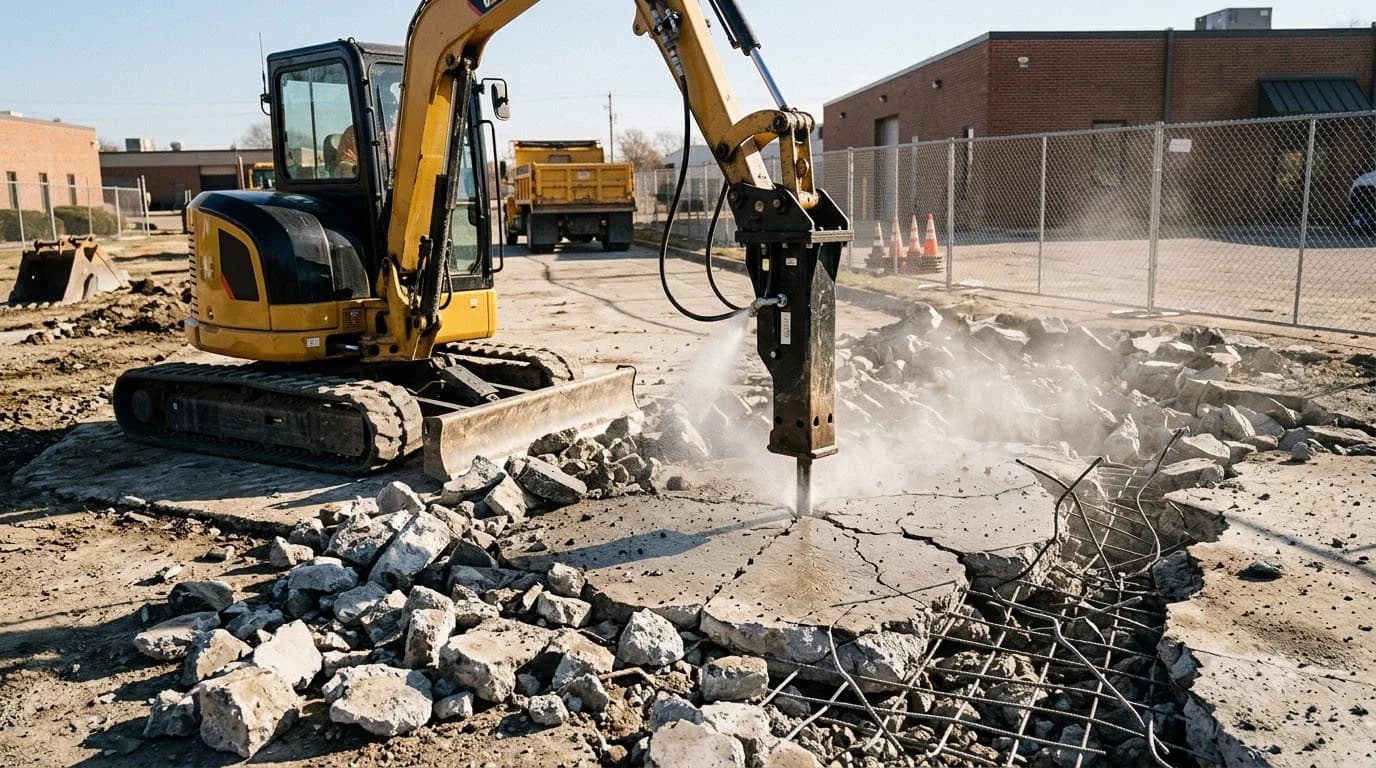
Standard for full driveways and commercial slabs. Delivers 500+ ft-lbs of impact energy, shattering heavy reinforced slabs while the loader bucket scoops rubble into haulers.
4. Five Hidden Costs That Inflate Demolition Invoices
1. Cutting Embedded Steel Rebar
Breaking concrete around grid rebar is easy; cutting hundreds of steel grid intersections requires oxy-acetylene torches or angle grinders, adding $1.50 to $2.50/sq ft in specialty labor.
2. Tight Backyard Access Surcharges
If backyard gates are narrower than 36 inches, heavy skid-steers cannot enter. Moving 10 tons of rubble via manual wheelbarrows increases labor costs by $1.00 to $2.00/sq ft.
3. Disposal Load Contamination Penalties
Concrete recycling centers reject loads containing dirt, sod, roots, or wood. If your dumpster contains organic debris, it gets redirected to a municipal landfill at quadruple the tipping fee.
4. Subgrade Restoration & Gravel Fill
Demolishing old slabs often tears up the underlying soil and gravel base. Re-grading, importing fresh crushed stone, and compacting costs an extra $1.00 to $2.00/sq ft prior to repouring.
5. Real-World Takeoff: Demolishing a 600 Sq Ft Driveway
Let's calculate the complete removal budget for a 20 ft × 30 ft (600 sq ft) residential concrete driveway with wire mesh reinforcement:
6. Concrete Recycling: How Crushing Plants Process Rubble
In 2026, modern sustainability mandates and landfill restrictions divert over 75% of demolished concrete away from traditional landfills into specialized aggregate recycling facilities:
Primary Jaw Crushers
Massive oscillating steel jaw crushers compress 24-inch concrete boulders down to 3-inch aggregate chunks at rates of 150 to 300 tons per hour.
Cross-Belt Magnetic Separators
High-powered rare-earth electro-magnets suspended above output conveyor belts pull out broken steel rebar and wire mesh, routing scrap steel to metal recyclers.
Recycled Road Base (RCA)
The finished recycled concrete aggregate (RCA or CR-6) is screened to 3/4-inch minus with stone dust, creating an interlocking subbase material that earns LEED MR credits.
Frequently Asked Questions
Can broken concrete be disposed of or dumped for free?
Yes, in many municipalities. Dedicated concrete recycling plants and aggregate crushing yards frequently accept clean broken concrete (free of topsoil, trash, and excessive rebar) for free or at a nominal fee of $10 to $25 per truckload. The recycled rubble is crushed into high-grade compacted road base (crusher run or recycled aggregate base).
How much does broken concrete from a 10x10 slab weigh?
A standard 10x10 foot concrete patio that is 4 inches thick contains approximately 1.23 cubic yards of concrete. At 150 lbs per cubic foot (4,050 lbs per cubic yard), the total demolition rubble weighs approximately 5,000 lbs (2.5 US short tons).
What size roll-off dumpster is required for concrete demolition?
You must order a specialized 10-yard or 20-yard 'heavy inert debris' roll-off container. Standard residential household dumpsters have maximum legal weight allowances of 2 to 4 tons; filling a standard 30-yard dumpster with concrete rubble would exceed 25 tons, collapsing the haul truck suspension and triggering thousands in overweight fines.
Does steel rebar increase concrete removal costs?
Yes. Slabs reinforced with #4 or #5 rebar cost $1.50 to $3.00 more per square foot to demolish. When the concrete shatters, the embedded steel mesh holds the broken chunks together like a web, requiring workers to cut each bar individually with bolt cutters, angle grinders, or reciprocating saws.
What OSHA safety rules apply to breaking concrete?
OSHA Standard 29 CFR 1926.1153 strictly regulates respirable crystalline silica dust generated during concrete breaking, sawing, and jackhammering. Workers must use continuous water delivery attachments or HEPA-filtered vacuum shrouds, paired with N95 or half-face elastomeric respirators, heavy steel-toe boots, and hearing protection.
Building Codes & Primary Standards Cited
Respirable Crystalline Silica Standard in Construction
Mandates dust suppression and engineering controls during mechanical demolition of concrete.
Sustainable Management of Construction and Demolition Materials
Environmental guidelines and standards for crushing and recycling concrete rubble into road base.
Heavy Construction Cost Data - Demolition & Earthwork
Authoritative industry benchmark for machine production hours, labor rates, and tipping fees.
Federal Size Regulations for Commercial Motor Vehicles
Establishes gross vehicle weight limits (80,000 lbs) dictating roll-off container weight capacities.
Estimations adhere to standard North American modular 3/8-inch mortar joint physics and 5% to 10% material waste factors. Local municipal building inspectors, stamped architectural blueprints, and local frost depth requirements supersede general reference guidelines.
Popular Quick Estimates
Pre-engineered takeoffs & benchmarks matched to this project
Related Calculators
Specialized tools for foundation, core fill, and budgeting
Turnkey material costs, rebar, delivery and mason labor
Cost per square foot, material prices and excavation budget
Installed cost per square foot and full budget forecast
Heavyweight structural blocks and bond beam units
Blogs & Construction Guides
Technical articles, IRC code standards, rebar schedules & freight logistics
Cost to Pour Concrete per Square Foot (2026 Price Guide)
How Much Does a Bag of Concrete Cost? (2026 Prices)
Cost to Build a Cinder Block Wall (2026 Rates)