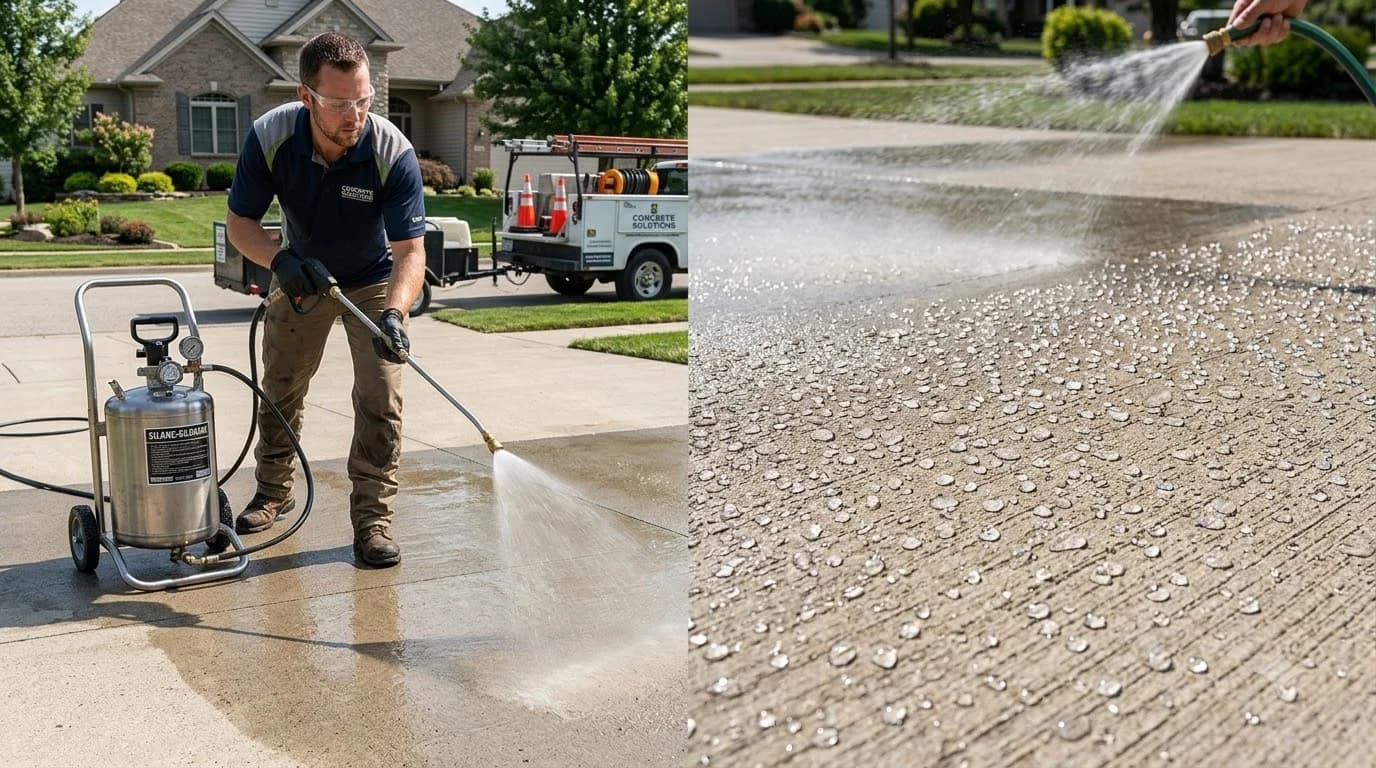
For standard broom-finished driveways, sidewalks, and pool decks, always use a penetrating silane-siloxane sealer. It chemically reacts 1/4" inside capillary pores to create a hydrophobic barrier that repels water and deicer salts for 7 to 10 years without altering traction, peeling, or trapping vapor. Use topical acrylic sealers only for decorative stamped or colored concrete where a glossy "wet-look" appearance is desired, and be prepared to reseal every 2 to 3 years.
1. Sealer Chemistry: Penetrating Reactive vs. Topical Film-Forming
Understanding the chemical difference between penetrating repellents and topical coatings prevents expensive jobsite failures:
Composed of microscopic organosilicon molecules that soak deep into the concrete capillary matrix (up to 1/4 inch). They chemically react with free lime and silica to form an insoluble, permanent hydrophobic silicone network. Water beads on the surface, but the pore structure remains 100% vapor-permeable (breathable).
Formulated from thermoplastic acrylic resins suspended in solvent or water. They do not penetrate deeply; instead, they form a solid plastic film (1 to 3 mils thick) atop the concrete. This highlights colors and gives a wet-look gloss, but creates a non-breathable membrane that can trap moisture and wear off under tire friction.
2. Freeze-Thaw Physics & Deicer Salt Attack (ACI 201.2R)
Winter damage on exterior driveways is driven by moisture saturation and chemical attack:
Critical Saturation Limit: When concrete capillary pores become more than 91% saturated with water, subsequent freezing generates severe hydraulic pressure as ice expands by 9%. If the tensile strength of the cement paste is exceeded, micro-cracks form, popping off surface flakes in a failure known as freeze-thaw spalling.
Deicing Chemical Scaling: Road salts (Sodium Chloride and Calcium Chloride) tracked onto driveways create an osmotic pressure imbalance. Salt depresses the freezing point, causing rapid, repeated freeze-thaw cycles within a single day. Penetrating silane-siloxane sealers line capillary walls with a permanent hydrophobic barrier, keeping pore saturation far below the 91% critical limit and halting deicer salt penetration.
3. Master Concrete Sealer Specification & Performance Matrix
Compare resin chemistry, breathability ratings, and lifespan benchmarks across sealer categories:
| Sealer Technology | Chemical Action | Finished Appearance | Vapor Breathability | Expected Durability | 2026 Material Cost / sq ft |
|---|---|---|---|---|---|
| Water-Based Silane-Siloxane | Deep penetration / cross-linking | 100% Invisible / Natural matte | 100% Breathable | 7 to 10 years | $0.25 – $0.45 / sq ft |
| Solvent-Based Acrylic (Wet Look) | Topical surface film (2 mils) | High gloss / Color enhancing | Semi-Breathable | 2 to 3 years | $0.40 – $0.70 / sq ft |
| Siliconate Sealer | Sub-surface silicate crystal growth | Invisible / Flat sheen | 100% Breathable | 10+ years (Single coat) | $0.20 – $0.35 / sq ft |
| 2-Part Polyurethane Sealer | High-build chemical topcoat | Satin or high gloss | Non-Breathable | 5 to 8 years (Interior) | $1.20 – $2.10 / sq ft |
4. Step-by-Step Professional Sealing Application Protocol
Achieving maximum penetration and uniform coverage requires a systematic application routine:
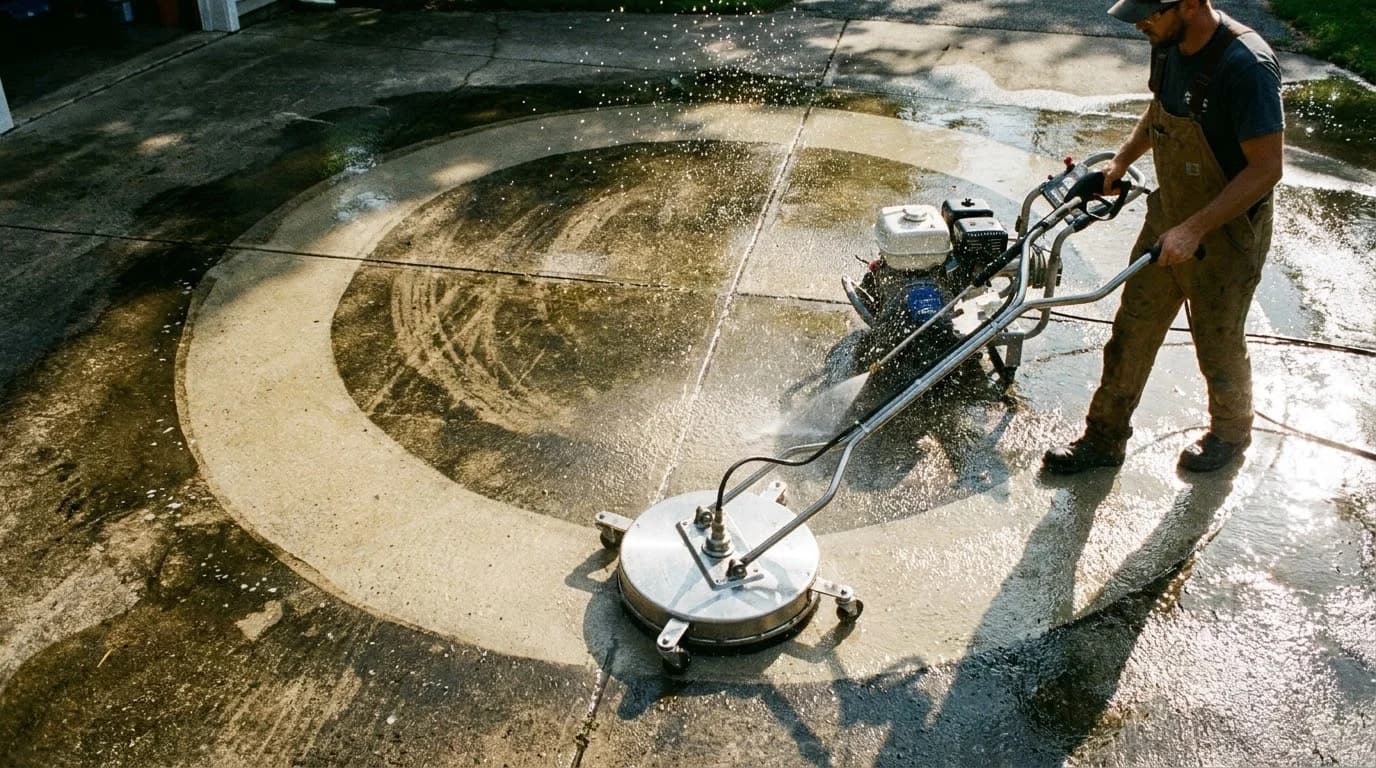
- Deep Surface Washing: Pressure wash the slab at 3,000 PSI with a rotating turbo nozzle to clear dirt, algae, and loose laitance. Treat grease spots with an alkaline degreaser.
- Ensure 24-Hour Dryness: Never seal damp concrete. Wait at least 24 hours of warm, dry weather after washing before applying sealers. Pores filled with water cannot absorb chemical resins.
- Low-Pressure Fan Spray: Pour silane-siloxane into a professional solvent-resistant pump sprayer (such as a Chapin concrete sprayer) equipped with a 0.5 GPM brass fan tip. Spray at low pressure (20 to 30 PSI) to minimize atomized misting.
- Execute the Wet-on-Wet Technique: Spray coat #1 until the surface is thoroughly flooded with a consistent wet film. Wait 10 to 15 minutes for the liquid to soak in, then apply coat #2 while the surface is still damp. This drives active silane molecules deep into the pore structure.
- Back-Roll Low Puddles: Walk the slab with a 3/8-inch nap roller to pick up puddles in low spots, ensuring a uniform finish without white residue lines. Keep vehicle traffic off for 24 to 48 hours.
5. Troubleshooting: Fixing Blushing & Slippery Topical Coatings
Topical acrylic sealers are susceptible to specific environmental failures:
Fixing Milky White Blushing: If a solvent-based acrylic turns milky white after rain, do not apply more sealer. Pour pure technical-grade xylene solvent across the affected area and agitate with a natural bristle brush. The xylene re-liquefies the solid acrylic film, allowing the trapped water vapor to escape into the atmosphere. The acrylic will re-harden crystal clear within 30 minutes.
Preventing Dangerous Slip Hazards: Topical acrylics dry to a smooth plastic film that becomes treacherous when wet. Always stir micronized polypropylene non-skid beads (e.g., SharkGrip) into your second coat at a rate of 3 to 4 ounces per gallon.
6. Five Costly Concrete Sealing Mistakes to Avoid
Trapping moisture under topical acrylic sealers causes immediate cloudiness and bubbling. Penetrating sealers will simply wash off because water-saturated pores cannot absorb the silane chemicals.
Hot concrete causes solvents to flash-evaporate before the sealer can penetrate. This forms thousands of tiny surface bubbles that pop, leaving an unsightly crusted texture.
Two thin coats will always outperform one heavy coat. Over-applying acrylic sealer creates a gummy, soft plastic layer that tracks tire rubber and blisters easily.
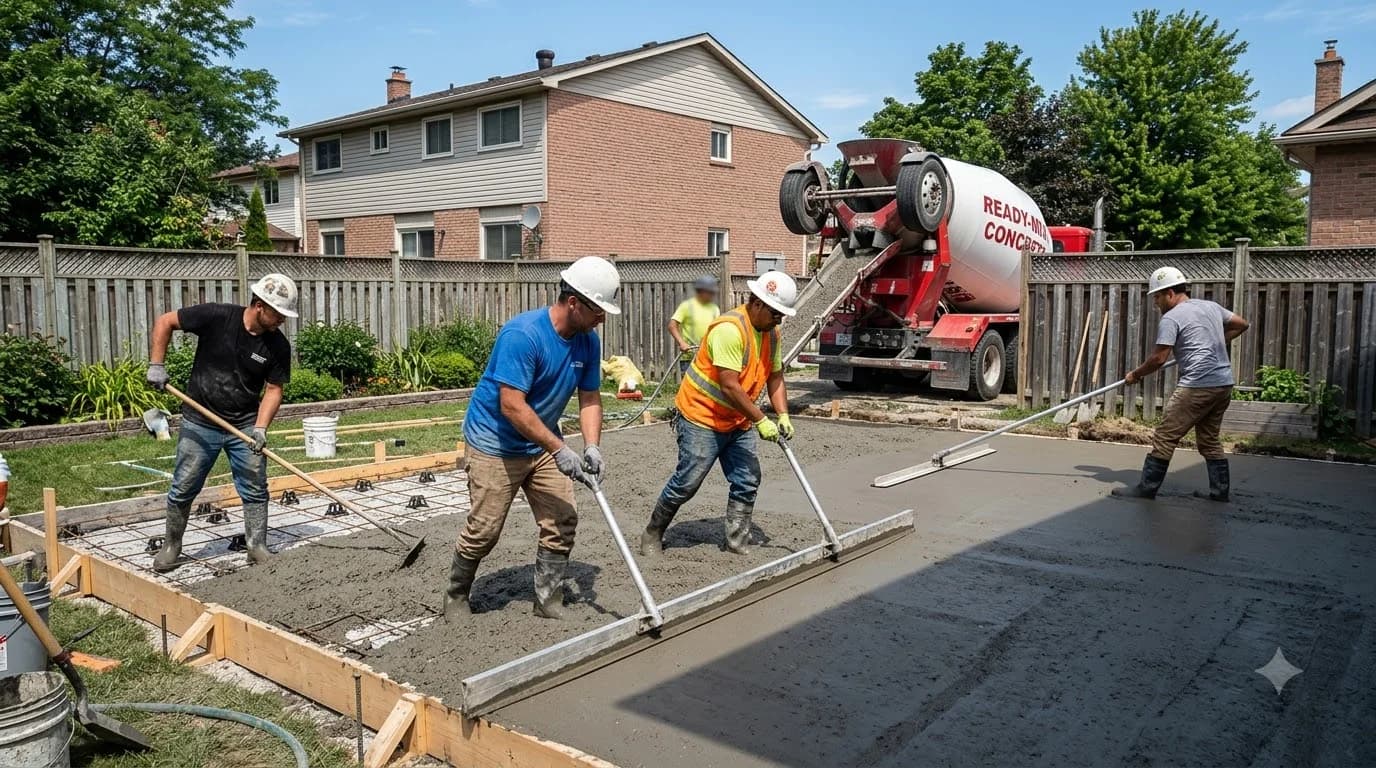
Sealing fresh concrete with penetrating sealers prevents internal water from hydrating cement crystals. Slabs must cure for a full 28 days to reach design strength before permanent sealing.
Never spray a penetrating sealer over a slab that already has an old acrylic coating. The existing acrylic film will block the penetrating sealer from soaking into pores, leaving sticky chemical puddles.
Calculating Concrete Yardage & Materials?
Get exact slab cubic yards, bag counts, and 2026 material costs instantly.
Frequently Asked Questions
When can you seal a newly poured concrete slab?
Penetrating silane-siloxane sealers require a full 28-day cure so hydraulic moisture escapes concrete pores before application. Specialized ASTM C309 compliant curing compounds ('cure-and-seals') may be applied within 2 to 4 hours of finishing to retain moisture for initial hydration.
Why did my acrylic concrete sealer turn milky white?
Milky, cloudy, or white patches indicate moisture trapped beneath the topical acrylic film. This occurs when sealer is applied over damp concrete or when subterranean moisture vapor drives upward. For solvent-based acrylics, flooding the surface with pure xylene re-emulsifies the acrylic resin, allowing moisture to evaporate and restoring clear gloss.
How many square feet does a gallon of concrete sealer cover?
Broom-finished exterior concrete absorbs sealer heavily at 150 to 200 square feet per gallon. Dense, smooth machine-troweled concrete covers 250 to 350 square feet per gallon. Penetrating sealers are typically applied in two wet-on-wet coats, while topical acrylics require two thin cross-rolled passes.
What is the difference between silane and siloxane sealers?
Silane molecules are ultra-small (under 0.5 nm), allowing them to penetrate up to 1/4 inch deep into dense concrete pores. Siloxanes have larger molecular structures that bond near the surface. Formulating them together into a silane-siloxane hybrid provides both deep subsurface pore protection and immediate surface water beading.
Do penetrating sealers make concrete slippery when wet?
No. Penetrating silane-siloxane sealers chemically react below the surface within capillary pores without leaving a topical film or plastic coating. They do not alter the surface friction coefficient, meaning your broom-finished concrete maintains 100% of its natural slip resistance.
Building Codes & Primary Standards Cited
Standard Specification for Liquid Membrane-Forming Compounds for Curing Concrete
Governs moisture retention properties for topical curing and sealing formulations.
Guide to External Curing of Concrete
Defines minimum curing intervals and moisture retention protocols prior to applying chemical sealers.
Guide to Durable Concrete
Details chemical mechanisms of deicer scaling, pore saturation thresholds, and protective silane barriers.
Estimations adhere to standard North American modular 3/8-inch mortar joint physics and 5% to 10% material waste factors. Local municipal building inspectors, stamped architectural blueprints, and local frost depth requirements supersede general reference guidelines.
Popular Quick Estimates
Pre-engineered takeoffs & benchmarks matched to this project
Related Calculators
Specialized tools for foundation, core fill, and budgeting
Cubic yards, bags, and slab volume for flatwork and footings
Heavyweight structural blocks and bond beam units
Core grout volume in cubic yards and 80-lb pre-mix bags
Cell fill requirements for low-lift and high-lift grouting
Blogs & Construction Guides
Technical articles, IRC code standards, rebar schedules & freight logistics
How to Pressure Wash Concrete Patios & Driveways
How to Pour a Concrete Slab DIY: Formwork, Rebar & Finishing
How Much Does a Concrete Driveway Cost? (2026 Guide)