Masonry Demolition Dumpster Calculator
Calculate concrete block demolition debris volume, bulking expansion factor, total tons, and recommended roll-off dumpster size to avoid road weight fines.
The Physics of Masonry Demolition Weight & Bulking Expansion
How solid concrete block walls fracture into high-volume, jagged debris that overloads waste bins faster than general construction trash.
Hollow vs. Solid Grouted CMU Density
An intact 8×8×16-inch hollow concrete block weighs roughly 38 lbs. Once laid into a wall with 3/8-inch bed and head mortar joints, the unreinforced assembly weighs 42 lbs per square foot of wall surface. However, retaining walls, basement walls, and hurricane shear walls are reinforced with continuous vertical rebar and pumped solid with 3,000-psi pea-gravel grout.
The 1.50× Bulking Factor Explained
Solid masonry walls cannot be repacked tightly once demolished. Jackhammering and hydraulic breaker chisels shatter the concrete into irregular, jagged fragments. These broken chunks leave substantial internal air voids when tossed into a roll-off container, creating a 1.50× bulking expansion factor (50% volume increase).
Why Haulers Strictly Restrict Concrete & Masonry to 10-Yard Roll-Offs
Federal bridge formulas, tandem-axle weight limits, and hydraulic winch hoist capabilities dictate dumpster sizes for heavy debris.
Low 36-inch sidewalls facilitate wheelbarrow access and keep total payload within the legal 10.0-ton (20,000 lb) road weight threshold when filled to the designated fill line.
Filled with concrete rubble, a 20-yard box weighs over 24 tons. Roll-off truck winches cannot physically lift this weight off the ground, causing catastrophic hydraulic line blowouts.
Designed exclusively for bulky, lightweight construction waste (wood framing, drywall, roofing shingles). Loading with CMU will crack the container frame and crush truck suspension axles.
| Container Size | Typical Dimensions | Weight if Filled with CMU | DOT Legal Haul Status | Hauler Acceptance |
|---|---|---|---|---|
| 10-Yard Low-Boy | 14' L × 7.5' W × 3.5' H | 8.0 to 12.0 Tons | Legal (at 24" fill line) | Standard for CMU |
| 20-Yard Medium | 22' L × 8.0' W × 4.5' H | 22.0 to 26.0 Tons | Illegal Road Overweight | Refused for Clean CMU |
| 30-Yard High-Cube | 22' L × 8.0' W × 6.0' H | 33.0 to 39.0 Tons | Severe Axle Violation | Strictly Prohibited |
The 24-Inch Safe Fill Line & Avoiding Overweight Citations
Why filling a 10-yard dumpster to its top edge triggers immediate weight rejection and expensive dry-run fees.
Overweight Penalties & Dry-Run Fees
Waste disposal contracts include a strict 10.0-ton weight cap. If the driver arrives and determines the container is overfilled, or if the certified scale ticket exceeds the threshold:
- Overweight Tonnage Fees: Billed at $75 to $150 per ton for every ton exceeding the 10-ton limit.
- Refusal to Transport: If the winch cannot lift the box safely or if tires deflect dangerously, drivers will refuse pickup.
- Dry-Run Trip Fee: A $150 to $250 penalty charge for an aborted pickup trip.
- Hand-Unloading Obligation: The crew must manually shovel tons of jagged block rubble out of the bin before the truck returns.
Clean Concrete Recycling vs. Mixed Landfill Trash
Concrete block and mortar rubble can be tipped at clean masonry recycling yards for a fraction of municipal landfill costs ($20–$40/ton vs. $90–$140/ton for mixed construction waste).
Step-by-Step Masonry Demolition & Hauling Guide
Follow this field protocol to calculate rubble tonnage, prevent driveway punch-through, and stage dumpsters safely.
Calculate Gross Wall Face Area & Opening Deductions
Measure total linear run and wall height in feet. Multiply length by height to obtain gross square footage. Deduct rough opening square footage for existing windows, doors, and crawlspace vents to get net demolition face area.
Identify Core Grouting & Reinforcing Steel Density
Drill test holes or inspect wall tops to verify if cores are hollow or solid-grouted. Unreinforced partition walls use 42 lbs/sq ft; retaining walls, bond beams, and grouted shear walls require 75 lbs/sq ft.
Apply the 1.50× Debris Bulking Expansion Multiplier
Convert solid masonry weight into solid cubic yards by dividing total pounds by 3,915 lbs/yd³ (145 lbs/cu ft). Multiply solid volume by 1.50 to calculate the loose volume required in the roll-off dumpster.
Compare Rubble Tonnage Against DOT 10-Ton Single-Haul Limits
Divide total weight by 2,000 lbs to determine US short tons. If total tonnage exceeds 10.0 tons, divide by 10 to establish the minimum number of separate 10-yard dumpster hauls needed.
Establish Site Staging & Driveway Protection Protocols
Roll-off delivery trucks and loaded 10-yard steel bins exert extreme point loads. Lay down continuous 3/4-inch CDX plywood or heavy 2×10 wood planks beneath the dumpster steel rollers to protect concrete and asphalt driveways.
Schedule Phased Container Swaps to Prevent Jobsite Shutdowns
For large walls exceeding 10 tons, arrange a 'haul-and-replace' swap with your roll-off provider. The driver drops an empty 10-yard bin while hauling the filled container away, eliminating labor downtime on site.
Material estimates depend on the selected dimensions, product yields, and waste allowance.
Masonry Demolition & Dumpster Sizing FAQ
Authoritative answers regarding concrete block rubble weight, dumpster size caps, bulking factors, and overweight penalties.
Popular Quick Estimates
Illustrative takeoffs with stated assumptions; verify project quantities
Type S Mortar Bags
Example 30 blocks per 80-lb bag; check product yield
Cinder Blocks for a 10x10 Wall: Exact Count & Mortar Math
Standard residential yard & garden wall run
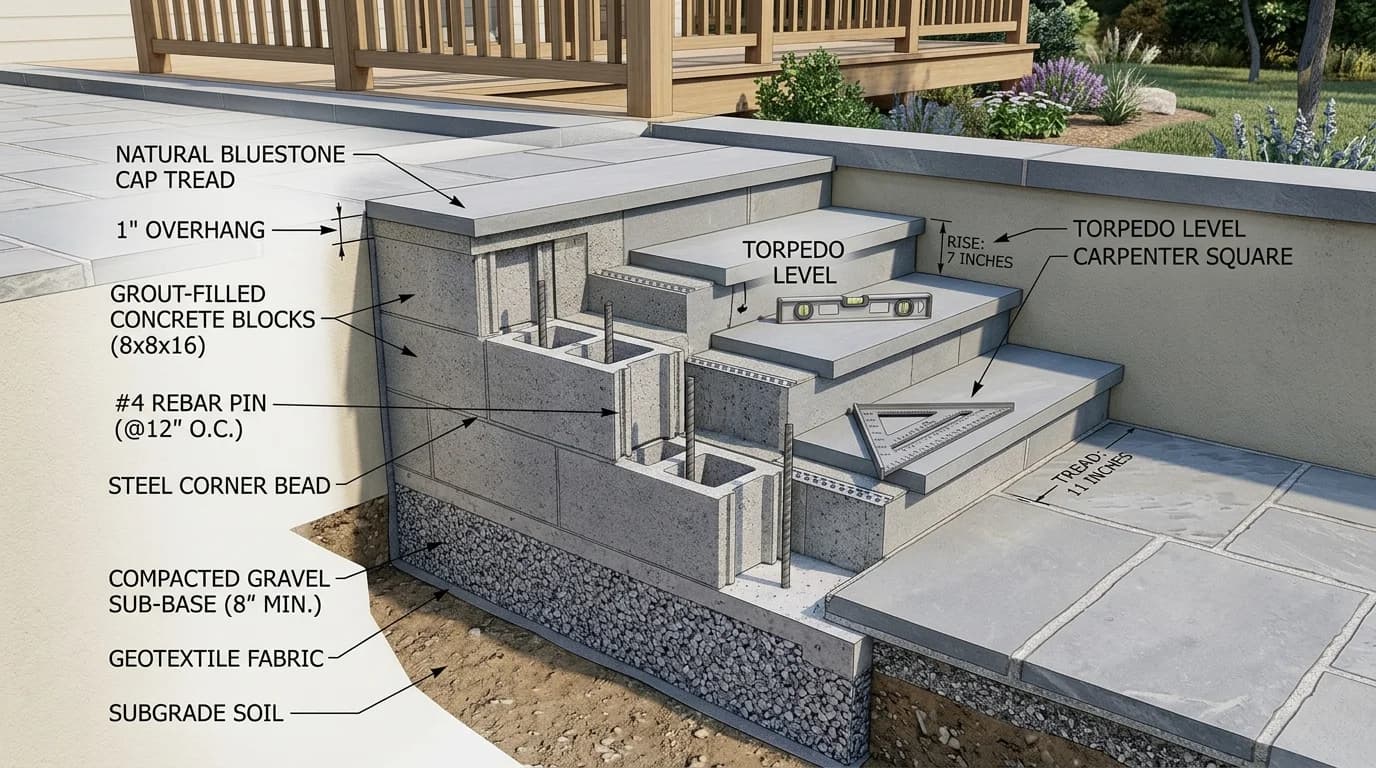
Masonry Steps Riser
Check local stair rules and project-specific design
24x24 Garage Slab
576 ft² × 5/12 ft ÷ 27; excludes waste and design
Related Calculators
Specialized tools for foundation, core fill, and budgeting
OSHA-compliant buck frames, cross braces, heavy-duty planks, guardrails, and mud sills
In-plane shear capacity, boundary element rebar, and seismic R-factor design
Preblended ASTM C91 masonry cement 70-lb bags, ASTM C144 sand, and water ratios
Radius of curvature, intrados arc length, skewback angle, voussoirs, and thrust
Blogs & Construction Guides
Practical guides to block sizing, material estimates and project planning
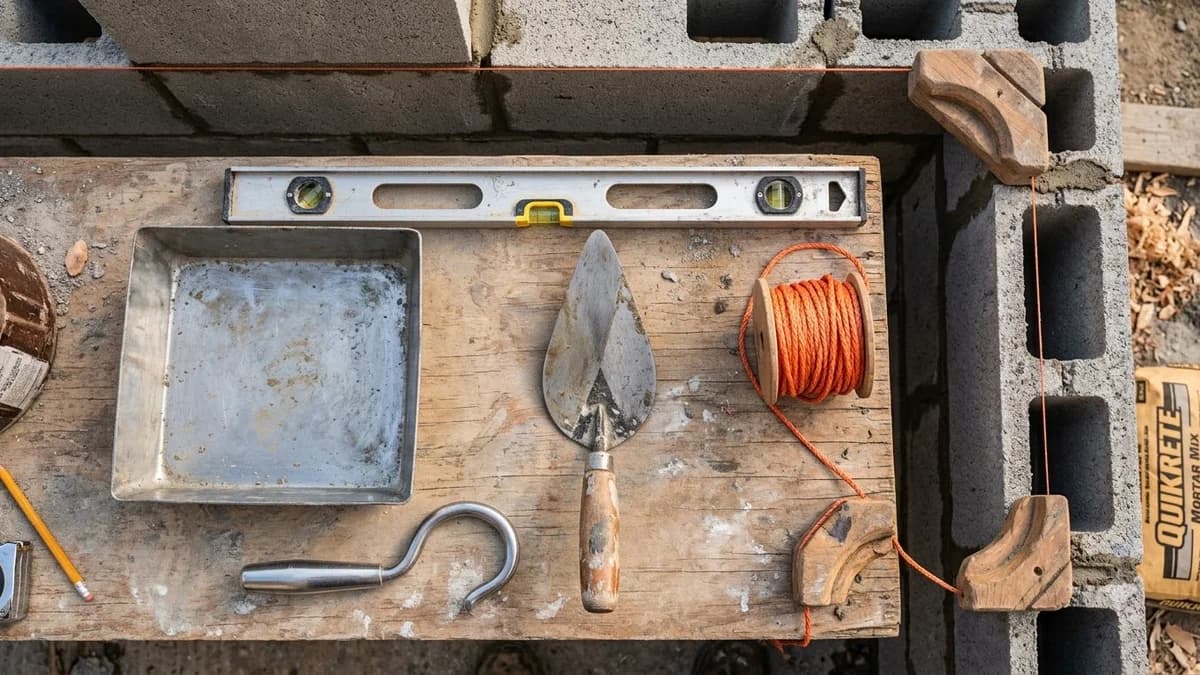
Concrete Block & Masonry FAQ: Sizing, Mortar & Codes
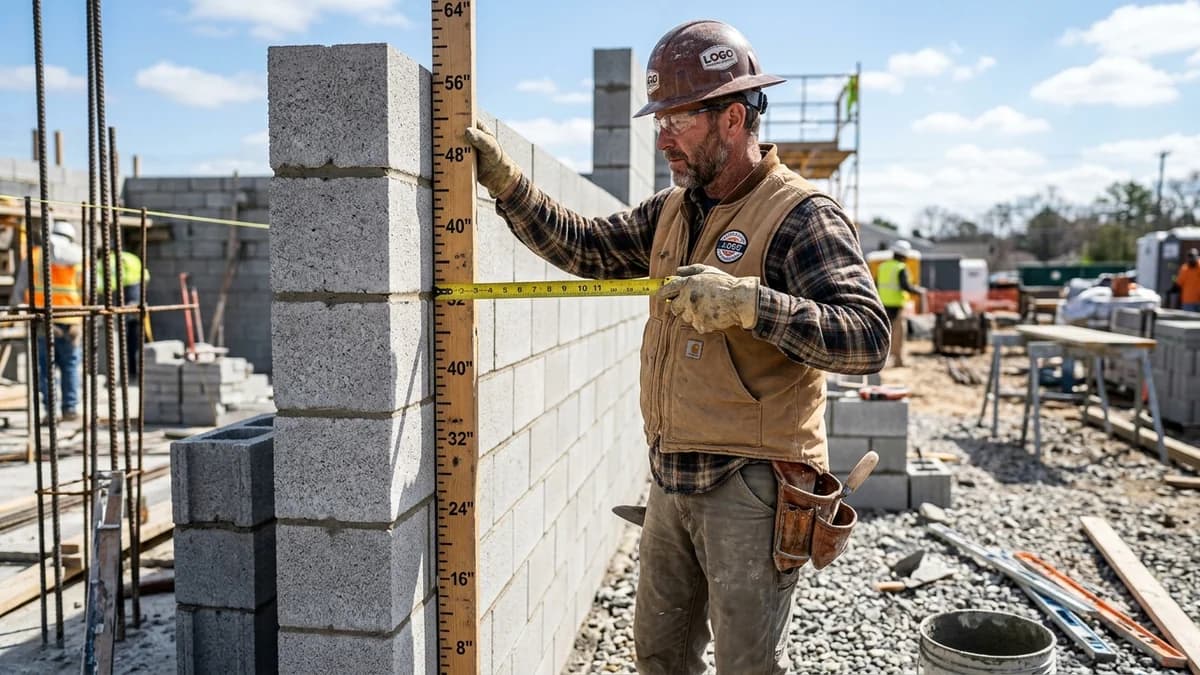
How Tall Is a Cinder Block? Actual Height (7-5/8 Inch)
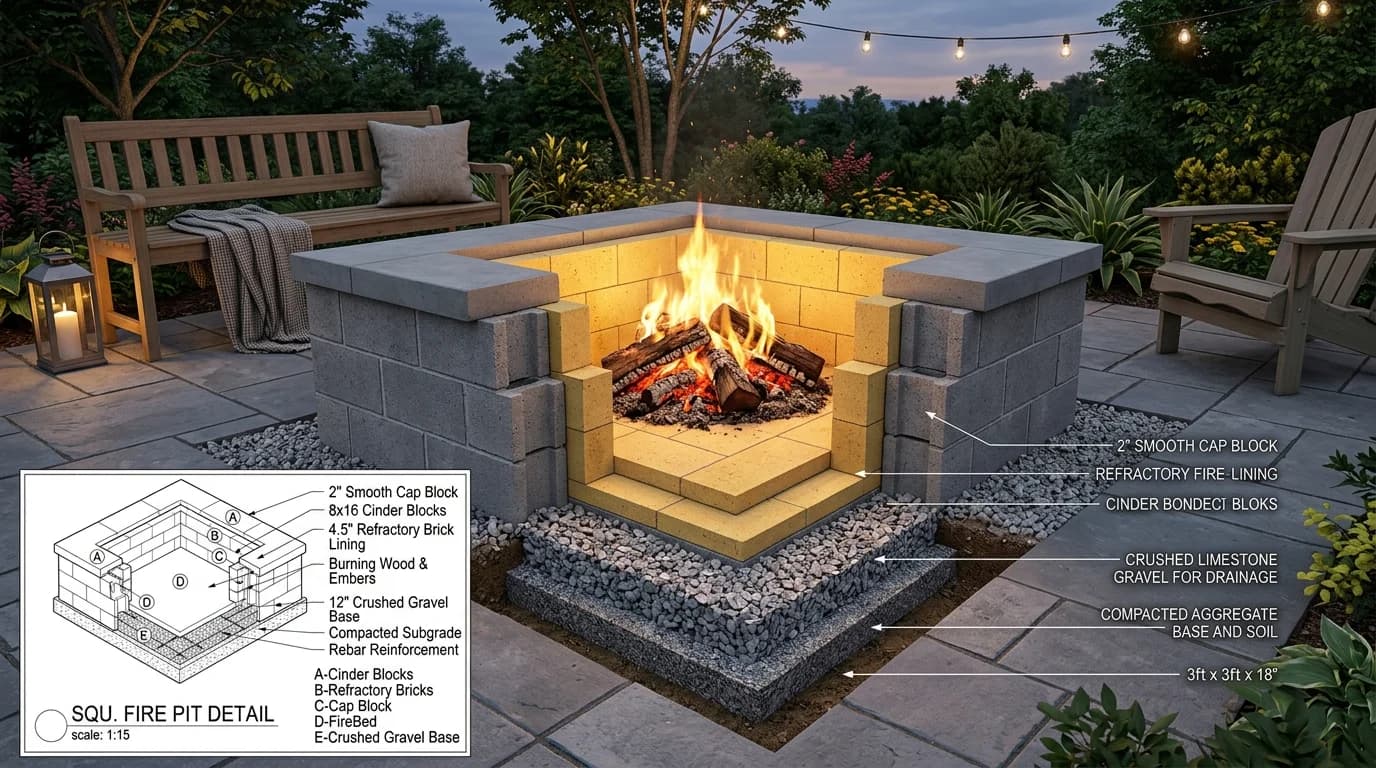
Can You Build a Fire Pit with Cinder Blocks? (Safety)