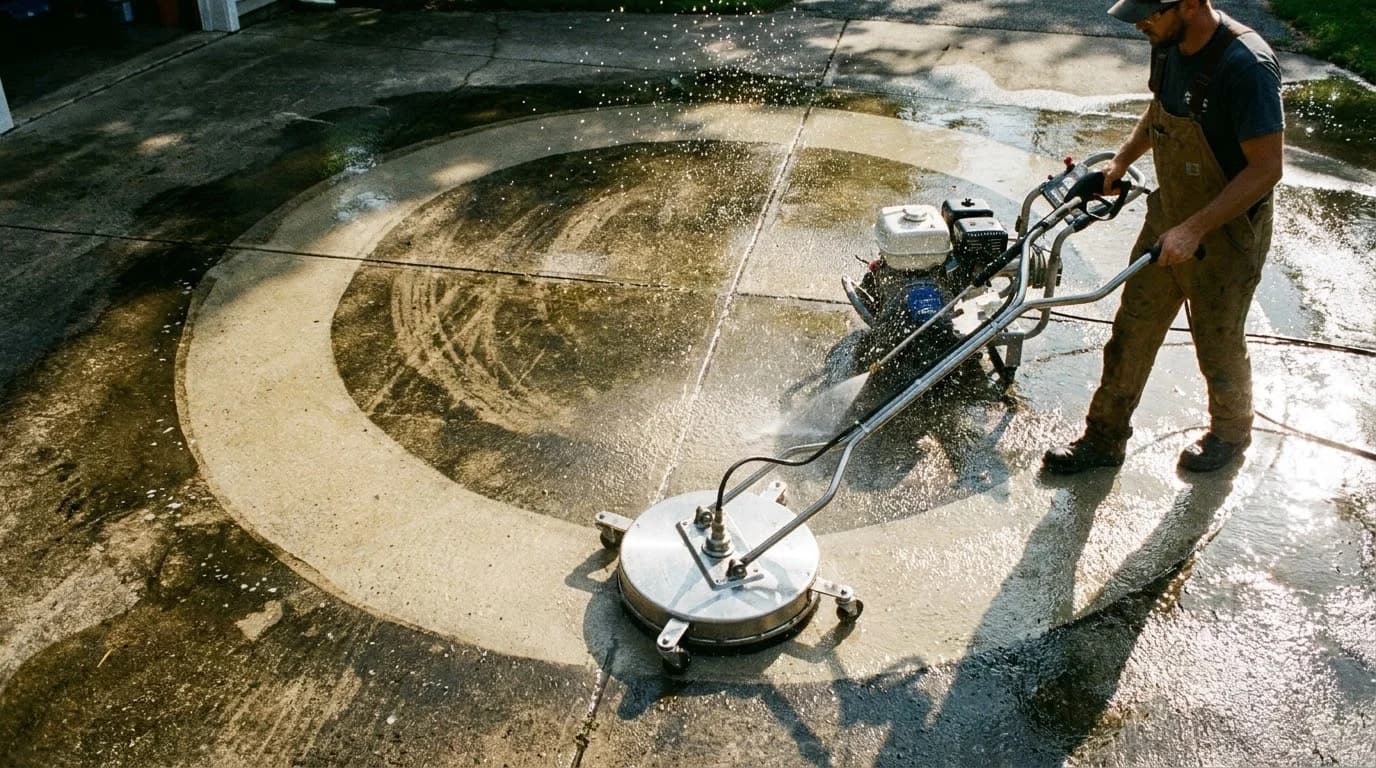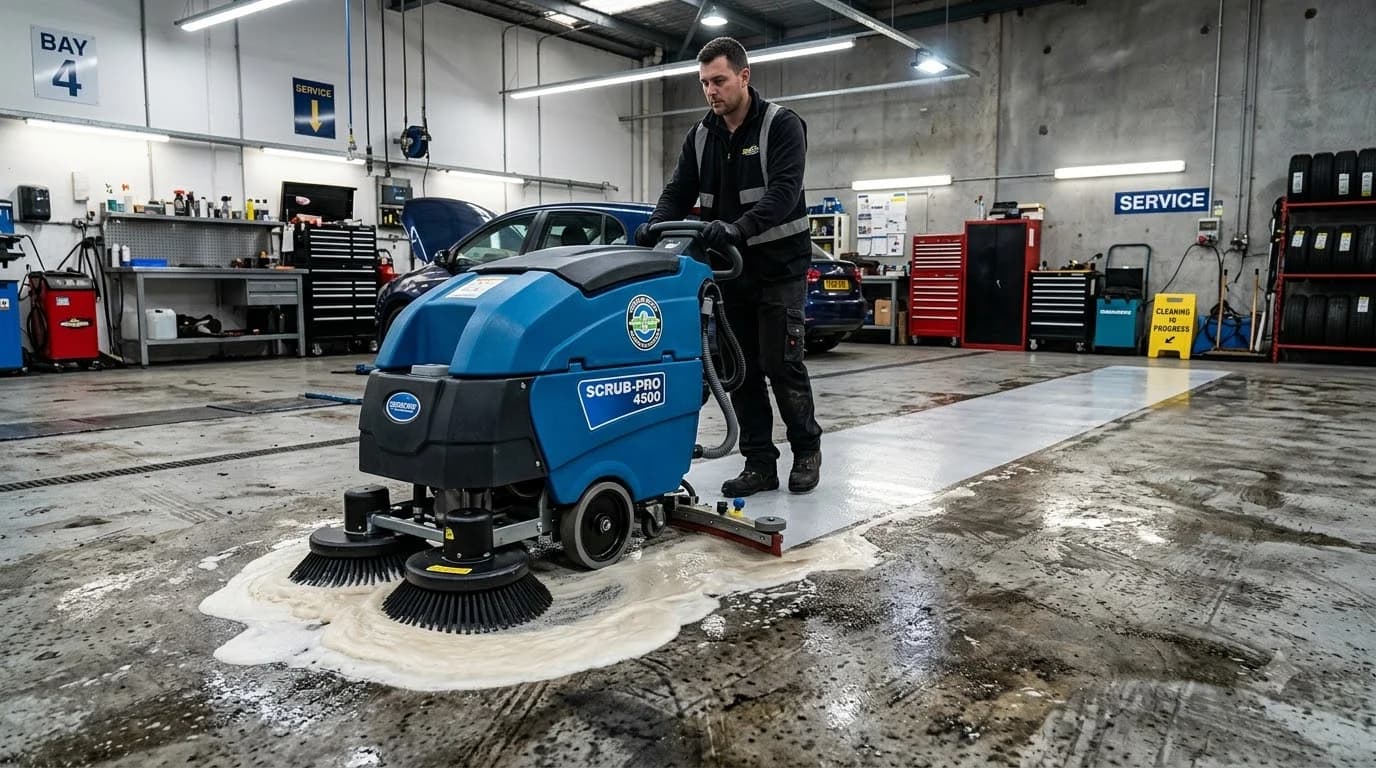
1. Master Cleaning Matrix: By Concrete Floor Finish Type
The chemical sensitivity and cleaning protocol varies dramatically depending on whether your interior concrete floor is bare, polished, or coated:
| Floor Finish Type | Best Chemical Cleaner | Prohibited Cleaners | Pad / Brush Type | Water Extraction Method |
|---|---|---|---|---|
| Unsealed Basement Slab | Sodium carbonate / TSP substitute (pH 9.5) | Chlorine bleach, flooding hose | Stiff nylon bristle deck brush | Wet/dry shop vac + LGR dehumidifier |
| Polished Concrete (Living Space) | pH-neutral specialized conditioner (pH 7.0) | Vinegar, pine oil, ammonia, acids | White or red micro-fiber buffing pad | Micro-fiber damp mop with dual-bucket |
| Epoxy / Polyaspartic Garage | Concentrated citrus degreaser / Dawn soap | Solvent strippers, wire brushes | Blue soft scrub pad / foam squeegee | Floor squeegee toward door apron |
| Acid-Stained / Acrylic Sealed | Mild neutral floor wash (pH 7.0–8.0) | Caustic bleach, harsh degreasers | Soft microfiber mop head | Damp mop; avoid standing puddles |
2. Moisture Management: Avoiding Indoor Mold Outbreaks
Unlike an outdoor patio where gallons of rinse water evaporate naturally in the sun, an enclosed basement slab acts as a giant moisture sink. Concrete can hold up to 3 to 5 pounds of water per 100 square feet in its internal capillaries.
Under ASTM F2170 relative humidity standards, if a wet basement floor elevates the indoor relative humidity above 60% for more than 48 hours, microscopic mold spores (such as Cladosporium and toxic Stachybotrys chartarum) will germinate on nearby drywall paper, wooden stud baseplates, and stored cardboard boxes.
3. Garage Floor Stain Protocols: Motor Oil & Tire Rubber
Garage floors suffer from heavy mechanical abuse. Follow these specific remediation steps:
Black Tire Rubber Marks (Plasticizer Burn)
Tire manufacturers blend polymer plasticizers into tread rubber to increase grip. Warm highway tires transfer these polymers into porous concrete or epoxy topcoats. Spray concentrated d-Limonene (citrus extract), scrub with a white Scotch-Brite nylon pad for 2 minutes, and wipe clean with a cotton rag.
Motor Oil & Transmission Fluid Puddles
Immediately cover fresh spills with clay kitty litter or diatomaceous earth and grind underfoot to absorb free standing oil. For set-in stains, mix a bio-enzymatic cleaner into a poultice paste with baking soda, leave for 24 hours, and vacuum up the dry powder.
4. Five Costly Mistakes in Interior Concrete Floor Cleaning
1. Using Muriatic Acid in an Enclosed Space
Never use muriatic acid inside a home. The airborne hydrochloric acid gas will corrode copper plumbing lines, destroy the zinc coating on ductwork, and rust the stainless steel heat exchanger in your central furnace.
2. Mopping with Vinegar on Polished Floors
Homeowners frequently clean polished concrete with vinegar and water. Acetic acid etches the microscopic calcium densifiers, permanently stripping the high-gloss shine and leaving dull, rough traffic paths.
3. Wet Mopping with a Single Dirty Bucket
A single bucket simply redistributes suspended dirt back into open concrete pores. Always use a dual-chamber mop bucket (one for fresh soapy solution, one for wringing dirty wastewater) with microfiber pads.
4. Leaving Caustic Cleaners to Air Dry
Allowing degreasers or TSP solutions to dry on the slab creates a slippery, powdery white chemical film that bonds to the concrete. Always rinse thoroughly and extract all liquid with a wet vacuum.
5. Permanent Dustproofing: Penetrating Lithium Silicate Densifiers
If your basement or utility room floor constantly produces a fine gray chalky powder under foot traffic (a defect known as concrete dusting), washing alone will not solve it. Concrete dusting is caused by weak unhydrated calcium hydroxide paste on the surface.
Once the floor is deeply cleaned and dried, apply a penetrating lithium silicate concrete densifier. The lithium ions penetrate 1/4 inch deep and react chemically with free lime to create permanent calcium silicate hydrate (C-S-H) crystals, hardening the floor into a dustproof, abrasion-resistant surface that never peels or flakes.
6. Machine Selection & Floor Pad Color Hierarchy
When cleaning residential garages or large finished basements, matching the correct machine RPM and pad color prevents scratching decorative coatings:
White / Red Pads (Gentle)
Operating at 175 to 300 RPM, white polish and red buffing pads provide non-abrasive agitation ideal for sealed decorative concrete, polished finishes, and showroom epoxy.
Blue / Green Pads (Medium)
Engineered for heavy scrubbing on unfinished basements and porous utility slabs. Effectively removes embedded clay soil, dried mud, and tire marks without stripping solid paste.
Black Pads (Heavy Strip)
Extremely abrasive silicon carbide pads intended solely for stripping old acrylic floor wax or prepping concrete for epoxy coatings. Never use black pads on polished concrete.
Frequently Asked Questions
Can you use Dawn dish soap to clean interior concrete floors?
Yes. Blue Dawn dish soap mixed with warm water (1/4 cup per 3 gallons) is an exceptionally safe, pH-neutral surfactant for routine maintenance of sealed, polished, or unsealed indoor concrete floors. It emulsifies light shoe grime and food oils without etching calcium minerals or stripping protective sealers.
How do you deep-clean an unfinished concrete basement floor without flooding it?
Never flood a basement with a garden hose. Begin with a HEPA vacuum to remove dry concrete dust. Scrub in sections using a commercial multi-surface floor scrubber or a stiff-bristled deck brush with a mild alkaline cleaner (TSP substitute or sodium carbonate). Extract the dirty slurry immediately with a high-capacity wet/dry shop vacuum, and run high-velocity air movers and dehumidifiers for 48 hours to prevent mold germination.
Why shouldn't you use chlorine bleach to clean indoor concrete floors?
Chlorine bleach does not dissolve mineral concrete, but its sodium chloride salt byproduct remains trapped inside concrete pores, accelerating efflorescence and moisture wicking. Furthermore, in enclosed basements without cross-ventilation, evaporating chlorine fumes corrode copper plumbing pipes, electrical panels, and furnace heat exchangers. Use hydrogen peroxide or quaternary ammonium disinfectants instead.
How do you remove stubborn black tire marks from garage floors?
Black tire marks are caused by 'plasticizer migration' where warm tires bake synthetic polymers into the concrete surface. Apply a concentrated natural citrus-terpene degreaser (d-Limonene), allow a 15-minute dwell time, agitate vigorously with a stiff nylon deck brush, and wipe clean with micro-fiber towels.
Can you use vinegar to clean polished or decorative concrete?
Never use vinegar (acetic acid) on polished or decorative concrete floors. Vinegar has an acidic pH of 2.5, which instantly attacks and dissolves the microscopic calcium carbonate and calcium silicate hydrate crystals that create the polished gloss, leaving permanent dull, cloudy etch marks.
Building Codes & Primary Standards Cited
Standard Test Method for Determining Relative Humidity in Concrete Floor Slabs
Governs moisture measurement thresholds inside enclosed concrete floor slabs.
Guide to Selecting Protective Materials for Concrete
Establishes maintenance, densification, and sealing protocols for interior architectural slabs.
Respirable Crystalline Silica Standard in Construction
Mandates HEPA filtration and wet cleaning to prevent indoor airborne silica exposure.
Mold Remediation in Schools and Commercial Buildings
Authoritative standards for moisture containment, relative humidity (<50%), and mold prevention.
Estimations adhere to standard North American modular 3/8-inch mortar joint physics and 5% to 10% material waste factors. Local municipal building inspectors, stamped architectural blueprints, and local frost depth requirements supersede general reference guidelines.
Popular Quick Estimates
Pre-engineered takeoffs & benchmarks matched to this project
Related Calculators
Specialized tools for foundation, core fill, and budgeting
Primer, acrylic block filler and topcoat paint gallons
Heavyweight structural blocks and bond beam units
Cubic yards, bags, and slab volume for flatwork and footings
Core grout volume in cubic yards and 80-lb pre-mix bags
Blogs & Construction Guides
Technical articles, IRC code standards, rebar schedules & freight logistics

How to Stain Concrete: Acid Stain vs Water Dyes
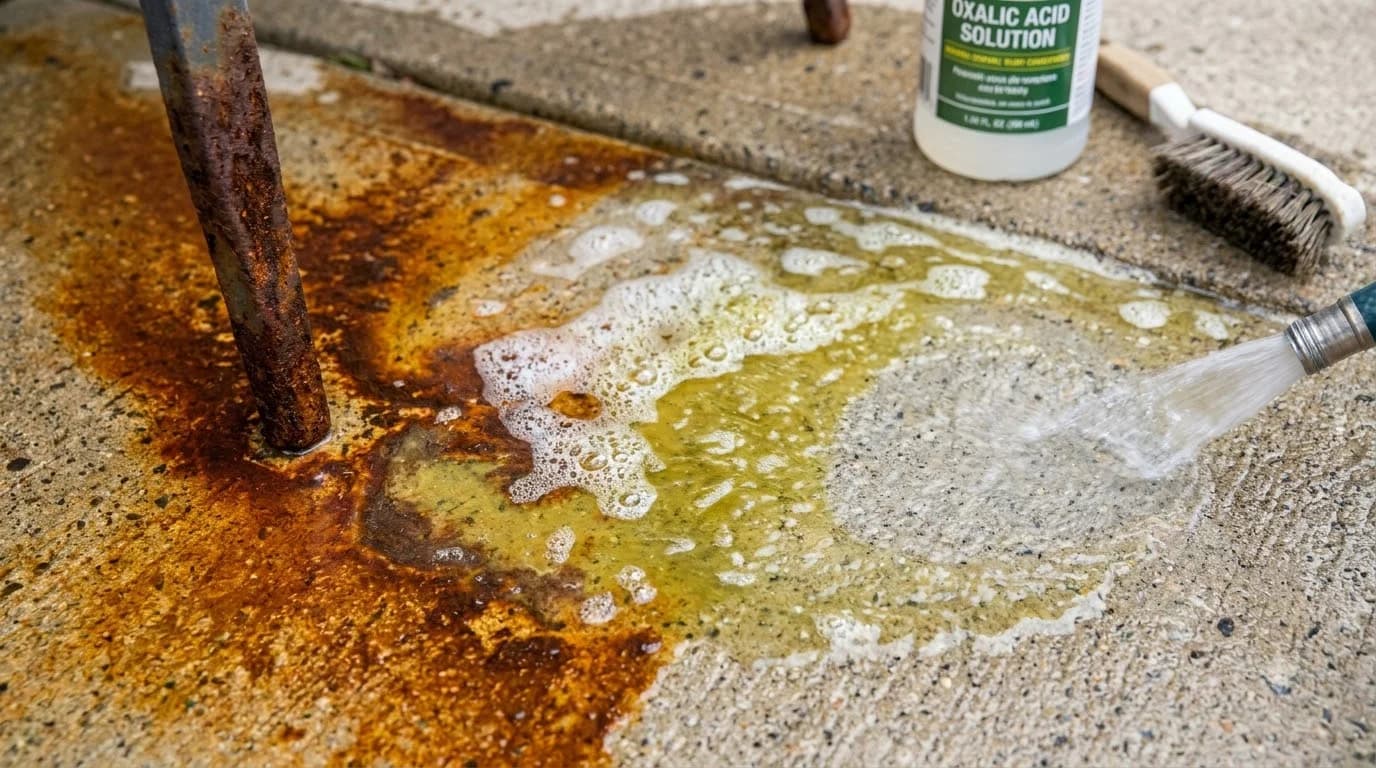
How to Remove Rust Stains from Concrete: Best Acids
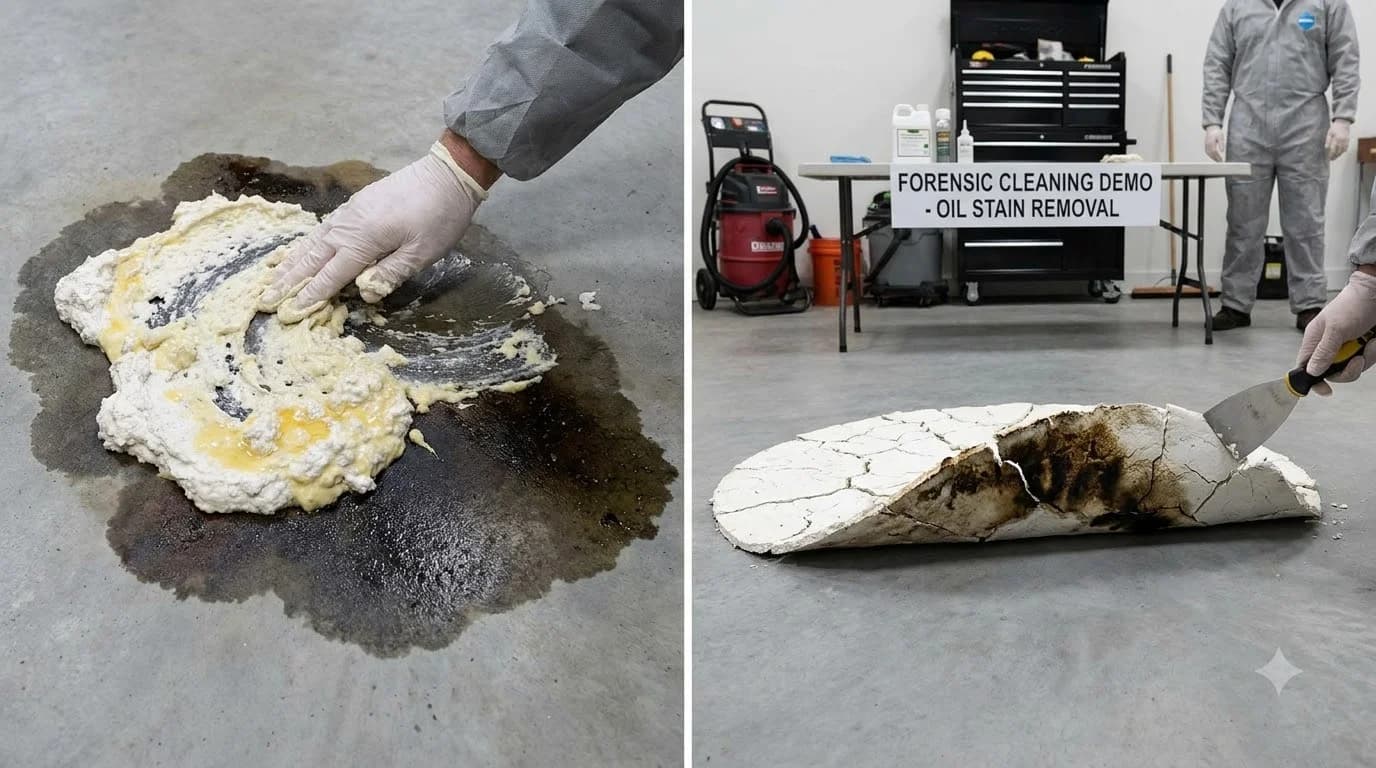
How to Remove Oil Stains from Concrete: Best Methods