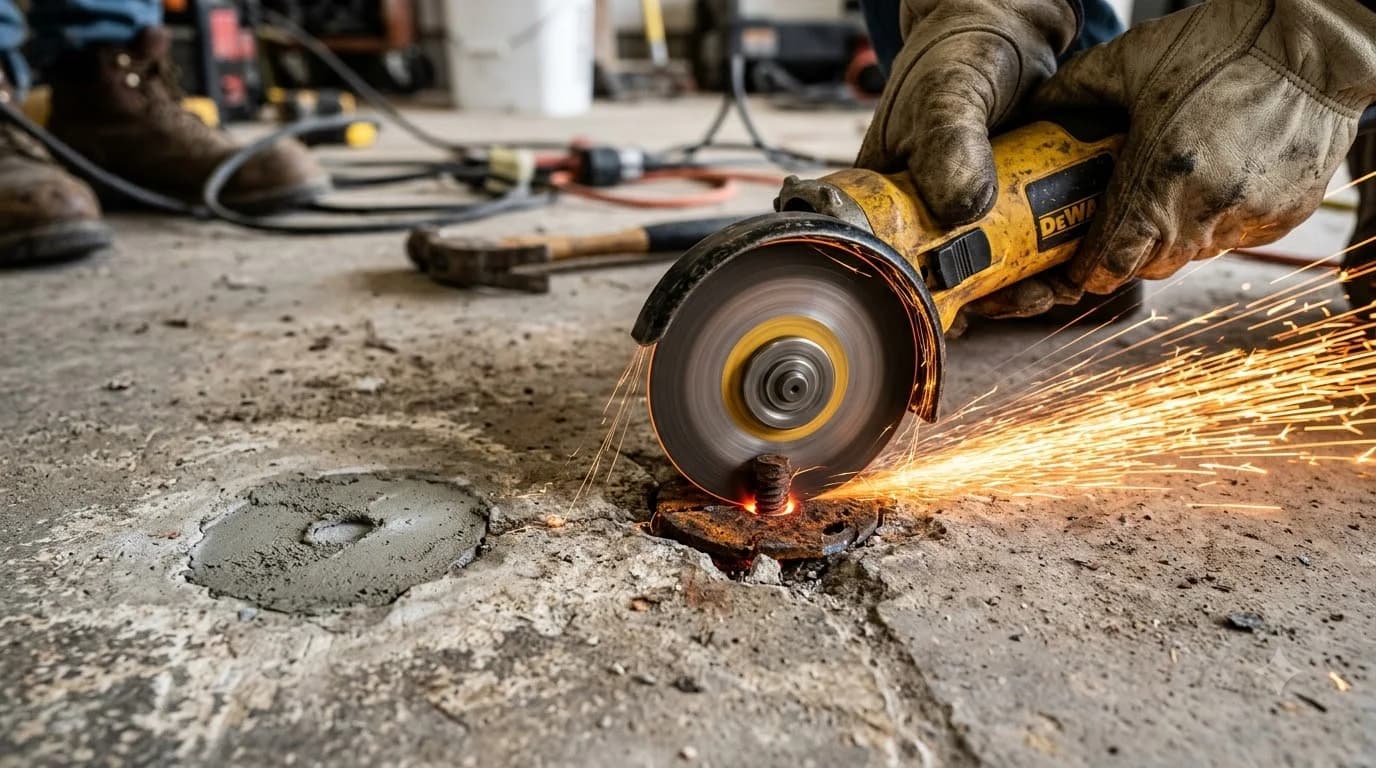
Quick Contractor Protocol: Test for Asbestos Before Scraping or Grinding
If the glue is black and installed before 1986, treat it as asbestos cutback mastic. Never dry-grind black mastic. For yellow or tan latex glue, apply a bio-based soy mastic remover (like Sentinel 747), let it dwell for 45 minutes to liquefy the adhesive into gel, and scrape with a razor floor scraper. Degrease the slab twice with TSP substitute to remove oily residues before installing new flooring.
1. Adhesive Chemistry: Yellow Latex vs. Black Cutback Mastic
Before applying mechanical scrapers or chemicals, inspect the color, age, and binder chemistry of the adhesive residue:
- Yellow, Tan, or White Carpet Adhesive: Synthetic styrene-butadiene rubber (SBR) or water-based acrylic emulsion. Common in homes built after 1985. Non-toxic, but highly resistant to dry scraping once cured. It softens quickly under heat or bio-based ester solvents.
- Black Cutback Mastic: Asphaltic petroleum-pitch adhesive used extensively from 1950 to the mid-1980s under 9-inch and 12-inch vinyl asbestos tiles (VAT). Black mastic frequently contains 5% to 25% chrysotile asbestos fibers added for tensile strength and fire resistance. Under OSHA 29 CFR 1926.1101 and EPA NESHAP, dry sanding, grinding, or abrasive blasting black mastic is illegal because it aerosolizes carcinogenic asbestos fibers.
2. Removal Methods & Performance Comparison
Review the speed, safety, and chemical profiles of common adhesive removal approaches:
| Removal Technique | Best Adhesive Match | Speed & Labor | Odor & VOC Level | Asbestos Safe? |
|---|---|---|---|---|
| Soy-Based Mastic Remover | Yellow latex & black cutback | Moderate (45 min dwell) | Low VOC / mild botanical odor | YES (Keeps asbestos fibers wet) |
| Motorized Stand-Up Floor Scraper | Thick foam padding & multi-layer glue | Fast (Oscillating steel blade) | Zero chemicals | NO on black mastic |
| Boiling Water & Detergent Soak | Water-soluble modern glues | Slow manual hand scraping | Zero fumes / Non-toxic | YES for small localized spots |
| PCD Diamond Grinder Shoes | Epoxy adhesives & tile thinset | Fastest (Walk-behind machine) | High dust (Mandates HEPA) | STRICTLY FORBIDDEN on asbestos |
3. The Professional Soy-Based Chemical Stripping Protocol
Soy-based mastic removers (such as Sentinel 747 or Franmar Bean-e-doo) have replaced toxic methylene chloride. Formulated from soybean oil esters, they dissolve adhesives without noxious vapors:
- Surface Clearing: Sweep or vacuum loose debris. Mask baseboards, drywall bottoms, and door thresholds with heavy plastic sheeting and tape.
- Chemical Application: Pour the soy mastic remover directly onto the concrete (coverage is roughly 100 to 150 sq ft per gallon). Spread the liquid evenly using a stiff push broom or paint roller.
- Allow Dwell Time (30 to 60 Minutes): Let the chemical break down the polymer chains. You will see yellow glue liquefy into a translucent gel, while black mastic dissolves into a dark liquid syrup.
- Scrape and Collect: Use a long-handled, razor-sharp 8-inch floor scraper. Push forward in steady strokes; the softened mastic glides off the slab effortlessly.
- Sorb and Bag: Sprinkle clay kitty litter or oil-absorbent granules over the liquid slurry. Sweep the solidified waste into heavy 3-mil contractor trash bags for disposal.
4. Mandatory Degreasing & Residue Neutralization
The most critical mistake contractors make with soy-based removers is failing to remove the oily ester film. Soy methyl esters penetrate concrete pores and act as a severe bond breaker:
- The Wash Solution: Mix 1 cup of Tri-Sodium Phosphate (TSP) substitute or industrial citrus degreaser per gallon of hot water.
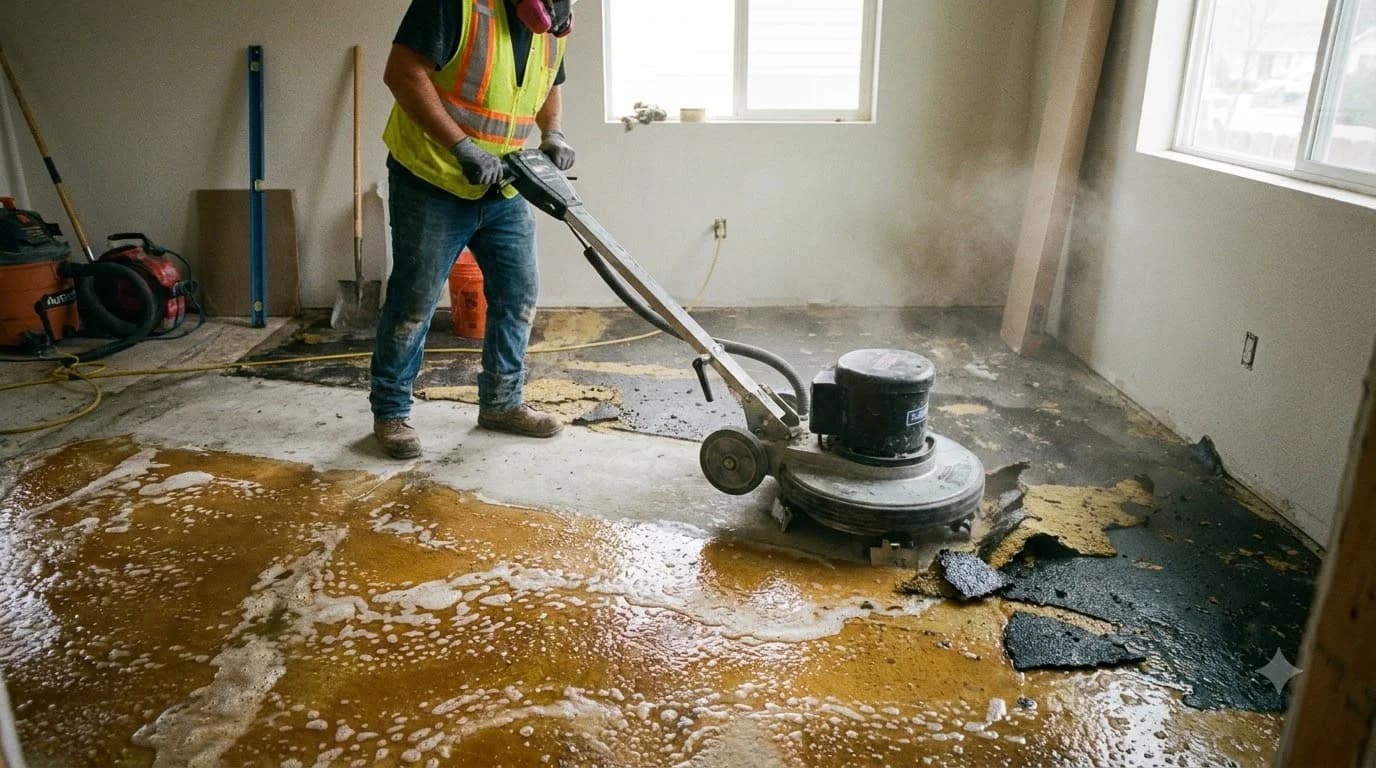
- Aggressive Mechanical Scrubbing: Scrub the slab thoroughly using a stiff-bristle deck broom or a low-speed rotary floor buffer equipped with a black scrubbing pad.
- Wet Vacuum Extraction: Immediately vacuum the emulsified soapy rinse water with a commercial wet-vac. Do not let the dirty water dry back into the slab pores.
- The Water Drop Test: After the floor dries, splash clean water drops onto the concrete. If water immediately soaks in and darkens the concrete, the pores are open and ready for bonding. If water beads up, an oily residue remains and another degreasing scrub is required.
5. Black Mastic Encapsulation Alternative
When dealing with confirmed asbestos black mastic, the safest and most economical solution is often encapsulation rather than chemical stripping:
- Scrape Flat: Use a manual floor scraper to knock down loose, flaky ridges without pulverizing the material.
- Apply Specialized Barrier Primer: Roll on a dedicated cutback mastic blocking primer (such as Ardex P 82 or Mapei Primer T). These specialized epoxy-acrylic hybrid primers chemically bond to asphaltic residues and create an anchor profile.
- Pour Self-Leveling Underlayment: Pour a 1/4-inch to 1/2-inch cap of polymer-modified self-leveling cement over the primer. This permanently encases the asbestos mastic beneath synthetic stone, providing a brand-new subfloor under ASTM F710 standards.
5 Critical Adhesive Removal Mistakes to Avoid
Dry Grinding Black Cutback Mastic
Dry abrasive grinding of pre-1986 black mastic releases billions of microscopic asbestos fibers into the living area, causing permanent toxic contamination and violating federal OSHA regulations.
Skipping the Degreasing Step
Soy-based removers leave a microscopic oily film. Installing tile thinset or floor patch over this film causes the entire floor covering to delaminate within weeks.
Using Gasoline or Toxic Solvents
Pouring gasoline, mineral spirits, or lacquer thinner onto concrete floors indoors creates an extreme explosive flash-fire hazard from water heater pilot lights and furnace burners.
Flushing Chemical Sludge Down House Drains
Rinsing liquefied glue sludge into floor drains or sinks will cool and solidify inside sewer pipes, causing severe plumbing clogs. Always absorb with kitty litter and bag as solid waste.
Planning Floor Replacement or Self-Leveling?
Calculate self-leveling underlayment bags, primer coverage, and 2026 material costs.
Frequently Asked Questions
How do you know if black floor glue contains asbestos?
If your structure was built before 1986 and the adhesive is black, tar-like, and petroleum-based, assume it contains chrysotile asbestos until tested. Send a 1-inch scrape sample to an EPA-accredited laboratory ($30 to $50 test fee) before disturbing or scraping.
Can you install new flooring over old carpet glue?
Floating luxury vinyl plank (LVP) or laminate with integrated underlayment can be installed over flat, dried, non-tacky glue ridges. Direct glue-down hardwood, porcelain tile thinset, or epoxy coatings require 100% removal down to clean porous concrete.
Does boiling water remove carpet glue from concrete?
Yes, for modern water-based latex adhesives. Pouring boiling water over towels placed across the glue softens the latex emulsion within 10 to 15 minutes, allowing clean hand scraping without toxic fumes or chemical strippers.
Why can't you grind black cutback mastic with a diamond grinder?
Dry mechanical grinding pulverizes asphaltic mastic into microscopic airborne respirable asbestos fibers, violating OSHA 1926.1101 and contaminating the entire building HVAC system. In addition, frictional heat melts the tar, instantly gumming up diamond abrasive wheels.
How do you remove the oily residue left by soy adhesive removers?
Soy-based removers leave a greasy methyl soyate film that acts as a bond breaker. Scrub the slab twice with warm water mixed with tri-sodium phosphate (TSP) substitute or a heavy citrus degreaser, rinse with clean water, and wet-vac dry.
Building Codes & Primary Standards Cited
Occupational Exposure to Asbestos in Construction
Prohibits sanding, mechanical grinding, and dry sweeping of asbestos mastic.
National Emission Standards for Hazardous Air Pollutants
Regulates disposal and wet-handling of regulated asbestos-containing materials.
Standard Practice for Preparing Concrete Floors to Receive Resilient Flooring
Establishes cleanliness, porosity, and flatness standards for concrete subfloors.
Estimations adhere to standard North American modular 3/8-inch mortar joint physics and 5% to 10% material waste factors. Local municipal building inspectors, stamped architectural blueprints, and local frost depth requirements supersede general reference guidelines.
Popular Quick Estimates
Pre-engineered takeoffs & benchmarks matched to this project
Related Calculators
Specialized tools for foundation, core fill, and budgeting
Heavyweight structural blocks and bond beam units
Cubic yards, bags, and slab volume for flatwork and footings
Core grout volume in cubic yards and 80-lb pre-mix bags
Cell fill requirements for low-lift and high-lift grouting
Blogs & Construction Guides
Technical articles, IRC code standards, rebar schedules & freight logistics
How Much Does Concrete Removal Cost? (2026 Price Guide)
How to Remove Paint from Concrete: Strippers & Tools
How to Remove Rust Stains from Concrete: Best Acids