Quick Answer: Which Cutting Method Should You Choose?
- For Under 5 Cuts: Use a 3-inch cold chisel and 2.5 lb club hammer. Score all four sides 1/8" deep, then tap firmly in the center. Cost: $20.
- For 5 to 50 Cuts: Use a 4.5" angle grinder with a segmented diamond blade. Score all exterior shells 1" deep, then lightly tap with a hammer to snap clean. Cost: $45–$80.
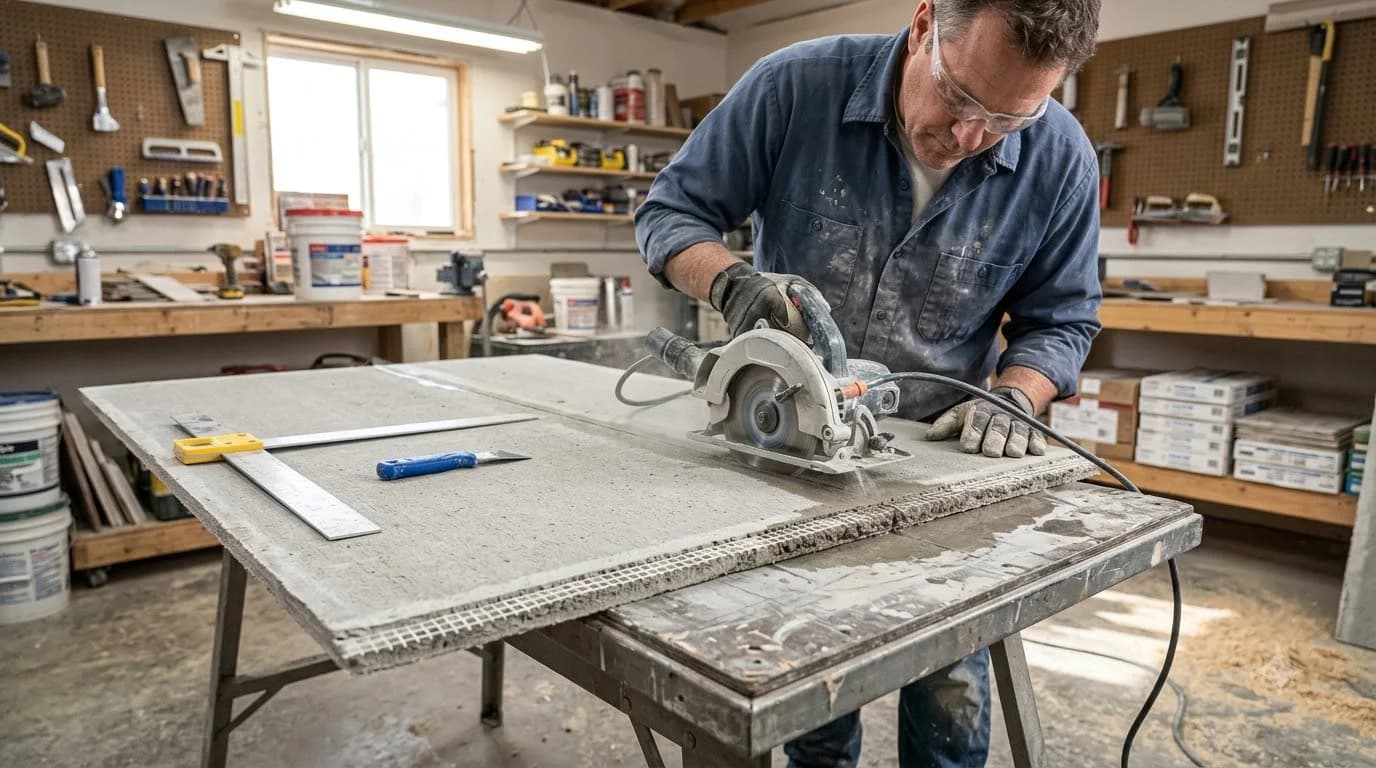
- For Clean Architectural Cuts: Use a 14" wet masonry cut-off saw or 7-1/4" worm-drive circular saw with a diamond blade and water mist nozzle.
1. Masonry Cutting Tool Comparison
| Tool Setup | Blade Type | Cut Speed | Cut Accuracy | Silica Dust Output |
|---|---|---|---|---|
| 4.5" Angle Grinder | Segmented Diamond | Fast (45–60 sec) | High (Crisp lines) | Very High (Requires dust shroud) |
| Mason Cold Chisel & Hammer | Hardened High-Carbon Steel | Moderate (2–3 min) | Moderate (Rough textured edge) | Virtually Zero (Coarse chips only) |
| 7-1/4" Circular Saw | Masonry Diamond Blade | Very Fast (30 sec) | Highest (Table-straight) | Extreme (Requires wet kit) |
| Reciprocating Saw (Sawzall) | Carbide Grit Blade | Slow (3–5 min) | Low (Blade tends to wander) | Low to Moderate |
2. Method 1: Angle Grinder with Diamond Blade (Contractor Standard)
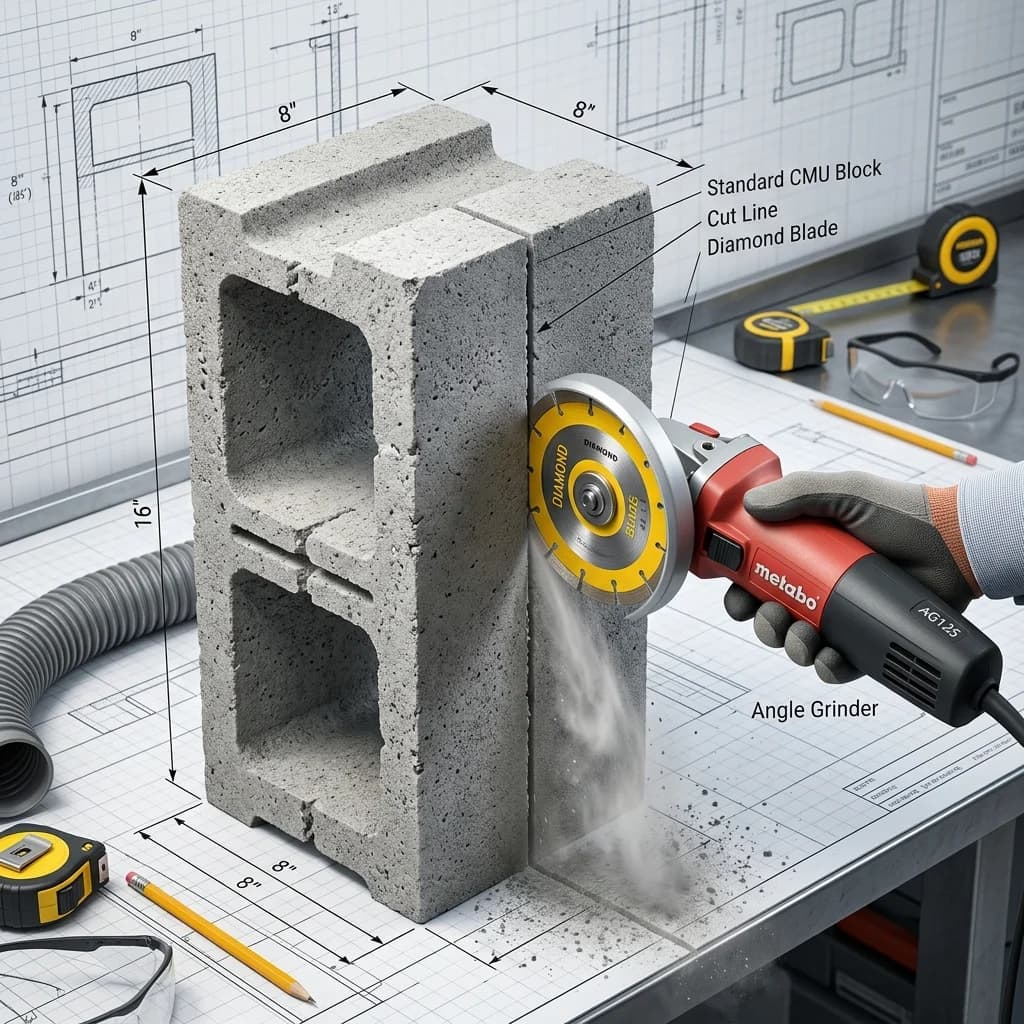
An angle grinder is the most versatile tool on a masonry jobsite because it allows you to score straight cuts, carve out pipe notches, and cut clean electrical box openings into block walls.
Step 1: Mark the Perimeter with a Framing Square
A standard 8x8x16 CMU measures 15-5/8" long. To make a true half-block (accounting for a 3/8" mortar joint), measure exactly 7-5/8 inchesfrom one edge. Use a carpenter's pencil or chalk line with a speed square to draw guidelines around all four faces (front shell, top web, back shell, and bottom web).
Step 2: Score 1/2" to 1" Deep on All Four Sides
Set the grinder to full RPM before touching the block. Make a shallow 1/4-inch scoring pass first to lock in the cut line, then deepen the cut to 3/4" or 1". Because the face shell is 1-1/4" thick, cutting 1" deep leaves only a razor-thin structural ligament holding the block together.
Step 3: Snap with a Mason's Chisel
Place your cold chisel into the scored groove on the top shell. Give it one solid, confident tap with a 2.5 lb club hammer. The block will snap cleanly across the interior core webs along the scored groove with crisp, factory-like edges.
3. Method 2: Cold Chisel & Hammer (No Power or Dust)
If you are working in a finished basement or backyard without outdoor power or dust containment, you can split blocks cleanly using traditional hand scoring:
Tools Required
- 3-inch wide masonry bolster / cold chisel (hardened steel edge)
- 2-pound to 3-pound club hammer or mason's hammer
- Gloves and ANSI Z87.1 impact safety glasses (vital for flying chips)
- A soft sand bed or timber offcut to cushion the block while striking
The Progressive Strike Method
Lay the block flat on sand. Hold the chisel perpendicular on your mark and tap lightly along the line to groove the surface 1/16" deep. Flip the block and groove all four sides. Once grooved all the way around, return to the face shell and strike the chisel with firm, centered blows. The micro-fractures will propagate inward, snapping the unit cleanly in half.
4. OSHA Silica Dust Control (Safety Protocol)
Crystalline Silica Inhalation Warning (OSHA 29 CFR 1926.1153)
Concrete blocks contain up to 30% quartz silica. Dry power cutting creates microscopic airborne silica particles that penetrate deep into lung tissue, causing irreversible silicosis. Federal OSHA regulations mandate one of two control methods:
5. Cutting Openings into Existing Block Walls (Doors & Windows)
Cutting a rough opening into a finished cinder block basement wall or garage requires temporary structural shoring. Under IRC Section R606, you cannot simply cut an opening without supporting the masonry above:
- Temporary Shoring: Erect 2x6 timber shores or screw jacks against the ceiling joists on both sides of the wall before cutting.
- Cut the Lintel Slot First: Cut the top horizontal slot 16 inches wider than your planned opening. Install a precast concrete lintel or two steel angle irons (back-to-back) packed with non-shrink mortar.
- Vertical Plunge Cuts: Once the lintel has cured for 48 hours, use a 14-inch wet cut-off saw to make vertical plunge cuts down the jamb sides. Knock out the center blocks with a 10 lb sledgehammer working from top to bottom.
Need to estimate wall materials and cut allowances?
Calculate block counts, mortar bags, and core fill with 5–10% cutting waste buffers.
Frequently Asked Questions
What is the best tool to cut a cinder block?
For the cleanest and fastest cuts, a 4.5-inch or 7-inch angle grinder equipped with a segmented diamond masonry blade is the undisputed contractor favorite. For long straight lines across multiple blocks, a 7-1/4-inch circular saw with a diamond blade provides deeper depth of cut.
Can you cut a cinder block without power tools?
Yes. Traditional masons use a 3-inch wide masonry cold chisel (brick bolster) and a 2.5-pound club hammer. By scoring a 1/8-inch groove around all four outer faces of the block and tapping progressively firmer along the score line, the block will naturally snap cleanly in half along the plane of weakness.
Can you cut a cinder block with a wood saw or reciprocating saw?
Standard wood blades will be instantly destroyed within 2 seconds of contacting concrete aggregate. However, a reciprocating saw (Sawzall) equipped with a specialized carbide-grit or diamond-edge masonry blade can cut cinder blocks, making it particularly useful for plumbing pipe notch-outs in tight corners.
How much waste should I calculate for cuts on a block wall?
Contractors factor a 5% to 10% waste buffer into wall block estimates to account for cutting half-blocks at corner leads, pipe penetrations, and accidental breakage. You can calculate precise block requirements with our Cinder Block Wall Calculator.
Building Codes & Primary Standards Cited
Standard Specification for Loadbearing Concrete Masonry Units
Defines face shell and web minimum thickness tolerances required when scoring and splitting CMU units.
Respirable Crystalline Silica in Construction
Mandatory engineering controls and respiratory protection standards for cutting masonry with powered equipment.
International Residential Code: Masonry Lintel & Opening Requirements
Specifies structural lintel bearing lengths and structural headers when cutting openings into bearing walls.
Estimations adhere to standard North American modular 3/8-inch mortar joint physics and 5% to 10% material waste factors. Local municipal building inspectors, stamped architectural blueprints, and local frost depth requirements supersede general reference guidelines.
Popular Quick Estimates
Pre-engineered takeoffs & benchmarks matched to this project
Related Calculators
Specialized tools for foundation, core fill, and budgeting
Step-by-step masonry formulas and corner waste rules
Direct wall dimensions with window and door deductions
Core grout volume in cubic yards and 80-lb pre-mix bags
Dry block weight, filled core weight and hauling loads
Blogs & Construction Guides
Technical articles, IRC code standards, rebar schedules & freight logistics
How to Drill into Cinder Block & Fasten Heavy Anchors
How to Drill into Concrete: Hammer Drills & SDS Bits
How to Cut Concrete Slabs: Circular Saw & Diamond Blades