Quick Contractor Answer: Use a Carbide Scoring Knife or Electric Shears for Zero Dust
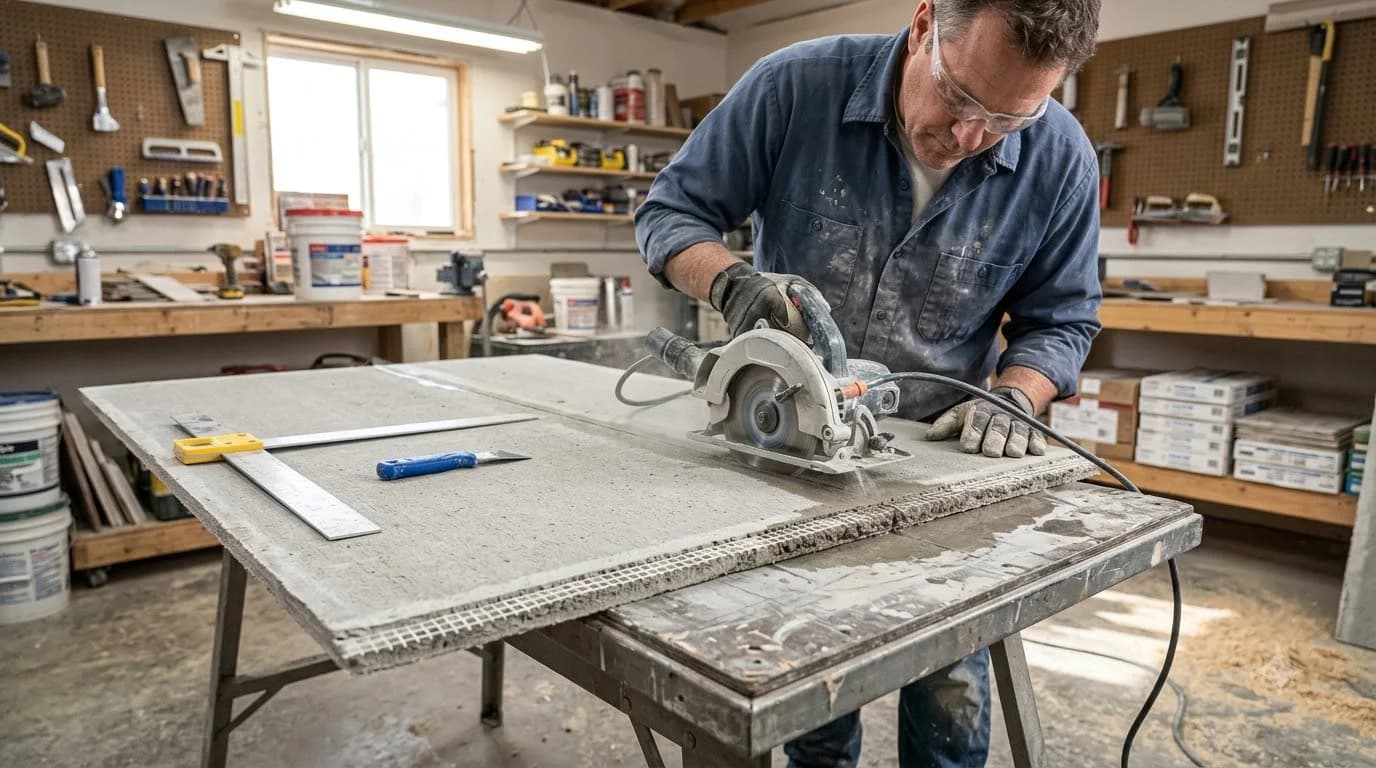
For straight cuts on Durock, WonderBoard, or HardieBacker, clamp a straightedge and draw a carbide-tipped scoring knife 2 to 3 times to slice the fiberglass mesh and score the cement core. Snap the board over the edge of your workbench and slice the back mesh with a utility knife. For plumbing circles, use a carbide hole saw or a jigsaw fitted with a carbide-grit blade. Never use dry circular saws indoors without OSHA-certified HEPA dust shrouds.
1. Material Chemistry: Aggregated CBU vs. Fiber-Cement Boards
Tile contractors encounter two primary types of cementitious backer units, each requiring slight adjustments in cutting technique:
- Aggregated Cementitious Backer Units (CBU - ASTM C1325 / ANSI A118.9): Brands like USG Durock and WonderBoard consist of a Portland cement and expanded shale aggregate core encased in an open-weave alkali-resistant fiberglass mesh. When scored through the mesh, the coarse cement core snaps cleanly with gentle downward hand pressure.
- Cellulose Fiber-Reinforced Cement Board (ASTM C1288): Brands like James Hardie HardieBacker blend Portland cement, silica sand, and cellulose wood fibers into a dense, homogeneous sheet without external mesh. Because there is no mesh to snap, scoring requires a slightly deeper groove, or the use of motorized electric fiber-cement shears.
2. Cement Board Cutting Methods Matrix
Review the efficiency, accuracy, and dust control characteristics of common cutting tools:
| Cutting Tool | Best Cut Types | Silica Dust Level | Indoor Use Suitability | Tool Cost Range |
|---|---|---|---|---|
| Carbide Scoring Knife | Full-length straight cuts & edge rips | Zero Airborne Dust | 100% Safe inside finished homes | $8 – $15 |
| Electric Fiber-Cement Shears | Straight cuts, L-shaped notches & strips | Zero Dust (Waste curls into ribbons) | Excellent (Fast production work) | $95 – $190 |
| Carbide Grit Jigsaw Blade | Curved shower valves, toilet flanges, notches | Low (Coarse heavy granular shavings) | Safe with shop vacuum extraction | $7 – $12 |
| Carbide / Diamond Hole Saw | Precise circular pipe penetrations (1" to 4") | Low (Run drill at low RPM) | Safe; hold wet sponge against bit | $15 – $35 |
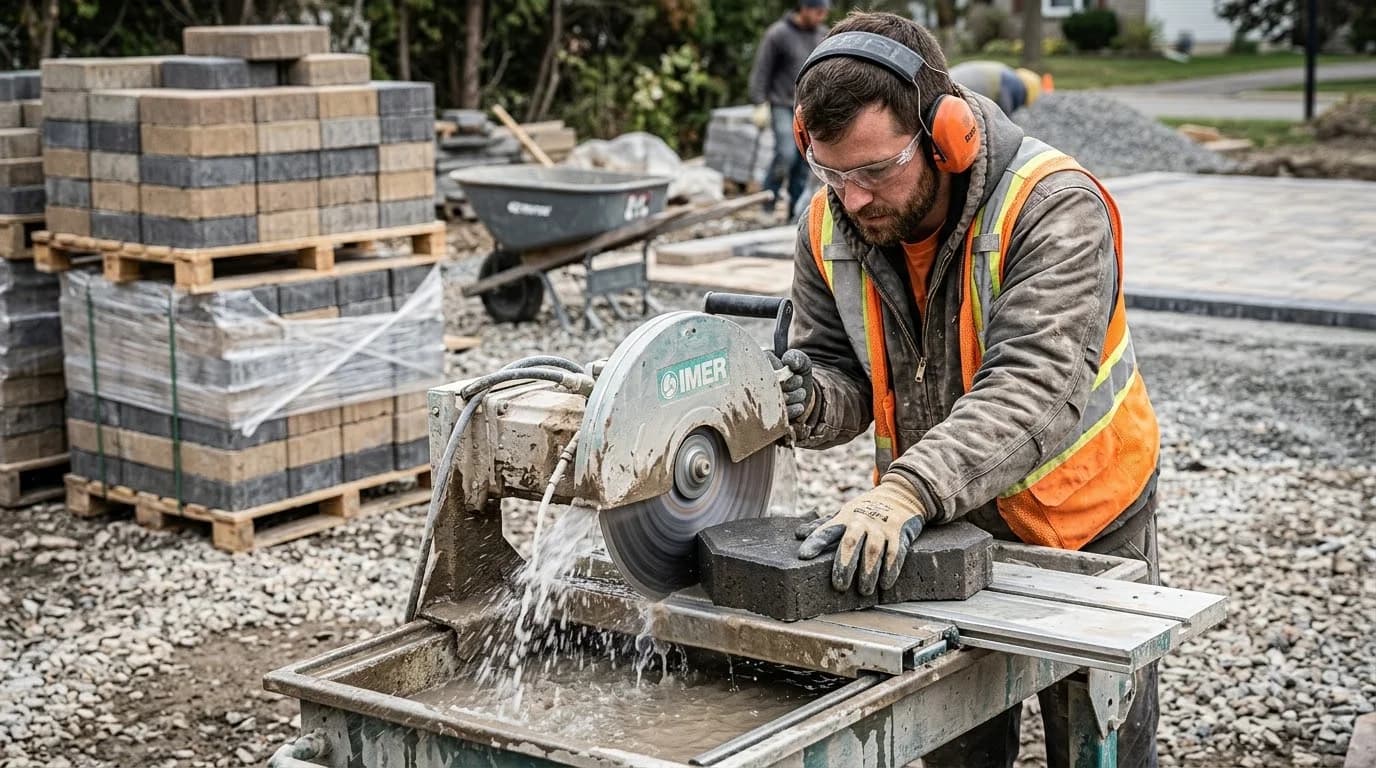
| Circular Saw with PCD Blade | High-volume outdoor gang cutting | EXTREME HAZARDOUS DUST | Outdoor ONLY with HEPA shroud & P100 mask | $60 – $150 |
3. The Flawless Score-and-Snap Procedure
The score-and-snap technique is universally preferred by professionals working in occupied residences because it creates virtually zero airborne dust under OSHA 1926.1153:
- Support the Sheet: Lay the cement board flat on a sturdy workbench or across a pair of sawhorses spanned by two 2x4s. Never try to snap a board resting on an uneven dirt or gravel surface.
- Clamp a Rigid Straightedge: Align a 4-foot level or heavy metal drywall square along your layout marks. Hold or clamp it firmly so it cannot shift.
- Score the Face Mesh: Using a tungsten-carbide-tipped scoring tool, pull the hooked tip along the straightedge with firm downward pressure. Make 2 to 3 steady strokes. Ensure the carbide tooth has sliced completely through the top fiberglass mesh and incised a 1/16-inch groove into the cement core.
- Execute the Snap: Slide the scored line 1 to 2 inches past the edge of the workbench. Place one hand flat on the supported section of the board, and press firmly downward on the cantilevered piece with your other hand. The board will snap cleanly along the score line with a crisp snap.
- Slice the Backing Mesh: Fold the snapped piece downward at a 90-degree angle. Reach into the fold with a standard utility knife and slice the rear fiberglass mesh to separate the pieces cleanly.
4. Cutting Plumbing Pipe & Valve Openings
Cutting penetrations for shower mixing valves, shower heads, and toilet drains requires specialized techniques to prevent shattering the panel:
- Hole Saw Method: Chuck a carbide-grit or diamond-edged hole saw into an 18V drill. Set the drill to low speed (drill mode, NOT hammer mode). Press a wet sponge against the hole saw arbor to suppress dust and cool the cutting teeth. Drill slowly until the slug pops free.
- Jigsaw with Carbide Grit Blade: Drill a 1/2-inch pilot hole inside the layout circle using a carbide masonry drill bit. Insert a carbide-grit rod jigsaw blade (such as a Bosch T130RF) into the hole. Cut along the pencil line at medium stroke speed without aggressive orbital action.
- Chisel / Rasp Method (Corner Notches): If fitting around a plumbing pipe near an edge, make two parallel cuts with a carbide scoring knife or hand saw, then tap the tab out with a cold chisel and rasp the edge smooth with a drywall rasp.
5. Mandatory Fastening & Joint Taping Standards (ANSI A118.9)
Proper cutting is only the first step. Substrate failure occurs when panels are installed improperly:
- Floor Mortar Bed:Under ANSI A118.9, floor backer board must be embedded into a freshly combed layer of modified thinset mortar (using a 1/4" × 1/4" square-notch trowel) over plywood subfloors. The mortar provides 100% continuous support, eliminating microscopic subfloor voids that crack tile grout.
- Corrosion-Resistant Screws: Fasten panels using dedicated 1-1/4" polymer-coated cement board screws (Backer-On or Rock-On). Never use standard black drywall screws; the alkaline chemistry of Portland cement will corrode drywall screws within 2 to 5 years.
- Joint Mesh & Thinset: Leave a 1/8-inch gap between board sheets. Cover all seams with 2-inch alkali-resistant fiberglass mesh tape and embed the tape in modified thinset mortar prior to tile installation.
5 Critical Cement Board Cutting Mistakes to Avoid
Using Dry Circular Saws Indoors
Running an un-shrouded circular saw indoors fills the room with hazardous crystalline silica dust, destroying HVAC air filters and creating severe respiratory health risks.
Using Standard Steel Razor Blades
A standard utility knife blade dulls instantly against the abrasive cement core. Always use a dedicated tungsten carbide scoring knife that maintains its sharp tooth for dozens of sheets.
Snapping Boards Over Uneven Ground
Attempting to snap a scored sheet while it rests on an uneven lawn or gravel driveway causes the break to wander off the score line, cracking the sheet into jagged, unusable shards.
Fastening with Standard Drywall Screws
Drywall screws lack alkali corrosion resistance. In moist bathroom environments, the screw shanks rust away, causing tile walls to detach from the wall studs.
Planning a Tile or Masonry Project?
Calculate thinset mortar, backer board sheets, screws, and estimated 2026 material costs.
Frequently Asked Questions
Can you cut cement board with a regular utility knife?
A standard utility knife blade easily slices the outer fiberglass mesh of Durock, but the cement core instantly dulls standard steel razor blades in 2 to 3 strokes. Use a $10 carbide-tipped scoring knife designed specifically for cement backer units.
How do you cut circular holes in cement board for plumbing pipes?
For round penetrations (shower mixing valves, shower heads, toilet flanges), use a carbide-grit or diamond hole saw running at low RPM, or drill a 1/2-inch starter hole and cut the circumference using a carbide grit jigsaw blade.
Which side of cement board faces out when installing?
On Durock and WonderBoard, install the rough textured side facing out toward the tile thinset (the smooth side with grid lines faces the framing studs). On HardieBacker, the side with the dotted fastener pattern faces outward toward the tile.
Why should you avoid using a circular saw indoors for cement board?
High-speed dry circular saws aerosolize billions of microscopic crystalline silica particles, creating a dense choking dust cloud that violates OSHA 1926.1153 safety standards and contaminates the entire home HVAC system. Use score-and-snap or electric shears indoors.
Does cement backer board require thinset mortar underneath floor installations?
Yes. ANSI A118.9 mandates a combed bed of modified thinset mortar beneath floor backer board sheets to fill microscopic subfloor voids and eliminate deflection, even though the board is also screwed down every 8 inches.
Building Codes & Primary Standards Cited
American National Standard Specifications for Cementitious Backer Units
Establishes performance, flexural strength, and installation standards for tile substrates.
Standard Specification for Non-Asbestos Fiber-Mat Reinforced Cementitious Backer Units
Governs core composition and alkali-resistant mesh reinforcement specifications.
Respirable Crystalline Silica Standard for Construction
Mandates dust suppression or low-dust scoring methods to protect workers from silica exposure.
Estimations adhere to standard North American modular 3/8-inch mortar joint physics and 5% to 10% material waste factors. Local municipal building inspectors, stamped architectural blueprints, and local frost depth requirements supersede general reference guidelines.
Popular Quick Estimates
Pre-engineered takeoffs & benchmarks matched to this project
Related Calculators
Specialized tools for foundation, core fill, and budgeting
Brick, block, and stone joint mortar bags and masonry sand
Type S and M bags, cubic feet and batching sand volume
Step-by-step masonry formulas and corner waste rules
Complete 4-wall structures, sheds and masonry workshops
Blogs & Construction Guides
Technical articles, IRC code standards, rebar schedules & freight logistics
How to Drill into Cinder Block & Fasten Heavy Anchors
How to Drill into Concrete: Hammer Drills & SDS Bits
How to Cut Cinder Blocks: Grinder, Saw & Chisel Guide