1. The Critical Sequence of Finishing Fresh Concrete
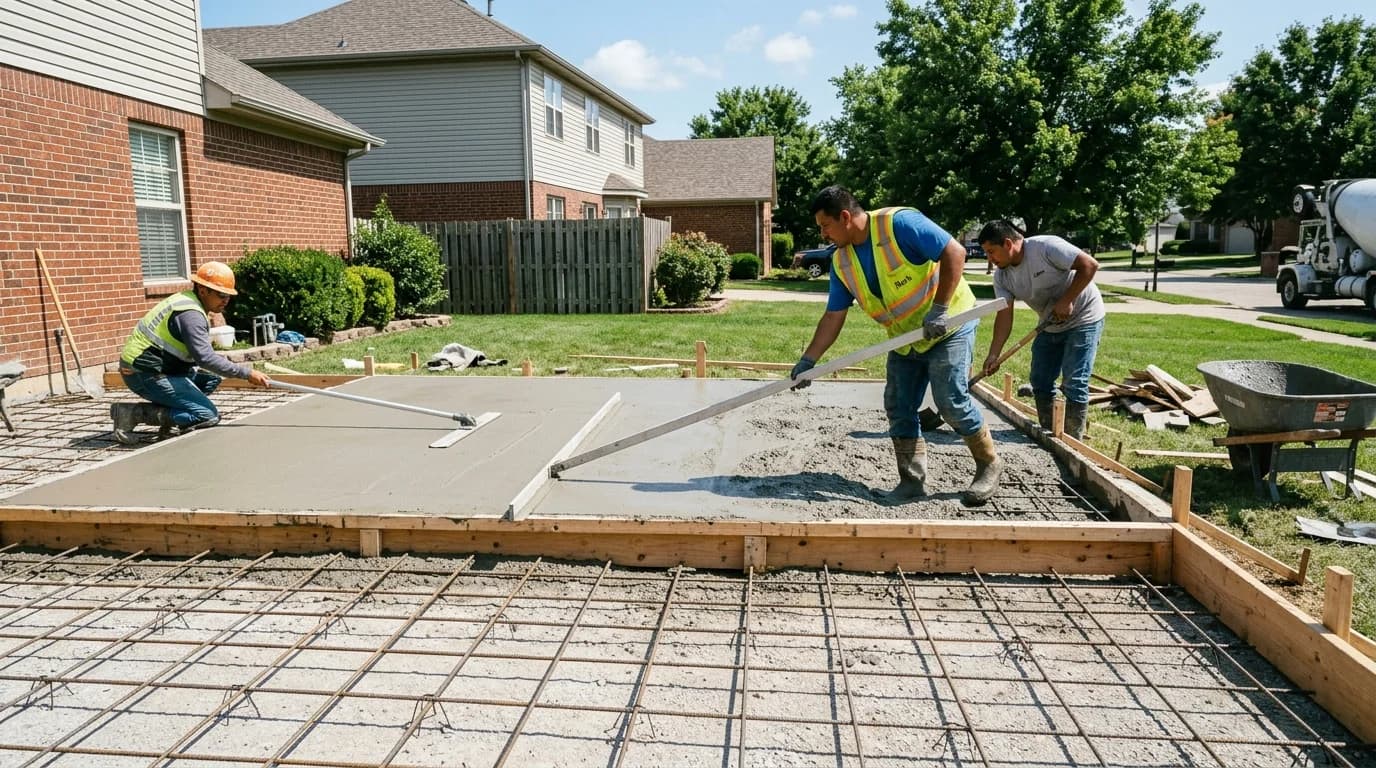
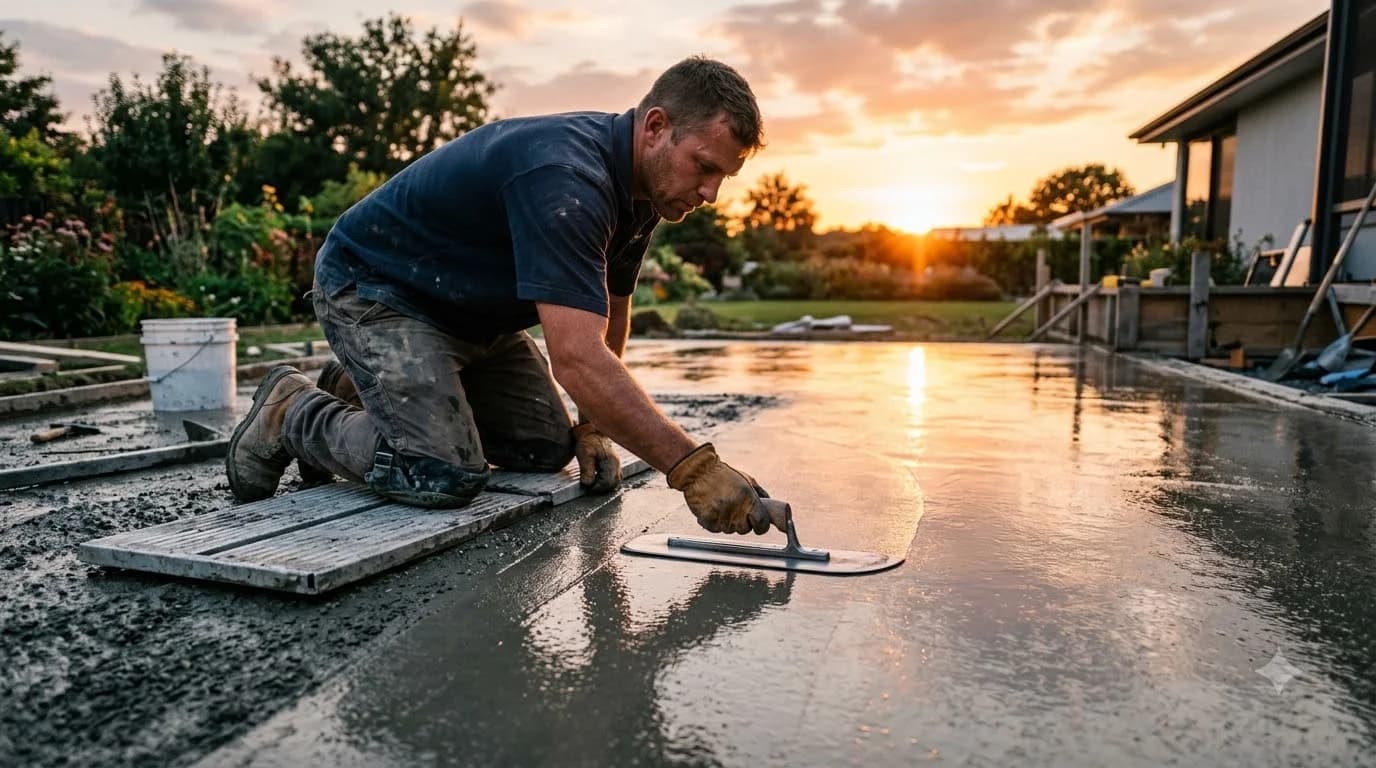
Concrete finishing is an unforgiving process driven by chemical hydration timing: 1. **Screeding (Strike-off):** Immediately level wet concrete flush with form tops using a straightedge. 2. **Initial Bull Floating:** Float the surface within minutes of screeding to embed large gravel aggregate and bring creamy cement paste to the top. 3. **The Bleed Water Waiting Period:** As concrete settles, excess water rises to the surface. **Do not touch the concrete while bleed water is visible.** 4. **Edging & Grooving:** Tool rounded border corners and cut control joints once the slab can support knee boards with less than 1/4-inch indentation. 5. **Final Troweling or Brooming:** Float with magnesium, finish-trowel with steel (interior) or pull a broom (exterior non-slip).
2. Concrete Finishing Tools & Timing Matrix
Review the purpose and application window of each masonry finishing tool:
| Finishing Tool | Blade Material | Timing Window | Primary Purpose | Surface Result |
|---|---|---|---|---|
| Straight Screed Board | Wood 2x4 or Aluminum box | Immediately during pour | Leveling high spots & dips | Dead-flat plane level with forms |
| Bull Float (48") | Extruded Magnesium blade | Immediately after screed | Knocks aggregate down 1/8" | Smooth creamy surface paste |
| Bronze Edger | Cast bronze / stainless steel | After bleed water clears | Rounds sharp exterior edges | Resists edge chipping under load |
| Hand Groover | Bronze / steel with 1" bit | Same time as edging | Cuts contraction control joints | Guides drying shrinkage cracks |
| Magnesium Hand Float | Rough magnesium alloy | When thumb leaves 1/4" dent | Evens ridges & opens pores | Smooth matte breathable finish |
| Steel Finishing Trowel | High-carbon blue spring steel | Final set (ringing sound) | Densifies and burns surface | Glass-smooth slick interior floor |
| Horsehair Finish Broom | Soft / medium synthetic bristles | Immediately after floating | Textured micro-grooves | Non-slip exterior traction grip |
3. Step-by-Step Trowel & Broom Finishing Protocol
1. **Bull Floating Pitch:** Push the bull float across the slab with the front edge tilted slightly up. Pull it back across the slab flat with the rear edge tilted up. Keep blade angle shallow (less than 1 inch of lift) to avoid gouging. 2. **Evaporate Bleed Sheen:** Watch the surface carefully. In dry warm weather, bleed water clears in 30 to 60 minutes; in cool humid weather, it may take 2 hours. 3. **Knee Board Edging:** Place 2x2 ft plywood knee boards on the slab. Run the edger along perimeter forms using long, continuous back-and-forth strokes until edges are mirror-smooth. 4. **Hand Floating:** Float the surface with a 16-inch magnesium hand float in wide sweeping arcs to erase edger lines and consolidate the cream. 5. **Apply Broom Finish:** Dip a concrete finish broom into clean water and shake off excess. Pull the broom lightly in one continuous, straight stroke toward you. Overlap each stroke by 1 inch for uniform texture.
Frequently Asked Questions
What happens if you work concrete while bleed water is still on the surface?
Troweling bleed water works excess water back into the top cement paste. This severely weakens the surface water-cement ratio, resulting in crazing cracks, dusting, and severe winter spalling.
Can you put a steel trowel finish on an outdoor patio or driveway?
No. Steel-troweled concrete creates an ultra-smooth, slick surface that becomes dangerously slippery when wet with rain or snow. Outdoor residential slabs should always receive a textured broom finish.
How do you fix marks or ridges left by the bull float?
Minor bull float ridges are easily smoothed out later during the hand-floating stage once bleed water has evaporated and the slab has stiffened enough to bear weight.
Building Codes & Primary Standards Cited
Guide for Concrete Floor and Slab Construction
Sets authoritative timing benchmarks and practices for float and trowel operations.
Water Retention by Liquid Membrane-Forming Compounds
Regulates surface moisture loss rates during finishing and early curing.
Estimations adhere to standard North American modular 3/8-inch mortar joint physics and 5% to 10% material waste factors. Local municipal building inspectors, stamped architectural blueprints, and local frost depth requirements supersede general reference guidelines.
Popular Quick Estimates
Pre-engineered takeoffs & benchmarks matched to this project
Related Calculators
Specialized tools for foundation, core fill, and budgeting
Heavyweight structural blocks and bond beam units
Cubic yards, bags, and slab volume for flatwork and footings
Core grout volume in cubic yards and 80-lb pre-mix bags
Step-by-step masonry formulas and corner waste rules
Blogs & Construction Guides
Technical articles, IRC code standards, rebar schedules & freight logistics
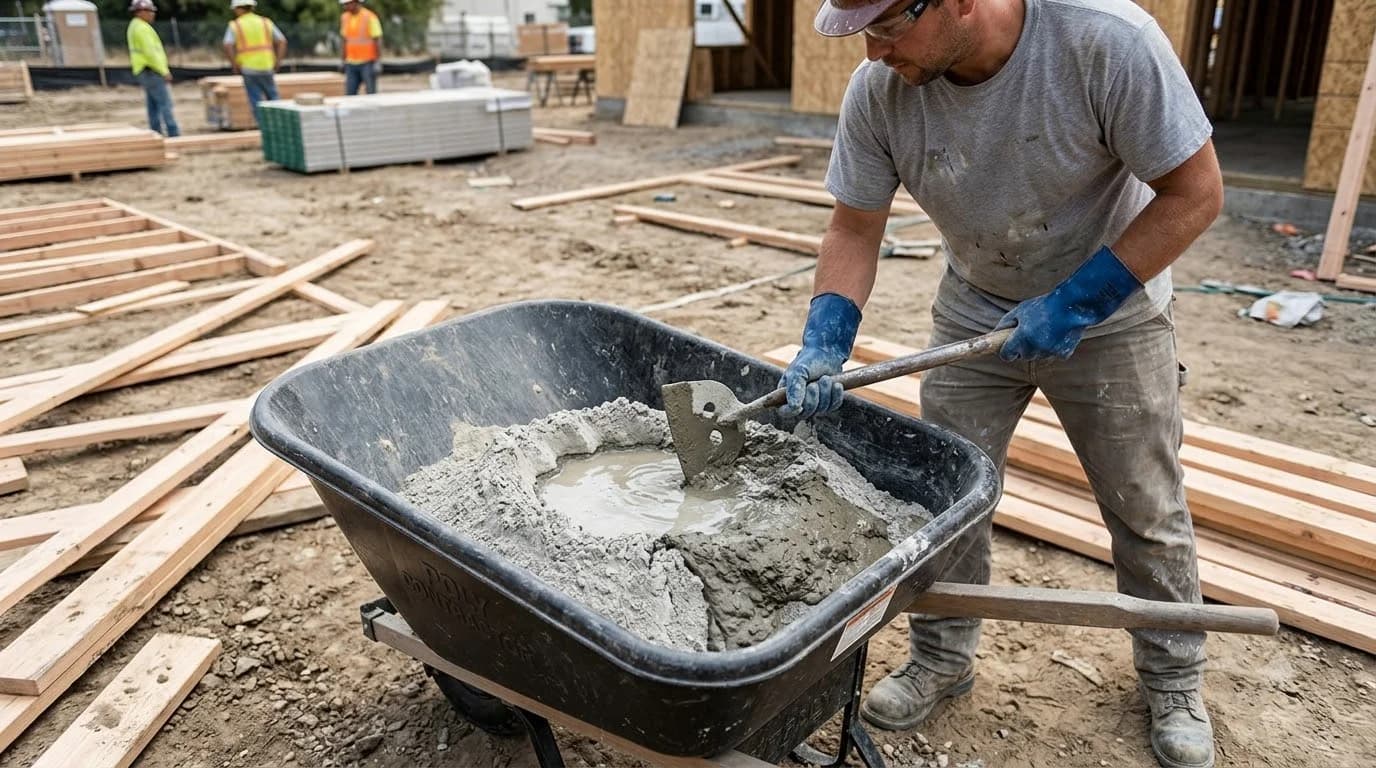
How to Mix Concrete by Hand: Wheelbarrow Water Ratio
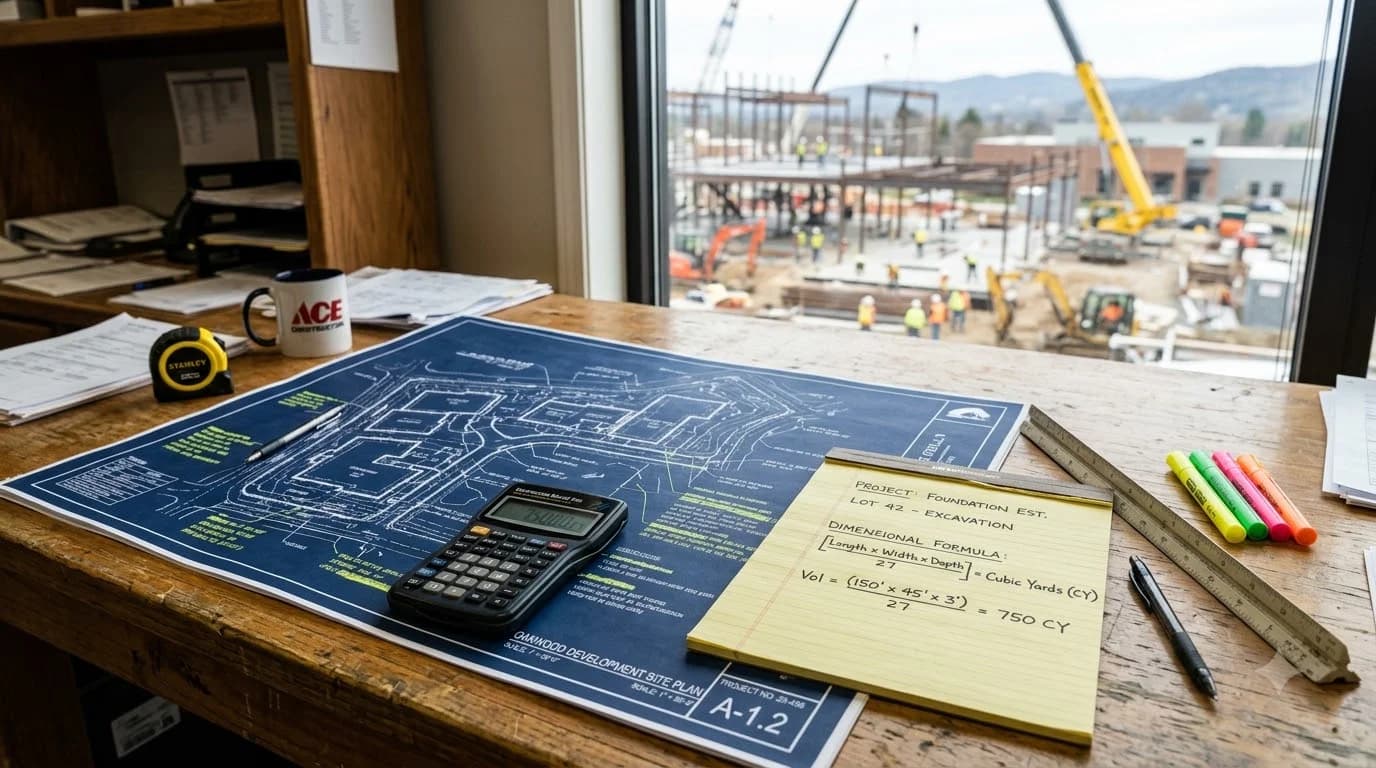
How to Calculate Concrete Yards: Step-by-Step Math
How to Seal Concrete: Siloxane vs Acrylic Sealers