Concrete Pump Line Volume Calculator
Calculate internal pipeline cubic yards, slurry primer packets, hopper loss, and charged hose handling weights for 2" to 5" lines.
CinderCalc
Concrete Pump Line Volume & Priming Takeoff Sheet
cinderblockscalculator.com • Concrete Pumping Logistics
Date: 10/30/2026
Line Diameter: 2.5" ID
Line Run: 150 ft
1. Pipeline Volume & Weight Specifications
| Inside Diameter (ID) | 2.5 inches |
| Total Run Length | 150 linear feet |
| Internal Volume (Cubic Yards) | 0.189 cu yds |
| Internal Volume (Cubic Feet / Gallons) | 5.11 ft³ (38.2 gal) |
| Line Capacity Per Foot | 0.0341 ft³/ft (0.255 gal/ft) |
| Charged Line Gross Weight | 1,116 lbs (0.56 US Tons) |
| Charged Handling Weight Per Foot | 7.4 lbs/linear ft |
2. Slurry Priming & Ready-Mix Dispatch Allowance
| Slick-Pak Primer Packets | 1 pouch(es) (+5 gal water) |
| Pump Hopper Remnant Allowance | 0.33 cu yds |
| Unrecovered Line Volume | 0.19 cu yds (0% recovery rate) |
| Total Ready-Mix Surcharge Allowance | +0.52 cu yds |
American Concrete Pumping Association (ACPA) Guidelines:
• Never discharge primer slurry or Slick-Pak residue into forms, structural members, or CMU wall cells.
• Concrete density calculated at 145 lbs/cu ft. Volumetric formula: V = π × d² × L / 576 cu ft.
• Planning estimates only. Verify with local ready-mix dispatch and certified concrete pumping contractor.
Concrete & Grout Line Capacity Reference Table
Capacities calculated using pure volumetric cylinder geometry ($V = \pi r^2 L$) with standard normal-weight concrete density (145 lbs/cu ft).
| Inside Diameter | Capacity per Ft | Gallons / LF | Volume per 100 Ft | Charged Wt / Ft | Slick-Pak Coverage |
|---|---|---|---|---|---|
| 2.0" ID (Grout Hose) | 0.0218 cu ft | 0.163 gal | 0.081 cu yds (16.3 gal) | 4.9 lbs/ft | 1 pkt per 300 ft |
| 2.5" ID (Line Pump) | 0.0341 cu ft | 0.255 gal | 0.126 cu yds (25.5 gal) | 7.4 lbs/ft | 1 pkt per 200 ft |
| 3.0" ID (Trailer Pump) | 0.0491 cu ft | 0.367 gal | 0.182 cu yds (36.7 gal) | 10.9 lbs/ft | 1 pkt per 150 ft |
| 4.0" ID (Boom Pipe) | 0.0873 cu ft | 0.653 gal | 0.323 cu yds (65.3 gal) | 19.7 lbs/ft | 1 pkt per 125 ft |
| 5.0" ID (Heavy Boom) | 0.1364 cu ft | 1.020 gal | 0.505 cu yds (102 gal) | 32.3 lbs/ft | 1 pkt per 100 ft |
Unit Capacity: 0.0218 ft³/ft • 0.163 gal/ft
Weight: 4.9 lbs/ft charged
Priming: 1 packet per 300 ft
Unit Capacity: 0.0341 ft³/ft • 0.255 gal/ft
Weight: 7.4 lbs/ft charged
Priming: 1 packet per 200 ft
Unit Capacity: 0.0491 ft³/ft • 0.367 gal/ft
Weight: 10.9 lbs/ft charged
Priming: 1 packet per 150 ft
Unit Capacity: 0.0873 ft³/ft • 0.653 gal/ft
Weight: 19.7 lbs/ft charged
Priming: 1 packet per 125 ft
Unit Capacity: 0.1364 ft³/ft • 1.020 gal/ft
Weight: 32.3 lbs/ft charged
Priming: 1 packet per 100 ft
Pipeline Volumetric Math & Hydraulic Physics
Concrete pump lines and masonry grout hoses behave as circular hydraulic conduits. Calculating the interior volume requires converting the internal diameter $d$ (expressed in inches) into feet ($d / 12$), calculating the circular cross-sectional area, and multiplying by pipeline run length $L$ in feet:
V (cu ft) = \pi \times (d / 24)^2 \times L = (\pi \times d^2 \times L) / 576 cu ft
V (cu yds) = V (cu ft) / 27 = (\pi \times d^2 \times L) / 15,552 cu yds
Gallons = V (cu ft) \times 7.48052 gal/cu ft
Because volume scales with the square of the diameter ($d^2$), moving from a 2" grout line to a 4" boom pump quadruples ($2^2 = 4$ vs $4^2 = 16$) the concrete volume held per linear foot (from 0.0218 cu ft/ft up to 0.0873 cu ft/ft). This non-linear relationship is why boom pumps hold substantially more concrete and require larger priming allowances.
How to Set Up, Prime & Calculate Pumped Concrete Orders
Standard operating procedure based on ACPA and ready-mix supplier best practices.
Survey Full Run & Hose Reductions
Measure total linear distance from the pump hopper to the farthest pour point. Count all 5-inch boom sections, 4-inch deck lines, 3-inch reductions, and flexible rubber tip hoses.
Enforce the ACPA 3:1 Aggregate Rule
Verify aggregate size against hose diameter. The minimum line ID must be 3 times larger than the largest rounded aggregate (or 3.5 to 4 times for angular crushed gravel) to prevent catastrophic aggregate bridging plugs.
Mix Slurry Primer Ahead of Pour
Dissolve Slick-Pak pouches in 5 gallons of water per pouch (use 10–15 gallons if pumping concrete containing high-range water reducers). Allow 5 minutes for polymer chain activation into a thick slick slurry.
Purge Priming Slurry into Washout Pit
Introduce primer directly into the pump hopper or through a priming port ahead of concrete. Pump through the line and catch the entire slurry slug in a wheelbarrow or washout bin. Never pump primer into formwork.
Add Hopper Remnant to Dispatch Order
Concrete pumps require 0.25 to 0.50 cubic yards of concrete in the hopper to maintain head pressure over the cylinders. Add this loss plus line volume to your ready-mix order, rounded to the nearest 1/4 yard.
Perform Safe Sponge Ball Cleanout
At the conclusion of the pour, insert a medium-density sponge washout ball into the line. Push the ball through using water or carefully regulated compressed air with a blowout safety relief cap.
ACPA Pumping Safety & Jobsite Hazard Control
- Tip Hose Whipping & Air Trapping: If air enters the concrete pumping cylinders, air compresses under hydraulic pressure (up to 1,200 PSI) and violently expands at the open nozzle, causing the heavy rubber tip hose to whip uncontrollably. Keep the hopper filled above cylinder intake level at all times.
- Nozzle Line Crew Ergonomics: A charged 3" hose weighs nearly 11 lbs per linear foot; holding a 10-foot bend requires supporting over 100 lbs of dynamic weight while countering surge pulses. Always rotate tip-hose operators and assign secondary line support crew.
- Clamp Pin & Safety Latch Inspection: Every snap-clamp coupling between hose sections must be secured with a steel safety pin. Never operate a pressurized concrete line without locking pins; loose clamp handles can spring open under pump pressure.
- Never Hammer on a Pressurized Line: If a blockage occurs, the pump operator must immediately reverse pump stroke to relieve trapped line pressure before inspecting couplings or tapping pipe walls. Hammering on a line under 1,000+ PSI pressure risks explosive joint rupture.
Material estimates depend on the selected dimensions, product yields, and waste allowance.
Concrete Pump Line & Priming FAQ
Authoritative contractor answers regarding line volumes, Slick-Pak dosages, hopper waste, and ready-mix orders.
Popular Quick Estimates
Illustrative takeoffs with stated assumptions; verify project quantities
Cinder Block Grout Calculator: Cubic Yards & Bag Math
Example: 0.22 ft³ cores × 1/6 fill; excludes waste
24x24 Garage Slab
576 ft² × 5/12 ft ÷ 27; excludes waste and design
4-in Patio Slab Takeoff
Ready-mix yardage with 10% subgrade allowance
1000 Sq Ft Sizing
High-volume logistics & bulk pallet freight
Related Calculators
Specialized tools for foundation, core fill, and budgeting
Heavyweight structural blocks and bond beam units
Core grout volume in cubic yards and 80-lb pre-mix bags
Cubic yards, bags, and slab volume for flatwork and footings
Spanning grade beams over drilled piers, rebar cages, and shear stirrups
Blogs & Construction Guides
Practical guides to block sizing, material estimates and project planning
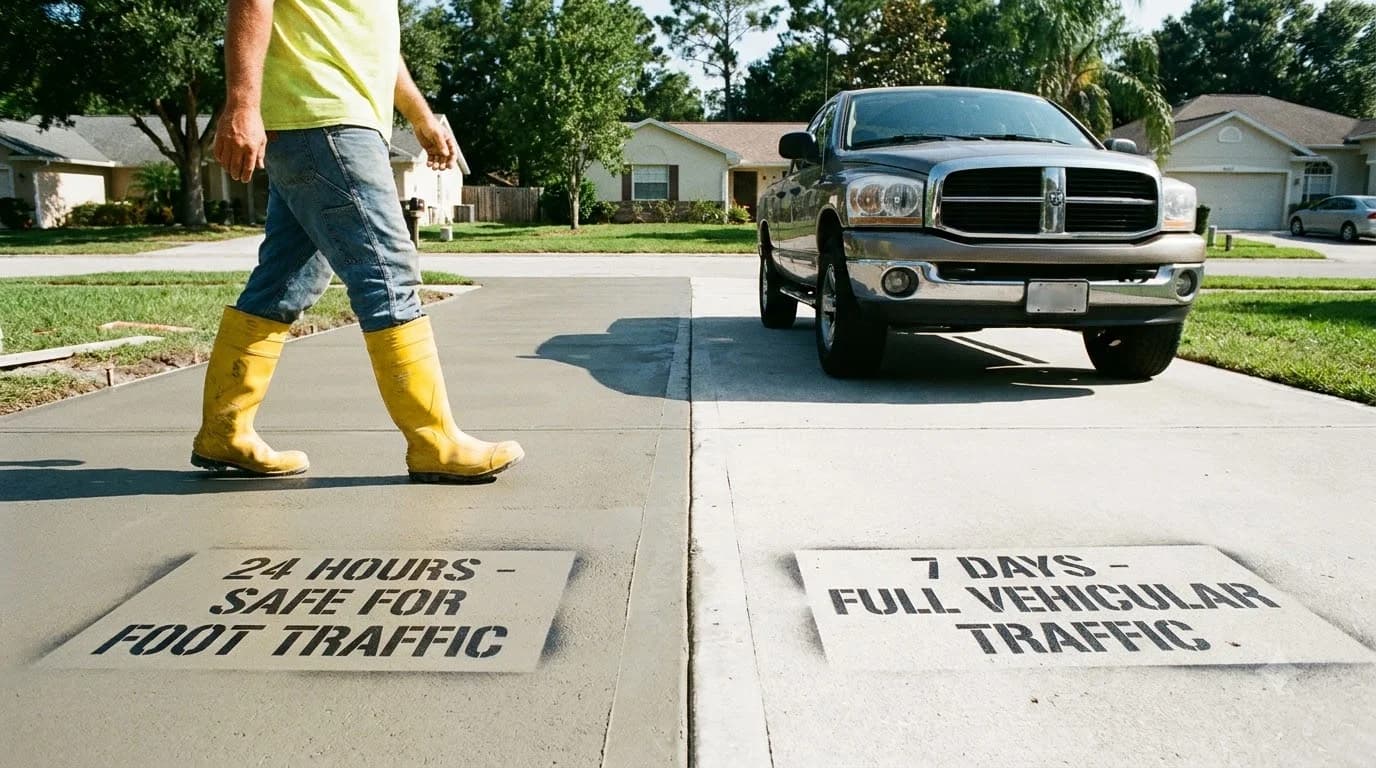
When Can You Walk or Drive on Concrete? (Timeline)

Concrete Molds & DIY Forms: Pavers, Stepping Stones & Edging
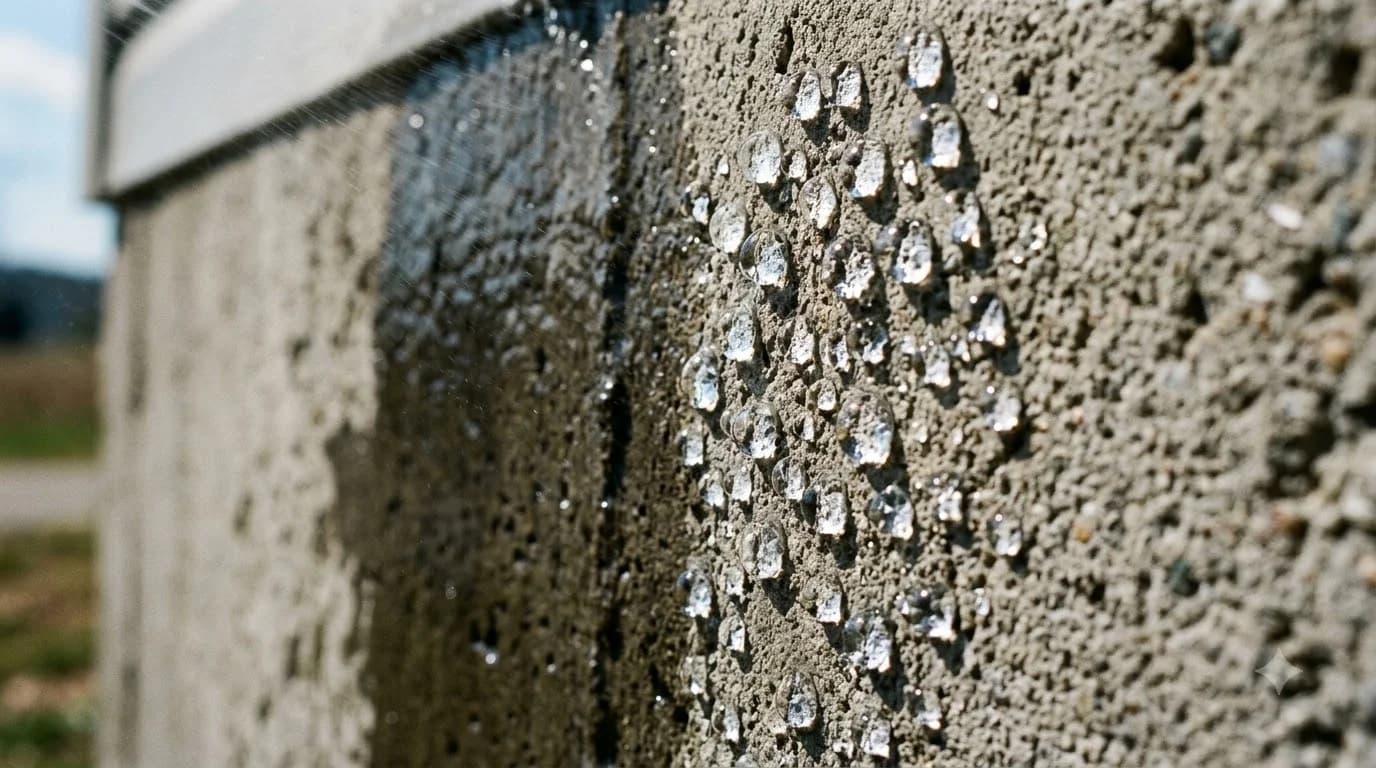
Is Concrete Porous? Permeability & Waterproofing Guide