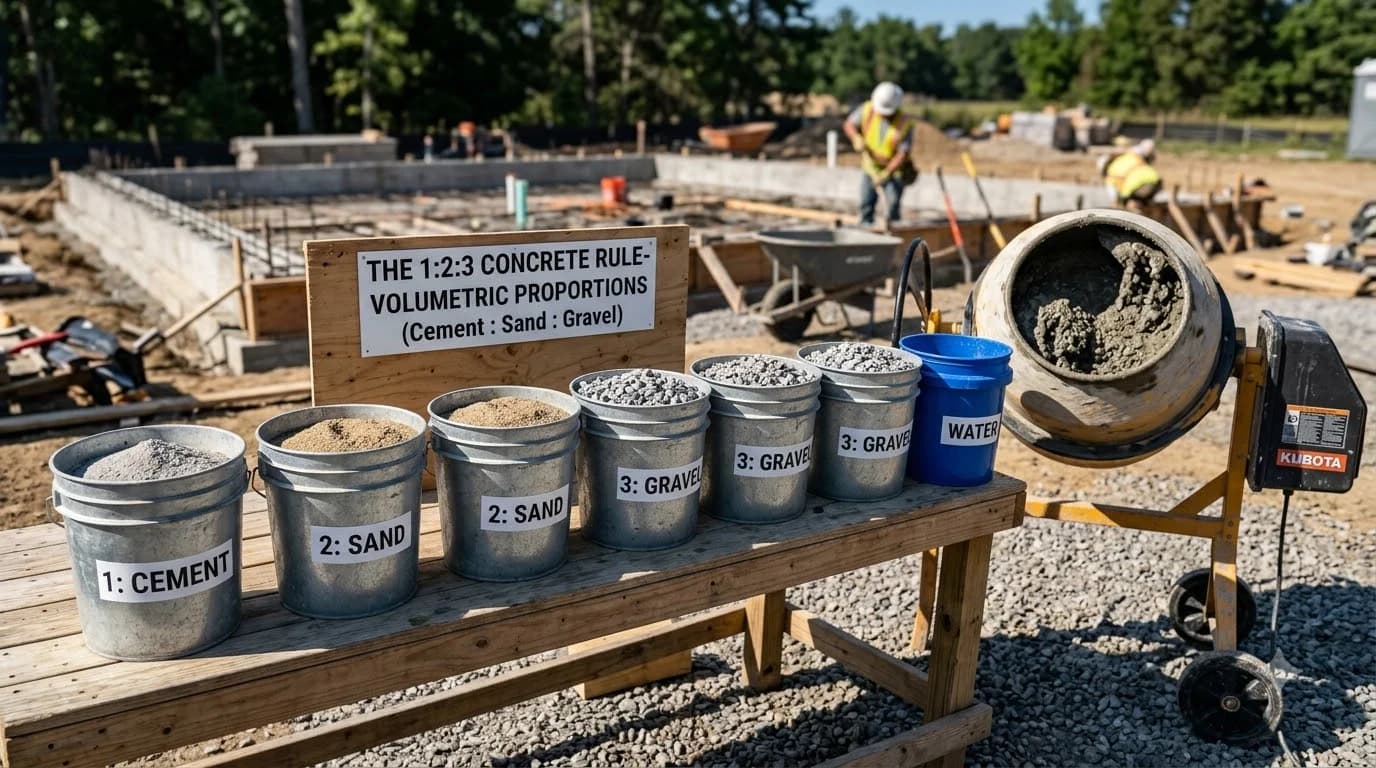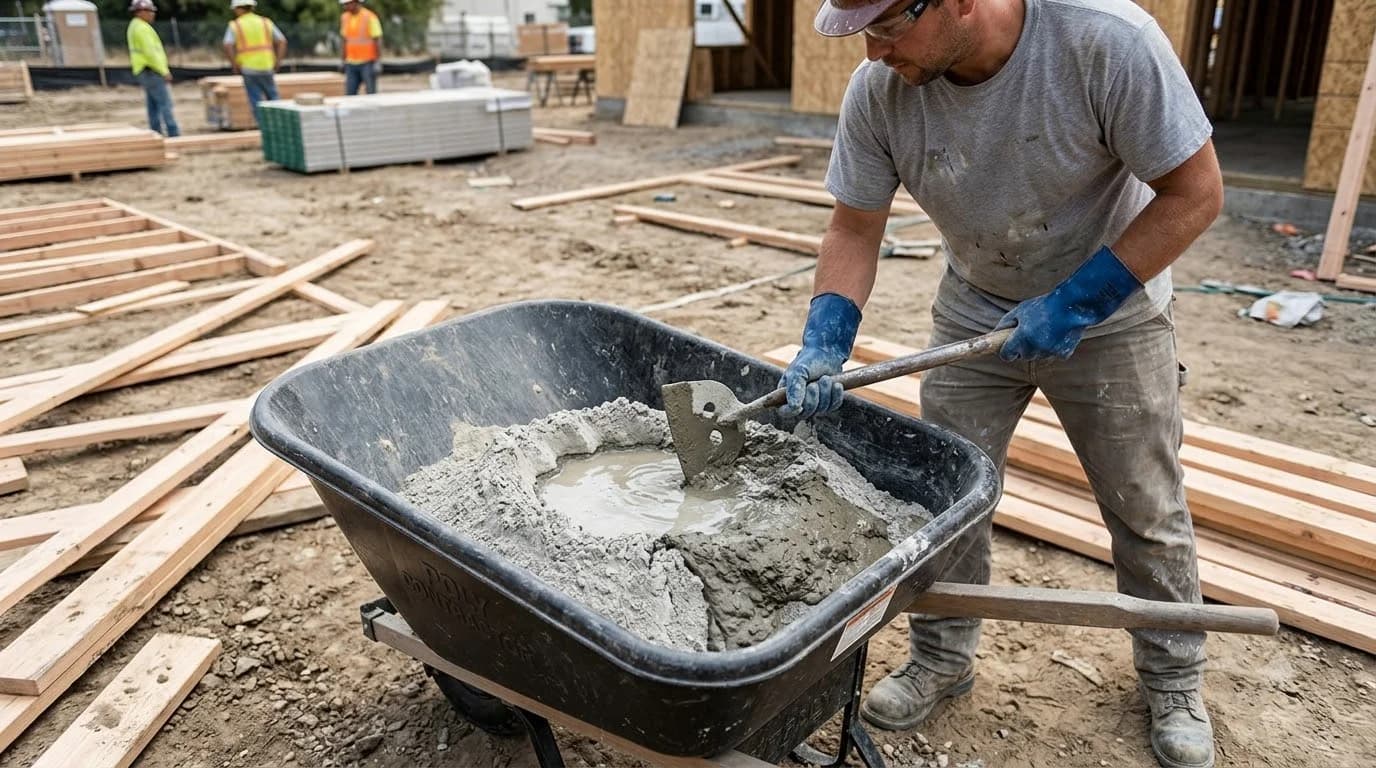
Quick Answer: Mix bagged concrete using a two-hole mortar hoe in a 6 cu ft wheelbarrow. Use exactly 2.5 to 3.0 quarts of water per 80-lb bag (or 1.8 to 2.2 quarts per 60-lb bag). Pour 2/3 of water into a carved center crater, fold dry powder inward from the rim, and add remaining water in splashes until a cohesive, oatmeal-like consistency (3 to 4-inch slump) is reached.
1. The Water-Cement Ratio: Compressive Strength vs Workability
The single most destructive mistake in DIY and residential concrete construction is adding excessive water to make the wet mix easier to shovel and spread. Concrete does not harden by drying out; it hardens through an irreversible, exothermic chemical reaction called hydration, wherein Portland cement crystals bind water molecules into a rigid calcium silicate hydrate matrix.
The ideal water-to-cement ratio (w/c) for bagged structural concrete is approximately 0.40 to 0.45 by weight:
- Correct Ratio (2.5 to 3.0 qts / 80-lb bag): Yields 3,500 to 4,000 PSI compressive strength at 28 days, low capillary porosity, excellent freeze-thaw durability, and minimal drying shrinkage.
- Excessive Water (4.0+ qts / 80-lb bag): Drops compressive strength by up to 40 percent (down to 2,000 PSI or less), creates bleed-water channels that rise to the surface, causes severe surface dusting (laitance), and produces widespread shrinkage cracks within 48 hours.
A properly mixed batch should resemble thick, cohesive oatmeal—wet enough to pack densely into form corners and bond around rebar without honeycombing, but stiff enough to hold its shape when piled into a heap without slumping into a liquid soup.
2. Hand-Mixing Equipment & Capacity Matrix
Choose the right vessel and tool based on your project volume, available crew, and physical site constraints:
| Mixing Vessel | Batch Capacity | Physical Effort | Cleanability | Recommended Job Size |
|---|---|---|---|---|
| 6 Cu Ft Steel Wheelbarrow | Two 80-lb bags (1.2 cu ft) | Moderate (Ergonomic height) | Easy (Hose & tip forward) | Fence posts, small footings, step repairs (1–8 bags) |
| Heavy Poly Mortar Tub | Three 80-lb bags (1.8 cu ft) | High (Stooping / bending) | Moderate (Flat bottom) | Bricklaying mortar, paver leveling beds (3–10 bags) |
| Heavy Tarp (2-Person Roll) | One 80-lb bag (0.6 cu ft) | Low (Back-and-forth roll) | Immediate (Shake clean) | Remote off-grid areas with zero tool access (1–3 bags) |
| Portable Electric Drum Mixer | Two to three 80-lb bags | Minimal (Motorized rotation) | Easy (Water spin rinse) | Slab walkways, patios, projects requiring >8 bags |
3. Step-by-Step Wheelbarrow Hand-Mixing Protocol
Follow this sequential, field-tested procedure to batch uniform, lump-free concrete in under 5 minutes per cycle:
- Safety Preparation: Put on heavy nitrile-coated waterproof gloves, wraparound safety glasses, and an N95 dust mask. Wet Portland cement is highly caustic (pH 12 to 13) and causes severe chemical skin burns upon prolonged contact.
- Position & Chock the Wheelbarrow: Park the wheelbarrow on level ground. Place a brick or block behind the tire to prevent unexpected rolling while you pull the hoe vigorously.
- Load Dry Mix: Rest an 80-lb bag across the wheelbarrow rim. Slice the paper center with the corner of your hoe or a utility knife, lift both ends, and let the powder dump into the center. Never drop bags from overhead to avoid sending silica dust plumes into the air.
- Form the Volcano Crater: Use your hoe to push dry mix outward against the wheelbarrow sides, creating a deep central depression or crater with high perimeter banks.
- Add 2/3 of Batch Water: Measure exactly 2.0 quarts of clean water per 80-lb bag using a marked bucket. Pour this water directly into the crater pool. Reserve the remaining 0.5 to 1.0 quart for final adjustment.
- Fold In with Two-Hole Mortar Hoe: Stand at the front of the wheelbarrow. Place the hoe blade at the outer perimeter and pull dry mix into the center pool with steady, deliberate strokes. The two holes in a masonry mortar hoe allow wet aggregate to pass through, cutting mixing resistance by half compared to a solid garden hoe.
- Scrape Bottom Corners: Pay special attention to the front sloped nose and bottom rear corners of the wheelbarrow, where dry unmixed cement powder loves to hide. Scrape the blade flat against the metal tray bottom to pull all dry pockets into the slurry.
- Fine-Tune with Reserved Water: If dry gray streaks remain, splash 1 to 2 cups of reserved water onto the stubborn spots. Mix for an additional 60 seconds until the batch achieves uniform gray color, glossy sheen, and consistent aggregate distribution throughout.
4. Field Slump & Consistency Testing
Professional jobs use a standard 12-inch Abrams slump cone (ASTM C143) to verify consistency. On small hand-mixed jobs, you can perform two quick, highly accurate field checks:
The Spade Slap Test: Firmly slap the flat backside of your shovel or float against the surface of the mixed concrete:
- Too Dry (Slump <2"): The surface stays dull, rough, and granular. Individual gravel stones do not settle into paste, leaving visible air pockets. Add 1 cup of water and remix.
- Ideal Consistency (Slump 3–4"): The surface instantly turns smooth, glossy, and wet from a thin cream of cement paste. No water pools or runs off the edges.
- Too Wet (Slump >6"): Water and cement paste pool heavily on top like gray milk soup, while coarse gravel sinks to the bottom. Add 5 to 10 lbs of dry concrete mix from an unopened bag to absorb excess water.
The Ridge Carve Test: Drag the blade of your trowel through the mix to carve a 2-inch deep V-groove. In a properly proportioned batch, the ridges of the groove stand crisp and upright without collapsing or melting back together.
5 Costly Hand-Mixing Mistakes to Avoid
Eyeballing water with an open garden hose
Hoses discharge 5 to 10 gallons per minute, flooding the mix in seconds. Always use a calibrated measuring bucket to add precise quarts.
Leaving dry pockets in wheelbarrow corners
Unhydrated powder dumped into forms creates weak, crumbly void pockets inside the finished slab. Always scrape the tray bottom clean.
Overloading the wheelbarrow past 2 bags
Three 80-lb bags weigh 240 lbs, causing severe wheelbarrow tip hazards and making thorough manual hoe folding physically exhausting.
Using a standard solid garden hoe
Solid hoe blades push heavy wet gravel instead of letting it pass through. A specialized two-hole masonry mortar hoe cuts mixing fatigue by 50%.
Working without waterproof skin protection
Wet Portland cement contains calcium hydroxide, which draws moisture from skin and causes severe third-degree chemical alkaline burns that require medical grafting. Wear heavy nitrile gloves and rubber boots.
Calculate Bag Count for Your Project
Use our Concrete Bag Calculator to find exact bag requirements (50-lb, 60-lb, or 80-lb) and total mixing water volume for any slab or footing dimensions.
Frequently Asked Questions
How many bags of concrete can you realistically mix by hand?
Mixing up to 6 or 8 bags by hand is manageable for a single person in an afternoon. For projects requiring 10 to 30 bags (such as small walkways or slab pads), renting a portable electric drum mixer for $40 to $60 a day saves tremendous physical strain and guarantees uniform hydration.
Can you mix concrete in a 5-gallon bucket with a drill?
You can mix thin grout or fast-setting anchor cement in a 5-gallon bucket, but full-aggregate concrete containing heavy gravel will overload handheld drills, burn out motors, and repeatedly bind the mixing paddle. Full concrete requires a wheelbarrow, mortar tub, or drum mixer.
How do you test if hand-mixed concrete has the right consistency?
Use the spade slap test: slap the flat back of a shovel or trowel firmly against the mix surface. The concrete should become smooth and glossy with no watery pooling or liquid runoff; carving a groove with the blade edge should hold crisp, standing ridges without slumping flat.
How much water is needed per 80-lb bag of concrete mix?
A standard 80-lb bag of concrete mix requires approximately 2.5 to 3.0 quarts (0.6 to 0.75 gallons) of clean water to achieve a 3 to 4-inch slump at 3,500 to 4,000 PSI. Adding more than 3.5 quarts weakens compressive strength by 20 to 30 percent and causes surface dusting.
How long do you have to place hand-mixed concrete before it sets?
Standard Portland concrete has an initial setting time of 45 to 90 minutes at 70°F (21°C). In hot weather above 85°F, initial set drops to 30 minutes or less. Always pour, screed, and float hand-mixed batches within 20 to 30 minutes of mixing.
Building Codes & Primary Standards Cited
Standard Specification for Ready-Mixed Concrete
Establishes uniformity criteria, batching tolerances, and mixing time requirements for Portland cement composites.
Guide for Measuring, Mixing, Transporting, and Placing Concrete
Authoritative American Concrete Institute manual on field batching protocols, slump consistency tolerances, and consolidation.
Standard Test Method for Slump of Hydraulic-Cement Concrete
Defines the standard cone procedure for measuring plastic consistency and flowability in field-placed concrete.
Estimations adhere to standard North American modular 3/8-inch mortar joint physics and 5% to 10% material waste factors. Local municipal building inspectors, stamped architectural blueprints, and local frost depth requirements supersede general reference guidelines.
Popular Quick Estimates
Pre-engineered takeoffs & benchmarks matched to this project
Related Calculators
Specialized tools for foundation, core fill, and budgeting
Cubic yards, bags, and slab volume for flatwork and footings
Heavyweight structural blocks and bond beam units
Core grout volume in cubic yards and 80-lb pre-mix bags
Cell fill requirements for low-lift and high-lift grouting
Blogs & Construction Guides
Technical articles, IRC code standards, rebar schedules & freight logistics
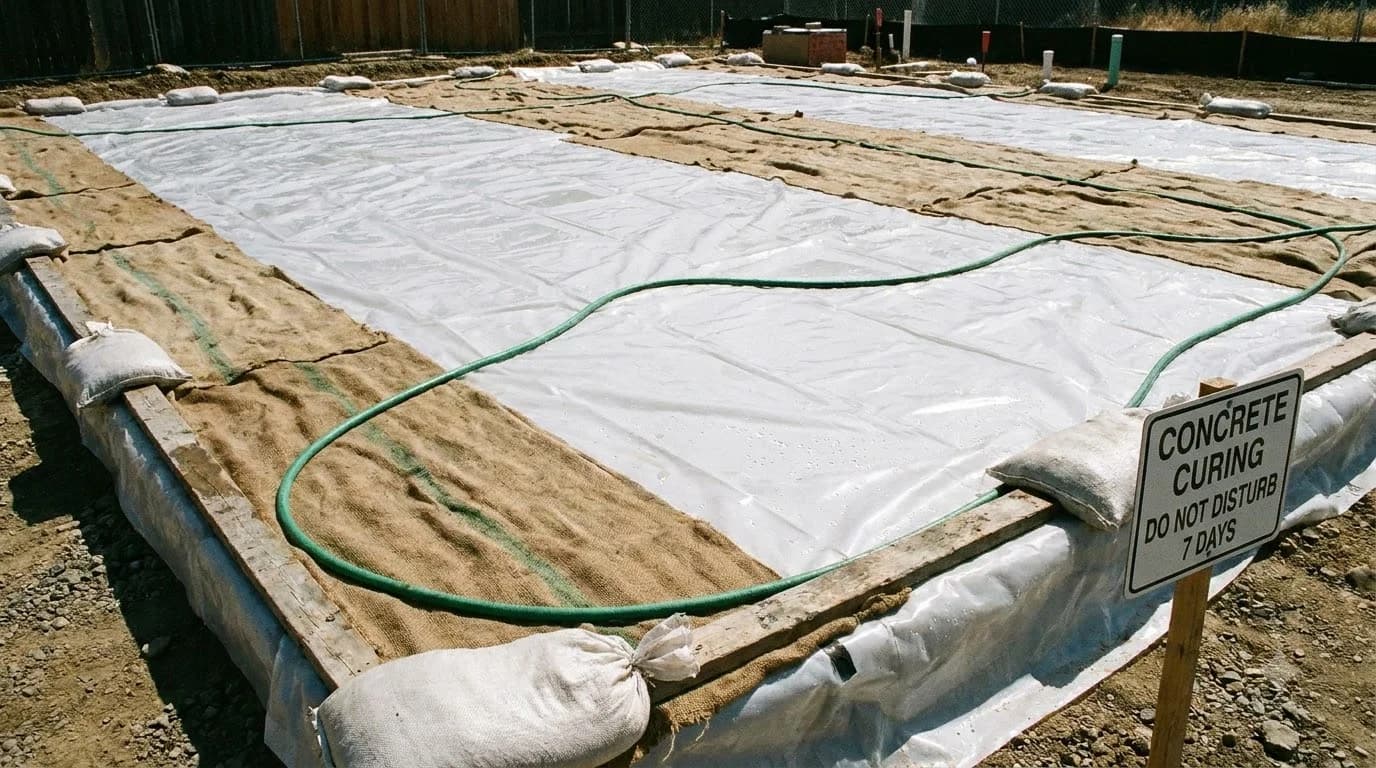
How to Cure Concrete: Wet Curing vs Curing Compounds
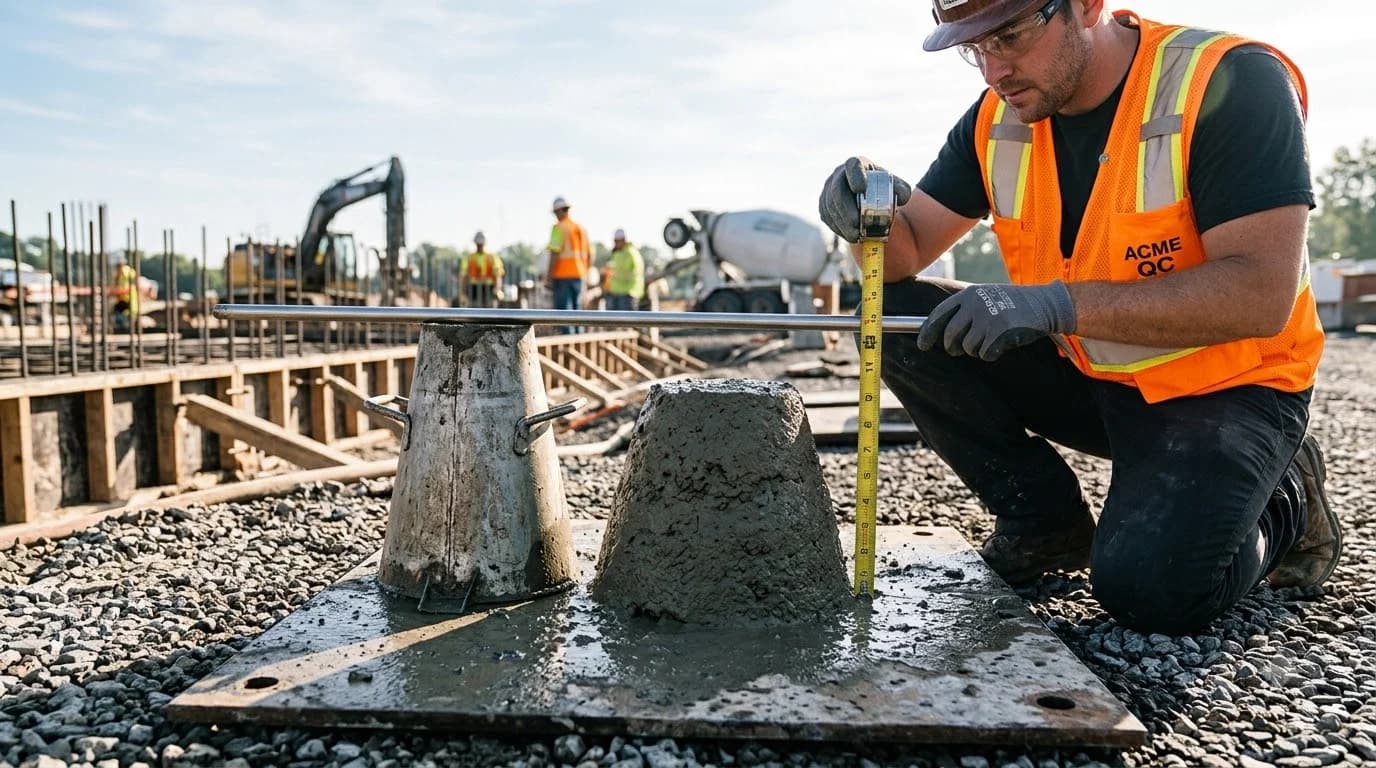
Concrete Slump Test: ASTM C143 Procedures & Values
How to Seal Concrete: Siloxane vs Acrylic Sealers