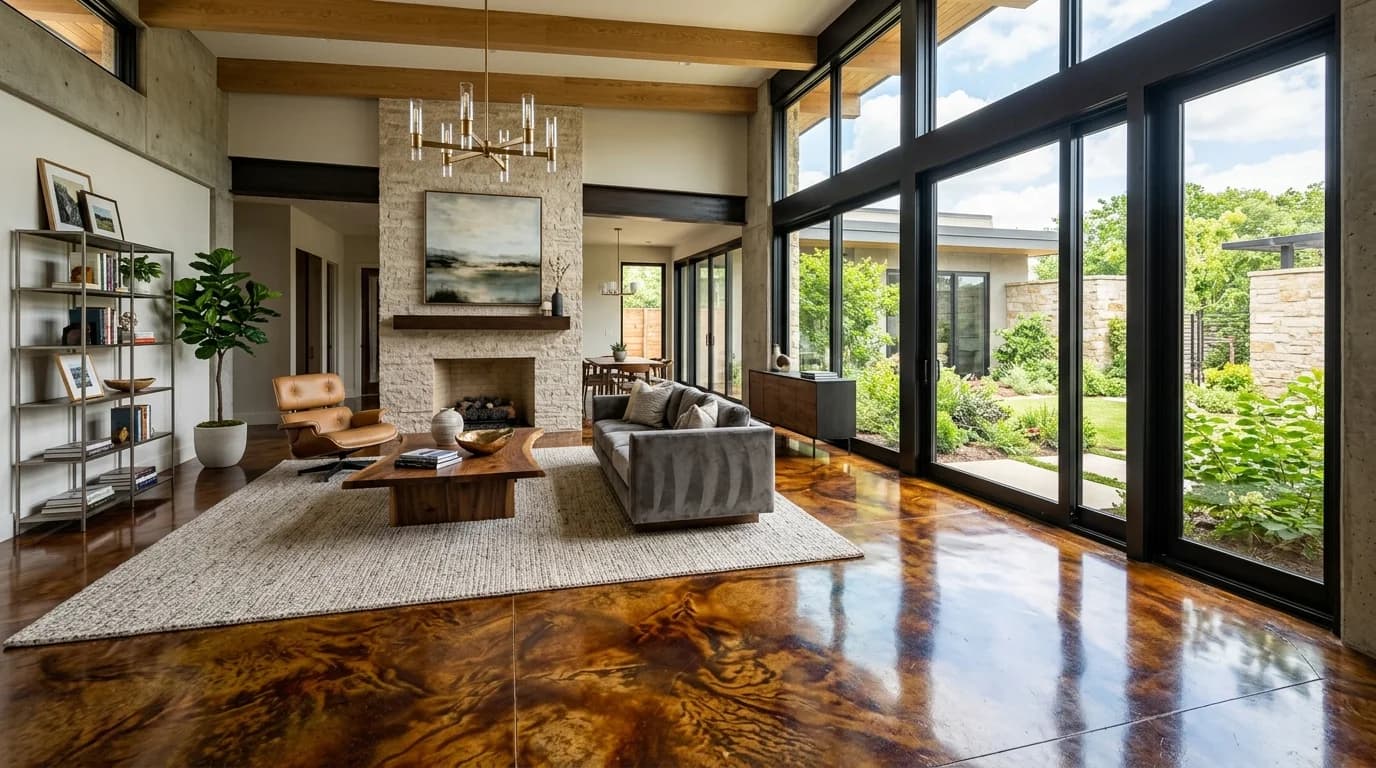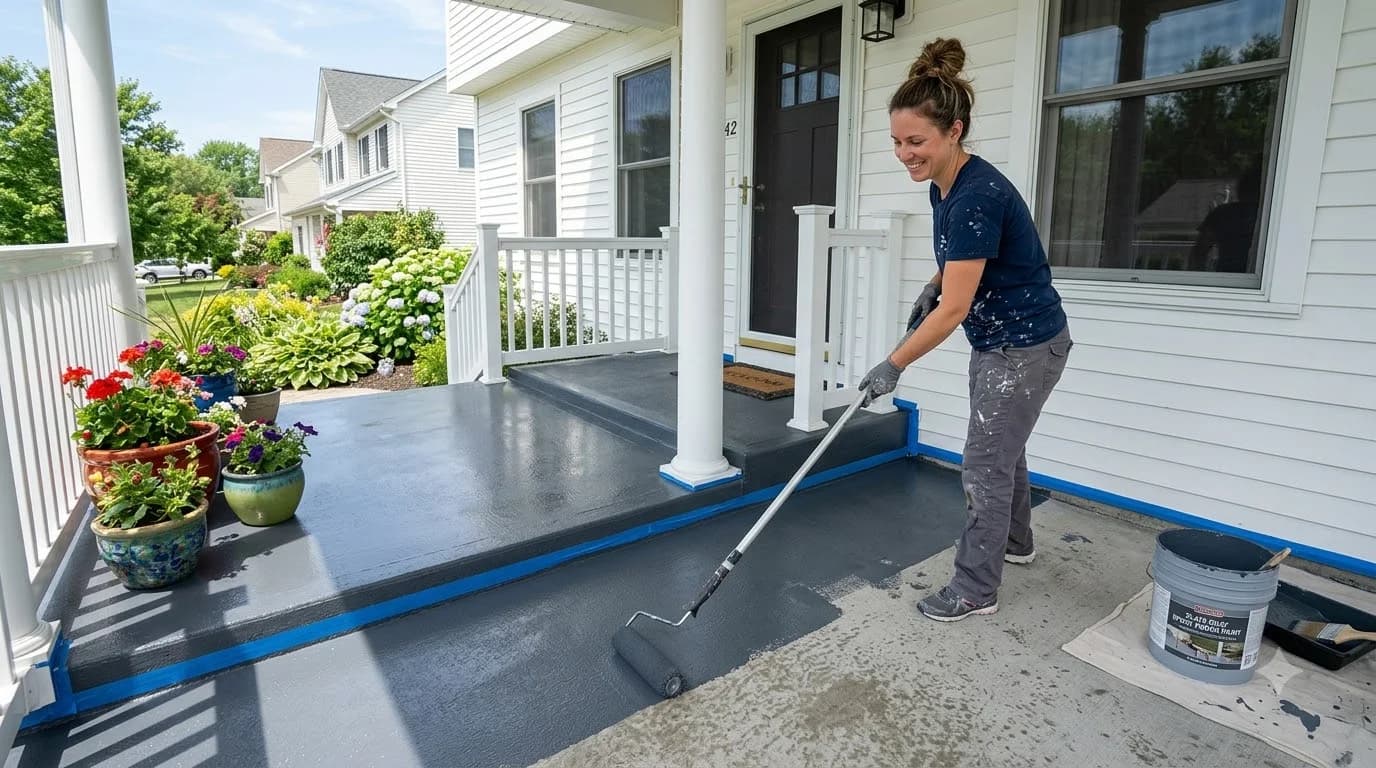
Porch paint never peels because of the paint itself; it peels because of moisture vapor transmission or poor mechanical bonding. Always test for sub-slab moisture using a 24-hour plastic sheet test (ASTM D4263). Etch smooth concrete to an ICRI CSP 1 to 2 profile (rough like 120-grit sandpaper), apply a penetrating 100% acrylic alkali-resistant primer, and finish with two coats of urethane-modified acrylic porch and floor enamel containing micronized anti-slip aggregate.
1. Why Porch Paint Fails: Hydrostatic Pressure, Alkalinity & Saponification
Exterior concrete slabs on grade are in direct contact with subterranean soil moisture. Ground moisture wicks upward through the concrete matrix via capillary action in a process known as Moisture Vapor Transmission (MVT).
If an impermeable, non-breathable oil or thick epoxy coating is applied over an exterior porch slab without an underslab vapor barrier, rising vapor pressure builds behind the coating film. During summer heat, solar vapor drives the moisture upward, blowing water blisters into the paint and delaminating whole sheets.
Concrete contains Calcium Hydroxide with a highly caustic pH of 10 to 12. If oil-based or alkyd deck paints are applied, free alkaline hydroxide molecules chemically react with the vegetable oil binders in the paint. This process (saponification) literally turns the paint resin into water-soluble soap, causing sticky goo and peeling.
2. Surface Preparation: The ASTM D4260 Etching Protocol
Troweled concrete has a hard, glassy surface layer of cement paste called "laitance." Applying paint over laitance is like painting glass—the coating has zero mechanical tooth.
Step 1: Heavy Degreasing (ASTM D4258): Scrub the porch with a heavy-duty Trisodium Phosphate (TSP) solution or biodegradable citrus degreaser to emulsify automotive drippings, barbecue grease, and tree sap. Rinse thoroughly with a 3,000 PSI pressure washer.
Step 2: Chemical Etching (ASTM D4260): Mix 1 part muriatic acid to 4 parts clean water in a plastic watering can (always pour acid into water, never water into acid). Sprinkle evenly across the damp slab at a rate of 1 gallon per 50 sq ft. The solution will vigorously foam and fizz as it reacts with calcium carbonate.
Step 3: Neutralization & Rinse: After 10 minutes of foaming, scrub with a stiff bristle broom and flood the slab with a neutralizing solution of 1 cup baking soda per 5 gallons of water. Rinse twice with clean water. Once dry, the concrete must feel rough like 120-grit sandpaper (ICRI CSP 1 to 2).
3. Porch & Floor Coating Chemistry Comparison
Select the proper coating resin chemistry to match your climate and porch exposure:
| Coating System | Resin Chemistry | Vapor Breathability | Abrasion Resistance | Expected Service Life | 2026 Material Cost / sq ft |
|---|---|---|---|---|---|
| 100% Acrylic Porch & Floor | Water-based pure acrylic latex | Excellent (Breathable) | Moderate (Foot traffic) | 3 to 5 years | $0.45 – $0.75 / sq ft |
| Urethane-Fortified Acrylic | Acrylic resin with polyurethane | Good (Semi-Breathable) | High (Scratch-resistant) | 5 to 8 years | $0.70 – $1.15 / sq ft |
| 1-Part Waterborne Epoxy | Epoxy ester acrylic hybrid | Moderate | Very High | 5 to 7 years | $0.85 – $1.40 / sq ft |
| 2-Part Industrial Epoxy | Polyamide cured epoxy | Zero (Vapor Barrier) | Maximum (Chemical resistant) | 10+ years (Interior only) | $1.80 – $3.50 / sq ft |
4. Application Protocol: Priming, Rolling & Slip-Resistant Additives
Follow this professional coating procedure to guarantee 5+ years of peeling-free performance:
- Moisture Verification (ASTM D4263): Tape an 18x18 inch square of 4-mil polyethylene plastic to the concrete with duct tape. After 24 hours, peel it back. If condensation appears on the plastic or the concrete is darkened, moisture vapor is excessive; painting will fail without a specialized vapor-barrier epoxy primer.
- Apply Alkali-Resistant Primer: Cut in perimeter edges with a 3-inch polyester brush. Roll an even coat of 100% acrylic masonry bonding primer using a 3/8-inch nap woven lint-free roller. Allow 4 to 6 hours dry time.
- First Topcoat Application: Roll the first coat of urethane-acrylic porch enamel perpendicular to your primer pass. Avoid over-rolling; maintain a continuous wet edge. Allow 12 to 24 hours dry time.
- Incorporate Anti-Slip Micro-Beads: Before applying the second topcoat, stir 3.5 ounces of micronized polypropylene non-skid aggregate (such as SharkGrip) per gallon into your paint. Stir continuously every 10 minutes to prevent the light polymer beads from floating to the surface.
- Final Cross-Roll Pass: Apply the anti-slip topcoat in smooth, uniform passes. Keep foot traffic off the porch for 24 hours, and wait 72 hours before placing heavy planters or patio furniture.
5. Five Costly Concrete Painting Mistakes to Avoid
If water beads on the surface during the water-drop test, old siloxane sealers will block waterborne primers from soaking into pores. The paint will peel off in ribbons during the first heavy rain.
Interior enamels lack UV stabilizers and cross-linking acrylic resins. Sunlight will chalk and fade the pigments, while puddle water will turn the paint film soft and gummy.
Standard 2-part epoxies form a completely non-breathable moisture barrier. When exterior ground vapor rises, it blows blisters through the epoxy. Epoxies also amber and yellow under direct UV sunlight.
High slab temperatures cause waterborne paint to dry before the resin chains can coalesce. This causes blistered pinholes, visible roller lap marks, and weak inter-coat adhesion.
Painted concrete porch steps become slick as ice when wet with morning dew or rainwater. Never skip non-skid polypropylene beads on horizontal exterior stair treads.
Planning a Patio or Porch Build?
Calculate concrete cubic yards, bag counts, rebar, and 2026 material costs instantly.
Frequently Asked Questions
Do you really need to prime concrete before painting?
Yes. Concrete contains free lime and alkali salts (pH 9 to 12). Applying topcoat paint directly over raw concrete causes saponification (chemical breakdown of the paint resin), leading to flaking within months. An alkali-resistant 100% acrylic masonry primer bonds mechanically into concrete pores, neutralizing surface salts and providing a uniform foundation for topcoats.
Can you use regular exterior house paint on concrete porches?
Never use standard vertical exterior house paint on horizontal concrete. Wall paints are flexible coatings formulated to shed rain on vertical siding, but lack the cross-linked tensile hardness and abrasion resistance required to withstand foot traffic, patio furniture dragging, and standing puddle water.
How long must new concrete cure before painting?
Under ASTM D4258 guidelines, freshly poured concrete must cure for a minimum of 30 to 60 days before painting. This allows hydraulic moisture levels to drop below 4% and allows internal pH levels to stabilize from caustic 13 down to a workable 9 to 10.
How do you test if old concrete is already sealed before painting?
Perform the water-drop test: sprinkle a few tablespoons of water across several spots on the slab. If the water beads up into droplets and the concrete does not darken within 3 to 5 minutes, an old silicone, acrylic, or siloxane sealer is present. You must mechanically grind the surface to remove the sealer before paint will adhere.
How do you make painted concrete porches slip-resistant when wet?
Stir a micronized polypropylene non-skid additive (such as SharkGrip) or fine 60-mesh silica sand into your final coat of paint at a ratio of 3 to 4 ounces per gallon. This creates a fine, uniform abrasive texture that prevents dangerous slipping during rainy or icy weather without scratching bare feet.
Building Codes & Primary Standards Cited
Standard Practice for Surface Cleaning Concrete for Coating
Defines solvent, detergent, and steam-cleaning procedures to eliminate oil, grease, and curing compounds.
Standard Practice for Liquid and Gel Acid Etching of Concrete
Governs acid concentration ratios and neutralization methods required to create mechanical tooth.
Standard Test Method for Indicating Moisture in Concrete by the Plastic Sheet Method
The definitive field test for detecting subterranean capillary moisture vapor transmission.
Estimations adhere to standard North American modular 3/8-inch mortar joint physics and 5% to 10% material waste factors. Local municipal building inspectors, stamped architectural blueprints, and local frost depth requirements supersede general reference guidelines.
Popular Quick Estimates
Pre-engineered takeoffs & benchmarks matched to this project
Related Calculators
Specialized tools for foundation, core fill, and budgeting
Primer, acrylic block filler and topcoat paint gallons
Heavyweight structural blocks and bond beam units
Cubic yards, bags, and slab volume for flatwork and footings
Core grout volume in cubic yards and 80-lb pre-mix bags
Blogs & Construction Guides
Technical articles, IRC code standards, rebar schedules & freight logistics
How to Clean Concrete Floors: Garage & Basement Guide
How to Remove Paint from Concrete: Strippers & Tools
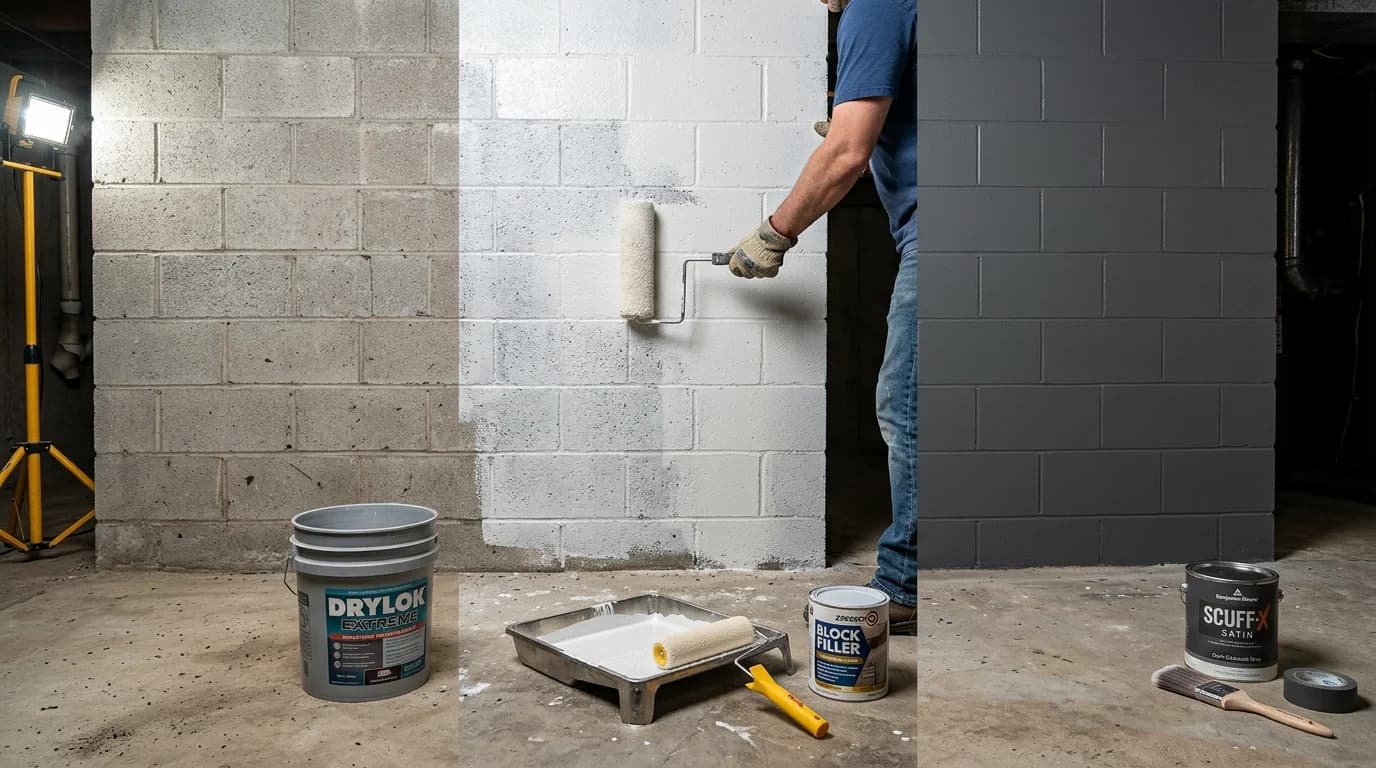
How to Paint Cinder Block Walls: Primer & Sealer Guide