Quick Contractor Protocol: Test Resin Type First, Then Choose Chemical Gel or Diamond Grinder
Rub a small area with denatured alcohol: if paint softens, it is water-based acrylic/latex. If unaffected, test with xylene (oil-based) or assume commercial 2-part epoxy. For acrylic and oil paint, apply a soy or benzyl-alcohol chemical stripper, cover with plastic film for 4 to 12 hours, and scrape off. For tough commercial epoxy or large garage slabs, mechanical diamond grinding with PCD scraper teeth is 5x faster and leaves zero chemical residue.
1. Identifying Paint Resins: The 30-Second Solvent Rub Test
Because concrete is porous, paint does not just coat the surface—it soaks into micro-fissures and locks mechanically. Determining the resin binder is crucial before choosing a stripper:
- Water-Based Acrylic / Latex: Wet a clean rag with denatured alcohol or rubbing alcohol and press firmly against the paint for 30 seconds. If the paint softens, turns gummy, or wipes onto the rag, it is acrylic latex. Latex is easily stripped with biodegradable soy-based gels.
- Oil-Based Alkyd Enamel: Alcohol has no effect. Wet a rag with xylene or lacquer thinner. If it softens, it is an oil-based alkyd or single-component solvent enamel.
- Two-Part Epoxy or Polyurethane: Impervious to both alcohol and xylene. Industrial two-component epoxies feature dense cross-linked molecular chains that resist common solvents, requiring high-potency benzyl-alcohol paste or mechanical diamond grinding under ASTM D4259.
2. Paint Removal Systems & Performance Matrix
Compare labor requirements, indoor safety, and surface finish across standard removal methods:
| Removal System | Best Resin Match | Dwell / Working Speed | Indoor Fume Safety | Resulting Concrete Profile |
|---|---|---|---|---|
| Soy-Based Stripper (Blue Bear) | Latex, acrylic & single-pack enamel | Slow (4 to 12 hr dwell time) | Excellent (Low VOC, pleasant odor) | CSP 1 (Smooth, unetched) |
| Benzyl Alcohol Gel (Peel Away) | Multi-layer oil, polyurethane & epoxies | Moderate (2 to 6 hr dwell under film) | Safe with standard cross-ventilation | CSP 1 (Original concrete preserved) |
| PCD Diamond Rotary Grinding | Industrial high-build epoxy & polyaspartic | Fastest (100% immediate mechanical peel) | Zero chemicals; mandates HEPA vacuum | CSP 2 to CSP 3 (Ideal for new coatings) |
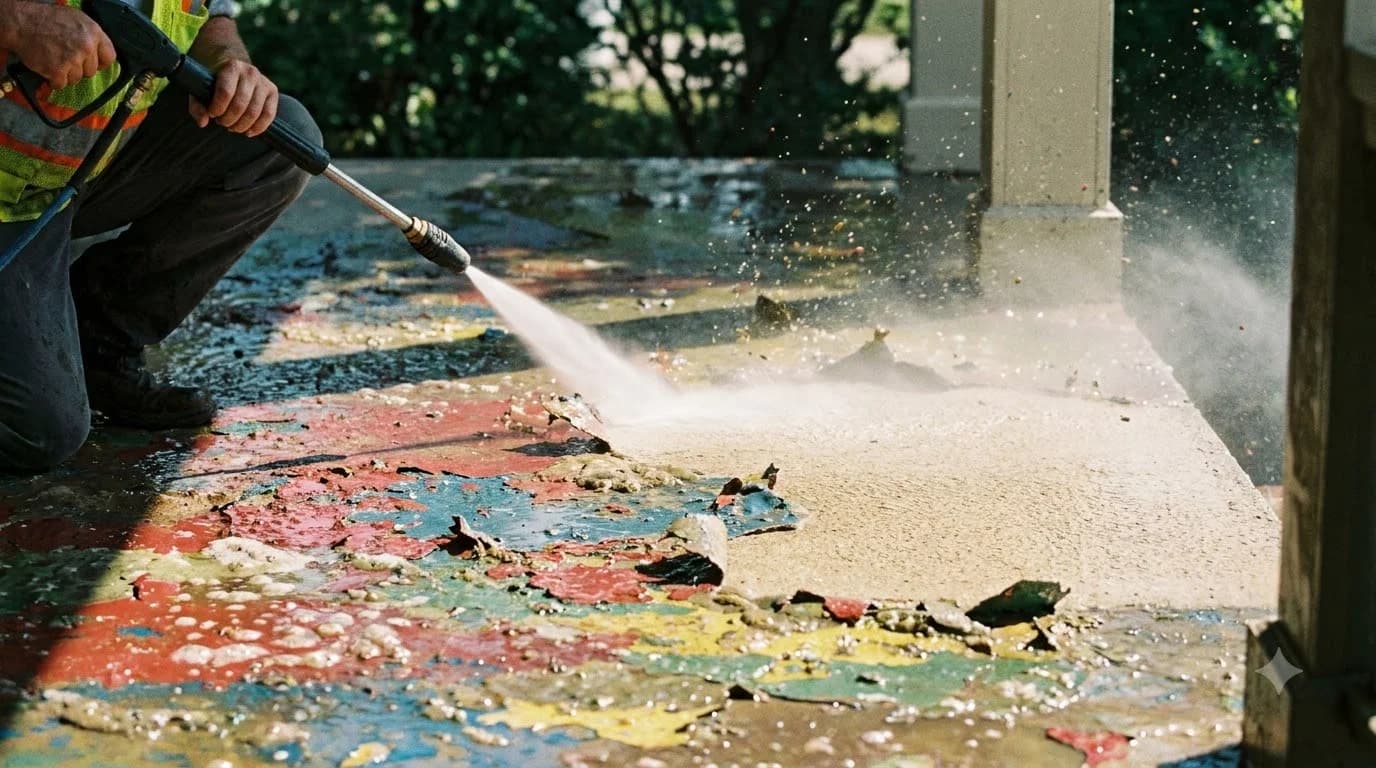
| Pressure Washer with Turbo Tip | Weathered, peeling exterior porch paint | Fast on loose paint; slow on tight paint | Outdoor ONLY | Variable (Can etch soft spots) |
3. The Professional Chemical Stripping Technique
Modern EPA-compliant chemical strippers utilize high-boiling active ingredients like benzyl alcohol or methyl soyate. They work slowly by swelling the paint matrix until its bond breaks:
- Thick Application: Apply a heavy 1/8-inch layer of stripper using an old masonry brush or heavy nap roller. Do not brush thin like paint—the chemical requires bulk thickness to stay wet and active.
- The Polyethylene Cover Secret: Immediately cover the wet stripper with a 1-mil plastic drop cloth or plastic food wrap. The plastic locks in evaporating active solvents, doubling penetration depth into concrete pores.
- Patience (Dwell Window): Let the stripper dwell for 4 to 12 hours (or overnight for multi-coat applications). When ready, the paint will look wrinkled, blistered, and lifted from the slab.
- Scraping and Disposal: Peel back small sections of plastic and glide a stiff 4-inch steel floor scraper across the slab. The paint lifts off as thick paste. Deposit the paste directly into contractor bags.
- Deep Scrub and Rinse: Scrub the remaining haze with a stiff nylon deck brush using hot water and TSP substitute to remove oily residues.
4. Mechanical Diamond Grinding for Commercial Epoxies
When preparing a garage floor for professional polyaspartic or epoxy flake systems, contractors rarely use chemical strippers. Chemicals are messy, leave pore residues, and require days of drying:
- PCD (Polycrystalline Diamond) Scrapers: Standard diamond grinding segments will overheat and smear gummy paint. Equip floor grinders with PCD scarifying shoes. PCD segments feature sharp, chisel-like diamond corners that shave thick coatings off concrete like a wood plane.
- OSHA Table 1 Dust Control: Always connect grinders to a pulse-filter vacuum delivering at least 25 CFM per inch of grinder diameter, equipped with certified HEPA filtration (OSHA 1926.1153).
5. Lead Paint Precautions (OSHA 1926.62 & EPA RRP)
If you are stripping concrete porch stairs, patio slabs, or basement walls in a structure built before 1978:
Never use dry grinders, sanders, or wire wheels without checking for lead. Inhaling pulverized lead dust causes severe neurological damage. Under EPA RRP regulations, lead paint on concrete must be stripped using wet chemical strippers (like Peel Away 1, which encapsulates lead sludge in fibrous paper blankets) or wet-shrouded HEPA vacuum equipment.
5 Critical Paint Removal Mistakes to Avoid
Using Muriatic Acid to Strip Paint
Acid does not break down paint resins. It attacks unpainted concrete pores, creating severe etching and pits while leaving the painted spots completely untouched.
Letting Chemical Strippers Dry Out
If chemical stripper evaporates in the sun without a plastic cover, the dissolved paint will re-harden into an immovable crust that is twice as hard to remove.
Dry Sanding Pre-1978 Paint
Dry sanding lead-based porch paint fills the home and neighborhood with toxic lead dust, violating federal EPA standards and risking severe heavy metal poisoning.
Over-Pressuring with Zero-Degree Tips
Blasting paint with a pin-point zero-degree red pressure washer tip gouges deep grooves into the concrete surface, permanently scarring the slab.
Planning a Fresh Concrete Floor Coating?
Calculate square footage, primer requirements, epoxy coats, and 2026 material costs.
Frequently Asked Questions
Does vinegar or muriatic acid remove paint from concrete?
No. Acid does not dissolve paint polymers; it attacks the alkaline concrete paste underneath the paint. This causes uneven etching and cratering while leaving the paint film intact. Use dedicated solvent strippers or diamond grinding instead.
How do you remove spray paint and graffiti from outdoor concrete?
Apply a professional graffiti remover containing benzyl alcohol or d-limonene. Let it dwell for 15 to 20 minutes to break down the acrylic resin, scrub with a stiff nylon brush, and blast clean with a 3,000-PSI pressure washer equipped with a 15-degree yellow nozzle tip.
What is the fastest way to get multi-layer epoxy off a garage floor?
Rent a walk-behind rotary floor grinder equipped with PCD (polycrystalline diamond) scrapers or coarse 16-to-30 grit diamond segments. PCD teeth physically peel and scrape thick epoxy coatings without melting or smearing the resin.
How can I tell if old porch paint contains lead?
Any concrete structure painted before 1978 may contain toxic lead pigments. Use an EPA-recognized chemical swab test (such as D-Lead or LeadCheck). If positive, follow EPA RRP and OSHA 1926.62 lead abatement protocols with zero dry sanding.
Can pressure washing alone remove porch paint?
Pressure washing easily strips peeling, blistered, or weathered paint. However, tightly bonded paint anchored in concrete pores will withstand 4,000 PSI; attempting to blast it off will gouge soft concrete cream before lifting the paint film.
Building Codes & Primary Standards Cited
Standard Practice for Abrading Concrete
Governs mechanical surface preparation, diamond grinding, and profiling of concrete.
Lead Exposure in Construction Standard
Mandates testing, containment, and PPE protocols when disturbing pre-1978 coatings.
Renovation, Repair, and Painting Program
Federal guidelines for certified lead-safe work practices in residential structures.
Estimations adhere to standard North American modular 3/8-inch mortar joint physics and 5% to 10% material waste factors. Local municipal building inspectors, stamped architectural blueprints, and local frost depth requirements supersede general reference guidelines.
Popular Quick Estimates
Pre-engineered takeoffs & benchmarks matched to this project
Related Calculators
Specialized tools for foundation, core fill, and budgeting
Primer, acrylic block filler and topcoat paint gallons
Cubic yards, bags, and slab volume for flatwork and footings
Heavyweight structural blocks and bond beam units
Core grout volume in cubic yards and 80-lb pre-mix bags
Blogs & Construction Guides
Technical articles, IRC code standards, rebar schedules & freight logistics
How to Paint Concrete Porches: Primers & Acrylic Paint
How to Remove Oil Stains from Concrete: Best Methods
How to Remove Rust Stains from Concrete: Best Acids