1. The Science: Why Regular Paint Fails on Concrete Blocks
Homeowners often buy standard interior latex paint and wonder why the wall looks speckled with white pinholes or peels off in sheets a year later. Three physical properties make concrete blocks unique:
Extreme Porosity
A single standard 8x8x16 CMU contains thousands of microscopic air voids and aggregate craters. Thin paints flow into the holes without bridging them, leaving unsightly open pinholes where moisture collects.
Surface Alkalinity (pH 9–11)
Cured Portland cement contains calcium hydroxide, creating high alkaline pH levels. Regular oil-based or cheap alkyd paints saponify (turn to soap) in contact with alkali, completely losing adhesion.
Efflorescence & Moisture
Sub-surface water migrates through basement masonry, dissolving mineral salts. When the water evaporates, crystallizing salts (efflorescence) expand behind paint films with over 2,000 PSI of mechanical force, popping the paint off.
2. The 4-Step Professional Painting System
Test for Moisture & Clean (ASTM D4263)
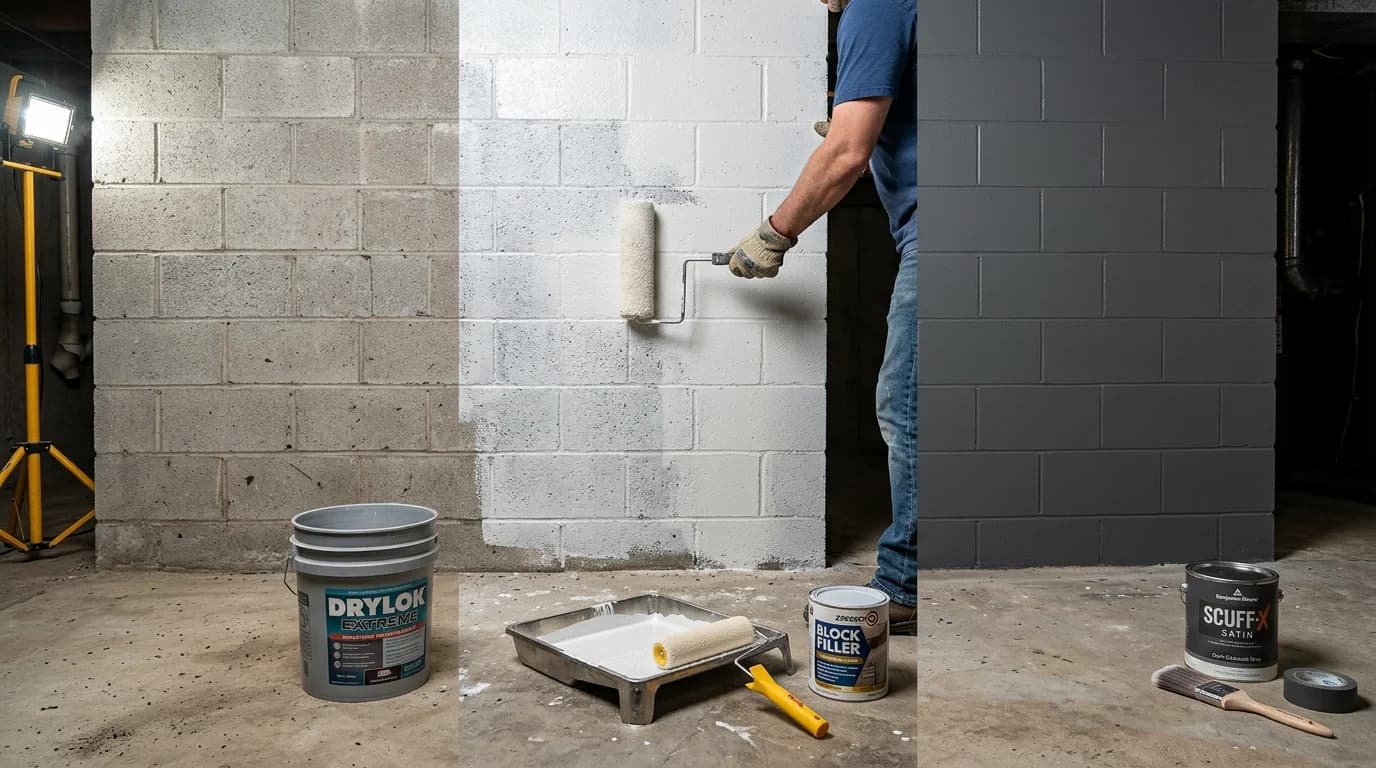
Tape an 18x18-inch square of clear polyethylene plastic tightly to the center of the block wall with duct tape. Wait 24 hours. If moisture droplets form under the plastic or the concrete darkens, you have active hydrostatic vapor pressure and must apply a negative-side waterproofing barrier (like Drylok Extreme) before painting. Scrub away any white efflorescence with a stiff nylon wire brush and diluted muriatic acid or vinegar, then wash with TSP (trisodium phosphate) and allow 48 hours to dry completely.
Patch Cracks & Void Mortar Joints
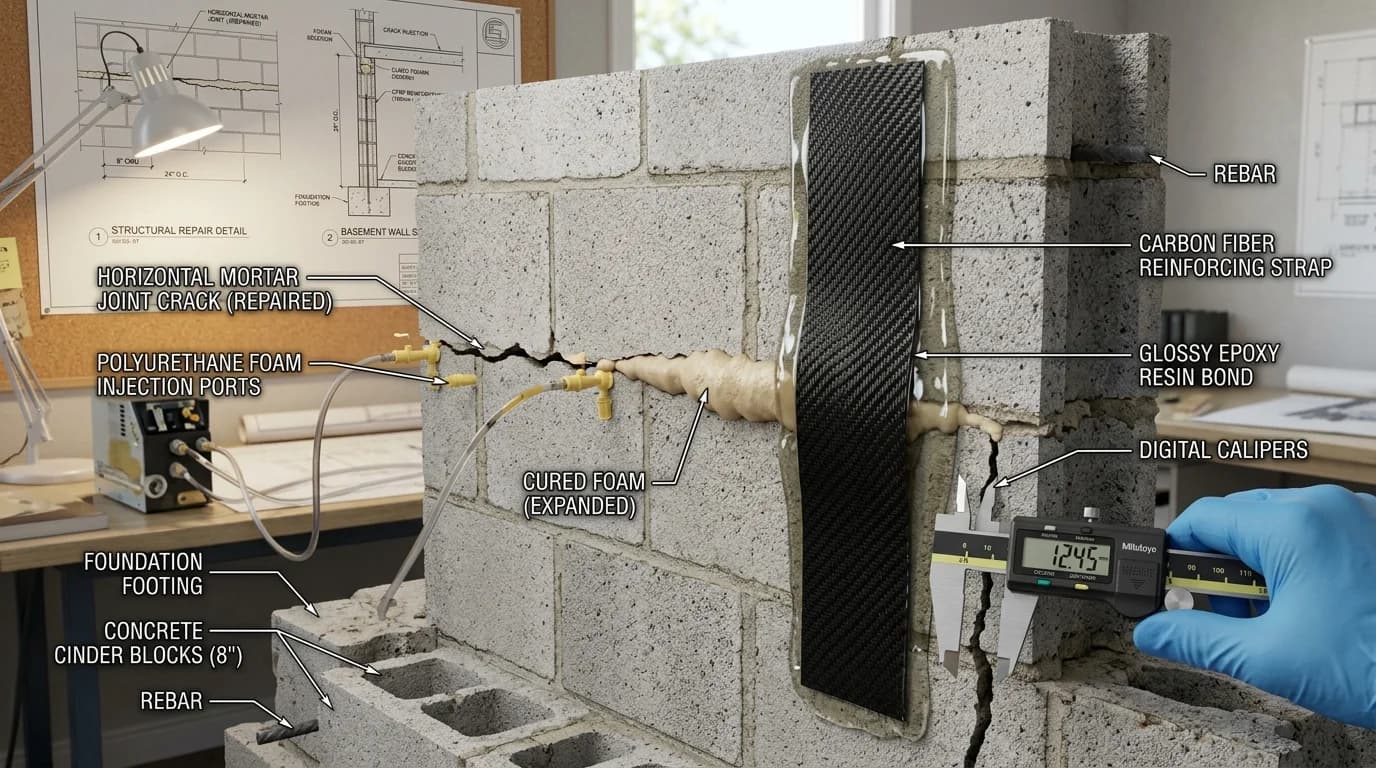
Inspect the 3/8-inch mortar joints. Chisel away crumbling mortar and patch voids with hydraulic cement or sandable exterior polyurethane masonry sealant. Let patches cure according to manufacturer instructions (typically 2 to 4 hours).
Apply Heavy Acrylic Block Filler Primer
Apply a dedicated high-solids Acrylic Masonry Block Filler(such as Sherwin-Williams PrepRite Block Filler, Benjamin Moore Moorcraft, or Behr Heavy Duty Block Filler). Use a thick 1-inch or 1-1/4-inch nap roller. Work in a cross-hatch "W" pattern, applying heavy downward pressure to physically pack the thick slurry into every aggregate pore. Allow 16 to 24 hours to cure.
Apply Two Coats of 100% Acrylic Latex Topcoat
Apply two coats of premium 100% acrylic latex or elastomeric paint (satin or semi-gloss sheen makes future cleaning easy). An acrylic finish remains flexible and "breathes," allowing microscopic water vapor molecules to escape without blowing bubbles in the paint film. Wait 4 hours between coats.
3. Coverage Rates & Tool Checklist
| Coating Stage | Recommended Product | Coverage per Gallon | Recommended Applicator |
|---|---|---|---|
| Prep / Cleaning | TSP or Muriatic Acid (1:10) | 200 sq ft / gallon mixed | Stiff nylon bristle scrub brush |
| Primer Coat | High-Solids Acrylic Block Filler | 75–100 sq ft / gallon | 1" or 1-1/4" synthetic knap roller |
| Waterproofing Base (Optional) | Drylok Extreme Masonry Waterproofer | 75–100 sq ft / gallon | Stiff masonry brush or 3/4" roller |
| Finish Topcoat (2 Coats) | 100% Acrylic Latex (Satin / Semi-Gloss) | 200–250 sq ft / gallon | 3/4" roller or airless sprayer (.021" tip) |
4. Interior Basements vs. Exterior Perimeter Walls
Interior Basement Walls
Basements face negative-side hydrostatic water pressure from saturated outdoor soil. If soil moisture is present, you cannot use conventional latex paint alone. You must apply two continuous coats of cementitious waterproofing barrier (Drylok) rated to withstand 15 PSI of hydrostatic pressure before applying any decorative topcoats.
Exterior Retaining & Fence Walls
Exterior block walls are subject to freeze-thaw cycles and UV solar radiation. Never use an elastomeric coating on retaining walls unless the backside (dirt side) has a functioning French drain and waterproof asphalt emulsion. Trapping groundwater inside a cinder block wall causes freeze-spalling and destroys the block in cold winters.
Need to calculate wall surface area for paint gallons?
Use our wall calculator to determine total square footage and material requirements.
Frequently Asked Questions
Can you paint directly over cinder blocks without a primer?
No. Standard concrete blocks are extremely porous, full of microscopic air voids, and naturally alkaline (pH 9–11). Painting directly with standard latex wall paint results in thousands of unpainted pinholes, rapid soaking that starves the paint film of resin, and bubbling or peeling within 6 to 18 months.
What is the difference between standard primer and masonry block filler?
Standard drywall primer has a thin viscosity designed only to seal drywall paper. Masonry block filler is a heavy-bodied, high-solids acrylic compound formulated with calcium carbonate fillers. It goes on thick like pancake batter to physically bridge and fill the coarse pinholes and aggregate craters of ASTM C90 blocks.
What is the best roller nap for painting cinder blocks?
Use a heavy 3/4-inch to 1-1/4-inch synthetic nap roller cover. Standard 3/8-inch rollers cannot push paint into the recessed 3/8-inch mortar joints or rough concrete surface pockets.
How much paint does a cinder block wall need per square foot?
Because raw concrete block is so porous, block filler coverage is only 75 to 100 square feet per gallon (compared to 350–400 sq ft on smooth drywall). Once primed with block filler, the finish acrylic latex topcoat achieves standard coverage of 200 to 250 square feet per gallon.
Building Codes & Primary Standards Cited
Standard Practice for Surface Cleaning Concrete for Coating
Specifies protocols for removing grease, efflorescence, and laitance before applying architectural coatings.
Standard Test Method for Indicating Moisture in Concrete by the Plastic Sheet Method
The industry standard 24-hour polyethylene moisture test required prior to coating application.
Master Painters Institute Architectural Specification - Masonry Block Fillers
Defines minimum non-volatile vehicle and high-solids requirements for commercial concrete block fillers.
Estimations adhere to standard North American modular 3/8-inch mortar joint physics and 5% to 10% material waste factors. Local municipal building inspectors, stamped architectural blueprints, and local frost depth requirements supersede general reference guidelines.
Popular Quick Estimates
Pre-engineered takeoffs & benchmarks matched to this project
Related Calculators
Specialized tools for foundation, core fill, and budgeting
Primer, acrylic block filler and topcoat paint gallons
Straight and multi-wall runs with mortar and waste allowances
Standard 8-inch series wall and reinforcement estimates
Dry block weight, filled core weight and hauling loads
Blogs & Construction Guides
Technical articles, IRC code standards, rebar schedules & freight logistics
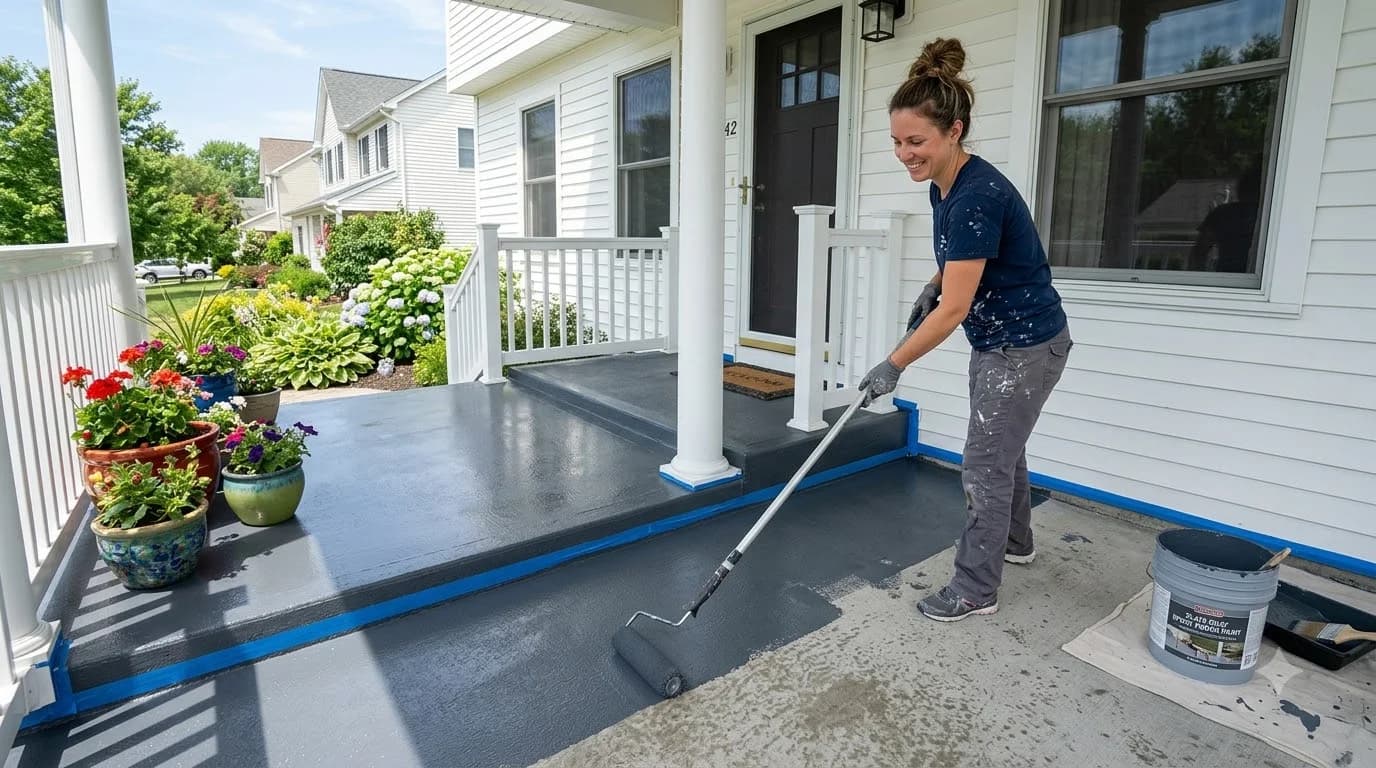
How to Paint Concrete Porches: Primers & Acrylic Paint
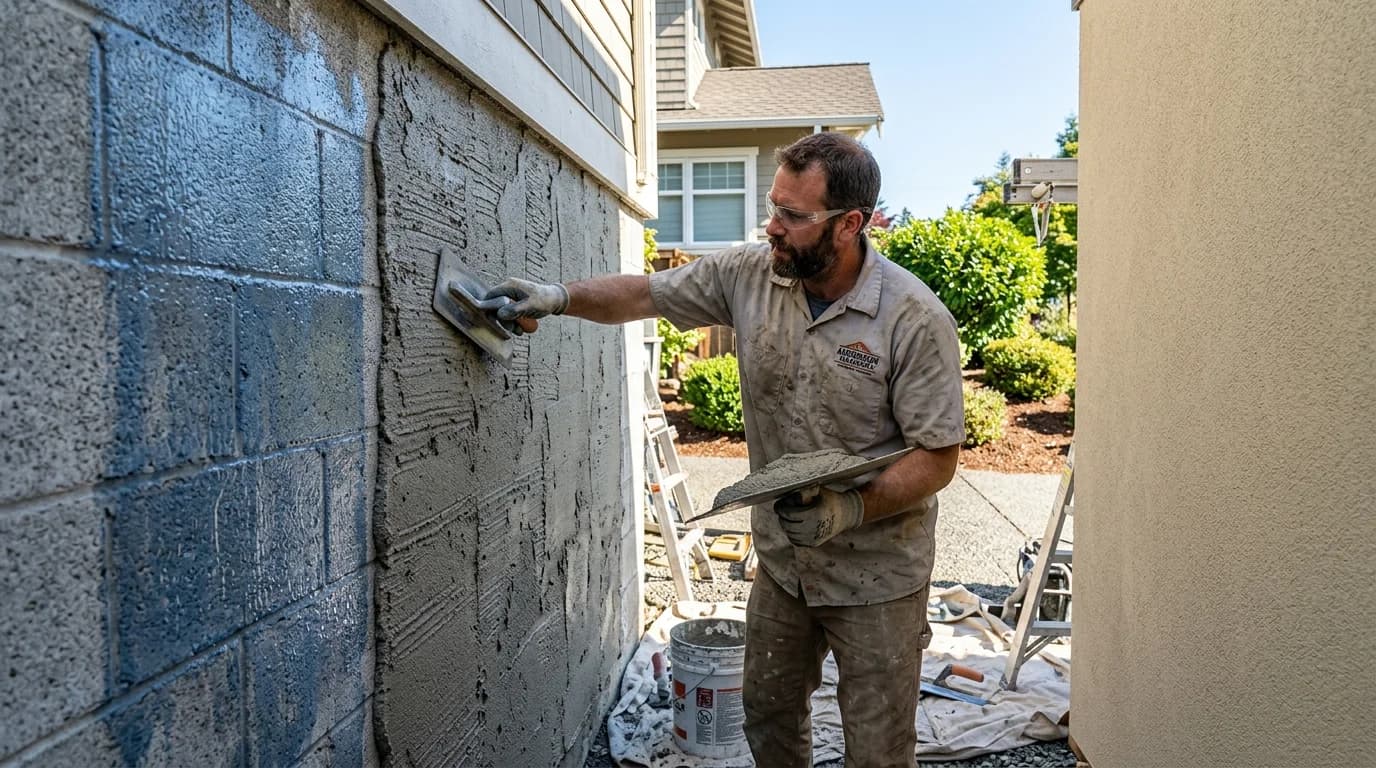
How to Stucco & Parge Over Cinder Block Walls
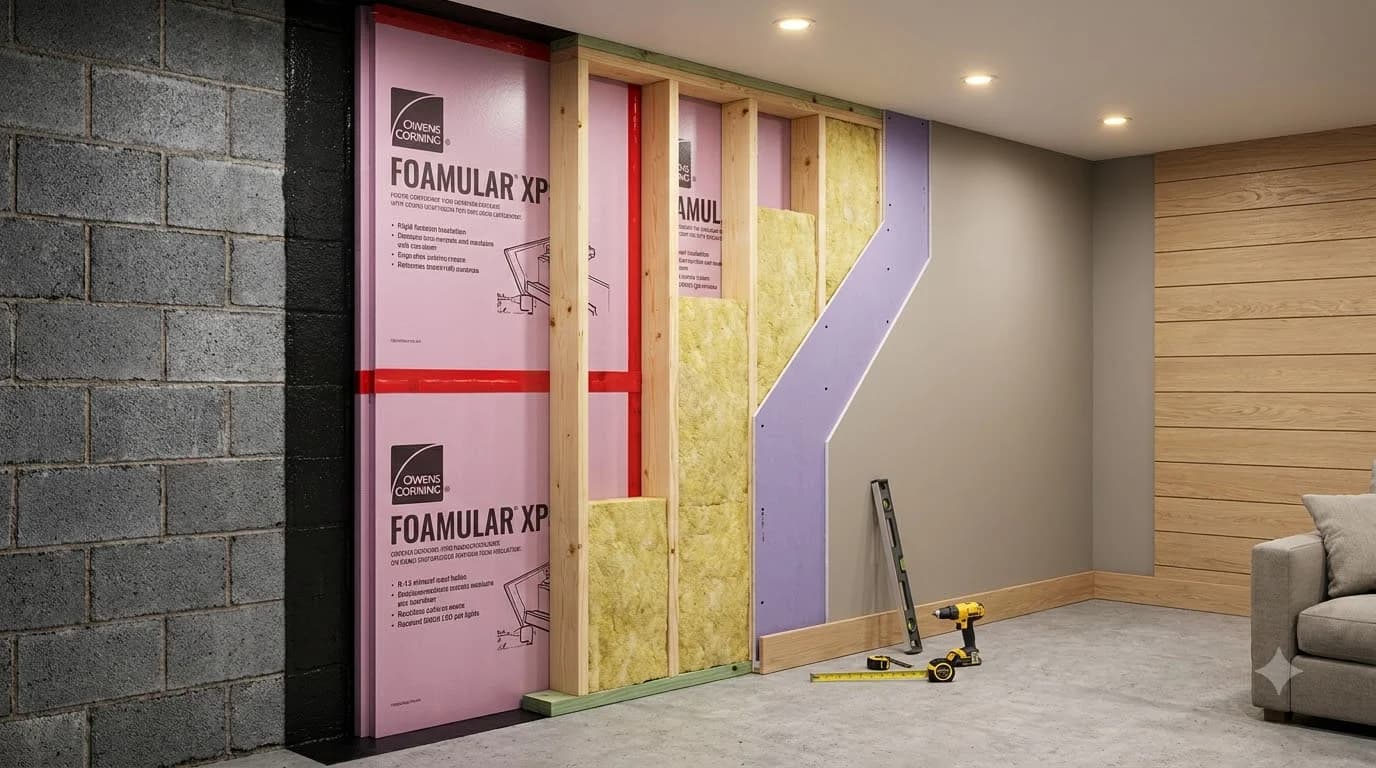
How to Cover Interior Cinder Block Walls (Top 5 Ways)