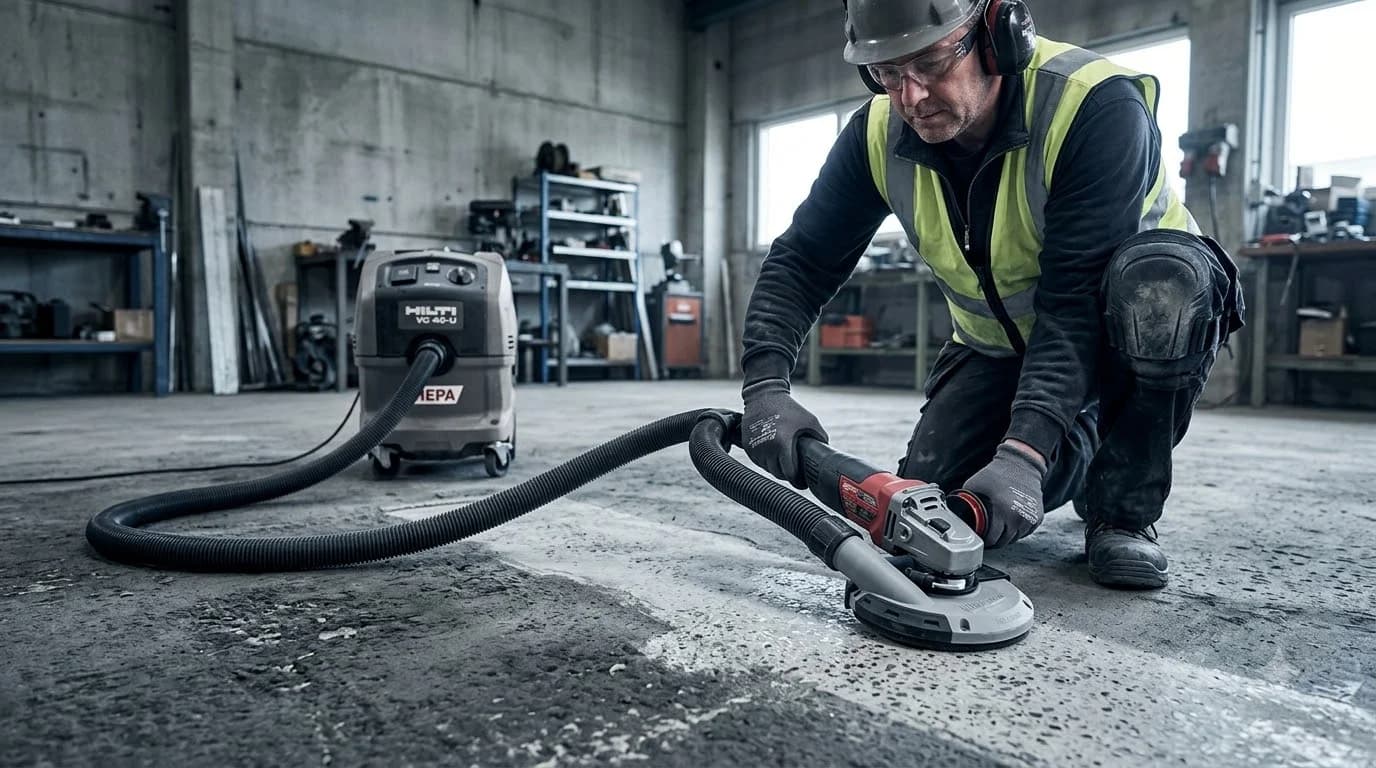
Quick Contractor Answer: Use Diamond Abrasives with Certified HEPA Vacuum Shrouds
Never use wood sandpaper on concrete. Use a 7-inch angle grinder equipped with a double-row segmented diamond cup wheel for localized high spots, or a walk-behind planetary floor grinder for large slabs. Connect an airtight dust shroud to an OSHA Table 1 compliant HEPA extractor (minimum 25 CFM per inch of disc diameter). Start with 30-grit metal bond diamonds for stock removal and progress to 100+ grit for finishing.
1. Abrasive Physics: Why Conventional Sandpaper Fails on Concrete
DIY homeowners often wonder why standard woodworking orbital palm sanders and aluminum oxide sandpaper burn out in seconds on concrete. The answer lies in the Mohs Scale of Mineral Hardness:
- Hardened Portland cement paste scores approximately 4 to 5 on the Mohs scale, while coarse aggregate (crushed granite, river gravel, and quartz sand) rates between 6.5 and 7.0 Mohs.
- Aluminum oxide sandpaper grains quickly fracture and overheat under the friction, rubbing smooth against hard aggregate within 15 to 30 seconds.
- Industrial Diamond Segments (Mohs 10): Professional concrete grinders utilize synthetic polycrystalline diamonds sintered within a metal matrix (cobalt, nickel, or bronze). As the wheel grinds against aggregate, the metal matrix slowly erodes, continually exposing fresh, razor-sharp diamond cutting facets that cleave through aggregate without burning.
2. Concrete Surface Profile (ICRI 310.2R) & Tool Selection Matrix
The International Concrete Repair Institute (ICRI) defines 9 distinct Surface Profiles (CSP 1 through CSP 9) based on surface roughness. Match your tool and diamond segment to the target profile:
| Application & Goal | Recommended Equipment | Diamond Bond & Segment | Grit Range | ICRI Profile |
|---|---|---|---|---|
| ADA Sidewalk Trip Hazard Relief | 7" Handheld Heavy Grinder (6,000 RPM) | Double-row segmented diamond cup wheel | 16 – 24 Coarse | CSP 2 – 3 |
| Carpet Glue & Thinset Removal | Walk-behind single-disc rotary grinder | PCD (Polycrystalline Diamond) scraper shoes | N/A (Scraping) | CSP 2 |
| Garage Epoxy Base Preparation | Walk-behind dual or planetary grinder | Medium-bond arrow or rectangular segments | 30 – 40 Grit | CSP 2 (Fine sandpaper texture) |
| High Spot & Ridge Flattening | Variable speed 7" grinder with anti-vibration | Turbo spiral diamond cup wheel | 30 – 50 Grit | CSP 2 |
| Honed / Polished Architectural Finish | Planetary 3-head counter-rotating machine | Resin-bond diamond polishing discs | 100 → 400 → 800+ | CSP 1 (Glass-smooth sheen) |
3. OSHA Table 1 Crystalline Silica Dust Compliance
Grinding concrete dry releases microscopic respirable crystalline silica particles (PM2.5), which cause incurable silicosis and lung cancer. Under OSHA 29 CFR 1926.1153 Table 1, dry grinding without engineering controls is illegal on commercial jobsites:
- Commercially Manufactured Dust Shroud: The grinder must be enclosed in an intact shroud with a flexible edge seal to maintain direct suction contact with the concrete floor.
- Airflow Minimums (CFM): The dust collection vacuum must produce at least 25 CFM of airflow per inch of wheel diameter. A 7-inch grinder requires a minimum vacuum airflow rating of 175 CFM (7 × 25 CFM).
- Filter Efficiency & Cleaning: The vacuum must feature a certified HEPA filter (99.97% efficiency at 0.3 microns) and an integrated reverse-pulse filter cleaning mechanism to prevent filter clogging within minutes.
4. Step-by-Step Leveling & Grinding Procedure
Follow this professional methodology to eliminate slab crowns and ridges without gouging:
- Map the High Spots: Place an 8-foot precision aluminum straightedge or screed across the slab in multiple directions. Shine a flashlight behind the bar to reveal high humps and depressions. Circle high points with blue lumber chalk.
- Set Grinder Speed & Downward Force: Set variable-speed grinders to roughly 5,000 to 6,000 RPM. Let the machine weight and diamond segments do the work; never lean down with body weight, as this glazes the diamonds and overheats the motor.
- Execute the Sweeping Figure-8 Pattern: Rest the cup wheel completely flat against the peak of the hump. Power on the grinder and move in continuous overlapping sweeping figure-eight arcs. Never allow the tool to remain stationary for even one second.
- Feather the Transitions: As the peak approaches level plane, widen your sweeping strokes outward 6 to 12 inches to feather the edges seamlessly into surrounding low areas.
- Verify with Straightedge: Turn off the tool, vacuum the dust, and check flatness. The gap beneath an 8-foot level should measure less than 1/8 inch for tile or 3/16 inch for epoxy flooring.
5. Dry Grinding vs. Wet Grinding: When to Choose Each
Contractors choose between dry extraction and wet grinding based on indoor ventilation and coating timelines:
Dry Grinding with HEPA Vacuum
Best For: Enclosed residential basements, finished garages, and projects requiring immediate coating. Because no water is introduced, moisture testing (ASTM F1869 or F2170) is not disrupted and epoxy can be applied the same day after vacuuming.
Wet Grinding with Slurry Recovery
Best For: Outdoor sidewalks, patio transitions, and commercial polishers. Water cools the diamond matrix, doubles diamond segment life, and eliminates airborne dust entirely. However, caustic slurry (pH 12+) must be collected with a wet-vac and solidified before disposal.
5 Critical Concrete Grinding Mistakes to Avoid
Tilting Grinder on Its Outer Rim
Tilting the grinder digs a half-moon shaped gouge 1/4-inch deep into the slab within two seconds. Cup wheels must always stay 100% coplanar and flat against the concrete surface.
Using Hard-Bond Diamonds on Hard Concrete
A common counter-intuitive error: hard 5,000 psi concrete requires SOFT-bond diamonds (so the matrix wears rapidly to expose new diamonds), while soft abrasive concrete requires HARD-bond diamonds.
Using Underpowered Shop Vacuums
Standard home wet/dry vacs lack pulse filter cleaning. Fine concrete dust instantly blinds the paper filter, reducing airflow to near zero and spewing toxic silica dust throughout the room.
Skipping Intermediate Diamond Grits
Jumping directly from an aggressive 30-grit stock removal cup to a 200-grit polishing pad will lock deep radial swirl marks into the slab that will show through clear coats and sealers.
Need Exact Materials For Your Project?
Get an instant takeoff with bags, ready-mix yards, sand, and 2026 pricing.
Frequently Asked Questions
Can you sand concrete smooth with an orbital palm sander?
No. Wood orbital palm sanders lack the motor torque, RPM, and downward head pressure to cut concrete aggregates (Mohs hardness 7). Standard sandpaper wears out within seconds. You need a dedicated variable-speed angle grinder or concrete floor machine with diamond abrasive pads.
What diamond grit sequence should I follow?
Start with 30-grit or 50-grit metal-bond diamond segments to knock down high spots and achieve an ICRI CSP 2 profile. Transition to 100-grit, 200-grit, and 400-grit semi-metal or resin pads to smooth away grinding scratch swirls before sealing or polishing.
How do you control concrete dust indoors under OSHA standards?
You must attach an airtight polyurethane dust shroud with a flexible perimeter brush skirt to your grinder, connected to an OSHA Table 1 compliant HEPA-filtered vacuum delivering at least 25 CFM of airflow per inch of blade diameter (175 CFM for a 7-inch grinder).
What is the difference between wet and dry concrete grinding?
Dry grinding requires heavy-duty HEPA dust extraction but produces immediate visible profiling. Wet grinding eliminates airborne silica dust using continuous water lubrication and diamond cooling, but generates hazardous caustic slurry that must be vacuumed and neutralized before disposal.
How do you avoid creating gouges and swirl marks?
Always keep the diamond cup wheel completely flat against the concrete surface. Never tilt the grinder on its edge. Keep the tool in constant overlapping circular motion without lingering in one spot, and clean the floor between grit transitions.
Building Codes & Primary Standards Cited
Selecting and Specifying Concrete Surface Preparation for Sealers, Coatings, and Polymer Overlays
Establishes standard tactile CSP profiling standards from CSP 1 to CSP 9.
Respirable Crystalline Silica - Handheld Grinders
Mandates commercially manufactured shrouds with 99.97% HEPA filtration and 25 CFM per inch airflow.
Standard Specification for Epoxy-Resin-Base Bonding Systems for Concrete
Defines substrate preparation and tensile bond strength requirements on ground concrete.
Estimations adhere to standard North American modular 3/8-inch mortar joint physics and 5% to 10% material waste factors. Local municipal building inspectors, stamped architectural blueprints, and local frost depth requirements supersede general reference guidelines.
Popular Quick Estimates
Pre-engineered takeoffs & benchmarks matched to this project
Related Calculators
Specialized tools for foundation, core fill, and budgeting
Heavyweight structural blocks and bond beam units
Cubic yards, bags, and slab volume for flatwork and footings
Core grout volume in cubic yards and 80-lb pre-mix bags
Patio and driveway interlocking pavers with base sand
Blogs & Construction Guides
Technical articles, IRC code standards, rebar schedules & freight logistics
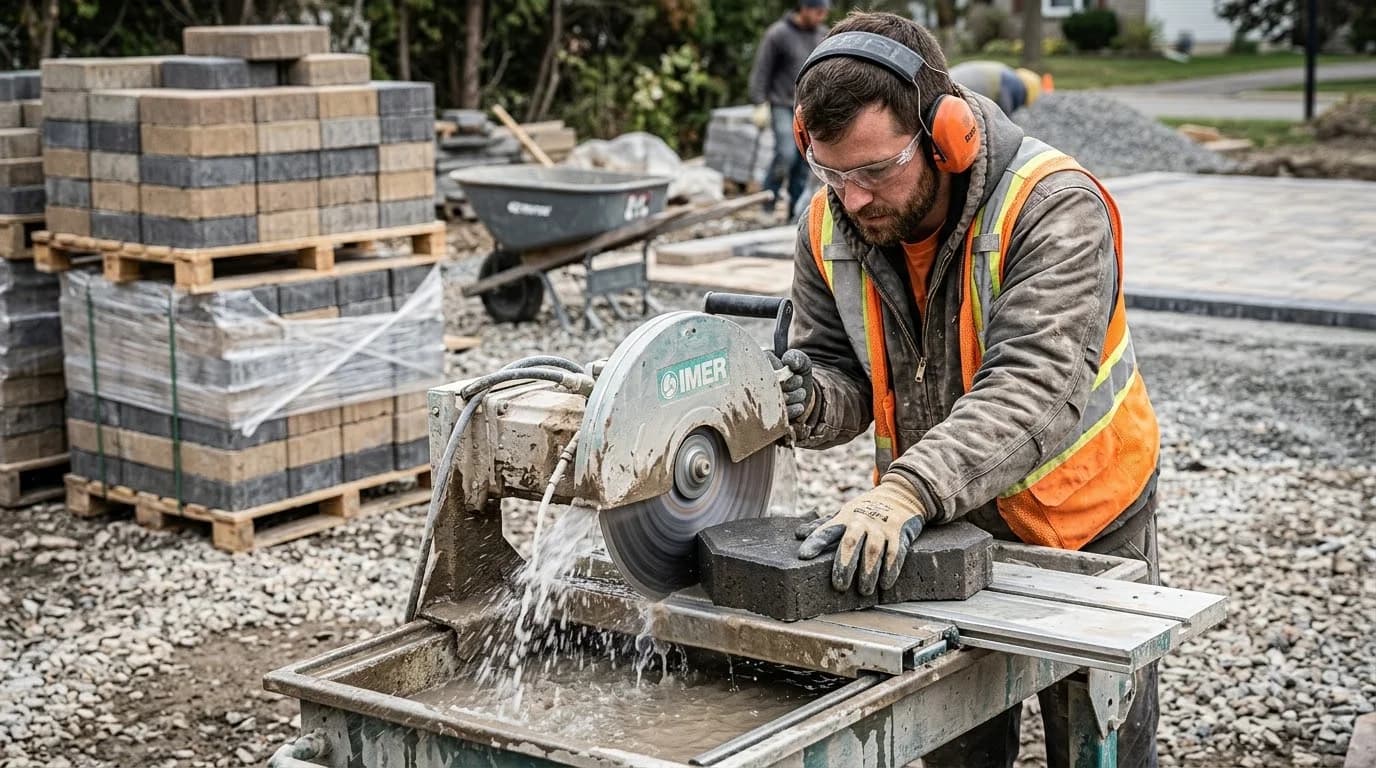
How to Cut Concrete Pavers: Angle Grinder & Splitters
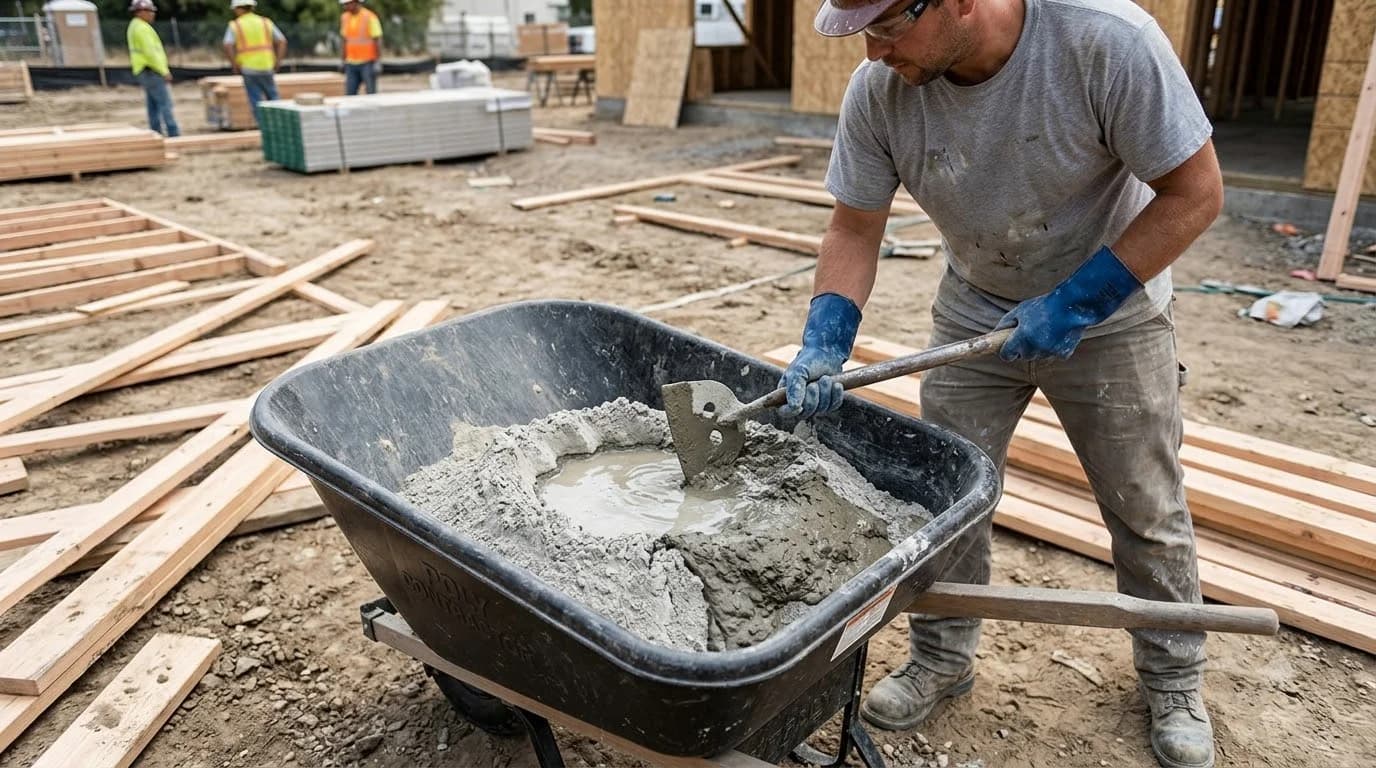
How to Mix Concrete by Hand: Wheelbarrow Water Ratio
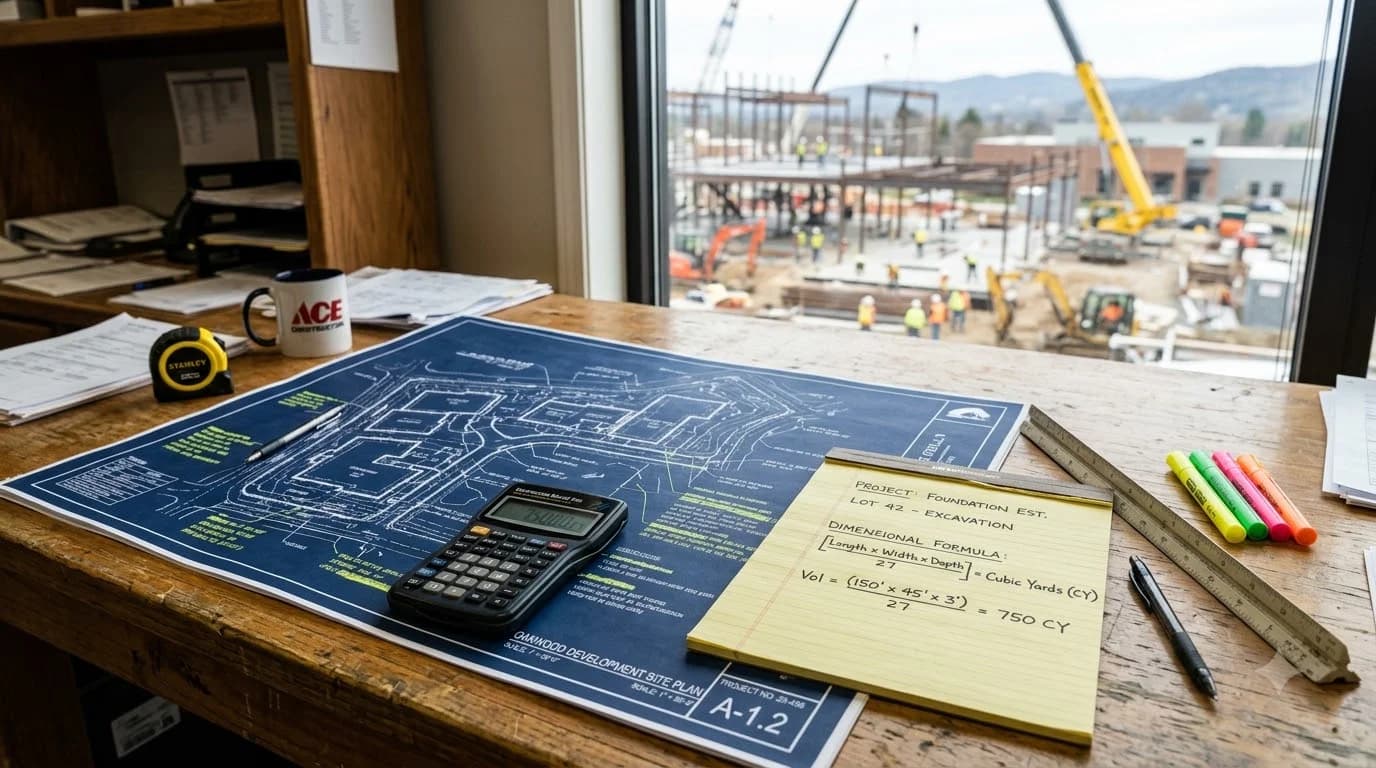
How to Calculate Concrete Yards: Step-by-Step Math