Masonry Sand Calculator
Calculate ASTM C144 masonry sand tons, cubic yards, moisture bulking expansion, Portland cement and lime companion binders, and dump truck delivery loads for concrete masonry construction.
CMU estimates use nominal face dimensions and illustrative mortar yields (30 standard 8-inch units per 80-lb premix bag before waste; thickness adjustments apply). Confirm product yields, unit core volumes, supplier pack sizes and local prices before ordering. Reinforcement quantities are material allowances; laps, hooks, embedment and engineered design are excluded.
CinderCalc
ASTM C144 Masonry Sand & Mortar Bill of Materials
Project Takeoff Sheet
Generated: 10/30/2026
1. Project Criteria & Moisture Assumptions
| Masonry Units | 1,100 Blocks (10% waste factor) | Mortar Joint Thickness | 3/8-inch Standard Joint |
| Moisture Bulking Rate | 25% Expansion (1.25×) | Mortar Mix Spec | TYPE S (ASTM C270) |
| Delivery Vehicle | Tandem-Axle Dump Truck (12 Tons / ~9.0 yd³) | Sand Density Rating | 1.35 tons / yd³ (~2,700 lbs/yd³) |
2. Material Takeoff Quantities
| Material Item | Specification | Takeoff Quantity | Packaging / Logistics |
|---|---|---|---|
| ASTM C144 Masonry Sand | Damp Bulked Aggregate | 3.71 Tons | 2.75 yd³ (1 Trip) |
| Portland Cement (Type I/II) | ASTM C150 Pure Cement | 14 Bags | 94 lb bags (1.0 cu ft) |
| Hydrated Masonry Lime | ASTM C207 Type S Lime | 7 Bags | 50 lb bags (1.0 cu ft) |
| Batching Shovels | #2 Square-Point Shovel | ~386 Shovels | ~5.2 shovels / cu ft |
| Premix 80-lb Equivalent | Type S Pre-Bagged Mortar | ~37 Bags | Optional bagged alternative |
| Illustrative Material Planning Budget: | $449 – $626 | ||
Contractor Field Quality Notes:
• Keep bulk sand stockpiles covered with waterproof tarps to prevent rain saturation and mud contamination.
• Sand bulking peaks at 4% to 6% moisture content. Calibrate site shovel counts with a 1-cubic-foot wooden gauge box at the start of each project day.
• Only use ASTM C144 washed masonry sand. Never substitute unwashed pit run or ASTM C33 coarse concrete sand for masonry bedding joints.
Masonry Sand Takeoff Benchmarks by CMU Block Quantity
Takeoff planning table for standard 8×8×16 hollow concrete masonry units laid with nominal 3/8-inch mortar bed and head joints, assuming standard 25% moisture bulking and 10% jobsite waste factor.
| Block Quantity | Wall Face Area | Dry Sand (Cu Ft) | Bulked Sand (Cu Yds) | Total Weight (Tons) | Truckload Size |
|---|---|---|---|---|---|
| 250 Blocks | ~222 sq ft | 14.9 cu ft | 0.69 yd³ | 0.93 tons | Pickup / Single-Axle |
| 500 Blocks | ~444 sq ft | 29.7 cu ft | 1.38 yd³ | 1.86 tons | 1 Single-Axle Trip |
| 1,000 Blocks | ~889 sq ft | 59.4 cu ft | 2.75 yd³ | 3.71 tons | 1 Tandem-Axle Trip |
| 2,500 Blocks | ~2,222 sq ft | 148.5 cu ft | 6.88 yd³ | 9.28 tons | 1 Tandem-Axle Trip |
| 5,000 Blocks | ~4,444 sq ft | 297.0 cu ft | 13.75 yd³ | 18.56 tons | 1 Tri-Axle Trip |
Note: Calculations incorporate 10% waste buffer and 1.35 tons per bulked cubic yard density (~2,700 lbs/yd³ damp aggregate).
The Physics of Sand Bulking: Why Moisture Expands Fine Aggregate
Unlike coarse stone or solid gravel, damp fine masonry sand undergoes substantial volumetric expansion known as sand bulking. When aggregate contains between 3% and 8% moisture by weight, micro-droplets of water form surface-tension menisci around each individual silica particle. These capillary surface tension forces physically push adjacent sand grains apart, creating artificial void spaces that prevent the sand from compacting.
Bone-Dry Sand (1.00×)
Kiln-dried bagged sand has zero water surface tension. Particles slide tightly into void spaces, yielding true solid mineral density (~2,600 lbs/yd³ compact).
Peak Bulking (1.20×–1.30×)
Typical damp jobsite sand stockpiles. Capillary menisci push grains apart to maximum expansion, inflating cubic yard volume by 20% to 30% without adding solid sand grains.
Inundated / Flooded Sand
When sand is completely waterlogged or submerged, surface tension menisci collapse. Water fills the interstitial voids and sand contracts back to its original compact dry volume.
ASTM C270 Mortar Mix Proportioning & Sand Ratios
Standard volume proportions for site-mixed Portland cement, hydrated lime, and ASTM C144 masonry sand under ASTM C270 specification criteria.
| Mortar Type | Compressive Strength | Portland Cement | Hydrated Lime | Damp Sand Ratio | Typical Structural Application |
|---|---|---|---|---|---|
| Type S | 1,800 psi | 1 Part (94 lb) | 1/2 Part (25 lb) | 4.5 Parts (4.5 cu ft) | Retaining walls, below grade, seismic zones |
| Type N | 750 psi | 1 Part (94 lb) | 1 Part (50 lb) | 6.0 Parts (6.0 cu ft) | Above-grade exterior walls, chimneys, veneers |
| Type M | 2,500 psi | 1 Part (94 lb) | 1/4 Part (12.5 lb) | 3.75 Parts (3.75 cu ft) | Heavy bearing foundations, manholes, soil contact |
Rule of thumb: Total damp loose sand volume must measure not less than 2-1/4 times and not more than 3 times the sum of the separate volumes of cementitious materials (ASTM C270 §5.1).
Dump Truck Payload Capacities & Logistics Planning
Payload tonnage limits, volumetric yardage capacities, and site access considerations for bulk masonry sand delivery.
| Vehicle Classification | Payload Tonnage | Sand Volume (yd³) | Max Block Coverage | Site Access / Driveway Risk |
|---|---|---|---|---|
| Single-Axle Dump Truck | 5 – 7 Tons | 4 – 5 yd³ | Up to 1,500 Blocks | Safe for residential asphalt and tight driveways |
| Tandem-Axle Dump Truck | 12 – 14 Tons | 9 – 10 yd³ | Up to 3,500 Blocks | Standard quarry delivery; check concrete paver borders |
| Tri-Axle Commercial Dump | 18 – 22 Tons | 13 – 16 yd³ | Up to 5,500 Blocks | High weight; can crack residential curbs & septic tanks |
| Pickup Truck Bed (1/2-Ton) | 0.75 – 1.0 Ton | 0.5 – 0.7 yd³ | Up to 250 Blocks | DIY runs; do not exceed rear suspension GAWR rating |
Jobsite Sand Stockpile Quality Control & Tarping Rules
Always cover bulk sand piles with heavy 10-mil waterproof poly tarps weighted with blocks along edges. Prolonged rain supersaturates sand, completely distorting water-cement ratios and turning mixer batches into unworkable slurry.
Never dump loose masonry sand directly on bare mud or turf. Have the driver dump onto a clean sacrificial plywood platform or large heavy-duty ground tarp to prevent scooping soil, organics, and stones into the mixer drum.
Build a simple 12×12×12 inch interior wooden cube (1 cubic foot). Fill it with shovelfuls of site sand to determine whether your crew's shovels average 5, 5.5, or 6 shovels per cubic foot. Re-verify after heavy rain events.
Keep masonry sand clearly separated from pipe bedding gravel, topsoil, or coarse concrete stone. Even a handful of 3/8-inch pebbles will snag under masons' trowels and prevent consistent 3/8-inch bed joint tooling.
Illustrative Masonry Sand & Binder Planning Costs
Typical retail and building supply planning benchmarks. Masonry sand is typically sold by the bulk ton or cubic yard plus a local freight dump charge.
Pricing figures are illustrative planning benchmarks. Always verify current local aggregate quotes and truck dispatch fees before ordering jobsite deliveries.
Material estimates depend on the selected dimensions, product yields, and waste allowance.
Masonry Sand & Mortar Bulking FAQ
Authoritative answers on sand tons, cubic yard bulking, dump truck delivery capacities, and ASTM C144 specifications.
Popular Quick Estimates
Illustrative takeoffs with stated assumptions; verify project quantities
Type S Mortar Bags
Example 30 blocks per 80-lb bag; check product yield
Cinder Blocks for a 10x10 Wall: Exact Count & Mortar Math
Standard residential yard & garden wall run
Interlocking Paver Sand
Enter area and bedding depth; verify product coverage
Crawlspace Stem Wall
Course-height example; footing design is site-specific
Related Calculators
Specialized tools for foundation, core fill, and budgeting
Preblended ASTM C91 masonry cement 70-lb bags, ASTM C144 sand, and water ratios
ASTM C270 Type M, S, N site-mix Portland cement, hydrated lime, and sand batches
Mechanical paddle mixer shovel counts, cement bags and water gallons
Brick, block, and stone joint mortar bags and masonry sand
Blogs & Construction Guides
Practical guides to block sizing, material estimates and project planning
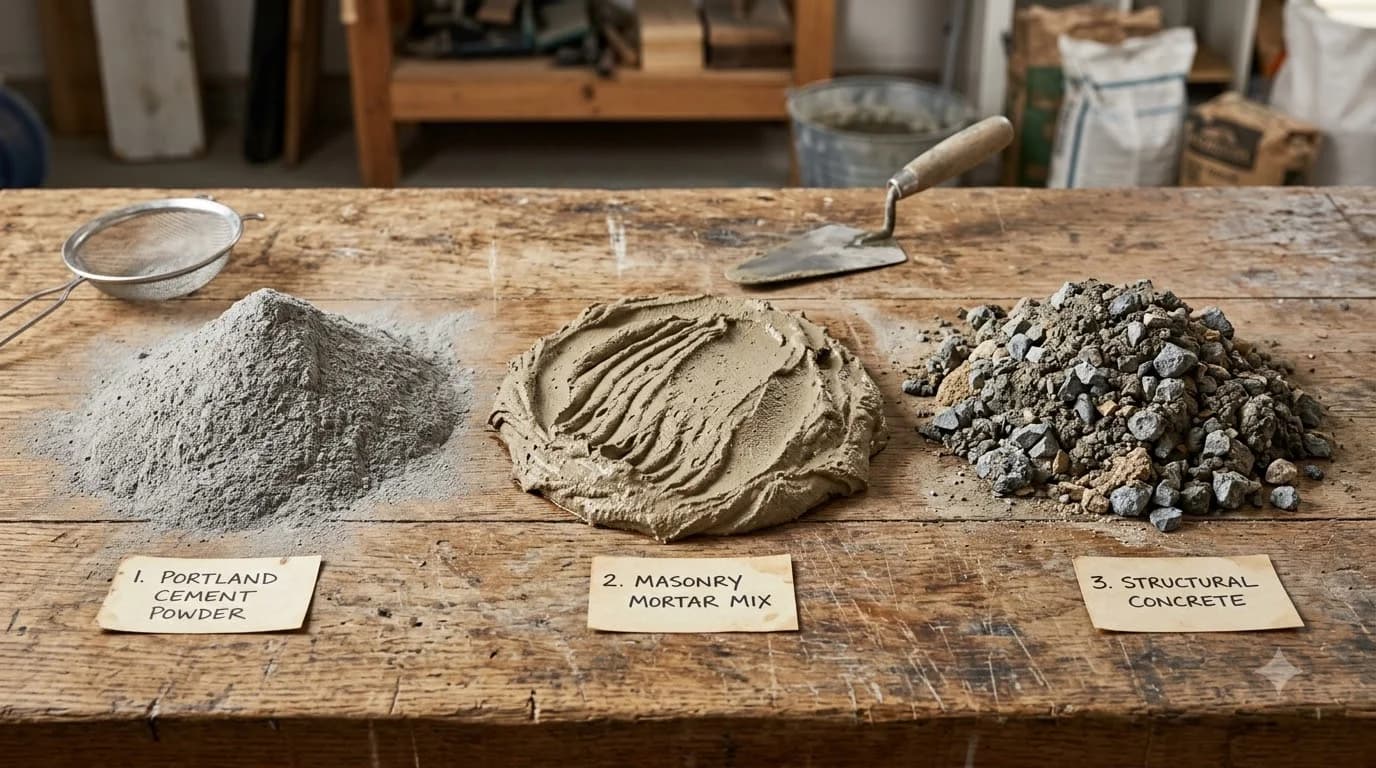
Concrete vs Cement vs Mortar: Key Differences & Mixes

How to Grind Concrete: Angle Grinder & Floor Machines
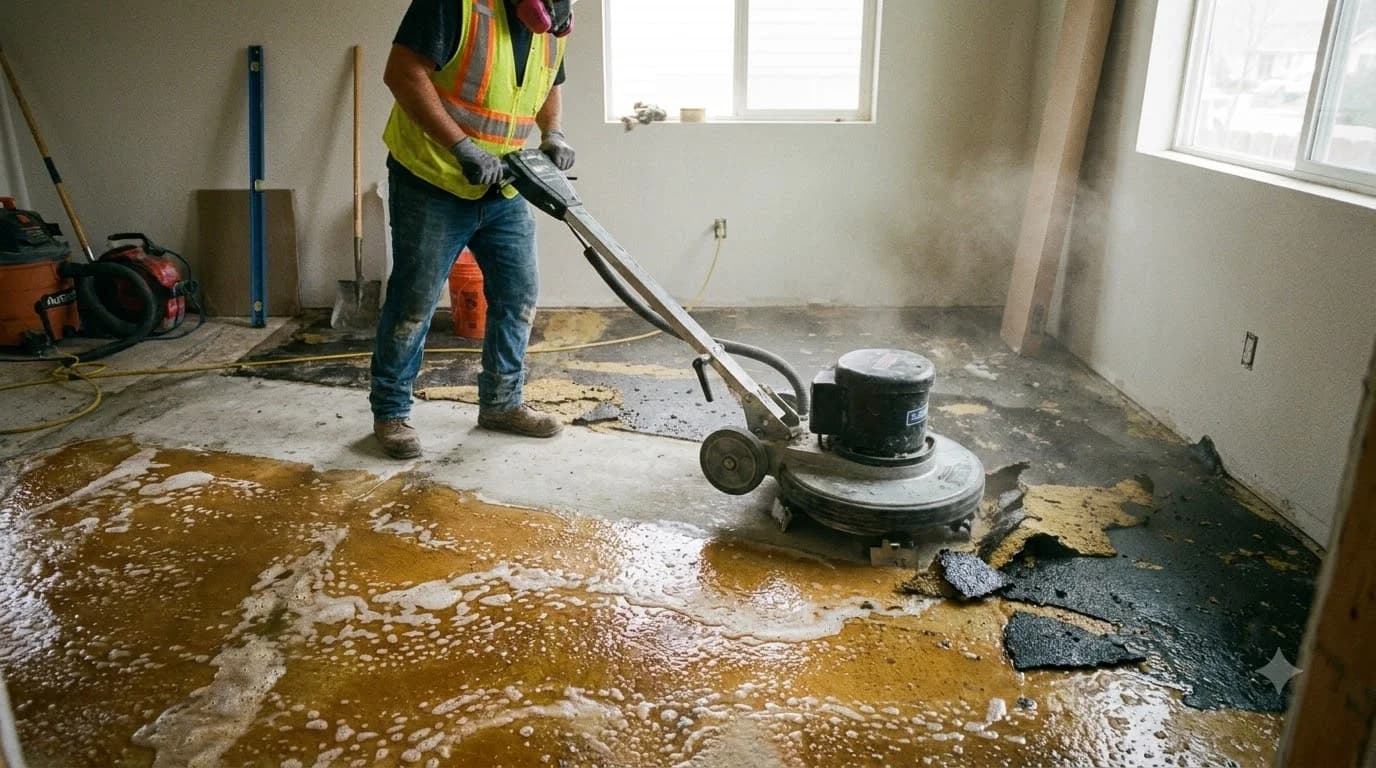
How to Remove Carpet Glue & Mastic from Concrete Slabs