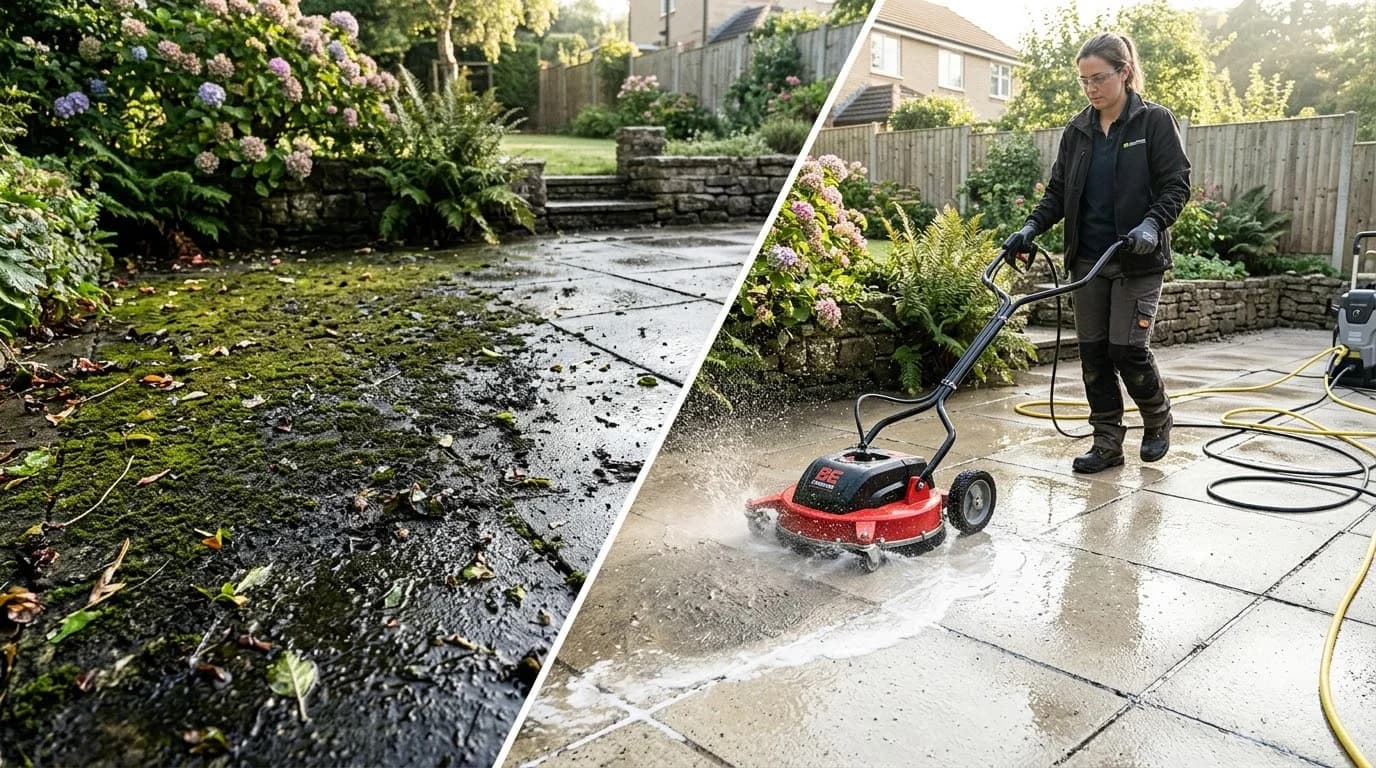
1. Master Biofilm Classification: Mold vs. Mildew vs. Algae vs. Moss
Treating biological growth effectively requires identifying the exact organism growing on your concrete:
| Organism | Appearance & Texture | Root Structure | Primary Hazard | Target Chemical Biocide |
|---|---|---|---|---|
| Green Algae (Gloeocapsa) | Bright green slime, slick biofilm | Single-celled photosynthetic colonies | Severe wet slip hazard | Sodium Hypochlorite (2%) |
| Black Mildew / Mold | Dark gray/black speckles, powdery | Branching fungal hyphae filaments | Airborne mycotoxins / allergies | 12% Peroxide / Quat Ammonium |
| Bryophyte Moss | Thick green carpet, velvet clumps | Penetrating fibrous rhizoids | Dislodges pavers, retains water | Iron sulfate / Boiling water / QAC |
| Lichen | Hard circular crusts (gray/orange) | Symbiotic fungus-algae composite | Chemical root acid etching | High-surfactant 4% SH soak |
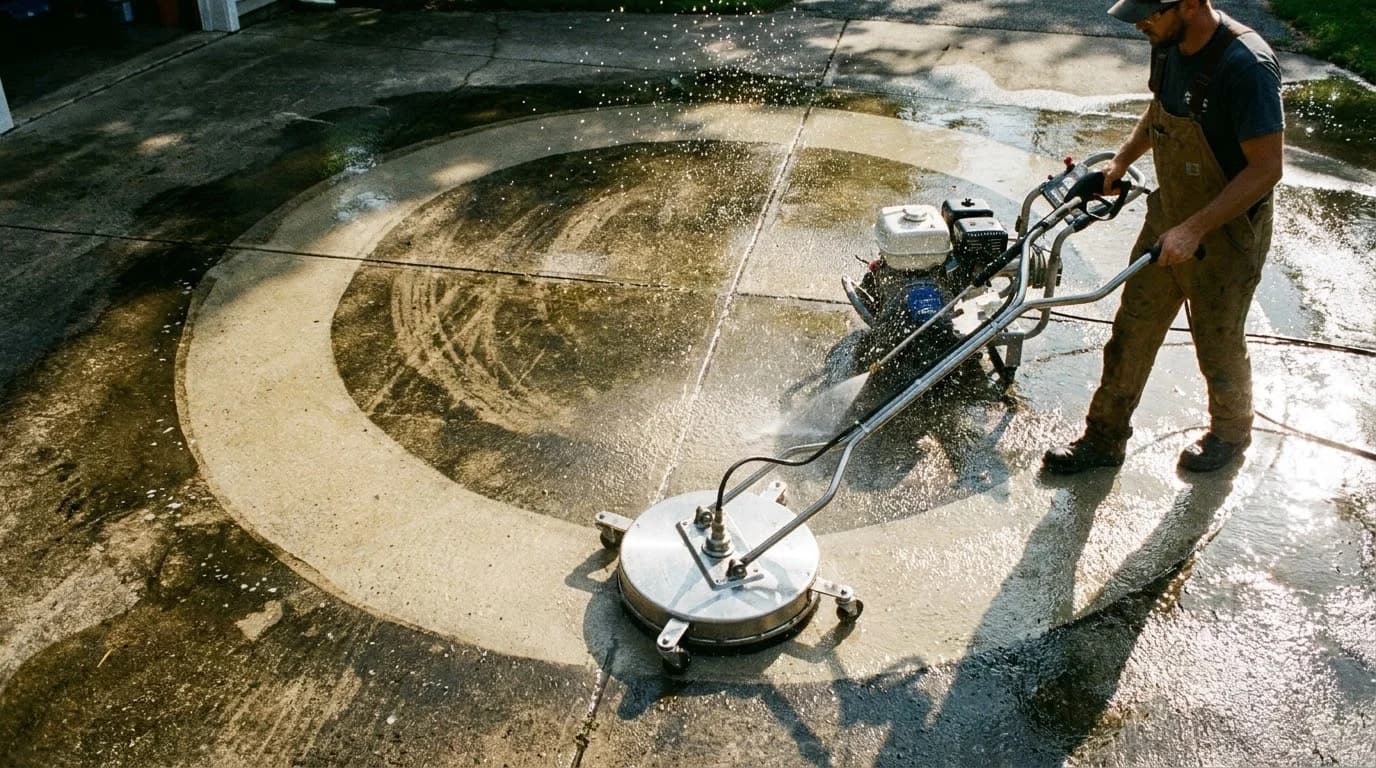
2. Why Pressure Washing Alone Fails: The Root Physics
Homeowners frequently rent a 3,500 PSI pressure washer, blast away the black and green discoloration, and marvel at the clean concrete. However, within 4 to 6 weeks, the mold returns thicker than before.
This occurs because:
- Surface Decapitation: Water pressure shears off the visible photosynthetic top layer of algae, but leaves the microscopic fungal hyphae roots buried 1/8 inch inside the pores completely intact.
- Etching the Paste: High-pressure wand tips strip the protective smooth top cream layer of concrete, exposing rough sand and gravel. This rough surface has exponentially more surface area and deeper crevices for spores to colonize.
- Injecting Moisture: High pressure forces gallons of water deep into the concrete core, providing the perfect saturated micro-environment for dormant spores to germinate.
3. The Professional 4-Step "Soft Wash" Chemical Protocol
Professional exterior cleaning contractors use chemical soft washing (applying low-pressure chemical biocides under 100 PSI) to sanitize the concrete:
- Pre-Wet Surrounding Landscaping: Thoroughly soak all adjacent turf, shrubs, and flower beds with fresh clean water. Saturated plant leaves cannot absorb chemical overspray.
- Mix the Soft-Wash Biocide: Combine sodium hypochlorite (10% to 12.5% pool chlorine) with water to achieve a 2.5% to 3.0% active SH solution. Add 1 ounce of specialized surfactant or laundry detergent per gallon to break surface tension and make the solution cling.
- Low-Pressure Application & Dwell Time: Spray evenly across the dry stained slab using an agricultural backpack sprayer or dedicated soft-wash pump. Allow a 15 to 20-minute dwell time. As the chemical oxidizes organic proteins, black mold turns brown, then yellow, and disappears completely.
- Low-Pressure High-Volume Rinse: Rinse the slab with clean garden-hose water or a wide 40-degree low-pressure tip. Rinse surrounding grass and flower beds copiously for 5 minutes.
4. Five Costly Mistakes in Concrete Mold Remediation
1. Using Chlorine Bleach Indoors
Never spray chlorine bleach in an unventilated basement. Evaporating chlorine fumes corrode copper pipes, furnace electronics, and form hazardous atmospheric gases. Use quaternary ammonium or hydrogen peroxide.
2. Mixing Bleach with Acids or Ammonia
Combining bleach with vinegar, muriatic acid, or ammonia generates fatal chlorine or chloramine gas clouds within seconds. Never mix cleaning chemicals.
3. Sealing Concrete While Damp
Applying an acrylic topical sealer over moist concrete traps biological spores beneath the plastic film. Within months, mold colonies grow under the sealer, forming trapped yellow-green blotches.
4. Using Carbon Steel Wire Wheels
Scraping moss with steel wire wheels embeds microscopic carbon steel shards into the pores. The first rainfall causes hundreds of unsightly orange rust stains across the patio.
5. Long-Term Prevention: Sunlight, Drainage & Silane Sealers
To permanently break the cycle of biological growth on patios and walkways:
- Trim Overhanging Tree Branches: Increasing direct sunlight exposure by just 2 hours daily dries morning dew quickly, starving moss and algae of the persistent dampness required for photosynthesis.
- Redirect Downspouts and Sprinklers: Ensure lawn irrigation spray heads never hit concrete walkways or retaining walls, and extend roof downspouts 6 feet away from paved surfaces.
- Apply Penetrating Silane-Siloxane Sealers: A breathable silane-siloxane sealer lines the pores with hydrophobic silicone polymers. Liquid water beads up and runs off immediately, leaving no moisture inside capillaries for spores to drink.
Frequently Asked Questions
Is black mold on outdoor concrete dangerous to health?
Outdoor black mold and algae on concrete patios and sidewalks primarily represent a severe slip-and-fall hazard when wet, as biological biofilm becomes as slick as ice. However, inside enclosed basements, black mold (such as Stachybotrys chartarum and Aspergillus) can release airborne mycotoxins into HVAC ductwork, triggering severe respiratory irritation, asthma, and chronic allergies.
Does pressure washing permanently kill mold and moss on concrete?
No. Pressure washing merely strips the visible green moss and surface black mildew. It does not kill the microscopic fungal hyphae roots and dormant reproductive endospores embedded deep inside the concrete capillaries. Without an antimicrobial biocide treatment, mold and algae will fully return within 30 to 45 days.
Can household vinegar kill moss on concrete pavers?
Standard grocery store vinegar (5% acetic acid) is too weak to eliminate mature moss roots. Concentrated 20% to 30% horticultural agricultural vinegar will kill moss foliage within 24 hours. However, because strong acetic acid etches alkaline cement paste, repeated use will pit and soften concrete. Use non-acidic quaternary ammonium compounds instead.
What is the best biocide for killing algae and mildew on concrete?
For outdoor slabs, a professional soft-wash solution of 2% to 3% sodium hypochlorite (diluted pool shock) mixed with a surfactant is the fastest biocide, dissolving algae cell walls in 10 minutes. For indoor basement slabs or eco-sensitive areas, quaternary ammonium salt compounds (such as benzalkonium chloride) or 12% hydrogen peroxide provide odorless, non-corrosive spore sterilization.
How do you permanently prevent moss from growing between paver joints?
Sweep out old infected joint dirt, sterilize with a biocide, and install polymeric joint sand conforming to ASTM C144. Polymeric sand contains water-activated polymers that harden into an impermeable, weed- and moss-resistant mortar-like barrier. Topcoat the pavers with a breathable penetrating silane-siloxane sealer.
Building Codes & Primary Standards Cited
Mold Remediation in Schools and Commercial Buildings
Establishes biocide application criteria, HEPA filtration standards, and structural moisture thresholds.
Standard Specification for Aggregate for Masonry Mortar
Governs gradation standards for polymeric sand joints resistant to moss and weed infestation.
Guide to Selecting Protective Materials for Concrete
Recommends breathable penetrating sealers for mitigating surface moisture and microbial colonization.
Hazard Communication Standard - Chemical Biocides
Regulates personal protective equipment and ventilation requirements for industrial sodium hypochlorite.
Estimations adhere to standard North American modular 3/8-inch mortar joint physics and 5% to 10% material waste factors. Local municipal building inspectors, stamped architectural blueprints, and local frost depth requirements supersede general reference guidelines.
Popular Quick Estimates
Pre-engineered takeoffs & benchmarks matched to this project
Related Calculators
Specialized tools for foundation, core fill, and budgeting
Primer, acrylic block filler and topcoat paint gallons
Heavyweight structural blocks and bond beam units
Cubic yards, bags, and slab volume for flatwork and footings
Core grout volume in cubic yards and 80-lb pre-mix bags
Blogs & Construction Guides
Technical articles, IRC code standards, rebar schedules & freight logistics
How to Remove Rust Stains from Concrete: Best Acids
How to Remove Oil Stains from Concrete: Best Methods
How to Clean Concrete Floors: Garage & Basement Guide