Quick Contractor Protocol: Use Oxalic Acid Chelation, Never Muriatic Acid
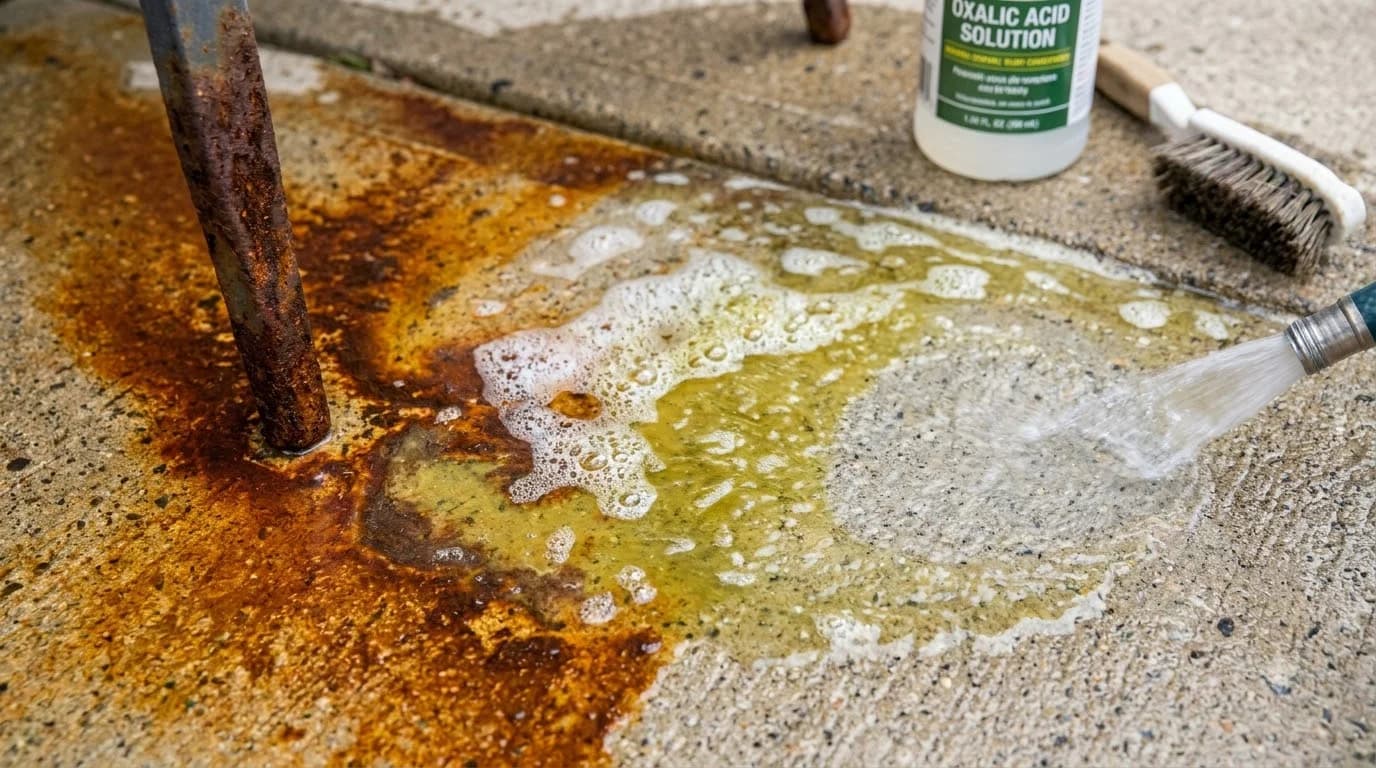
Rust is iron oxide chemically bonded inside concrete pores. Muriatic acid eats concrete paste and creates permanent yellow discoloration. Use oxalic acid (wood bleach) or buffered phosphoric acid (like F9 BARC). Oxalic acid chemically chelates iron ions into soluble, colorless iron oxalate without etching the concrete cream layer. Dwell for 15 minutes, scrub lightly with a nylon brush, and rinse clean.
1. Rust Chemistry: Why Pressure Washing Alone Fails
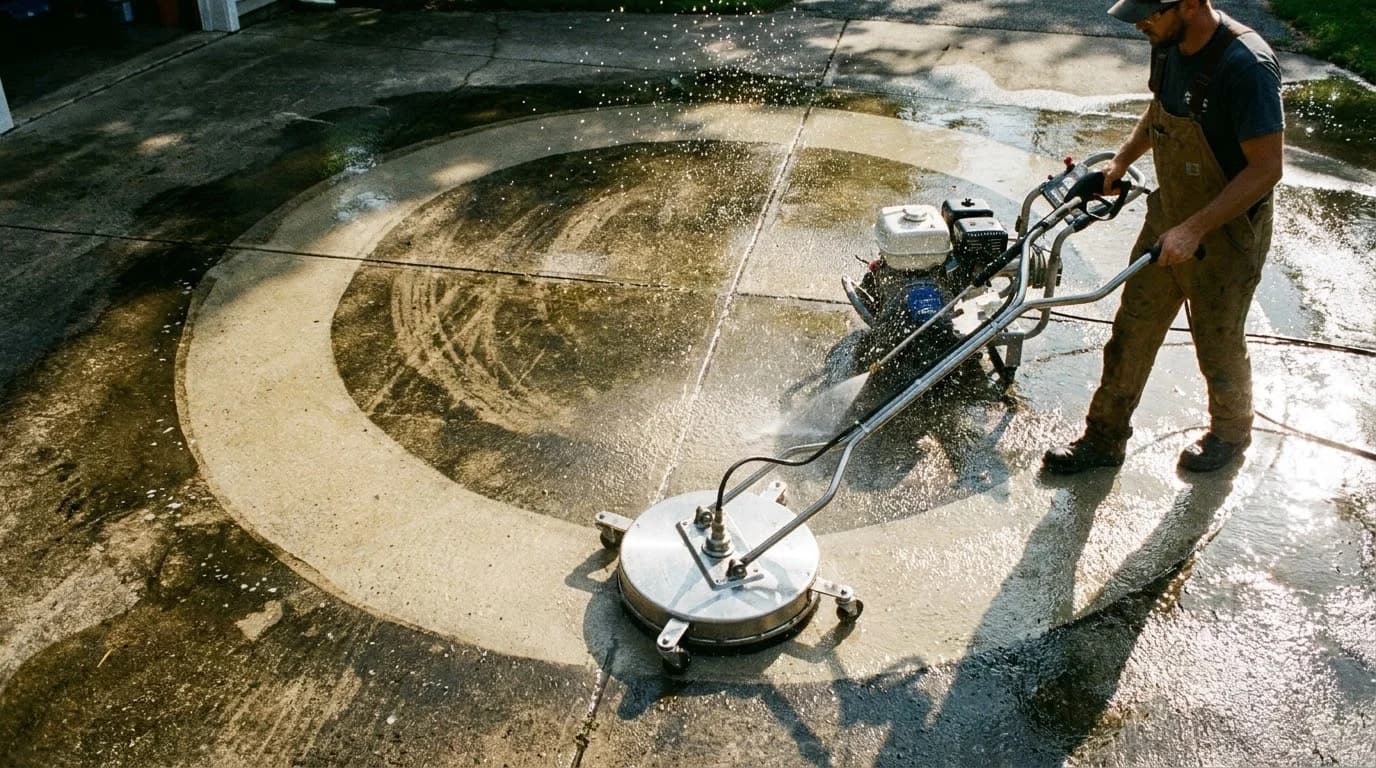
Homeowners frequently attempt to blast orange rust marks off driveways with high-pressure washers (3,500+ PSI), only to find that the stain remains completely unaffected or the concrete surface is scarred.
Rust is not superficial dirt—it is insoluble iron(III) oxide ($Fe_2O_3$). When iron particles from lawn fertilizer or metal furniture meet moisture and oxygen, microscopic iron ions migrate deep into the capillary pores of the concrete. Inside the pore structure, the iron bonds chemically with alkaline calcium hydroxide. Blasting with high pressure only strips away the durable cement cream layer, exposing coarse sand without dislodging the embedded chemical stain. Removing rust requires a chemical chelation agent that breaks the iron bond.
2. Chemical Rust Removal Agents Comparison Matrix
Compare the chemical mechanisms, surface safety, and efficacy of standard rust-removal compounds:
| Chemical Agent | Active Chemical Formula | Concrete Etching Risk | Iron Chelation Power | Required Personal Safety PPE |
|---|---|---|---|---|
| Oxalic Acid (Wood Bleach) | Dicarboxylic acid (C2H2O4) | Zero (pH balanced for concrete) | Superior (Turns iron into soluble oxalate) | Nitrile gloves, splash goggles, dust mask |
| Buffered Phosphoric Acid (F9 BARC) | Buffered H3PO4 + wetting agents | Zero (Leaves cement paste intact) | Maximum (Reverses fertilizer burn) | Nitrile gloves & eye protection |
| Muriatic Acid (Hydrochloric) | 31.45% HCl aqueous solution | EXTREME (Dissolves top 1/8" paste) | Unpredictable (Forms yellow FeCl2 stains) | Acid gas respirator, rubber apron, face shield |
| Household Lemon & Vinegar (DIY) | Citric / Acetic acid (5% solution) | Low to Moderate on polished floors | Very Weak (Only removes faint surface rust) | Household rubber gloves |
3. The Flawless Oxalic Acid Application Protocol
Oxalic acid is the gold standard used by commercial pressure washing contractors. It binds to iron molecules to create water-soluble iron oxalate:
- Mix the Chelation Solution: Dissolve 1 to 1.5 cups of oxalic acid powder (sold cheaply as deck brightener or wood bleach) into 1 gallon of hot tap water inside a clean plastic pump sprayer. Shake vigorously until crystals dissolve completely.
- Pre-Wet the Surrounding Concrete: Mist clean water across the concrete around the stained area. Pre-wetting prevents dry concrete from pulling the acid outward, preventing uneven bright halo rings.
- Apply and Dwell: Spray the oxalic acid solution generously over the rust stain until the concrete is fully saturated. Allow the chemical to dwell for 15 to 20 minutes. As the reaction proceeds, you will see the bright orange stain fade into a clear, colorless liquid.
- Light Nylon Agitation: Scrub the stain with a stiff nylon-bristled deck brush to push the chemical deeper into the pores. Never use a wire brush, as wire bristles will break off and cause new rust spots.
- Rinse and Neutralize: Rinse thoroughly with a garden hose or low-pressure washer. If runoff will flow onto grass or flowerbeds, spread baking soda along the lawn edge to neutralize the acid.
4. Fertilizer Iron Burn & Sprinkler Well Water Staining
Two common exterior rust problems require specialized handling:
- Fertilizer Specks (Iron Burn): Weed-and-feed fertilizers contain ferrous sulfate. When granular pellets land on concrete and get wet, each speck blossoms into an orange rust dot. Spot treating hundreds of dots is impossible. Instead, apply a broad mist of oxalic acid across the entire sidewalk panel using a pump sprayer, then rinse the full slab for a uniform appearance.
- Irrigation Sprinkler Well Water Rust: Well water containing dissolved iron bicarbonate continually oxidizes onto foundation walls and driveways. Commercial restoration products like F9 BARC(Battery Acid & Rust Cleaner) reverse both rust and battery acid burns across large square footage without damaging concrete paste.
5. Long-Term Prevention: Penetrating Silane-Siloxane Sealers
Once rust is eliminated, protect the open pores to prevent recurring discoloration:
Apply a penetrating silane-siloxane hydrophobic sealer (complying with ASTM C156). Silane molecules penetrate 1/4 inch into concrete pores, chemically bonding with silica to line the pores with a permanent water-repellent barrier. When water, fertilizer, or rusty patio furniture contacts the surface, moisture cannot enter the pore structure, allowing rust to be rinsed away with a simple garden hose before it bonds.
5 Critical Rust Removal Mistakes to Avoid
Using Muriatic Acid on Concrete
Muriatic acid violently etches away the cement paste, exposes coarse aggregates, and reacts with iron in the concrete mix to leave an ugly permanent yellow-green mineral stain.
Using a Steel Wire Brush
Scrubbing with a metal wire brush snaps off microscopic steel bristle fragments that lodge in the concrete pores. Within 48 hours, every fragment oxidizes into a brand-new rust spot.
Applying WD-40 or Solvents
Petroleum oils will not dissolve rust and will soak immediately into the slab, replacing an orange stain with an unremovable dark petroleum stain.
Letting Acid Runoff Burn Turfgrass
Rinsing unneutralized oxalic or phosphoric acid directly onto lawn edges will scorch and kill grass roots within hours. Always buffer lawn borders with baking soda or lime.
Planning a Concrete Cleaning or Sealing Project?
Calculate sealer square footage, chemical cleaner quantities, and 2026 pricing.
Frequently Asked Questions
Will muriatic acid remove rust from concrete?
While muriatic (hydrochloric) acid removes surface rust, it violently attacks the alkaline cement paste, permanently etching the cream layer and exposing coarse sand. Even worse, it reacts with iron minerals in the concrete to create stubborn yellow iron chloride stains.
How do you get fertilizer rust stains off a sidewalk?
Spray a 10% oxalic acid solution or a commercial buffered rust remover (like F9 BARC) over the affected area with a pump sprayer. Agitate lightly with a stiff nylon deck brush, let dwell 15 minutes to chelate the iron, and rinse thoroughly with clean water.
Does WD-40 or vinegar remove rust from concrete?
WD-40 is a petroleum solvent and creates a permanent oily stain in porous concrete that is far harder to remove than the rust. Household vinegar is too weak to dissolve deep rust but acidic enough to etch unsealed polished slabs if left to dwell.
Can pressure washing alone remove rust stains from concrete?
No. Rust is not surface dirt; it is iron oxide chemically bonded inside the microscopic pores of the concrete. High-pressure water alone will blast away the surface cream layer before it dislodges deep iron stains, requiring chemical chelation first.
How do you neutralize oxalic acid runoff before it hits the lawn?
Dissolve 2 cups of baking soda (sodium bicarbonate) or agricultural lime in a 5-gallon bucket of water and pour it along lawn edges and driveway borders. This neutralizes acid runoff instantly, preventing grass burns and soil acidification.
Building Codes & Primary Standards Cited
Standard for Safer Chemical Ingredients - Acid Alternatives
Establishes non-destructive, low-toxicity guidelines for consumer masonry rust removers.
Respiratory Protection Standard for Chemical Handling
Regulates PPE, glove barriers, and eye protection when handling acid crystals.
Standard Test Method for Water Loss of Concrete Surface Sealers
Evaluates penetrating silane-siloxane moisture barriers that prevent mineral absorption.
Estimations adhere to standard North American modular 3/8-inch mortar joint physics and 5% to 10% material waste factors. Local municipal building inspectors, stamped architectural blueprints, and local frost depth requirements supersede general reference guidelines.
Popular Quick Estimates
Pre-engineered takeoffs & benchmarks matched to this project
Related Calculators
Specialized tools for foundation, core fill, and budgeting
Primer, acrylic block filler and topcoat paint gallons
Heavyweight structural blocks and bond beam units
Cubic yards, bags, and slab volume for flatwork and footings
Core grout volume in cubic yards and 80-lb pre-mix bags
Blogs & Construction Guides
Technical articles, IRC code standards, rebar schedules & freight logistics
How to Remove Oil Stains from Concrete: Best Methods
How to Clean Concrete Floors: Garage & Basement Guide
Can Mold Grow on Concrete? How to Kill Spores & Moss