Heavy Liquid Containment

Cinder Block Pool
Calculator

Plan your DIY plunge pool or custom in-ground swimming pool. Estimate blocks, continuous mortar, structural rebar frames, core grout, slab floors, and water gallon capacities.

Pool Structural Rule: Pool masonry demands solid concrete grouting of ALL cells and dual horizontal reinforcement in every course to resist extreme internal water loads safely.

Pool Materials Estimate

Enter dimensions to estimate pool materials

Plunge Pool Tip

Waterproofing plaster/paint estimates assume coating the entire internal floor slab and wall face area.

Pool Configurations Quick Reference

Small Plunge Pool

Dimensions:8' × 12'Water Depth:4 ftBlocks Required:~200 pcsWater Capacity:~2,872 gal

Large Plunge Pool

Dimensions:10' × 16'Water Depth:5 ftBlocks Required:~290 pcsWater Capacity:~5,984 gal

Medium Swimming Pool

Dimensions:12' × 24'Water Depth:5 ftBlocks Required:~400 pcsWater Capacity:~10,771 gal

Large Swimming Pool

Dimensions:16' × 32'Water Depth:6 ftBlocks Required:~635 pcsWater Capacity:~22,978 gal

How to Build a Cinder Block Plunge Pool

Concrete block (CMU) swimming pools are popular because they can be customized to any shape and built at a fraction of the cost of shotcrete/gunite pools. However, containing thousands of gallons of water requires strict structural rules:
1

Cinder Block Pool Calculator (2026)

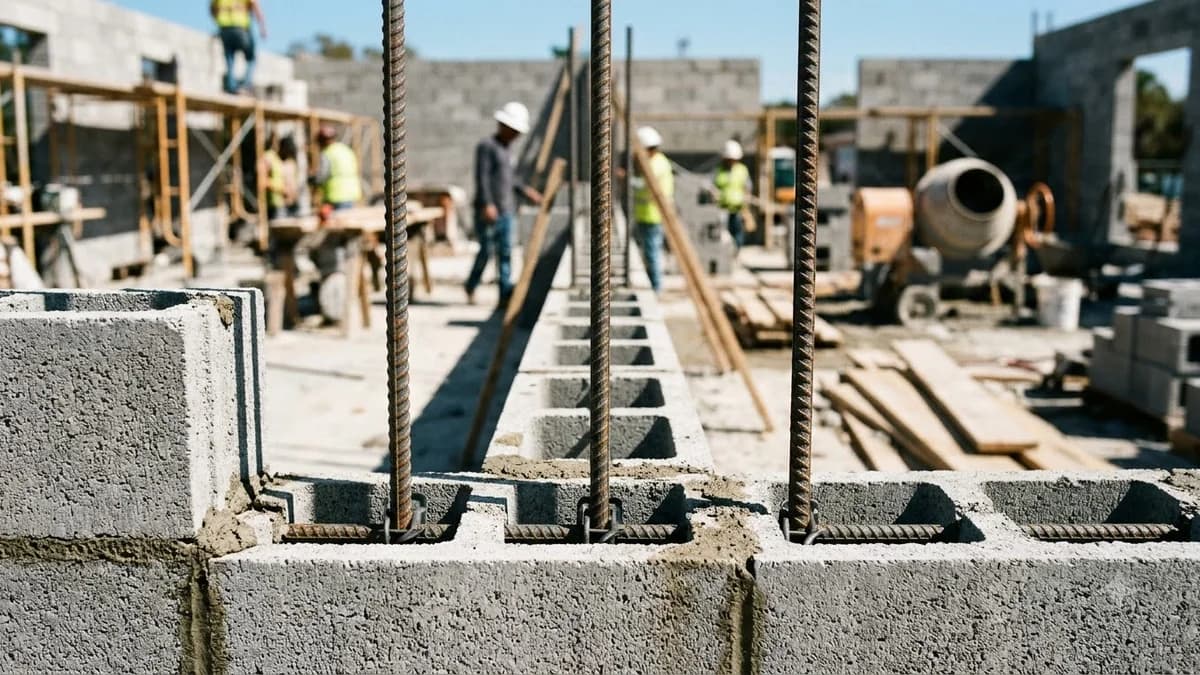
Pour a continuous 6" to 8" thick concrete pool slab floor. The floor must contain steel rebar grids with dowels sticking up to tie into the block walls.

2

Cinder Block Pool Calculator (2026)

Lay standard 8" or 12" blocks on a thick mortar bed. Standard 12" blocks are highly recommended for deep pools (6 ft or more).

3

Cinder Block Pool Calculator (2026)

Install heavy vertical #4 or #5 rebar in every single cell, plus double continuous horizontal rebar loops on every single course.

4

Cinder Block Pool Calculator (2026)

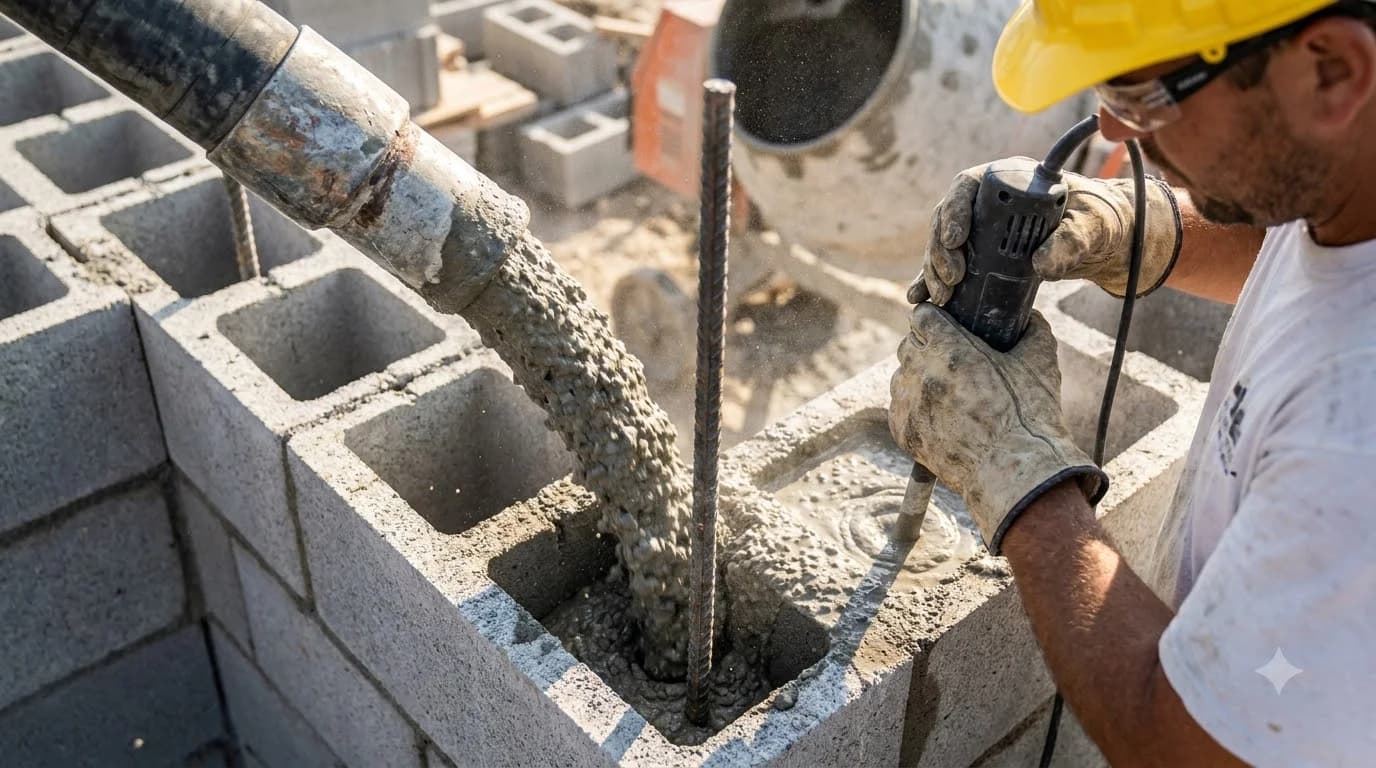
Completely fill all hollow block cores with a high-strength concrete grout mix (minimum 3,000 PSI). Never build a pool with hollow blocks.

5

Cinder Block Pool Calculator (2026)

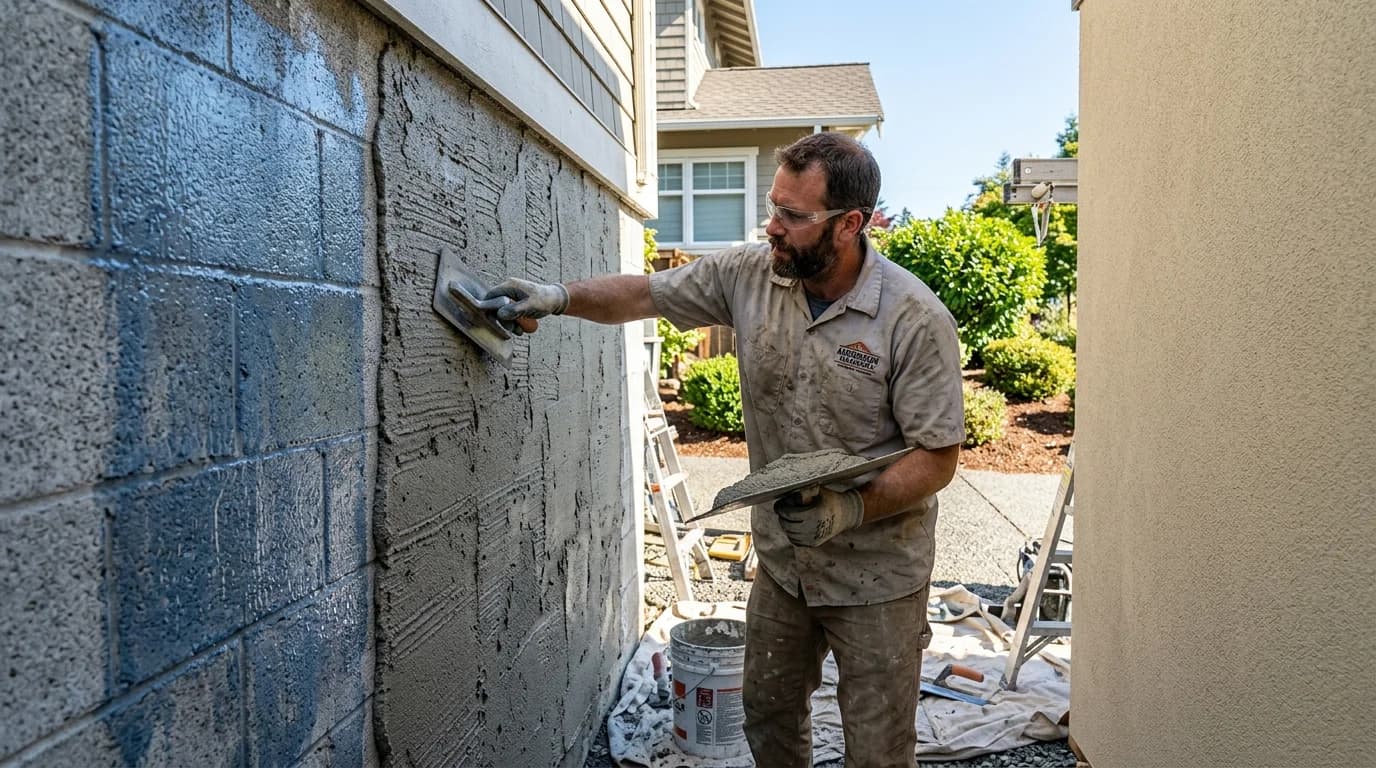
Render both internal and external walls with a waterproof cementitious scratch coat, followed by standard pool plaster or epoxy paint.

6

Cinder Block Pool Calculator (2026)

Cut block openings for skimmers, main drains, and return jets before pouring concrete core grout to ensure leak-proof seals.

Professional Pool Builder Guidelines

  • Monolithic Pour: Concrete core grout must be poured and vibrated in lifts to ensure there are absolutely zero air gaps in the cores.
  • Doweling: Rebar dowels must extend at least 18 inches from the concrete floor slab into the block cores to resist lateral shear loads.
  • Elastomeric Render: Apply a high-quality flexible render coat to the interior before applying pool plaster or waterproof epoxy pool paint.
  • Zoning & Fencing: Most municipal regulations require a structural permit and code-approved safety fencing for pool installations.

Pool Sizing Block Specifications

Choosing the correct block thickness affects structural capacity, lateral load resistance, and cost:

8-inch CMU

Best For:Shallow backyard plunge pools, lap pools up to 4 ft depthLoad Capacity:Standard load capacity when solid groutedUnit Weight:38 lbs

12-inch CMU

Best For:Deeper pools (5 ft to 6 ft depth), in-ground slopes, commercial featuresLoad Capacity:Extreme structural strength to resist high lateral pressuresUnit Weight:55 lbs

Building clearances & mandatory engineering

Swimming pools represent immense hydrostatic lateral loads. Building in-ground block pools demands professional structural engineering reviews and local municipal zoning clearance.