ASTM C91 & ASTM C270 Table 2 Preblended Mortar Standards

Masonry Cement Mortar Calculator

Laying 1,000 standard cinder blocks with ASTM C91 Type S masonry cement requires 13 bags (70 lbs each), 1.44 cubic yards of damp masonry sand, and 59 gallons of water, eliminating the need for separate hydrated lime.

Size 70-lb and 75-lb ASTM C91 preblended masonry cement bags, ASTM C144 masonry sand volumes and tonnages, water batching, and mixer shovel ratios under ASTM C270 Table 2.

Live Mortar Takeoff
13Bags (70 lbs)• 1.44 yd³ sand (~1.94 tons)
Details
Standard 8×8×16 units

Total standard hollow cinder blocks requiring bed and head joints.

Type S is required for reinforced loadbearing masonry and retaining walls.

1 bag equals 1 loose cubic foot binder volume under ASTM C270.

1 Part Cement : 3 Parts Sand (1:3 Standard)

Table 2 limits sand to 2¼ to 3 times the cement volume (3 cu ft/bag).

Critical Masonry Cement Rule: Never Add Hydrated Lime

ASTM C91 Masonry Cement is already preblended at the factory with plasticizers and air-entraining additives. Adding separate hydrated lime or Portland cement on the jobsite is strictly prohibited as it disrupts air content and lowers compressive strength.

ASTM C91 Mortar Takeoff

ASTM C91 Preblended Masonry Cement

13Bags (70 lbs each)

910 lbs total cementitious binder (Type S)

ASTM C144 Sand
1.44cu yds
~1.94 tons (38.9 cu ft)
Water Demand
59gallons
~4.5 gal / bag batch
Total Mortar Yield
37cu ft
Includes 10% joint waste
1-Bag Mixer Batches
13batches
18 shovels sand per bag
No Hydrated Lime Required

ASTM C91 preblended masonry cement contains factory-interground plasticizers. Only add clean ASTM C144 masonry sand and potable water.

Estimated Materials Cost:~$276
Cement: $189
Sand: $87

ASTM C270 Table 2 Formulation

Proportions: 1 part masonry cement to 3 parts damp loose masonry sand. Mechanical mixer run time: 3 to 5 minutes.

ASTM C270 Table 2 Masonry Cement Proportion & Strength Table

Standard commercial preblended masonry cement specifications under ASTM C91 and ASTM C270 Table 2. Unlike site-blended Portland-lime mortars, masonry cements contain factory-calibrated plasticizers and air-entraining agents, requiring only clean damp sand and water.

Mortar Type28-Day Strength (ASTM C109)Cement Volume PartSand Volume (ASTM C144)Bag Packaging (ASTM C91)Structural Applications
Type M2,500 PSI (17.2 MPa)1 Part Type M2¼ to 3 times cement volume (3 cu ft/bag)75-lb Bag (nominal 1 cu ft)Heavy retaining walls, foundation footings, deep earth contact
Type S1,800 PSI (12.4 MPa)1 Part Type S2¼ to 3 times cement volume (3 cu ft/bag)70-lb Bag (nominal 1 cu ft)Reinforced structural CMU, below-grade foundations, seismic walls
Type N750 PSI (5.2 MPa)1 Part Type N2¼ to 3 times cement volume (3 cu ft/bag)70-lb Bag (nominal 1 cu ft)Above-grade exterior veneers, interior non-loadbearing partitions

Worked Example: Mortar Takeoff for 1,000 Standard 8×8×16 CMU Blocks

To illustrate how contractors and estimators size materials for commercial blockwork, consider a 1,000-block structural foundation run built with standard 8×8×16 hollow CMU, 3/8-inch face-shell mortar joints, and ASTM C91 Type S preblended masonry cement.

1Mortar Yield & Block Coverage

Under standard masonry estimating practices, 100 8-inch CMU units require approximately 3.3 to 3.7 cubic feet of wet compacted mortar. Laying 1,000 units yields a net mortar demand of 33.3 cu ft. Applying a standard 10% allowance for head joint extrusion, bed trimmings, and board waste:

Total Mortar = 33.33 × 1.10 = 36.67 ≈ 37.0 cu ft

2ASTM C91 Cement Bags (70 lbs)

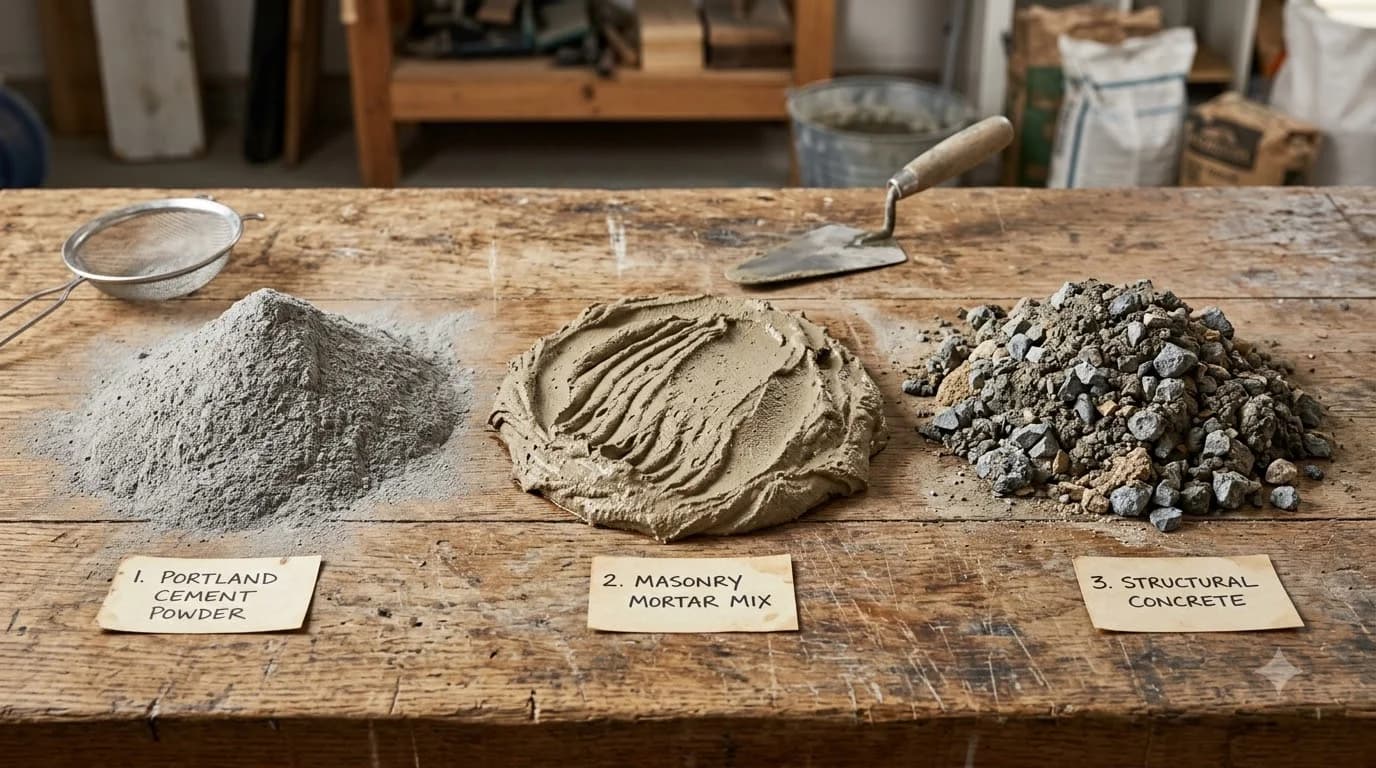
Under ASTM C270 Table 2, 1 bag of masonry cement produces 1 loose cubic foot of cementitious material, which combines with 3 cu ft of sand to yield approx. 3.0 cu ft of mixed mortar. Dividing total mortar demand by bag yield:

Cement Bags = 36.67 ÷ 3.0 = 12.22 → Round up to 13 Bags (910 lbs)

3ASTM C144 Masonry Sand Volume & Tonnage

With 13 bags batching at 3.0 cu ft of damp loose sand per bag, total sand volume equals 39.0 cubic feet. Converting cubic feet to cubic yards and commercial short tons (assuming damp bulk density of ~2,700 lbs/cu yd or 1.35 tons/cu yd):

Sand Volume = 39.0 ÷ 27 = 1.44 cu yds × 1.35 = 1.94 Tons

4Potable Mixing Water & Batching

Each 70-lb bag of Type S masonry cement requires approximately 4.5 gallons of clean, potable water depending on sand dampness and ambient temperature. Total jobsite water requirement:
Water Demand = 13 Bags × 4.5 gal = 58.5 ≈ 59 Gallons

ASTM C91 Preblended Masonry Cement vs. Site-Mixed Portland & Lime

When specifying mortar for concrete masonry unit (CMU) construction, engineers and mason contractors typically choose between preblended ASTM C91 Masonry Cement and traditional ASTM C270 Portland Cement-Lime (P/L) formulations.

Preblended Consistency

ASTM C91 cements combine Portland cement clinker, limestone, and plasticizing agents interground in industrial ball mills. This eliminates jobsite batching errors caused by laborers measuring separate bags of hydrated lime (ASTM C207).

Board Life & Workability

Masonry cements feature higher microscopic air entrainment (typically 12% to 21% air content) than Portland-lime mortars. This gives the wet mortar exceptional board life, buttery spreadability, and enhanced freeze-thaw durability.

Flexural Bond Strength

While masonry cement provides high compressive strength and workability, Portland-lime mortars achieve higher flexural tensile bond strength. For high-seismic zones (SDC D–F), check whether the structural engineer specifies ASTM C1329 Mortar Cement or P/L mortar.

Jobsite Mechanical Mixer Protocol: The Standard 18-Shovel Rule

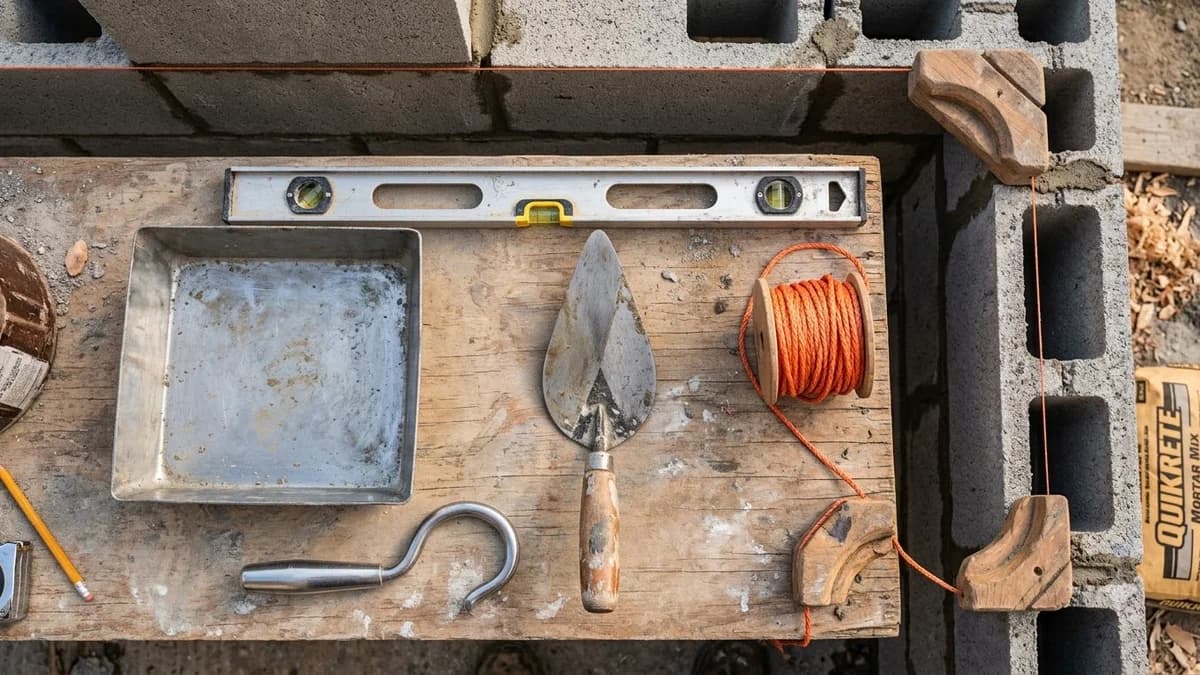
Under ASTM C270 Section 5.3 and TMS 602 Section 3.2 C, all mortar must be mixed in a mechanical batch mixer with rotating paddles for a minimum of 3 minutes and maximum of 5 minutes after all constituents are added. Follow this precise contractor charging sequence:

Step 1Water Charge

Add ~3.5 gallons (approx. 75% of mix water) to lubricate rotating paddles.

Step 2Half Sand

Add 9 standard shovels (~1.5 cu ft) of damp ASTM C144 masonry sand.

Step 31 Bag Cement

Empty 1 whole bag (70-lb or 75-lb) of ASTM C91 masonry cement.

Step 4Balance Sand

Add remaining 9 shovels of sand (total 18 shovels = 3.0 cu ft) and balance water.

Step 53–5 Min Mix

Mix thoroughly. Discard any unused mortar after 2.5 hours from initial batching.

Jobsite Retempering & Pot Life Limitations

Mortar that stiffens due to evaporation on the mortar board may be retempered with clean water within the first 2 hours of mixing to restore trowel workability. However, under TMS 602 Section 3.2 C.4, never retemper mortar older than 2.5 hours. Once initial cement hydration begins, adding water dissolves developing crystal matrices and drastically weakens compressive bond strength.

Calculation Assumptions & References Planning Reference

Material estimates depend on the selected dimensions, product yields, and waste allowance.

Content date: October 2026
Related references: ASTM C91 (Standard Specification for Masonry Cement), ASTM C270 Table 2 (Proportion Specification for Masonry Cement Mortars), ASTM C144 (Standard Specification for Aggregate for Masonry Mortar), TMS 602 / ACI 530.1 / ASCE 6 (Specification for Masonry Structures), NCMA TEK 09-01A (Mortars for Concrete Masonry). Confirm the applicable edition and local requirements.
A material estimate is not a structural design or code approval.
Masonry Q&A

ASTM C91 Masonry Cement Mortar FAQ

Expert technical answers on preblended masonry cement proportions, ASTM C144 sand ratios, hydrated lime prohibitions, and ASTM C270 compliance.

Under ASTM C270 Table 2 (Proportion Specification for Masonry Cement Mortars), the volumetric ratio is 1 part ASTM C91 masonry cement to 2-1/4 to 3 parts damp, loose ASTM C144 masonry sand. Standard field practice pairs 1 bag (1 loose cubic foot) with 3 cubic feet of damp sand (approx. 18 standard shovels) and 4.5 to 5 gallons of clean water.

Advertisement

Popular Quick Estimates

Illustrative takeoffs with stated assumptions; verify project quantities

Specialized tools for foundation, core fill, and budgeting

Blogs & Construction Guides

Practical guides to block sizing, material estimates and project planning