ASTM C270 Mortar Proportion Specification Table
ASTM C270 specifies two distinct compliance methods: the Proportion Specification (prescribed volumetric ratios) and the Property Specification (minimum laboratory compressive strength). The table below outlines standard volumetric proportions by loose damp volume:
| Mortar Type | Portland Cement | Hydrated Lime | Masonry Sand (Loose) | Min. Compressive Strength | Typical Application |
|---|---|---|---|---|---|
| Type M | 1 part | 1/4 part | 3 to 3.75 parts | 2,500 PSI | High lateral & compressive loads, below-grade foundations, retaining walls |
| Type S | 1 part | 1/2 part | 3.75 to 4.5 parts | 1,800 PSI | Exterior loadbearing block walls, seismic zones, retaining walls |
| Type N | 1 part | 1 part | 5 to 6 parts | 750 PSI | Above-grade residential brick veneer, exterior walls, chimneys |
| Type O | 1 part | 2 parts | 7.5 to 9 parts | 350 PSI | Interior non-load-bearing walls, historic preservation tuckpointing |
Water Mixing & Retempering Field Rules
Water Quantity per Bag
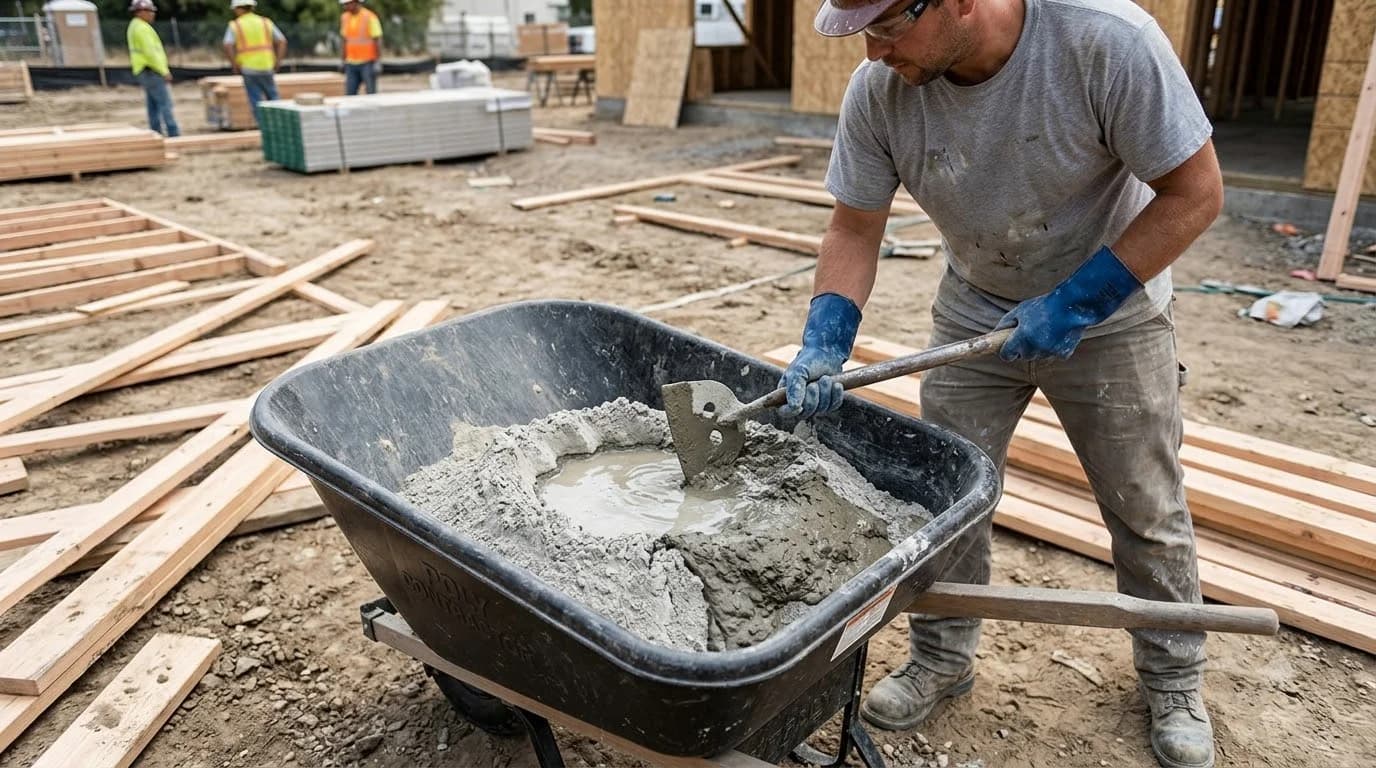
A standard 80 lb bag requires between 4.5 to 5.5 quarts (approx 1.2 to 1.4 gallons) of clean potable water. Always add roughly 75% of water to the paddle mixer before dry ingredients, adding remaining water gradually until buttery consistency is achieved.
The 2-Hour Retempering Rule
If mixed mortar loses workability from board drying on hot sunny days, you may sprinkle fresh water and remix within the first 90 minutes. Once initial set commences (past 2 hours), retempering destroys chemical bonding; old mortar must be scrapped.
Building Specifically with Concrete Cinder Blocks?
Get block-specific coverage formulas, Quikrete brand codes (#1102 & #1122), 4"/6"/8"/12" block widths, and quick 100-block multipliers.
Formulas, modular dimensions, and material yields verified by the CinderCalc Technical Team
Frequently Asked Questions About Masonry Mortar
Expert insights into mix ratios, bag yields, sand tonnage, and water requirements.