Contractor Verdict: Never Pour Concrete on Raw Dirt
Pouring concrete directly over raw dirt or lawn sod is the #1 cause of sunken, cracked residential slabs. A concrete slab is a rigid bridge—it has zero tensile strength and cannot flex over soft soil pockets. Under IRC Section R506, building codes require stripping all organic topsoil, compacting native subgrade, and installing a minimum 4-inch layer of crushed stone aggregate base (ASTM D2940) compacted to 95% Modified Proctor density.
1. The Three Mechanisms of Subgrade Failure
When inexperienced DIYers pour a 4-inch concrete patio directly over scraped lawn dirt, three distinct geotechnical failures occur within 6 to 24 months:
Topsoil contains roots, humus, and decomposing plant matter. As bacteria break down organics without oxygen, the soil compresses and shrinks by 20% to 40%, creating hollow caverns beneath the slab that lead to cave-ins under furniture or vehicle weight.
Subsurface clay soils (smectite and montmorillonite) swell dramatically when wet and shrink when dry. This cyclic volume change exerts upward heave pressures exceeding 5,000 lbs/sq ft, snapping 4-inch unreinforced slabs directly in half.
Fine-grained dirt draws ground moisture upward via capillary action. In winter, this water freezes into solid ice lenses directly beneath the slab, expanding by 9% and jacking the slab upward unevenly.
2. The 4-Layer Engineered Subbase Profile (IRC Section R506)
To construct a concrete slab that will endure 40+ years without settlement cracking, follow the structural layer profile mandated by ACI 360R (Design of Slabs-on-Ground):
| Layer | Material Specification | Thickness | Engineering Purpose |
|---|---|---|---|
| 1. Compacted Subgrade | Native inorganic soil (clay/sand/loam) | Undisturbed | Proof-rolled to eliminate soft spots |
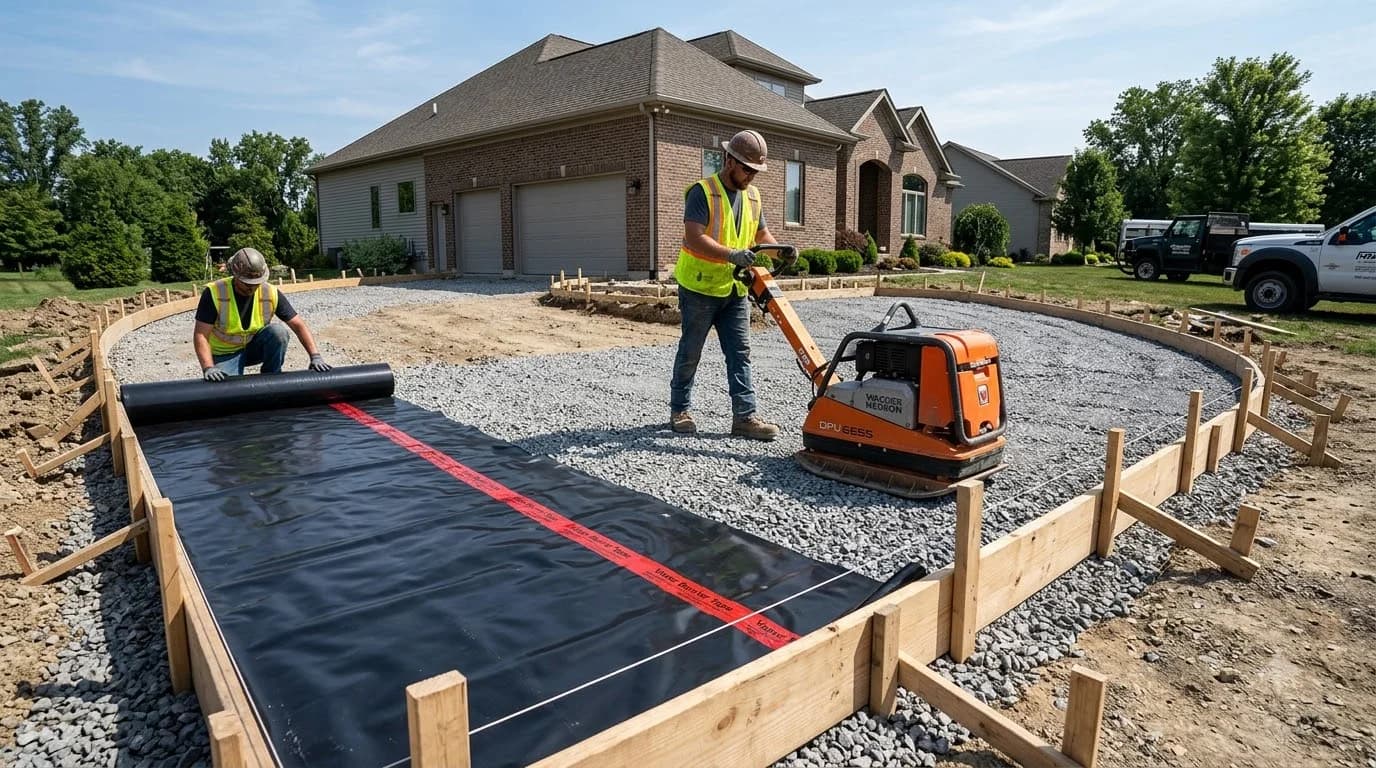
| 2. Geotextile Fabric | Woven polypropylene stabilization fabric | 4-mil / 4-oz | Prevents gravel base from punching into wet clay mud |
| 3. Crushed Gravel Base | ASTM D2940 Dense-Graded Crusher Run (CR-6) | 4″ to 6″ | Uniform load distribution & capillary water break |
| 4. Vapor Barrier (Interior) | 10-mil polyolefin sheeting (ASTM E1745) | 10 to 15 mil | Blocks moisture vapor transmission into interior rooms |
| 5. Reinforced Concrete | 4,000 PSI concrete with #4 rebar grid | 4″ to 6″ | Finished monolithic structural slab |
3. Master Gravel Base Material Estimating Matrix
Crushed stone base material is ordered by the ton or cubic yard. Standard dense-graded road base weighs approximately 1.4 tons (2,800 lbs) per cubic yard. Review exact requirements by project footprint:
| Slab Footprint (Sq Ft) | 4″ Gravel Volume (Cu Yds) | 4″ Gravel Weight (Tons) | 6″ Gravel Weight (Heavy Drive) | Approx Base Cost (2026) |
|---|---|---|---|---|
| 100 sq ft (10×10 Shed) | 1.23 yd³ | 1.75 tons | 2.60 tons | $65 – $95 |
| 200 sq ft (10×20 Patio) | 2.47 yd³ | 3.50 tons | 5.20 tons | $130 – $180 |
| 400 sq ft (20×20 Garage) | 4.94 yd³ | 7.00 tons | 10.40 tons | $250 – $360 |
| 600 sq ft (2-Car Driveway) | 7.41 yd³ | 10.50 tons | 15.60 tons | $380 – $540 |
| 1,000 sq ft (Large Apron) | 12.35 yd³ | 17.50 tons | 26.00 tons | $620 – $880 |
4. Mechanical Compaction Protocols (ASTM D1557)
Dumping 4 inches of gravel into your forms and smoothing it with a garden rake is not compaction. Loose gravel will settle under the weight of wet concrete, resulting in an uncompacted, uneven slab that cracks down the middle:
1. Rent a Gas-Powered Vibratory Plate Compactor
A manual 10-lb hand tamper cannot deliver sufficient kinetic compaction energy for areas over 50 square feet. Rent a commercial 200-lb plate compactor delivering 3,000 to 5,000 lbs of centrifugal force.
2. Compact in 2-Inch Lifts with Moisture
Never attempt to compact 4 or 6 inches of gravel all at once. Spread the gravel in 2-inch thick lifts. Lightly mist the stone with a garden hose to lubricate particles (optimum moisture content), then make at least 3 overlapping passes over the entire area before adding the next lift.
5. Five Costly Subgrade Preparation Mistakes
Smooth round stones never interlock. When vehicles drive onto the concrete, round pea gravel shifts underneath like marbles, creating localized point settlements that crack the slab. Only use angular, crushed stone road base.
If you dig too deep in one corner, never fill the depression with shoveled loose dirt. Uncompacted dirt will settle 1 to 2 inches once wet. Fill low spots exclusively with crushed stone and compact thoroughly.
Dry aggregate produces internal friction that prevents particles from sliding into maximum density. Without misting water, stone dust bridges air pockets. Always mist aggregate until damp before operating the plate compactor.
Leaving tree roots larger than 1 inch in diameter under the slab is a ticking time bomb. Live roots will continue growing and heave the slab; dead roots will rot, leaving caverns beneath the concrete. Grub out all roots during subgrade clearing.
Grading the subgrade dead flat traps subbase groundwater against the foundation wall. Grade both the native soil and the gravel subbase with a 1/8 to 1/4-inch per foot slope away from the home before pouring concrete.
Planning Your Slab Excavation?
Calculate total gravel tonnage, concrete cubic yards, and 2026 contractor pricing in seconds.
Frequently Asked Questions
Can you pour concrete directly onto grass or raw dirt?
Never pour concrete directly onto grass, sod, or organic topsoil. Topsoil contains roots, vegetation, and organic matter that decompose within months, leaving large subgrade voids that cause the concrete slab to crack, tilt, and collapse under load. You must excavate 4 to 8 inches down to reach firm, non-organic subsoil.
What is the best gravel base to put under a concrete slab?
The industry standard aggregate is 3/4-inch dense-graded crushed stone (often labeled Crusher Run, CR-6, 21A, or road base conforming to ASTM D2940). Dense-graded stone contains a blend of angular crushed rock and stone dust fines that interlock tightly when compacted with a vibratory plate compactor.
How thick should the gravel base be under concrete?
Under IRC Section R506.2.2, residential concrete slabs require a minimum 4-inch compacted gravel base. For heavy-vehicle driveways, detached garage floors, or installations over soft clay soils, increase the gravel subbase to 6 inches thick.
Do you need landscape fabric under the gravel base?
Yes, installing a woven geotextile stabilization fabric (geogrid or 4-oz woven polypropylene) over wet clay or sandy subsoils before adding gravel is strongly recommended. It prevents the heavy crushed stone from sinking into the soft subgrade mud over time.
Can you use pea gravel or river rock as a base for concrete?
No. Never use pea gravel, round river rock, or marble chips under concrete. Smooth, rounded stones act like ball bearings and cannot be mechanically locked together. When wet concrete is poured on top, the rounded stones shift under wheel loads, creating hollow settlement pockets.
Building Codes & Primary Standards Cited
International Residential Code - Concrete Floors (on Ground)
Mandates minimum 4-inch base courses of crushed stone, gravel, or sand on prepared subgrades.
Standard Specification for Graded Aggregate Material for Bases or Subbases
Defines particle-size distribution and compaction density criteria for dense-graded road bases.
Guide to Design of Slabs-on-Ground
American Concrete Institute guidelines for subgrade soil testing, modulus of subgrade reaction (k-value), and base courses.
Standard Test Methods for Laboratory Compaction Characteristics of Soil Using Modified Effort
Sets the benchmark 95% Modified Proctor density standard required for subgrade compaction.
Estimations adhere to standard North American modular 3/8-inch mortar joint physics and 5% to 10% material waste factors. Local municipal building inspectors, stamped architectural blueprints, and local frost depth requirements supersede general reference guidelines.
Popular Quick Estimates
Pre-engineered takeoffs & benchmarks matched to this project
Related Calculators
Specialized tools for foundation, core fill, and budgeting
Heavyweight structural blocks and bond beam units
Cubic yards, bags, and slab volume for flatwork and footings
Core grout volume in cubic yards and 80-lb pre-mix bags
Cell fill requirements for low-lift and high-lift grouting
Blogs & Construction Guides
Technical articles, IRC code standards, rebar schedules & freight logistics
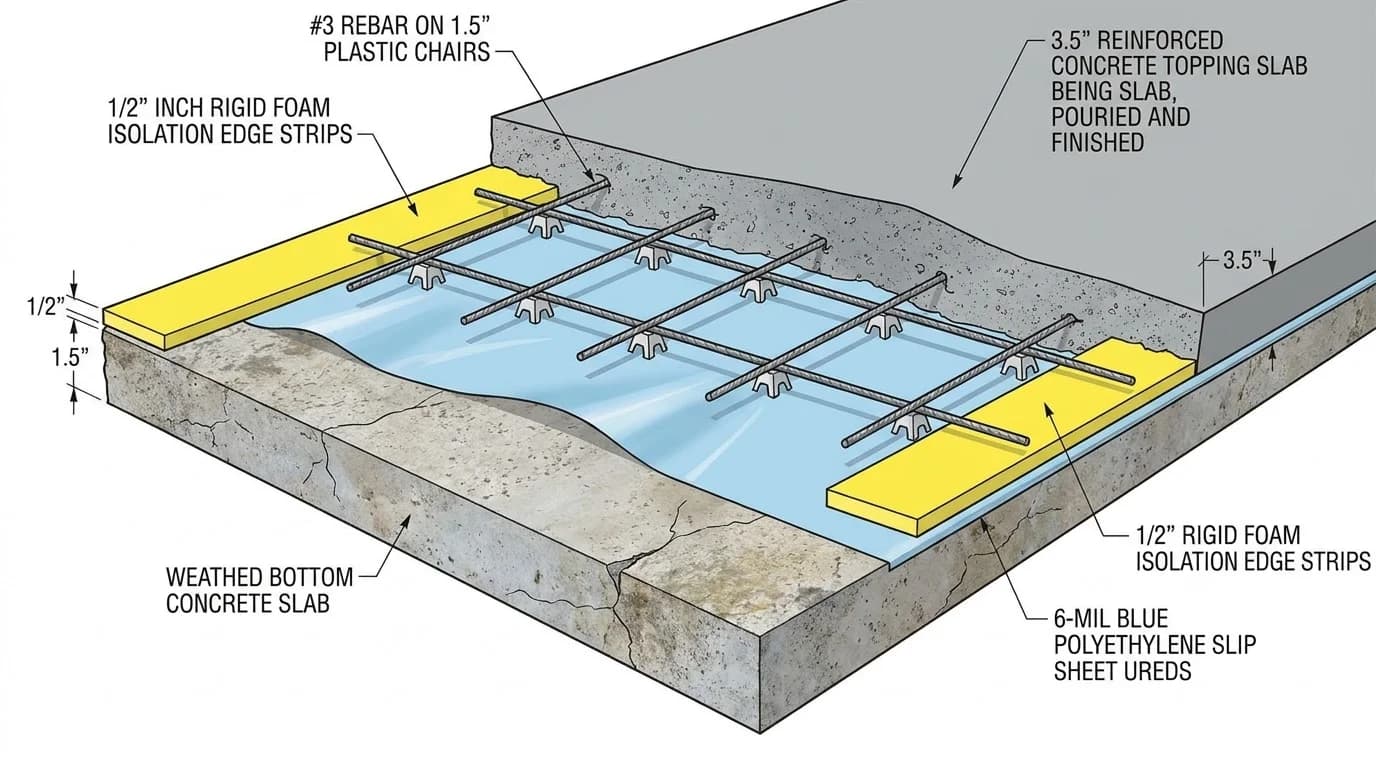
Can You Pour Concrete Over Concrete? (2" Min Guide)
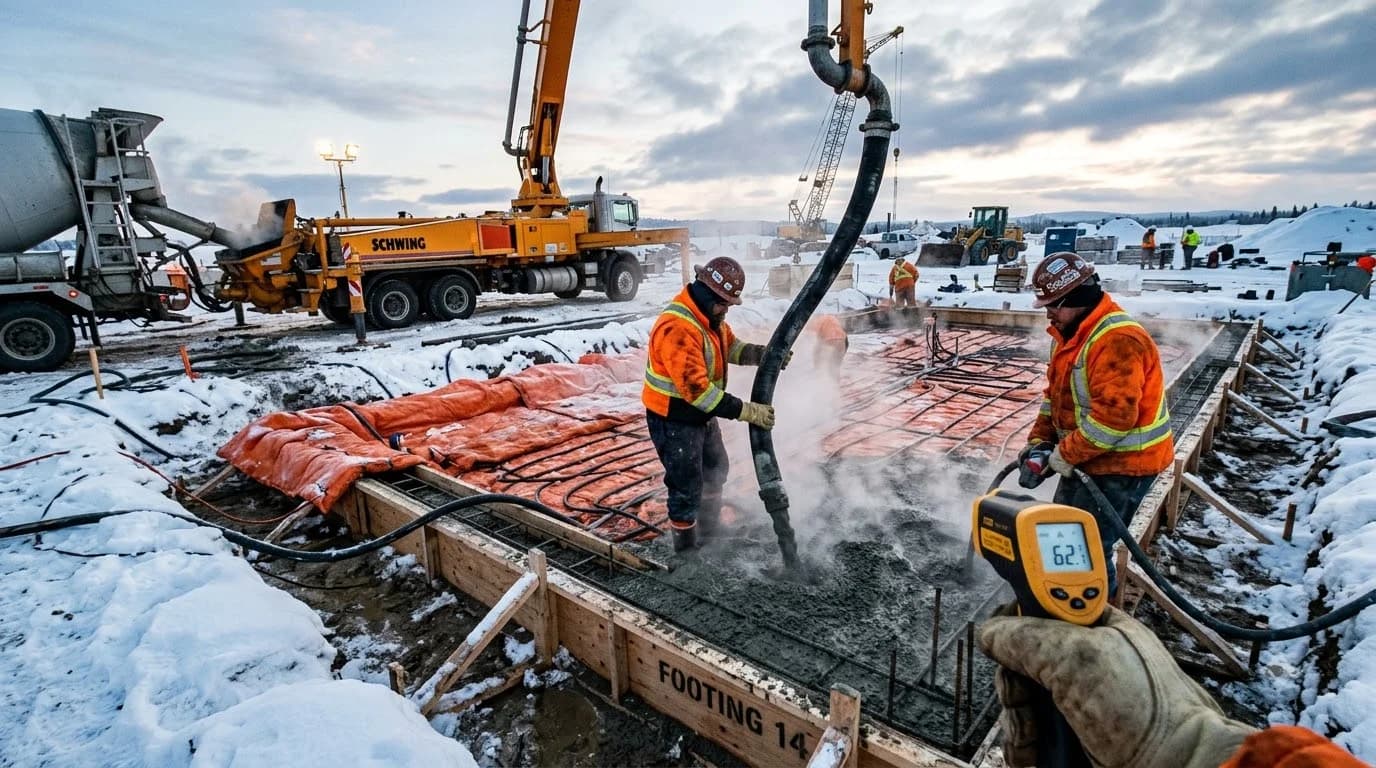
Pouring Concrete in Cold Weather: ACI 306R (2026 Guide)
How to Resurface Concrete: Overlays & Micro-Toppings