Concrete Block & Bag Pallet Weight + Vehicle Payload Calculator
Calculate gross pallet weight (units × unit weight + empty skid) and verify safe pickup truck or trailer payload utilization.
1. The Pallet Equation: Bag Counts, Net Weight & Pallet Tare
ASTM C387 covers packaged dry concrete and mortar materials; it does not make every product pack count or pallet weight identical. Bag mass, pack quantity, pallet construction and added packaging determine the shipment weight. Read the selected product label and confirm the loaded weight with the supplier.
2. Example Concrete & Masonry Pallet Weight Table
The following are illustrative configurations, not verified pack specifications for every brand or product. Every row adds a 50-lb pallet example; obtain actual unit weights, pack counts and packaging weight for the selected shipment:
| Material Product | Unit Weight | Units / Pallet | Dry Net Weight | Gross Weight (lbs) | Gross (Tons) |
|---|---|---|---|---|---|
| 80-lb Concrete Pre-Mix | 80 lbs | 42 bags | 3,360 lbs | 3,410 lbs | 1.71 tons |
| 60-lb Concrete Pre-Mix | 60 lbs | 56 bags | 3,360 lbs | 3,410 lbs | 1.71 tons |
| 50-lb Fast-Setting (Red Bag) | 50 lbs | 64 bags | 3,200 lbs | 3,250 lbs | 1.63 tons |
| 40-lb Concrete Pre-Mix | 40 lbs | 80 bags | 3,200 lbs | 3,250 lbs | 1.63 tons |
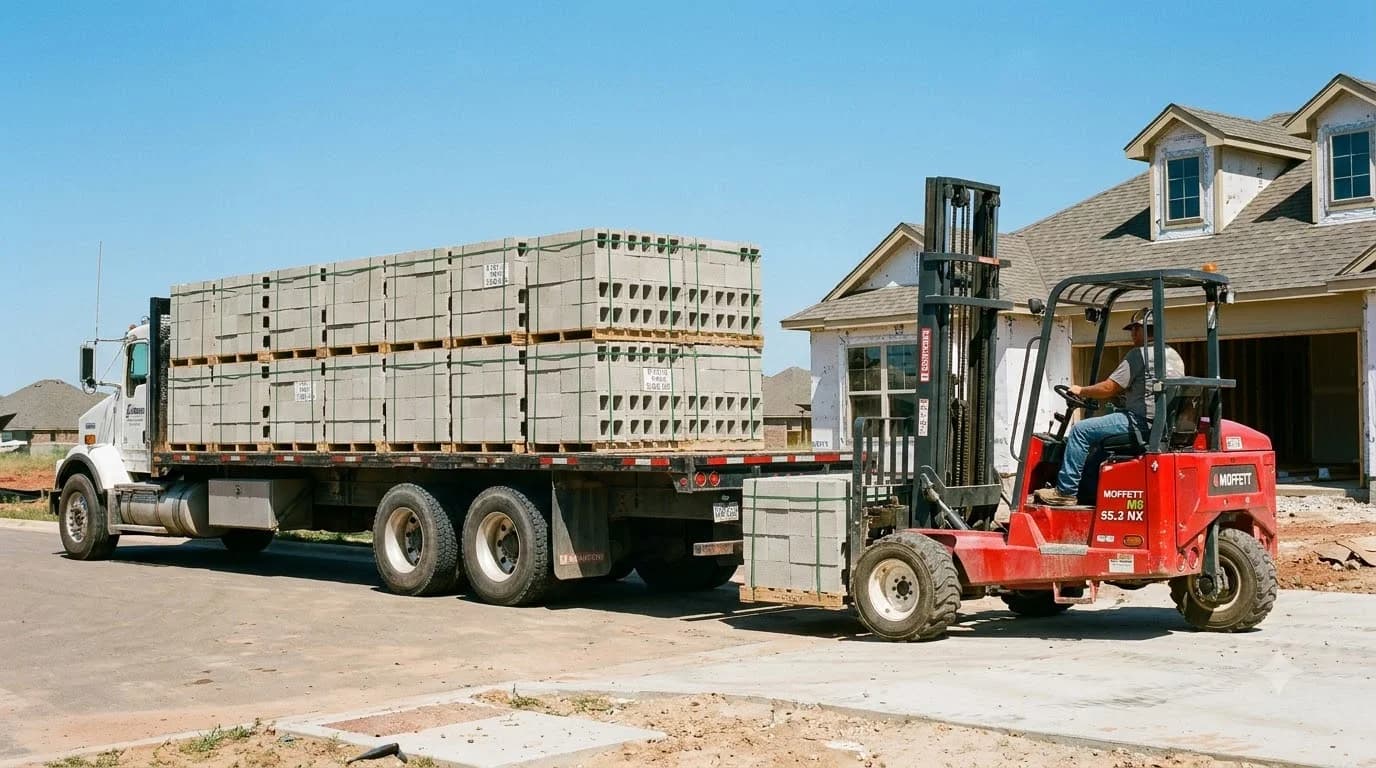
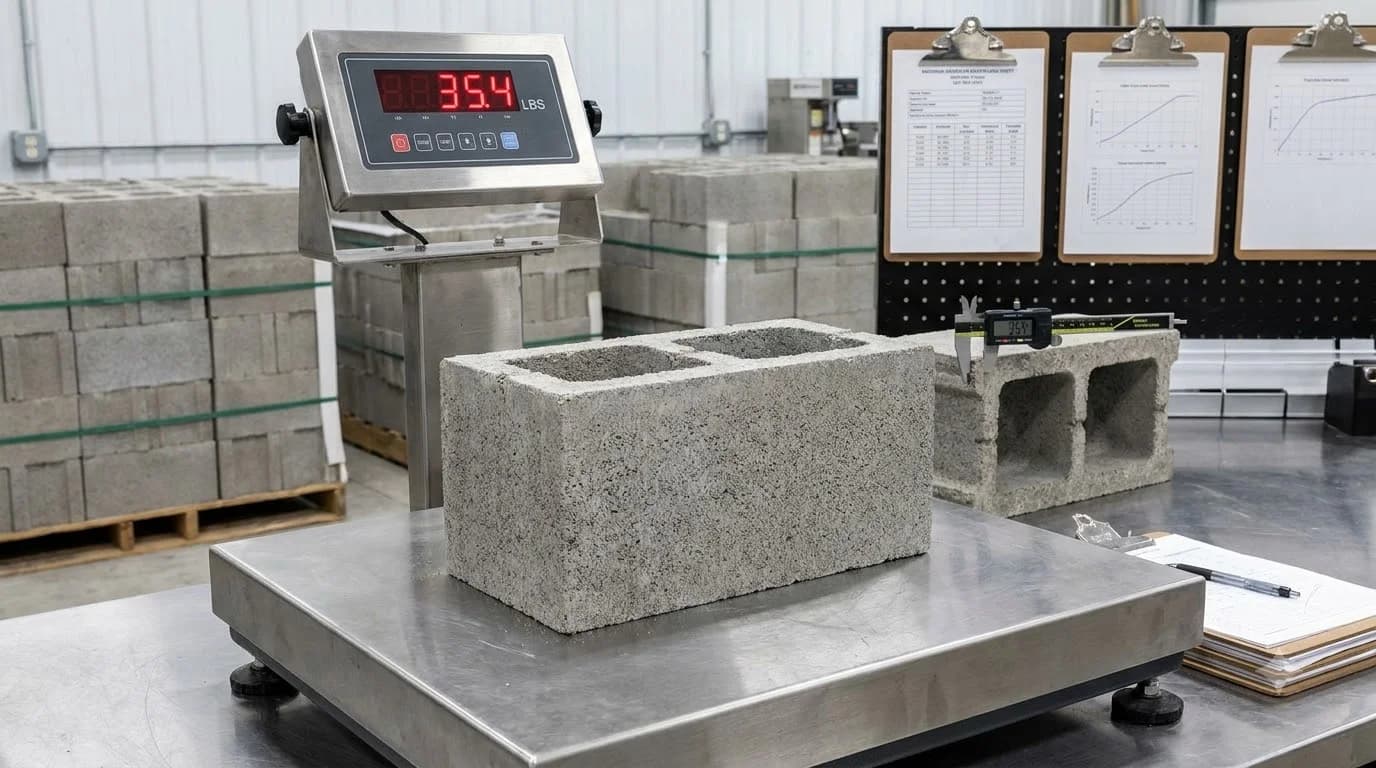
| Standard 8x8x16 CMU Block | 34 – 38 lbs | 108 blocks | 3,672 – 4,104 lbs | 3,722 – 4,154 lbs | 1.86 – 2.08 tons |
| 4x8x16 Concrete Solid Cap | 29 – 32 lbs | 144 blocks | 4,176 – 4,608 lbs | 4,226 – 4,658 lbs | 2.11 – 2.33 tons |
3. Vehicle Hauling Capabilities: Can Your Truck Carry a Pallet?
Before pickup, check the specific vehicle’s loading label and actual loaded weight. Passengers, tools, accessories, other cargo and trailer tongue weight reduce available capacity. Vehicle class and bed dimensions do not establish whether a pallet can be carried:
1/2-Ton (F-150 / 1500)
Check: Remaining cargo capacity for this specific truck.
Do not exceed any rating. An example 3,410-lb pallet exceeds 2,000 lb of remaining capacity by 1,410 lb. Smaller loose-bag loads also require a rating and securement check; there is no universal safe bag count.
3/4-Ton (F-250 / 2500)
Check: Loaded truck, axle and tire limits.
A class label is not clearance to load. A 3,410-lb example pallet may exceed the remaining capacity of a particular configuration. Follow the vehicle manufacturer’s load-distribution instructions and confirm all applicable ratings.
1-Ton Dually (F-350 / 3500)
Check: Remaining capacity and load distribution.
Dual wheels do not guarantee capacity. Two example 3,410-lb pallets total 6,820 lb before other cargo. Verify actual ratings, axle loads, loading space and securement; use supplier delivery when the arrangement cannot be confirmed.
4. Four Hauling Risks to Check Before Pickup
1. Relying on Plastic Shrink-Wrap for Cargo Securement
Factory wrap is packaging, not a substitute for an appropriate cargo-securement system. Tie-down selection, number, working load limits, attachment points and blocking depend on the load, vehicle and applicable rules. Follow equipment instructions and have the carrier confirm the arrangement; this guide does not prescribe a universal strap count.
2. Loading Pallet Behind the Trailer Axle
Incorrect load placement can overload an axle or create unsuitable tongue weight and unstable towing. Follow the trailer and tow-vehicle manufacturer’s loading instructions, verify loaded axle/tongue weights, and stay within hitch and equipment ratings. Do not infer a suitable layout from a single percentage or speed threshold.
3. Overloading Single-Axle 3,500-lb Utility Trailers
For illustration, a trailer with a 3,500-lb GVWR and 1,000-lb actual empty weight has at most 2,500 lb available before other cargo. A 3,410-lb pallet exceeds that example capacity by 910 lb. Confirm the actual trailer, axle, tire and tow-vehicle ratings rather than relying on bed size or axle count.
4. Hauling Uncovered Bags in the Rain
Moisture can damage dry concrete mix and its packaging. Follow the product’s transport and storage instructions, protect it from rain, and use a suitable secured cover that does not compromise the load-restraint system. Inspect damaged or wet bags before use.
5. Real-World Logistics Takeoff: Hauling 3 Cubic Yards of Concrete
For illustration, a contractor needs 3.0 cubic yards of concrete. Assume 80-lb bags yielding 0.60 cu ft each, 42 bags per pallet, a 50-lb pallet and no additional waste:
- Bags Required: 3.0 cu yds × 45 bags/yd = 135 bags (80 lbs each)
- Total Dry Weight: 135 × 80 lbs = 10,800 lbs
- Pallets Needed: 135 / 42 bags per pallet = 3.21 Pallets (3 full pallets + 9 loose bags)
- Total Gross Hauling Weight: (3 × 3,410 lbs) + (9 × 80 lbs) = 10,950 lbs (5.48 US Short Tons)
Logistics Decision: Trip count depends on confirmed available vehicle capacity, loading and securement. Obtain a supplier delivery quote and compare it with feasible pickup loads. The 10,950-lb example total assumes the three full pallets travel with their packaging and the nine loose bags need no additional pallet; any added packaging increases the shipment weight.
6. Jobsite Storage Protocols & Double-Stacking Rules
Storing pallets of dry cementitious pre-mix on jobsites requires strict adherence to material safety standards:
Double-Stacking Limits
Use the product and pallet supplier’s stacking limits and the site storage plan. Confirm the pallet’s rated load, packaging condition, surface bearing and stability; do not assume that two loaded pallets may be stacked.
Ground Moisture Protection
Follow the product’s storage instructions to keep bags dry, protected and off moisture-exposed ground. Use a stable, suitable storage surface and the specified moisture protection rather than treating one sheet thickness as universally sufficient.
Rough-Terrain Forklift Rigging
A trained operator should confirm the actual pallet weight and geometry, fork engagement and the machine’s capacity at the required load center and reach. Use the equipment and pallet instructions; a nominal fork length alone does not establish lifting capacity.
Frequently Asked Questions
How many pallets of concrete fit on a commercial flatbed semi-truck?
Pallet capacity depends on the loaded vehicle and trailer, axle distribution, equipment ratings and applicable route limits. Divide available cargo capacity by the actual gross pallet weight as an initial estimate, then have the carrier confirm loading and securement. Trailer length alone does not establish legal payload.
Can a home improvement store forklift operator load a full pallet into my half-ton pickup?
The vehicle class alone cannot answer this. Compare the specific truck’s remaining payload and axle/tire ratings with the loaded pallet, and ask the retailer about its loading policy. For illustration, 42 bags at 80 lb plus a 50-lb pallet weigh 3,410 lb; a truck with only 2,000 lb of remaining cargo capacity cannot carry that load.
How much does the wooden pallet itself weigh?
Pallet tare depends on construction, dimensions, condition and moisture. Use the supplier’s actual packaging weight or weigh the pallet. This guide uses 50 lb only as a replaceable example, not as a universal pallet specification.
How many 80-pound bags of concrete are on a standard pallet?
The count varies by manufacturer, product, packaging and supplier. Confirm the selected SKU and pack quantity before ordering. An example of 42 bags at 80 lb contains 3,360 lb of dry mix; adding an illustrative 50-lb pallet gives 3,410 lb gross.
What size trailer do you need to haul one pallet of concrete?
Choose from the actual loaded pallet weight and the trailer’s available cargo capacity, not axle count alone. Check trailer GVWR minus its actual empty weight and other cargo, axle/tire limits, tow-vehicle towing and combined ratings, hitch and tongue-weight limits, and securement requirements. Have the supplier or carrier confirm the loading arrangement.
Reference Standards & Source Catalogs
Standard Specification for Packaged, Dry, Combined Materials for Mortar and Concrete
Packaged dry concrete and mortar material requirements; confirm the product specification and applicable edition. Pack counts and gross weights remain product-specific.
ASTM standards catalogParts and Accessories Necessary for Safe Operation - Cargo Securement
Cargo-securement provisions where applicable; the carrier must determine requirements for the specific shipment, vehicle and route.
Grocery Manufacturers Association 48x40 4-Way Hardwood Pallet Standard
A pallet format reference, not a universal weight or load rating. Confirm the selected pallet’s supplier specification and condition.
Standard Specification for Loadbearing Concrete Masonry Units
Loadbearing CMU requirements include density classes; they do not assign one finished-unit weight. Use manufacturer unit weights and pack quantities.
ASTM standards catalogPublisher links identify where to find the applicable standard; they do not establish certification or confirm every statement on this page. Check the edition, manufacturer data, and local adoption. Material takeoffs are planning estimates, and structural dimensions and reinforcement must come from the project design.
Popular Quick Estimates
Illustrative takeoffs with stated assumptions; verify project quantities
Standard CMU Weight
Illustrative hollow-unit range; check supplier specs
4-in Patio Slab Takeoff
Ready-mix yardage with 10% subgrade allowance
1000 Sq Ft Sizing
High-volume logistics & bulk pallet freight
Core Grout Cell Volume
Example: 0.22 ft³ cores × 1/6 fill; excludes waste
Related Calculators
Specialized tools for foundation, core fill, and budgeting
Cubic yards, bags, and slab volume for flatwork and footings
Calculate runner contact pressure and plywood dunnage distribution
Heavyweight structural blocks and bond beam units
Core grout volume in cubic yards and 80-lb pre-mix bags
Blogs & Construction Guides
Practical guides to block sizing, material estimates and project planning
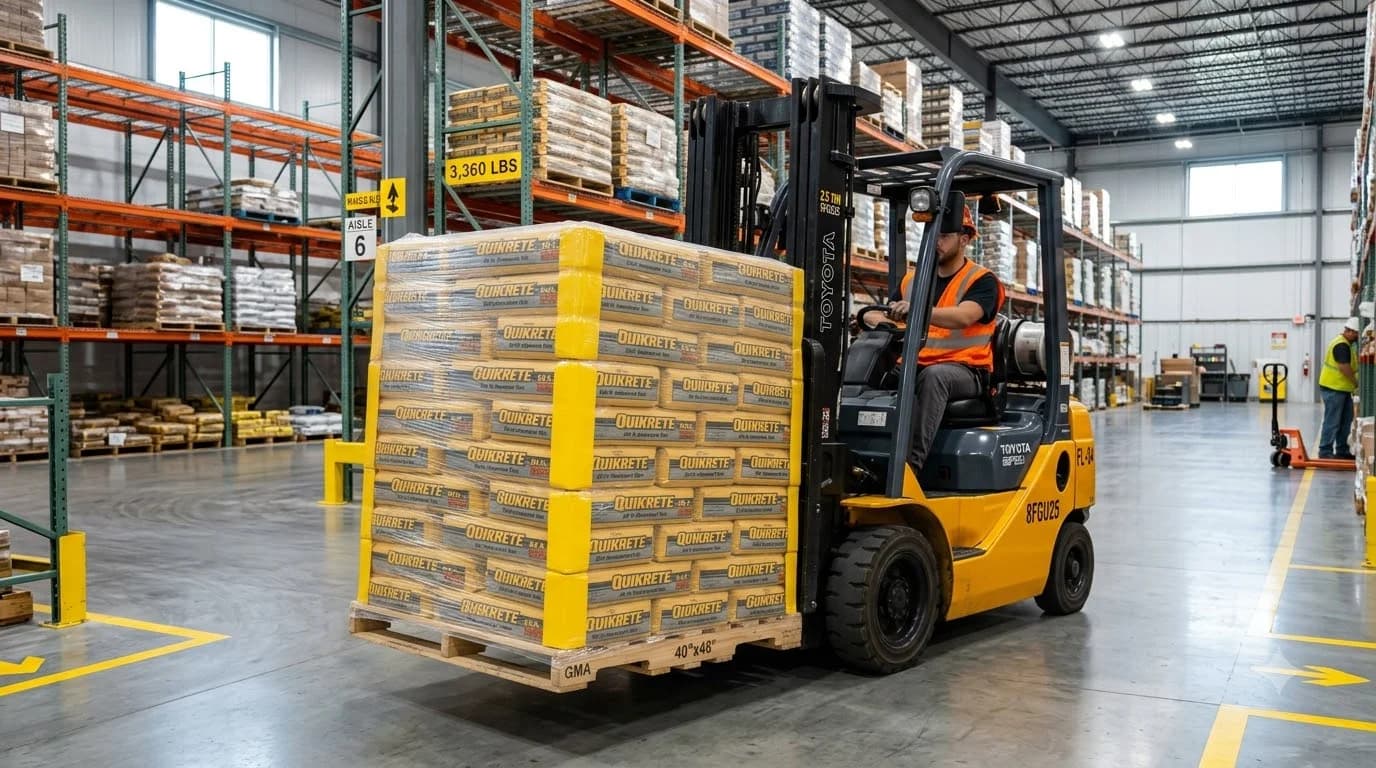
How Many Bags of Concrete on a Pallet? (Full Spec)
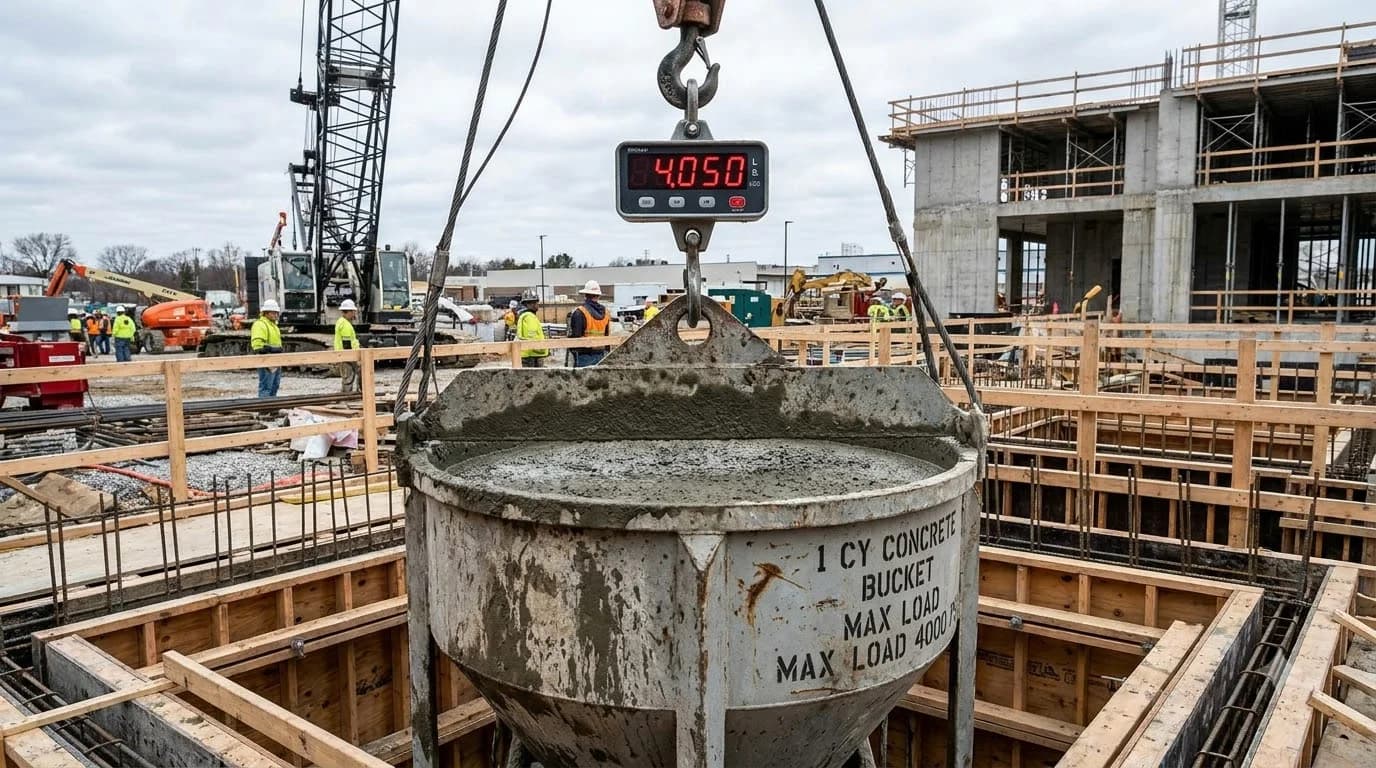
How Much Does a Yard of Concrete Weigh? 4,050 lb Wet & Dry
How Much Does a Concrete Block Weigh? (CMU Weight Chart)