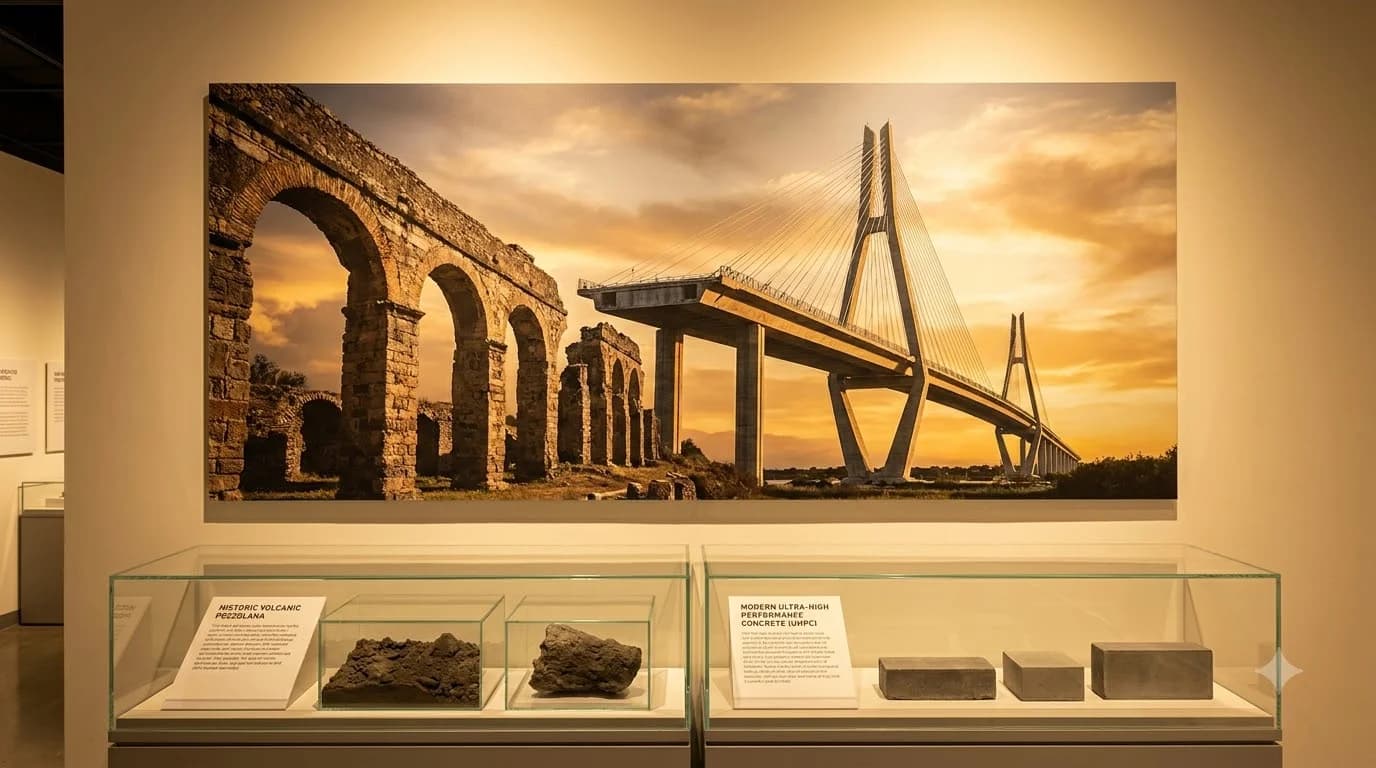
No single person invented concrete; it evolved across millennia. The Nabataean Arabs (6500 BC) discovered the earliest hydraulic lime cements for desert cisterns. The ancient Romans (300 BC) perfected volcanic pozzolana concrete (opus caementicium) to build the Pantheon and Colosseum. British engineer John Smeaton (1756) rediscovered hydraulic lime, English bricklayer Joseph Aspdin (1824) patented modern high-temperature Portland cement, and French gardener Joseph Monier (1867) patented steel-reinforced concrete.
1. Ancient Precursors: Nabataeans, Egyptians & Greeks (6500 BC – 500 BC)
Long before the rise of the Roman Empire, ancient builders experimented with primitive lime binders:
Nomadic tribes in modern-day Jordan and northern Arabia discovered that calcined limestone mixed with pozzolanic desert sands created a waterproof mortar. They plastered subterranean water storage cisterns, enabling civilizations to thrive in hyper-arid deserts.
Around 2500 BC, Egyptian masons burned gypsum and limestone to manufacture bedding mortars for the outer casing stones of the Great Pyramid of Giza. Simultaneously, Minoan builders on Crete blended volcanic ash into lime for palace floors.
2. The Roman Revolution: Opus Caementicium & The Pantheon
Between 300 BC and 476 AD, Roman engineers transformed concrete from a simple adhesive mortar into a primary structural medium known as opus caementicium.
The Secret Chemistry of Pozzolana (Vitruvius Book II): The Roman architect Vitruvius documented that mixing slaked lime (Calcium Hydroxide) with a specific reactive reddish-pink volcanic ash mined near the Bay of Naples (Pozzuoli) yielded an extraordinary hydraulic binder. Unlike standard air-curing lime, pozzolanic concrete cured and hardened underwater.
The World's Largest Unreinforced Concrete Dome: Commissioned by Emperor Hadrian and completed around 125 AD, the Roman Pantheon features a massive unreinforced concrete dome spanning 142.4 feet (43.4 m). Roman engineers used graded density aggregates: heavy basalt rock at the foundation ring, porous volcanic tuff in the middle rings, and ultra-lightweight pumice aggregate at the top near the central oculus, paired with stepped exterior buttresses to resist hoop tension.
3. The 1,300-Year Dark Age to John Smeaton (1756)
Following the collapse of the Western Roman Empire in 476 AD, international trade networks dissolved. Without access to Pozzuoli volcanic ash and centralized engineering guilds, the secret recipe for hydraulic concrete disappeared from European construction.
For over 1,300 years, medieval cathedrals and castles were built with hand-chiseled stone blocks joined by weak, water-soluble non-hydraulic lime mortars.
John Smeaton's Rediscovery (1756): British civil engineer John Smeaton was tasked with rebuilding the Eddystone Lighthouse on an exposed granite reef off the coast of Cornwall, England. Smeaton discovered through chemical testing that limestones containing naturally high percentages of clay produced hydraulic lime that could set solidly under saltwater waves, sparking the 18th-century industrial concrete renaissance.
4. Master Timeline of Concrete History & Key Milestones
Trace the critical scientific breakthroughs and structural milestones from antiquity to modern high-performance concrete:
| Era / Year | Key Inventor / Pioneer | Chemical Binder Innovation | Structural Breakthrough | Iconic Surviving Monument |
|---|---|---|---|---|
| 6500 BC | Nabataean Arabs | Kiln-burned hydraulic lime | Subterranean desert cisterns | Petra, Jordan water systems |
| 125 AD | Roman Master Builders | Pozzolana ash + quicklime | Graded density aggregate dome | The Pantheon, Rome (142 ft) |
| 1756 | John Smeaton (UK) | Argillaceous hydraulic limestone | Submerged saltwater marine setting | Eddystone Lighthouse, UK |
| 1824 | Joseph Aspdin (UK) | Patented Portland Cement | Pre-calcined synthetic clinker | Thames Tunnel, London (1843) |
| 1867 | Joseph Monier (France) | Reinforced Concrete (Ferrocement) | Embedded steel rebar tensile grid | Chazelet Castle Bridge (1875) |
| 1891 | George Bartholomew (USA) | High-strength machine-troweled mix | First US concrete street pavement | Bellefontaine, OH Courthouse |
5. 1824: Joseph Aspdin and the Patent of Portland Cement
In Leeds, England, in 1824, bricklayer Joseph Aspdin secured British Patent No. 5022 for an improved cement formulation.
Aspdin finely pulverized limestone and mixed it with clay into a slurry. He dried the slurry, broke it into lumps, and fired it in a bottle-shaped lime kiln until the limestone decarbonated into calcium oxide. He then crushed the resulting hard clinker into an ultra-fine gray powder.
The "Portland" Name: Aspdin chose the marketing name "Portland Cement" because the cured material mirrored the distinct gray-white shade and weather resistance of Portland stone, a prestigious natural limestone quarried on the Isle of Portland that was used by Sir Christopher Wren to build St. Paul's Cathedral in London.
In the 1840s, Joseph's son William Aspdin increased kiln temperatures to 2,700°F (1,482°C), accidentally sintering the raw feed to produce tricalcium silicate (Alite), which yielded true modern high-early-strength Portland cement.
6. The Reinforcement Revolution: Joseph Monier & Francois Hennebique
Plain unreinforced concrete has massive compressive strength (it can resist thousands of pounds of downward crushing force), but its tensile strength is pathetic (roughly 10% of its compressive rating). Under lateral bending loads, unreinforced beams snap instantly.
The Gardener Who Built Skyscraper Foundations: In 1867, Parisian gardener Joseph Monier grew frustrated that cold winter weather cracked his ceramic and concrete flower pots. Monier experimented by weaving an internal mesh basket of iron wires and encasing it in cement mortar. The metal wire absorbed tensile stresses while the concrete bore compression loads.
Monier's discovery coincided with a critical scientific miracle: steel and concrete share virtually identical thermal expansion coefficients (approximately 0.0000065 vs 0.0000055 in/in/°F). Because steel and concrete expand and contract at the exact same rate during temperature changes, steel rebar never breaks its internal bond with the surrounding concrete matrix.
7. Five Surprising Concrete Historical Facts
Edison designed a massive 150-foot rotary kiln in New Jersey and poured single-pour monolithic concrete houses complete with concrete bathtubs and phonograph cabinets in the early 1900s.
Unlike modern reinforced concrete, which degrades from chloride corrosion of steel rebar, unreinforced Roman sea piers grow rare aluminum-tobermorite crystals when washed by salt waves, increasing strength over 2,000 years.
In 1909, the Wayne County Road Commission in Michigan poured the first continuous mile of concrete road along Woodward Avenue in Detroit for $13,537, replacing bumpy wooden plank roads.
Poured in the 1930s with 3.25 million cubic yards of concrete, the exothermic heat of hydration would have taken 125 years to cool naturally. Engineers embedded 1-inch refrigerated pipes to cool the mass.
Humanity consumes more concrete by tonnage than steel, wood, plastic, and aluminum combined; only potable water exceeds concrete in global human consumption.
Calculating Concrete Materials for Modern Builds?
Get exact cubic yards, bag counts, rebar, and 2026 material costs instantly.
Frequently Asked Questions
Why did people stop using concrete after the fall of the Roman Empire?
With the collapse of Roman trade routes and centralized government administration in 476 AD, knowledge of volcanic pozzolana ash mining and high-temperature kiln operation was lost across Western Europe. Masons reverted to simple non-hydraulic slaked lime mortars until John Smeaton rediscovered hydraulic limestone in 1756.
Why is it called 'Portland' cement?
In 1824, English bricklayer Joseph Aspdin obtained a patent for his calcined limestone-clay cement and named it 'Portland Cement' because the hard, gray synthetic rock closely resembled the high-prestige natural oolitic limestone quarried on the Isle of Portland in Dorset, England.
Who poured the first concrete street in the United States?
George Bartholomew engineered and poured the first concrete roadway in North America in 1891 around the Logan County Courthouse in Bellefontaine, Ohio. Bartholomew tested his mix to over 8,000 PSI compressive strength, and sections of the original 1891 pavement remain in active service today.
How did Roman concrete survive 2,000 years in seawater?
Ancient Romans blended slaked lime with volcanic ash containing phillipsite. When seawater penetrated the concrete, it dissolved the volcanic ash and triggered a secondary chemical reaction that grew interlocking crystals of aluminum-tobermorite. Instead of eroding, the concrete became stronger and denser over centuries.
Who invented reinforced concrete?
French gardener Joseph Monier patented reinforced concrete in 1867 after embedding woven steel wire mesh inside concrete planter boxes to prevent thermal cracking. Monier later expanded his patents to railway ties, pipes, bridges, and structural building panels.
Building Codes & Primary Standards Cited
Ten Books on Architecture (Book II, Chapter 6)
The primary classical Roman treatise documenting pozzolanic volcanic ash and opus caementicium.
Standard Specification for Portland Cement
The modern evolution of Joseph Aspdin's 1824 calcined limestone and clay patent.
History of Concrete
American Concrete Institute historical monograph documenting the development of structural reinforced concrete.
Estimations adhere to standard North American modular 3/8-inch mortar joint physics and 5% to 10% material waste factors. Local municipal building inspectors, stamped architectural blueprints, and local frost depth requirements supersede general reference guidelines.
Popular Quick Estimates
Pre-engineered takeoffs & benchmarks matched to this project
Related Calculators
Specialized tools for foundation, core fill, and budgeting
Heavyweight structural blocks and bond beam units
Cubic yards, bags, and slab volume for flatwork and footings
Core grout volume in cubic yards and 80-lb pre-mix bags
Cell fill requirements for low-lift and high-lift grouting
Blogs & Construction Guides
Technical articles, IRC code standards, rebar schedules & freight logistics
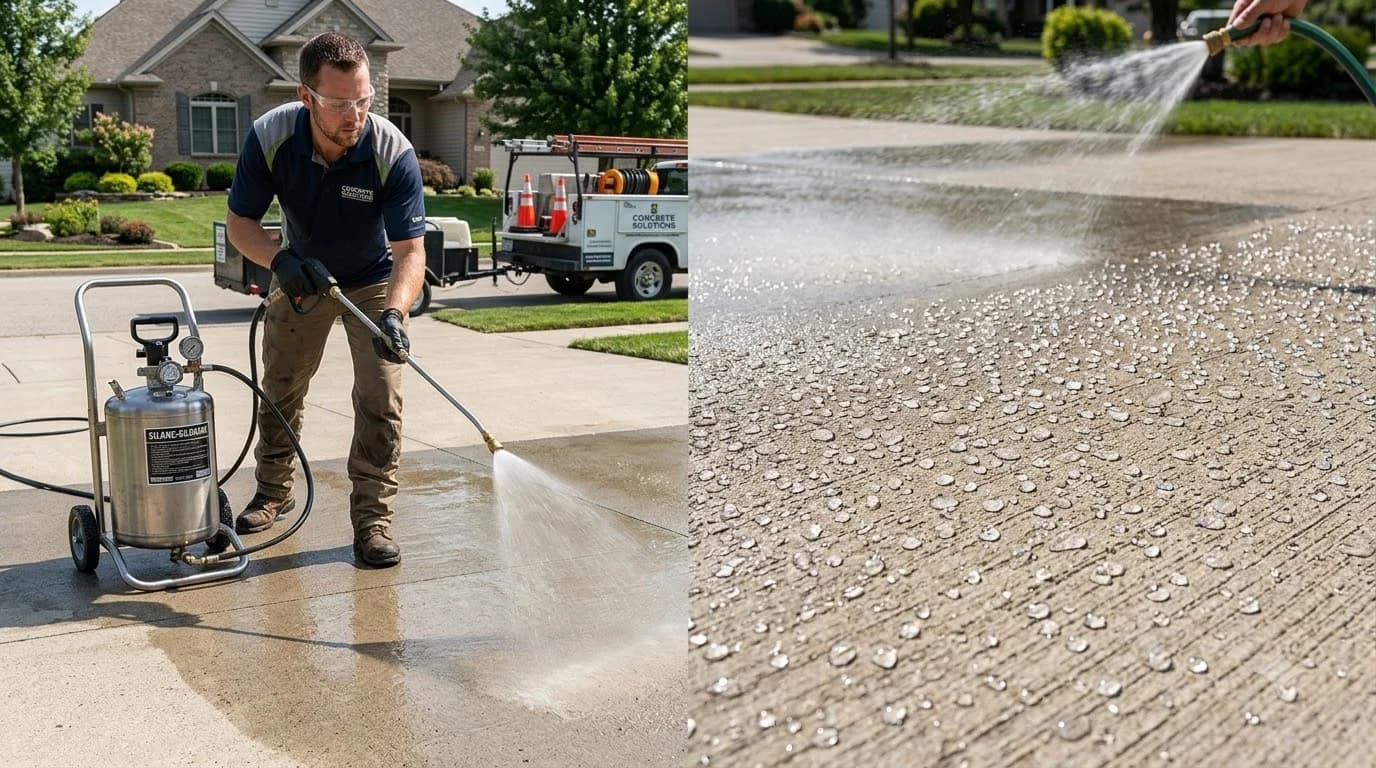
How to Seal Concrete: Siloxane vs Acrylic Sealers
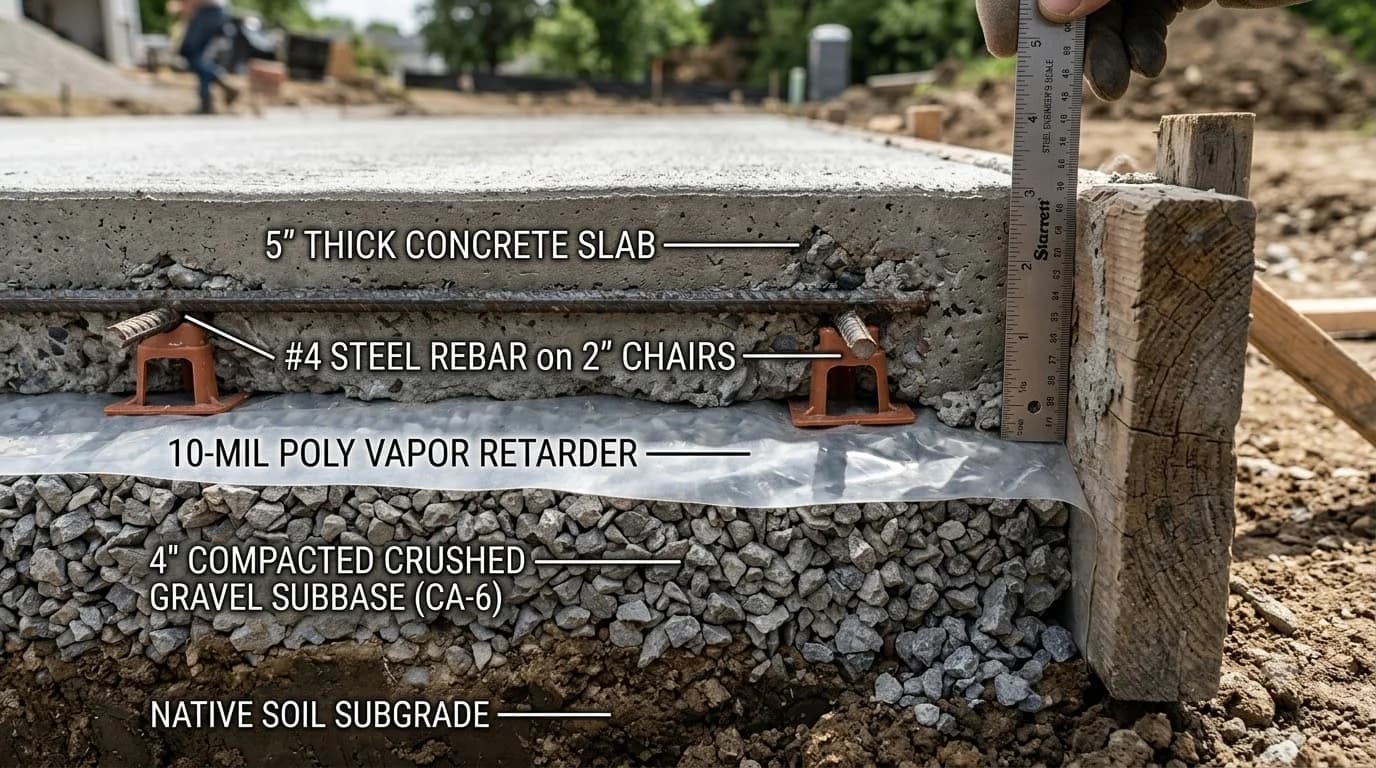
How Thick Should Concrete Slabs Be? Slab Guide
Concrete Slump Test: ASTM C143 Procedures & Values