Cinder Block Weight Calculator
Calculate total dead loads for concrete masonry walls, dry unit weights (ASTM C90), mortar joints, core-fill grout, and commercial delivery truck payloads.
CMU estimates use nominal face dimensions and illustrative mortar yields (30 standard 8-inch units per 80-lb premix bag before waste; thickness adjustments apply). Confirm product yields, unit core volumes, supplier pack sizes and local prices before ordering. Reinforcement quantities are material allowances; laps, hooks, embedment and engineered design are excluded.
CMU Unit Weight Quick Reference
Dry unit weight and filled core capacity by nominal block thickness and density class.
4" Partition CMU (4×8×16)
6" Medium CMU (6×8×16)
8" Standard CMU (8×8×16)
12" Heavy CMU (12×8×16)
| CMU Dimension | Lightweight Class | Normal Weight Class | Est. Mortar / Joint | Solid Core Grout Fill |
|---|---|---|---|---|
| 4" Partition CMU (4×8×16) | 18 lbs | 24 lbs | ~3.0 lbs | ~12 lbs (0.08 cu ft) |
| 6" Medium CMU (6×8×16) | 22 lbs | 30 lbs | ~4.0 lbs | ~23 lbs (0.16 cu ft) |
| 8" Standard CMU (8×8×16) | 28 lbs | 38 lbs | ~5.0 lbs | ~32 lbs (0.22 cu ft) |
| 12" Heavy CMU (12×8×16) | 43 lbs | 55 lbs | ~7.0 lbs | ~51 lbs (0.35 cu ft) |
ASTM C90 Density Classifications
Standard specifications for load-bearing concrete masonry units define three distinct density tiers based on aggregate composition.
| Density Class | Oven-Dry Density | Typical 8×8×16 Weight | Common Aggregates | Engineering Attributes |
|---|---|---|---|---|
| Lightweight | < 105 lb/cu ft | 25 – 28 lbs | Expanded clay, shale, slate, pumice | Higher thermal R-value (~R-1.7), reduced mason fatigue, improved fire endurance |
| Medium Weight | 105 to < 125 lb/cu ft | 30 – 33 lbs | Blended expanded aggregate & sand/limestone | Balanced thermal and acoustic dampening, standard commercial grade |
| Normal Weight | ≥ 125 lb/cu ft | 36 – 42 lbs (avg 38) | Crushed gravel, stone, quartz sand | Highest compressive strength, superior sound transmission loss (STC 48–52) |
Dead Load Calculation for a 100 Sq Ft CMU Wall
Consider an 8-inch concrete masonry foundation wall measuring 12.5 feet in length and 8 feet in height (100 net square feet). Vertical #4 rebar is specified at 32 inches on-center (every 4th core filled with grout), bonded with Type S mortar.
Material Component Breakdown
Footing & Soil Bearing Takeoff
The calculated 365 psf dead load is well within standard residential allowable soil bearing capacities (1,500 to 2,000 psf per IRC Table R401.4.1), leaving ample headroom for floor and roof live loads.
How to Calculate Structural Masonry Weight
Follow this 6-step engineering methodology to compute total materials weight for footing design and freight logistics.
Select ASTM C90 Density Class
Determine your dry unit weight: normal-weight blocks weigh 36–42 lbs (typically 38 lbs); medium-weight blocks weigh 30–33 lbs; lightweight blocks weigh 25–28 lbs.
Multiply Total Units with Waste
Multiply total wall blocks (including 5–10% cutting and breakage allowance) by unit dry weight. For example, 200 standard 38-lb blocks equal 7,600 lbs dry.
Factor Joint Mortar Weight
Add approximately 5.0 lbs of dry mortar mix per standard 8x8x16 block laid (3.0 lbs for 4-inch partition units, 7.0 lbs for 12-inch foundation units).
Determine Core Grouting Spacing
Standard 8-inch CMU cores hold 0.22 cu ft per unit. Establish core fill ratio: hollow (0%), reinforced at 48" o.c. (17%), reinforced at 32" o.c. (25%), or solid grouted (100%).
Compute Concrete Grout Weight
Core grout weighs ~145 lbs/cu ft (~32 lbs per filled 8-inch block). Multiply filled cells by 32 lbs to calculate wet core concrete dead load.
Verify Freight & Hauling Limits
Standard pallets hold 108–120 blocks (4,100–4,600 lbs). Check commercial flatbed legal highway limits (~45,000 lbs) or pickup truck bed ratings before transport.
Masonry Freight & Vehicle Hauling Limits
Never exceed Gross Vehicle Weight Ratings (GVWR) or legal axle limits when transporting heavy concrete units.
| Vehicle Class | Safe Bed Payload | Max 8" CMUs (38 lbs) | Pallet Capacity | Hauling Recommendation |
|---|---|---|---|---|
| 1/2-Ton Pickup (F-150 / 1500) | 1,500 – 2,000 lbs | 35 – 45 units | 0 Pallets (overloaded) | Small garden walls or repairs only; a full pallet will crush suspension |
| 3/4-Ton Heavy Duty (2500 / 250) | 3,000 – 3,800 lbs | 75 – 90 units | 0 – 1 partial pallet | Can carry partial skids or up to 90 loose units safely centered over axle |
| 1-Ton Dually (3500 / 350 DRW) | 5,000 – 6,500 lbs | 120 – 150 units | 1 Full Pallet (108 units) | Rated to forklift one full 4,150-lb pallet into bed or pull heavy utility trailer |
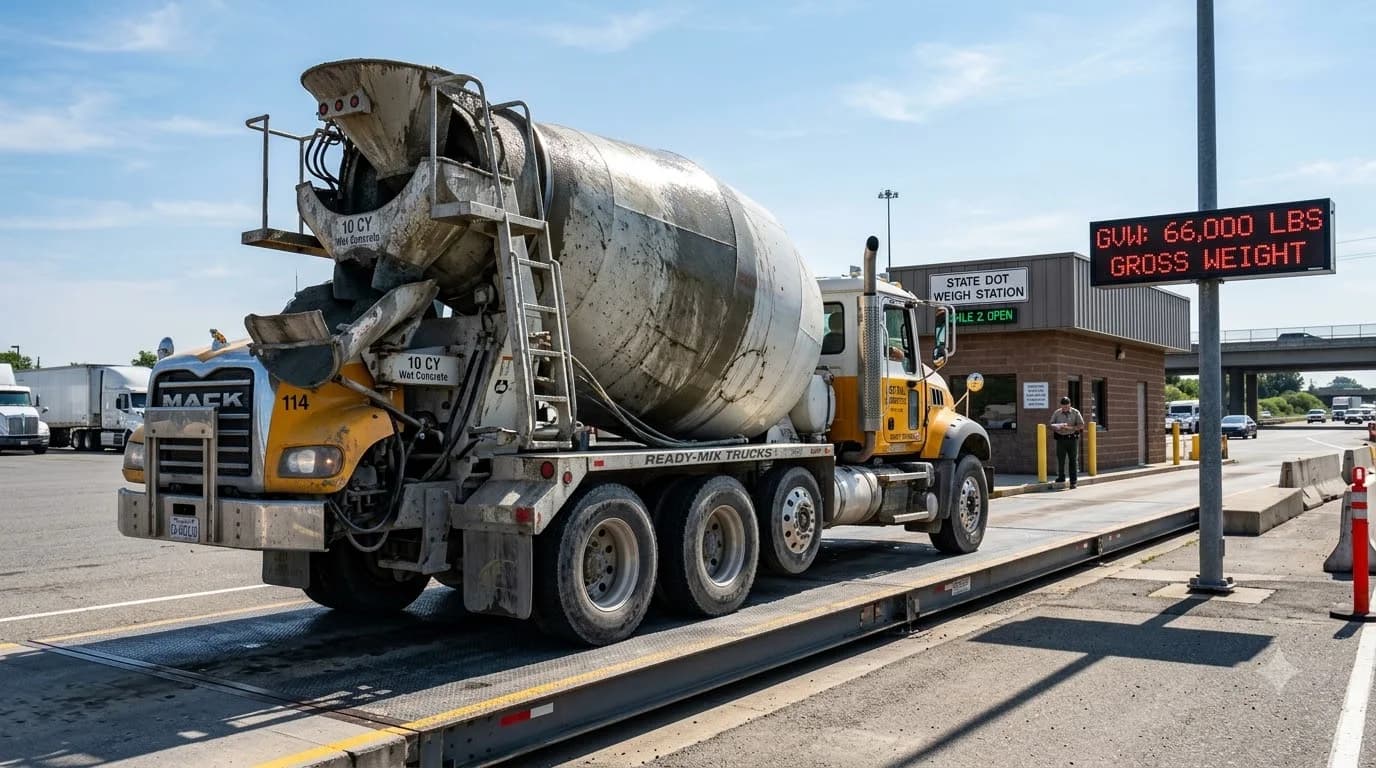
| Commercial Flatbed Semi (48 ft) | 45,000 – 48,000 lbs | 1,080 – 1,188 units | 10 – 11 Full Pallets | Standard supplier delivery with truck-mounted moffett forklift for jobsite placement |
Supplier Delivery Tip: Professional masonry suppliers charge $75 to $150 for flatbed truck delivery with mechanical forklift offload. This eliminates personal vehicle wear and ensures banded pallets are placed directly along your excavation trench.
Foundation Sizing Rules (IRC R403 & R404 Standards)
- Footing Width Standard: Concrete footings must measure twice the thickness of the supported block wall (e.g., an 8-inch CMU foundation wall requires a minimum 16-inch wide concrete footing).
- Footing Thickness: Continuous concrete footers must be poured to a minimum thickness of 8 inches (or equal to the footing projection past the wall face).
- Frost Line Protection: Footing bottoms must sit at least 12 inches below undisturbed soil and strictly beneath the local frost depth (IRC R403.1.4.1) to avoid winter heaving.
- Avoid Soil Settlement: High wall dead loads placed over loose, uncompacted fill cause structural shear cracks. Compact all subgrades to 95% Standard Proctor density prior to pouring footers.
Material estimates depend on the selected dimensions, product yields, and waste allowance.
Cinder Block Weight FAQ
Engineering data on block density tiers, concrete core grout dead loads, and flatbed hauling capacities.
Popular Quick Estimates
Illustrative takeoffs with stated assumptions; verify project quantities
1000 Sq Ft Sizing
High-volume logistics & bulk pallet freight
Core Grout Cell Volume
Example: 0.22 ft³ cores × 1/6 fill; excludes waste
10x10 Wall Estimate
Standard residential yard & garden wall run
100 Sq Ft Sizing
Standard 8x8x16 nominal coverage benchmark
Related Calculators
Specialized tools for foundation, core fill, and budgeting
Commercial load-bearing concrete masonry units
Heavyweight structural blocks and bond beam units
Actual vs nominal dimensions and ASTM C90 specifications
Turnkey material costs, rebar, delivery and mason labor
Blogs & Construction Guides
Practical guides to block sizing, material estimates and project planning
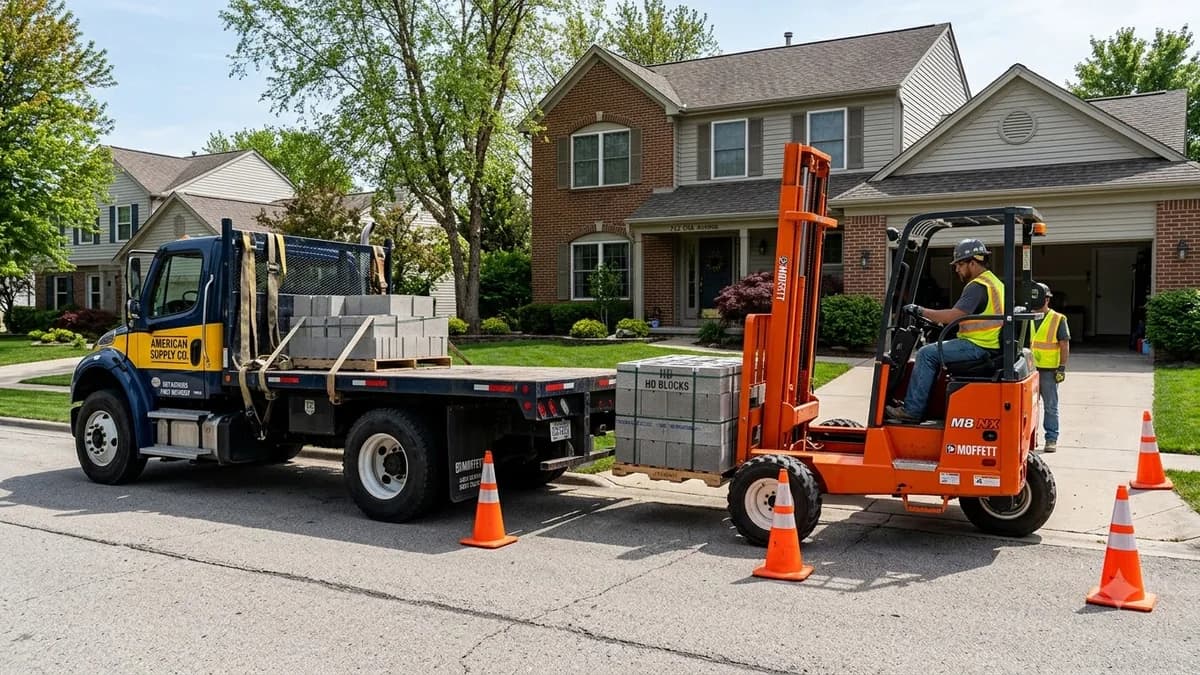
Cinder Block Pallet Weight & Safe Truck Hauling Limits
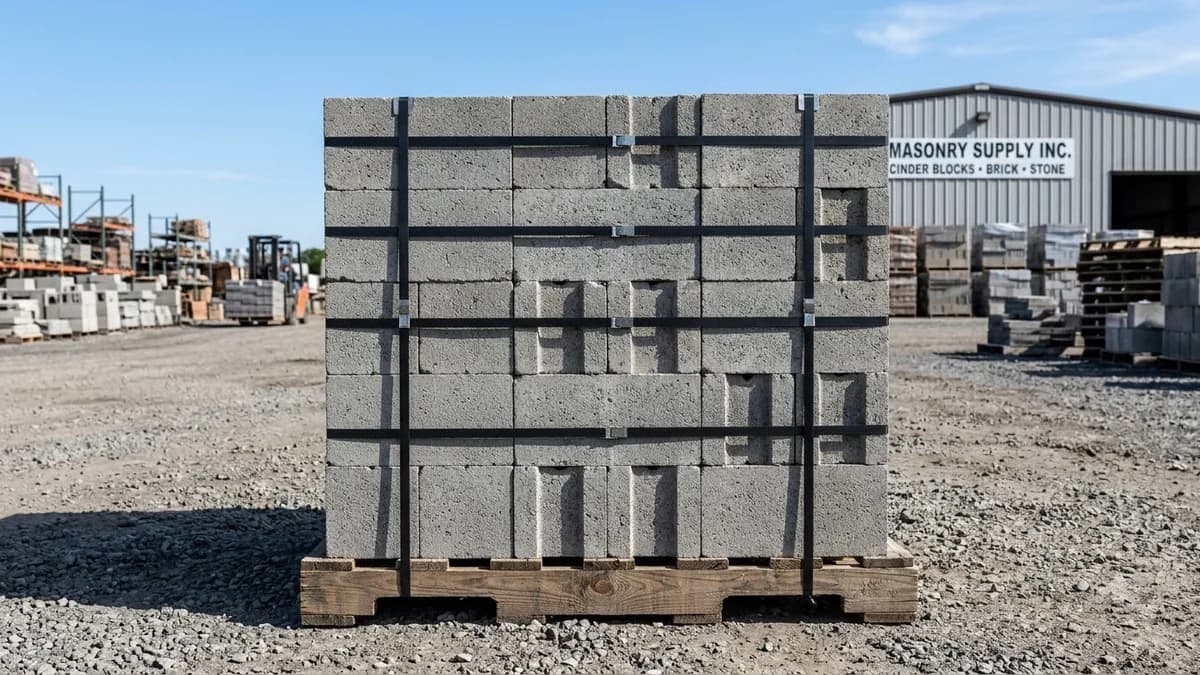
How Many Cinder Blocks on a Pallet? (108 to 120 Units)
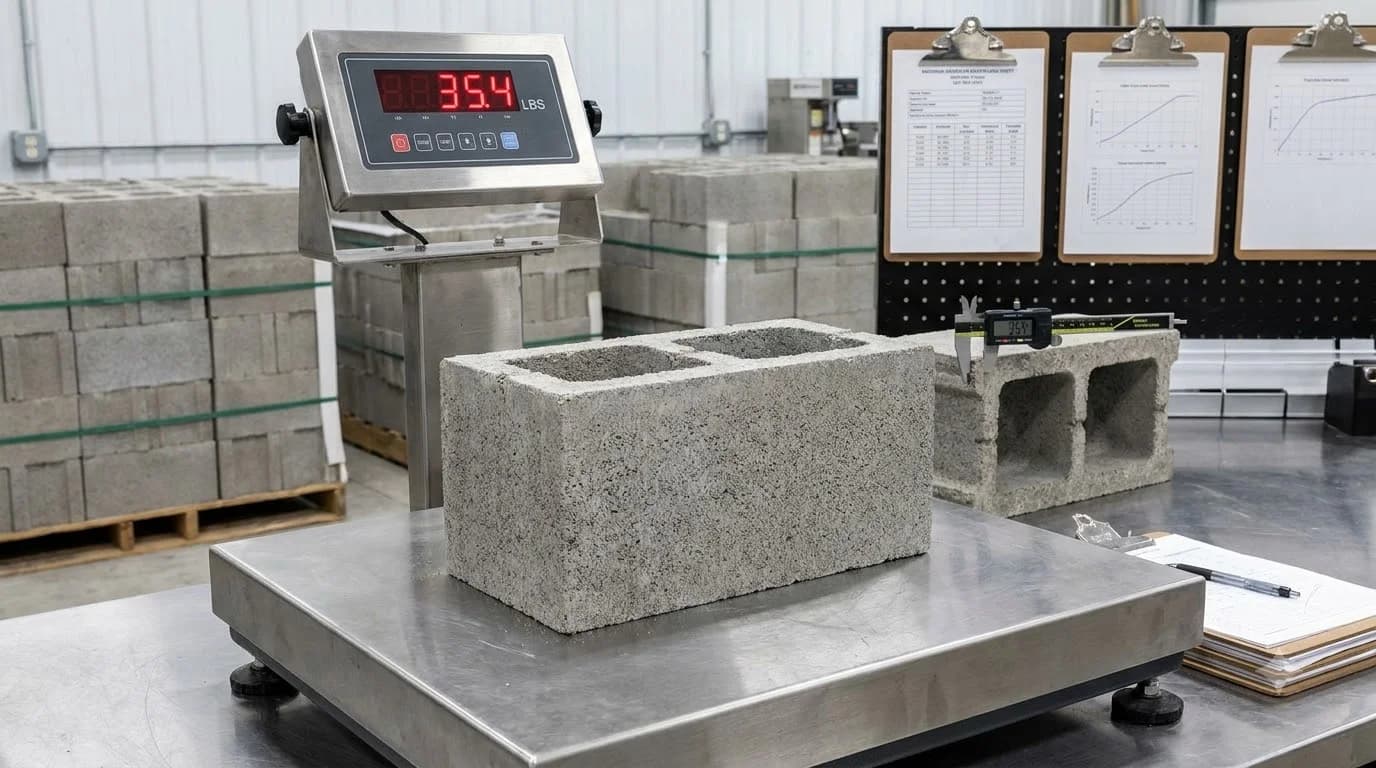
How Much Does a Concrete Block Weigh? (CMU Weight Chart)