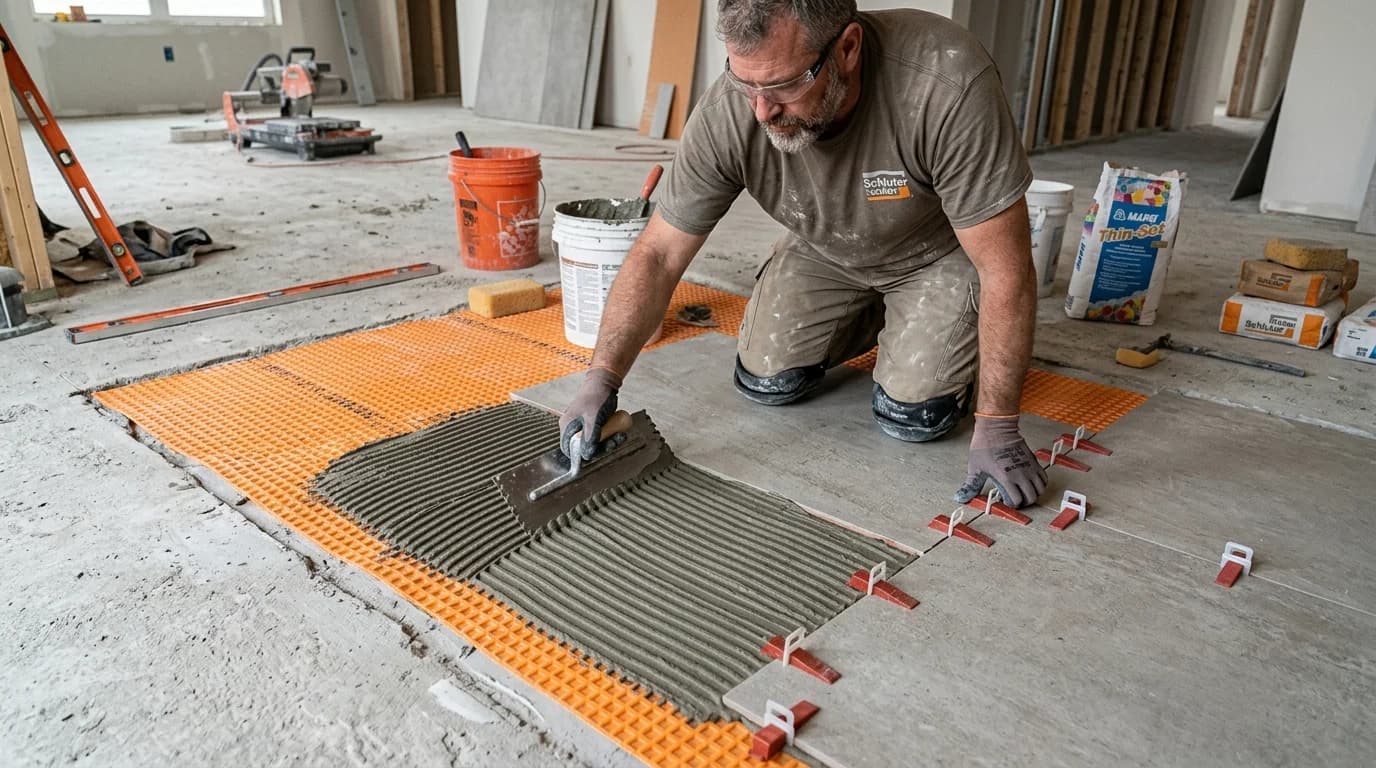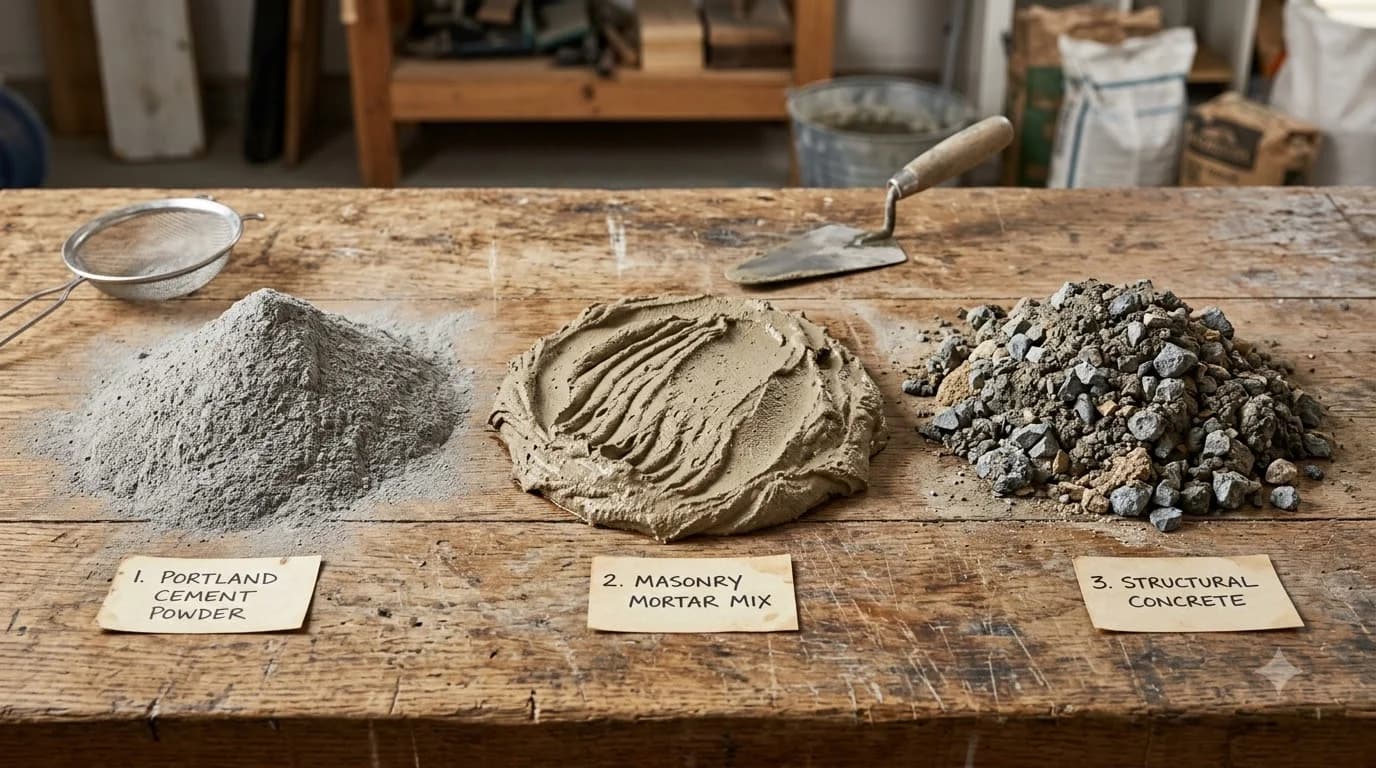
Think of cement as flour: it is an ingredient, never consumed alone. Concrete is the bread: a heavy, structural matrix made of cement, sand, stone gravel, and water engineered for massive load-bearing strength. Mortar is the frosting or glue: a sticky paste made of cement, fine sand, hydrated lime, and water engineered to bond bricks and cinder blocks together with flexible cushion.
1. Portland Cement: The Pure Hydraulic Binder
Portland cement (manufactured to ASTM C150 standards) is not a finished building material; it is a precisely engineered chemical binder. Raw limestone, clay, shale, and iron ore are pulverized and heated in a rotary kiln to 2,700°F (1,482°C) to form fused clinker nodules. The clinker is then ground into a powder so fine that over 90% passes through a #325 microscopic sieve (45 microns).
Why Cement Cannot Be Used Alone: Pure cement mixed with water undergoes severe volumetric shrinkage as it hydrates. Without sand or gravel aggregates to act as an unyielding physical skeleton, neat cement paste shrinks by up to 1/4 inch per foot, creating catastrophic spiderweb cracks, curling, and crumbling.
2. Concrete: The Heavyweight Structural Workhorse
Concrete is a composite rock created by combining Portland cement, fine sand, coarse gravel or crushed stone aggregates, and water. Aggregate accounts for 60% to 75% of the total mix volume.
Compressive Strength Range: Standard residential concrete ranges from 2,500 to 4,500 PSI (pounds per square inch), with commercial high-strength mixes exceeding 8,000 to 12,000 PSI.
Primary Applications: Subterranean spread footings, foundation walls, basement slabs, exterior driveways, grade beams, structural bridge decks, and precast panels. Concrete is engineered to bear immense compressive gravity loads.
3. Mortar: The Flexible Masonry Adhesive Cushion
Mortar is a specialized bonding matrix engineered specifically to lay unit masonry (concrete cinder blocks, clay bricks, and natural stone). Unlike concrete, mortar contains zero coarse stone gravel; it is formulated from Portland cement, clean fine masonry sand (ASTM C144), and hydrated lime (ASTM C207).
The Function of Hydrated Lime: Lime provides two indispensable properties:
- Workability & Board Life: Lime imparts a buttery, adhesive consistency that allows wet mortar to stick to vertical CMU webs without sliding off during block placement.
- Autogenous Micro-Healing: Mortar has high elasticity. When thermal movement causes microscopic fissures over decades, atmospheric carbon dioxide and rainwater dissolve calcium carbonate inside the lime, re-crystallizing and sealing the fissures naturally.
4. Master Material Engineering Comparison Matrix
Review the technical specifications, aggregate gradations, and ASTM code classifications across all cementitious categories:
| Material Category | Core Ingredients | Max Aggregate Sizing | Compressive PSI | Primary Construction Use | ASTM Code Spec |
|---|---|---|---|---|---|
| Portland Cement | Calcined limestone, clay, gypsum | Micro-fine powder (45 μm) | N/A (Binder only) | Raw binding ingredient in concrete & mortar | ASTM C150 Type I/II |
| Structural Concrete | Cement, sand, gravel stone, water | 3/8 in to 1-1/2 in gravel | 2,500 – 5,000+ PSI | Footings, driveways, structural slabs, walls | ASTM C94 / ACI 318 |
| Type S Masonry Mortar | Cement, hydrated lime, fine sand | #8 Sieve (2.36 mm max) | 1,800 – 2,400 PSI | Below-grade foundations, CMU retaining walls | ASTM C270 Type S |
| Type N Masonry Mortar | Cement, hydrated lime, fine sand | #8 Sieve (2.36 mm max) | 750 – 1,000 PSI | Above-grade brick veneer, non-loadbearing walls | ASTM C270 Type N |
| Masonry Core Grout | Cement, sand, pea gravel, water | 3/8 in fine pea gravel | 2,000 – 3,500 PSI | Encapsulating rebar inside hollow CMU cells | ASTM C476 (Fluid Slump) |
| Sand-Topping Mix | 1 Part cement to 3 parts sand | #4 Sieve (4.75 mm max) | 4,000 – 5,000 PSI | Thin overlays (1/2" to 2"), shower pans, chimney caps | ASTM C387 High Strength |
5. Understanding Grout vs. Mortar: Why Slump Matters
A common contractor failure occurs when workers confuse masonry mortar with structural masonry grout:
The Slump Difference: Mortar has a stiff slump of 4 to 6 inches so it can support heavy concrete blocks without squishing out of the bed joint. If you attempt to spoon stiff mortar down the hollow cores of a cinder block wall, it hangs up on rebar ties, bridging voids and leaving dangerous air pockets.
Fluid Consolidation (ASTM C476): Masonry grout is batched with an ultra-fluid 8 to 11-inch slump. Because dry CMU blocks are porous, their face shells immediately absorb excess water from the fluid grout upon placement. This reduces the grout's internal water-cement ratio rapidly to its optimal strength level while ensuring 100% void-free encapsulation of vertical steel rebar.
6. Five Costly Material Substitution Mistakes to Avoid
Concrete contains large gravel stones that prevent masons from striking a standard 3/8-inch bed joint. Lacking lime, concrete has zero stickiness and will not adhere to vertical block webs.
Mortar lacks coarse gravel aggregate to provide shear resistance. Pouring a foundation footing or gate post with mortar yields a weak, brittle mass that shatters under frost heave or lateral wind torque.
High-strength Type M mortar (2,500 PSI) is too rigid for historic clay bricks. When seasonal thermal expansion occurs, the rock-hard mortar fractures the soft brick faces (spalling), permanently ruining the building facade. Use Type O or Type N.
Mixing pure Portland cement with water to fill a 1-inch deep hole results in severe shrinkage cracking. Without sand to absorb hydration stresses, the patch pulls away from the edges and turns to dust.
Mortar that has sat on a mortar board for more than 90 minutes has begun chemical crystallization. Adding water to re-temper old mortar destroys bond strength and produces severe color variations in finished joints.
Calculating Materials for Block or Concrete?
Get exact concrete bag counts, mortar bags, sand yards, and 2026 material costs instantly.
Frequently Asked Questions
What is the primary role of hydrated lime in masonry mortar?
Hydrated lime increases the plasticity, workability, and water retention of wet mortar, allowing masons to spread smooth beds with a trowel. Crucially, lime provides autogenous self-healing: when micro-cracks form over decades, rainwater dissolves carbonated lime compounds and re-crystallizes them, sealing the crack.
Why is mortar engineered to be weaker than concrete?
Under ASTM C270, masonry mortar is intentionally formulated to be slightly weaker than the concrete masonry units (CMU) or clay bricks it binds. If a foundation or wall experiences minor thermal expansion or ground settlement, hairline stress relief cracks develop through easily repairable mortar joints rather than shattering expensive masonry units.
Can you use concrete to lay cinder blocks?
No. Concrete contains coarse gravel stones (3/8-inch to 1-inch) that prevent masons from achieving standard 3/8-inch bed joints. Furthermore, concrete lacks hydrated lime, making it too stiff and non-sticky to adhere to vertical block face shells.
What is the difference between mortar and masonry grout?
Mortar (ASTM C270) is a thick, stiff bedding paste (slump of 4 to 6 inches) designed to support the dead weight of newly laid blocks without squeezing out. Grout (ASTM C476) is an extremely fluid, pourable mix (slump of 8 to 11 inches) formulated to flow into hollow CMU cells and encapsulate steel rebar without leaving voids.
Can cement powder be used alone to fill cracks or holes?
Never use pure cement powder mixed only with water. Without sand or stone aggregates to absorb drying shrinkage stresses, pure cement paste shrinks drastically as it cures, developing severe spiderweb cracking and spalling within days.
Building Codes & Primary Standards Cited
Standard Specification for Portland Cement
Defines chemical and physical properties of hydraulic Portland cement types.
Standard Specification for Mortar for Unit Masonry
Establishes mix proportion and compressive property specifications for mortar types M, S, N, and O.
Standard Specification for Grout for Masonry
Governs fine and coarse fluid grout proportions used to fill reinforced CMU cells.
Estimations adhere to standard North American modular 3/8-inch mortar joint physics and 5% to 10% material waste factors. Local municipal building inspectors, stamped architectural blueprints, and local frost depth requirements supersede general reference guidelines.
Popular Quick Estimates
Pre-engineered takeoffs & benchmarks matched to this project
Related Calculators
Specialized tools for foundation, core fill, and budgeting
Type S and M bags, cubic feet and batching sand volume
Brick, block, and stone joint mortar bags and masonry sand
Heavyweight structural blocks and bond beam units
Cubic yards, bags, and slab volume for flatwork and footings
Blogs & Construction Guides
Technical articles, IRC code standards, rebar schedules & freight logistics

Asphalt vs Concrete: Cost, Lifespan & Driveway Guide
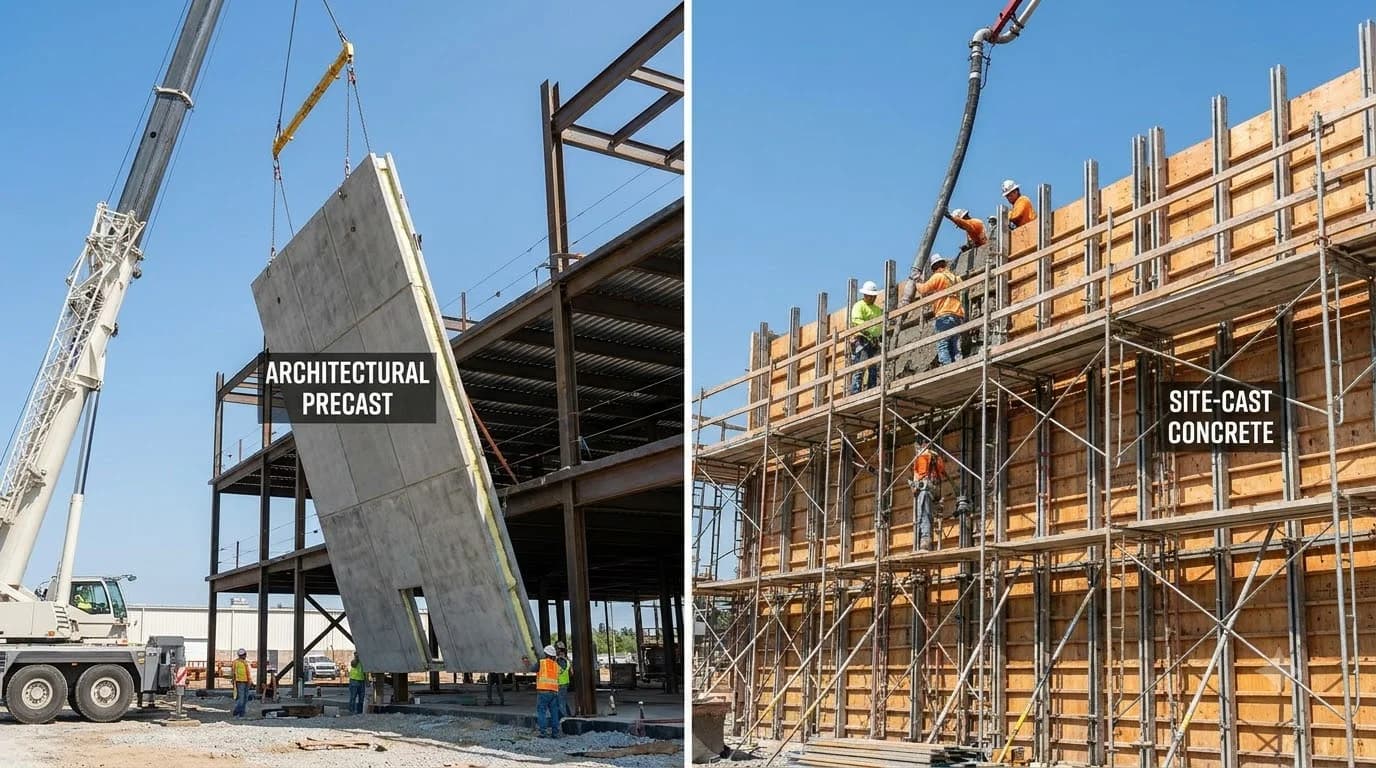
Precast vs Cast-in-Place Concrete: Costs & Durability
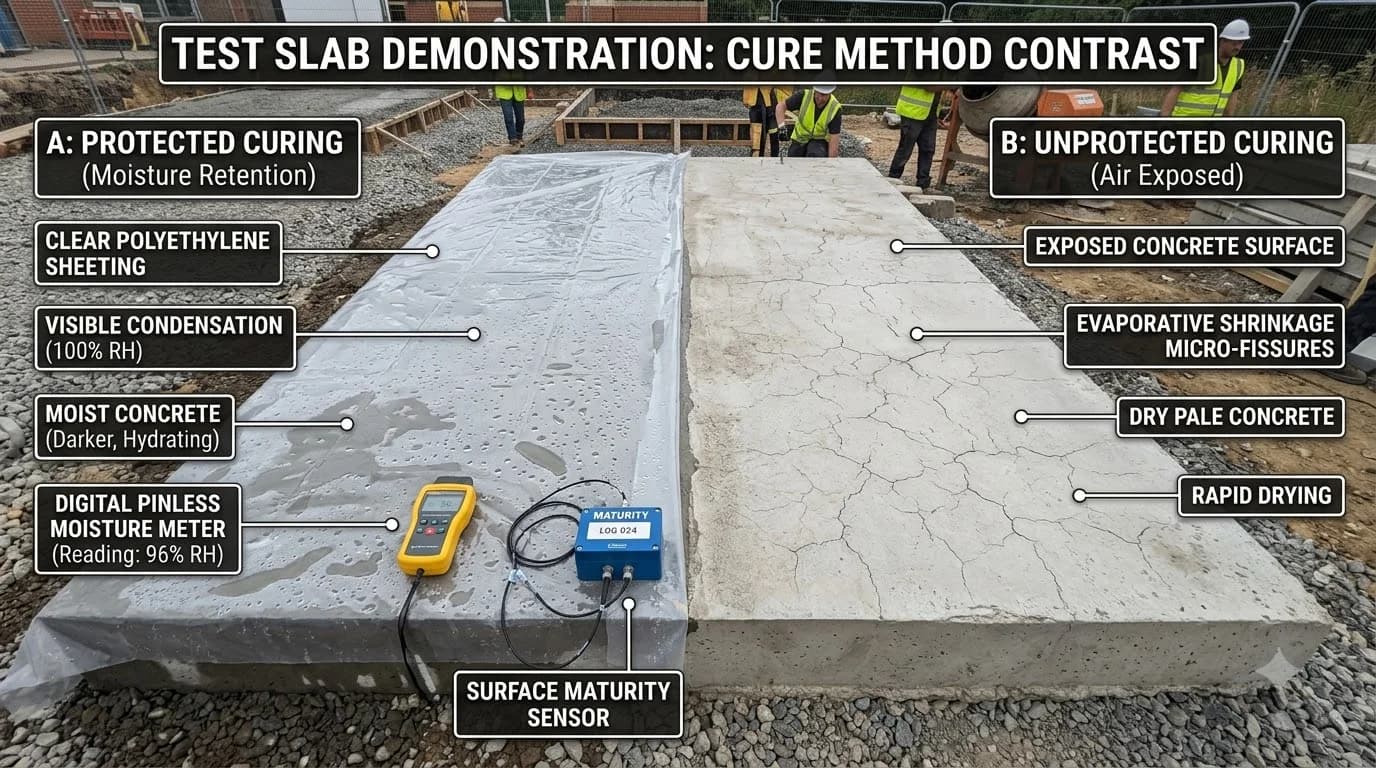
Concrete Drying vs Curing Time: 24h, 7-Day & 28-Day