Quick Contractor Rule: Degrease First, Dilute Safely, and Neutralize Completely
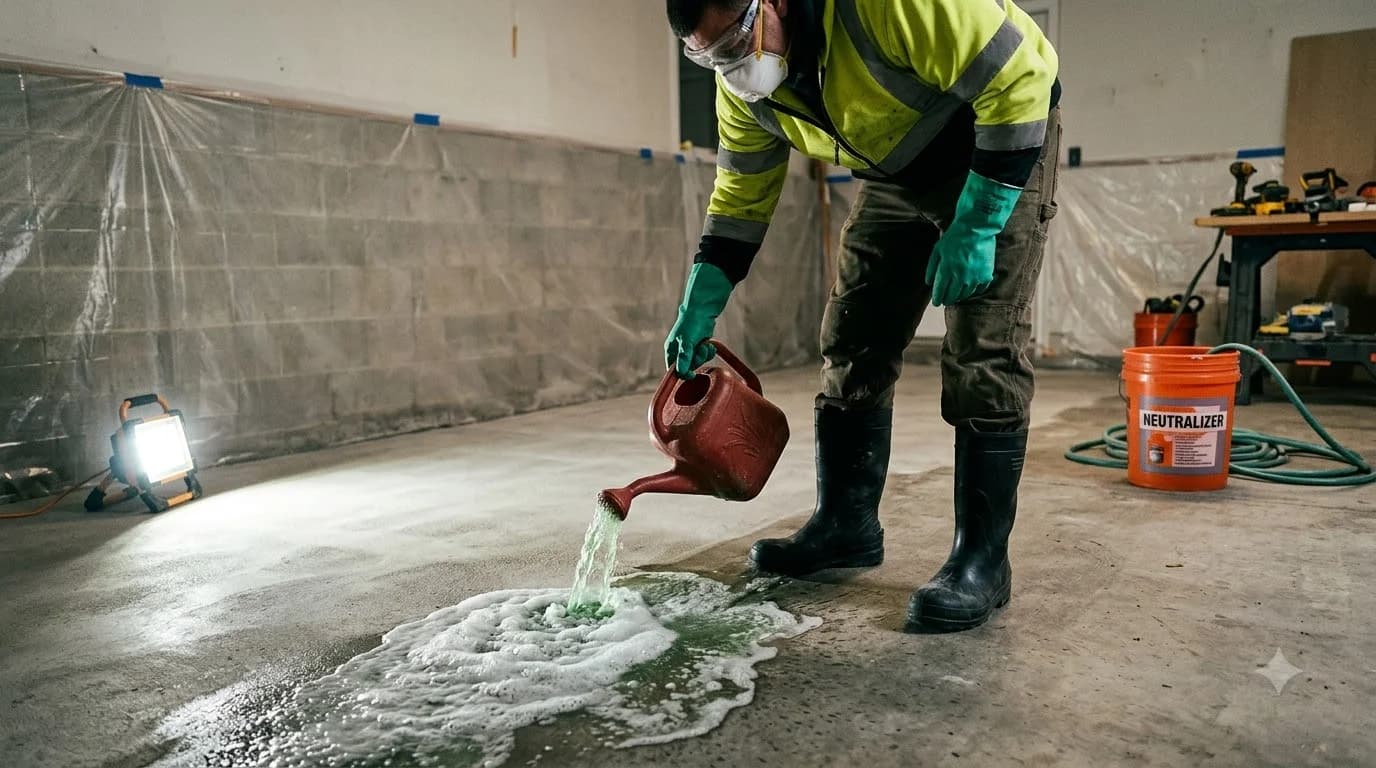
Acid cannot penetrate grease or existing sealers. Degrease the floor with TSP first. Pre-dampen the concrete with water, then apply a diluted acid solution (10 parts water to 1 part muriatic acid, or dissolved sulfamic acid). Always pour acid INTO water. Let it foam for 3 to 5 minutes while scrubbing with a stiff broom, then neutralize immediately with a baking soda solution (1 cup per gallon) and wet-vac dry.
1. The Chemistry of Acid Etching (ASTM D4260)
When a concrete slab is poured and steel-troweled, fine Portland cement paste and microscopic calcium hydroxide rise to the surface, creating a dense, glassy crust called laitance. Un-etched laitance has zero porosity. If you apply epoxy or acrylic sealers, the coating simply sits on top like tape on glass and will peel off under hot vehicle tires.
Under ASTM D4260 (Standard Practice for Liquid and Gel Acid Etching of Concrete), an acidic solution reacts with basic calcium hydroxide ($Ca(OH)_2$) and calcium carbonate in the cement paste:
This chemical dissolution dissolves the weak laitance crust, exposing millions of microscopic capillary pores. The resulting rough, textured surface provides the essential mechanical "teeth" required for coatings to anchor permanently.
2. Chemical Etching Options Comparison Matrix
Select the chemical etchant suited to your ventilation environment and project safety requirements:
| Etching Chemical | Active Acid Component | Fume / Gas Hazard | Reaction Aggressiveness | Best Application Environment |
|---|---|---|---|---|
| Muriatic Acid (Industrial) | 31.45% Hydrochloric Acid (HCl) | Severe (Hydrogen chloride fumes rust metal) | High (Foams violently in 3 minutes) | Open-air garages with wide doors, exterior driveways |
| Sulfamic Acid Crystals | Sulfamic Acid Powder (H3NSO3) | Zero Fumes (Mild, odorless when dissolved) | Moderate (Safe, steady profile) | Basements, indoor residential rooms, DIY projects |
| Phosphoric Acid Cleaner | Phosphoric Acid (H3PO4) | Low (Slight sour odor, non-fuming) | Controlled (Uniform CSP 1-2) | Commercial indoor facilities, prep before clear sealers |
| Organic Bio-Etch Blends | Citric / Glycolic acid complexes | Zero (100% biodegradable) | Mild (Requires 10-15 min dwell + scrubbing) | Occupied buildings, schools, pet-safe outdoor patios |
3. Step-by-Step Professional Etching Protocol
Follow this standardized 5-step procedure to guarantee flawless coating adhesion:
- Mandatory Degreasing: Acid will NOT react through motor oil, tire dressing, or grease. Scrub the floor with a concentrated solution of TSP (tri-sodium phosphate) and warm water. Rinse thoroughly and wet-vac dry.
- Pre-Dampen the Concrete: Lightly mist the entire concrete slab with clean water using a garden hose nozzle. The concrete should be uniformly damp (no standing puddles). Pre-wetting prevents the dry concrete from instantly sucking concentrated acid deep into the core, ensuring an even surface etch.
- Mix the Acid Dilution: In a plastic watering can or dedicated acid-safe sprayer, pour clean water first, then slowly add acid. For muriatic acid, mix 10 parts water to 1 part acid (or 4:1 for very hard concrete). For sulfamic acid, dissolve 1 lb of crystals per gallon of warm water. Wear full chemical goggles, heavy nitrile gloves, and an acid gas respirator.
- Apply and Scrub (3 to 5 Minutes): Sprinkle the solution evenly across a 10x10-foot area (approximately 1 gallon per 50 to 75 sq ft). The solution will immediately foam and fizz vigorously. Vigorously scrub the foaming liquid with a stiff nylon-bristled broom in overlapping circles.
- Neutralize and Rinse: Do not let the acid dry on the floor. While the solution is still wet, flood the section with a neutralizing mixture: 1 cup of baking soda (or 1 cup ammonia) per gallon of water. The foaming will cease. Rinse thoroughly with a pressure washer and immediately suck up all rinse water with a commercial wet-vac.
4. The Water Drop Porosity Test & Moisture Dryout
After the etched floor has completely dried, verify that the substrate is ready for paint or epoxy:
- The Water Drop Test: Splash several dime-sized drops of clean water across various areas of the floor. In a properly etched floor (ICRI CSP 1 to CSP 2), the water should soak in within 10 to 15 seconds, leaving a dark wet spot. If water beads up or takes minutes to absorb, the laitance was not fully removed or residual oil remains; that section must be re-etched.
- Mandatory Dryout Period: Acid etching saturates the slab with gallons of water. Applying an impermeable 100% solids epoxy over damp concrete will trap moisture, causing coating blisters. Allow the slab to dry for at least 48 to 72 hours with fans and dehumidification. Verify with a taped 2x2-foot plastic sheet test (ASTM D4263) or electronic moisture meter before painting.
5. Acid Etching vs. Mechanical Diamond Grinding
While acid etching is accessible for DIYers, commercial floor coating contractors almost exclusively use mechanical diamond grinding:
When Acid Etching Works
Ideal for unsealed, clean residential garage slabs and exterior patios receiving thin-mil acrylic paints or penetrating clear sealers. Cheap ($30 material cost) and requires no heavy machinery rental.
When Diamond Grinding Is Required
Mandatory if the floor has prior paint, cure-and-seal membranes, severe motor oil saturation, or hard machine-burnished concrete (where acid cannot react). Delivers an engineered CSP 2-3 profile and zero moisture dryout delay.
5 Critical Acid Etching Mistakes to Avoid
Pouring Water Into Acid
Always add acid to water! Adding water to concentrated acid causes an immediate violent exothermic flash-boil that spatters caustic acid into the applicator's face and eyes.
Letting Acid Solution Dry on Concrete
If acid dries before being neutralized, dissolved calcium chloride precipitates back into the concrete pores as a white powdery salt crystal that ruins coating adhesion.
Failing to Protect Garage Appliances
Hydrogen chloride gas vapors from muriatic acid will corrode water heater burners, furnace coils, and metal tool collections within hours. Seal pilot lights and ventilate with cross-fans.
Applying Epoxy on a Damp Slab
Painting epoxy 24 hours after acid etching traps gallons of wash water inside the slab. The evaporating water vapor creates hydrostatic pressure blisters that pop the epoxy loose.
Planning an Epoxy or Concrete Coating?
Calculate square footage, acid etching chemical gallons, primer, and 2026 kit costs.
Frequently Asked Questions
How do you know if concrete is etched properly?
Perform the water drop test: sprinkle several drops of clean water onto the dry etched floor. If water absorbs within 10 to 15 seconds and darkens the concrete, the pores are open and ready for epoxy (ICRI CSP 1-2). If water beads on top, you must re-etch or diamond-grind.
Why does muriatic acid rust metal tools in the garage?
Muriatic acid continuously outgasses hydrogen chloride vapor. These acidic airborne gases react instantly with ambient atmospheric humidity to produce corrosive hydrochloric acid droplets that rapidly rust steel tools, water heater burners, and garage door hardware.
Is mechanical diamond grinding better than acid etching?
Yes. Professional coating contractors strongly prefer diamond grinding because it removes existing sealers, curing compounds, and deep petroleum oils that acids cannot penetrate. Grinding also eliminates water introduction and requires zero multi-day dryout time.
Can you acid etch concrete in an enclosed basement?
Never use muriatic acid in a basement due to toxic respiratory gas buildup and corrosion of home HVAC systems. Use odorless sulfamic acid crystals or organic phosphoric acid blends, coupled with forced mechanical exhaust ventilation.
How long must concrete dry after acid etching before applying epoxy?
Wait a minimum of 48 to 72 hours under good ventilation and dehumidification. Verify moisture levels with an in-situ relative humidity probe (ASTM F2170) or a taped plastic sheet test to ensure moisture will not blister the epoxy coating.
Building Codes & Primary Standards Cited
Standard Practice for Liquid and Gel Acid Etching of Concrete
Establishes standardized application, dilution ratios, and neutralization protocols for etching.
Selecting and Specifying Concrete Surface Preparation
Defines concrete surface profiles (CSP 1 through CSP 9) for resinous flooring.
Standard Test Method for Determining Relative Humidity in Concrete Floor Slabs
Governs in-situ relative humidity testing prior to applying impermeable coating membranes.
Estimations adhere to standard North American modular 3/8-inch mortar joint physics and 5% to 10% material waste factors. Local municipal building inspectors, stamped architectural blueprints, and local frost depth requirements supersede general reference guidelines.
Popular Quick Estimates
Pre-engineered takeoffs & benchmarks matched to this project
Related Calculators
Specialized tools for foundation, core fill, and budgeting
Heavyweight structural blocks and bond beam units
Cubic yards, bags, and slab volume for flatwork and footings
Core grout volume in cubic yards and 80-lb pre-mix bags
Cell fill requirements for low-lift and high-lift grouting
Blogs & Construction Guides
Technical articles, IRC code standards, rebar schedules & freight logistics
How to Make Concrete Molds: Melamine, Wood & Silicone
Is Concrete Porous? Permeability & Sealing (2026 Guide)
How Much Concrete Do I Need? Complete Quantity Takeoff