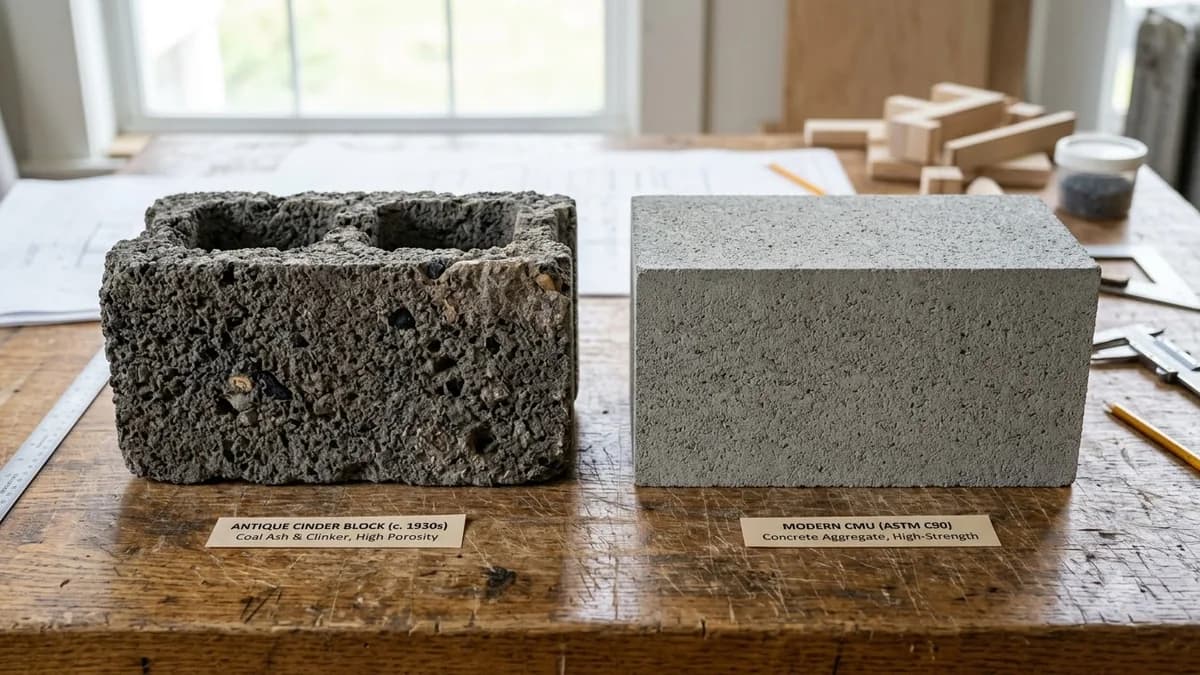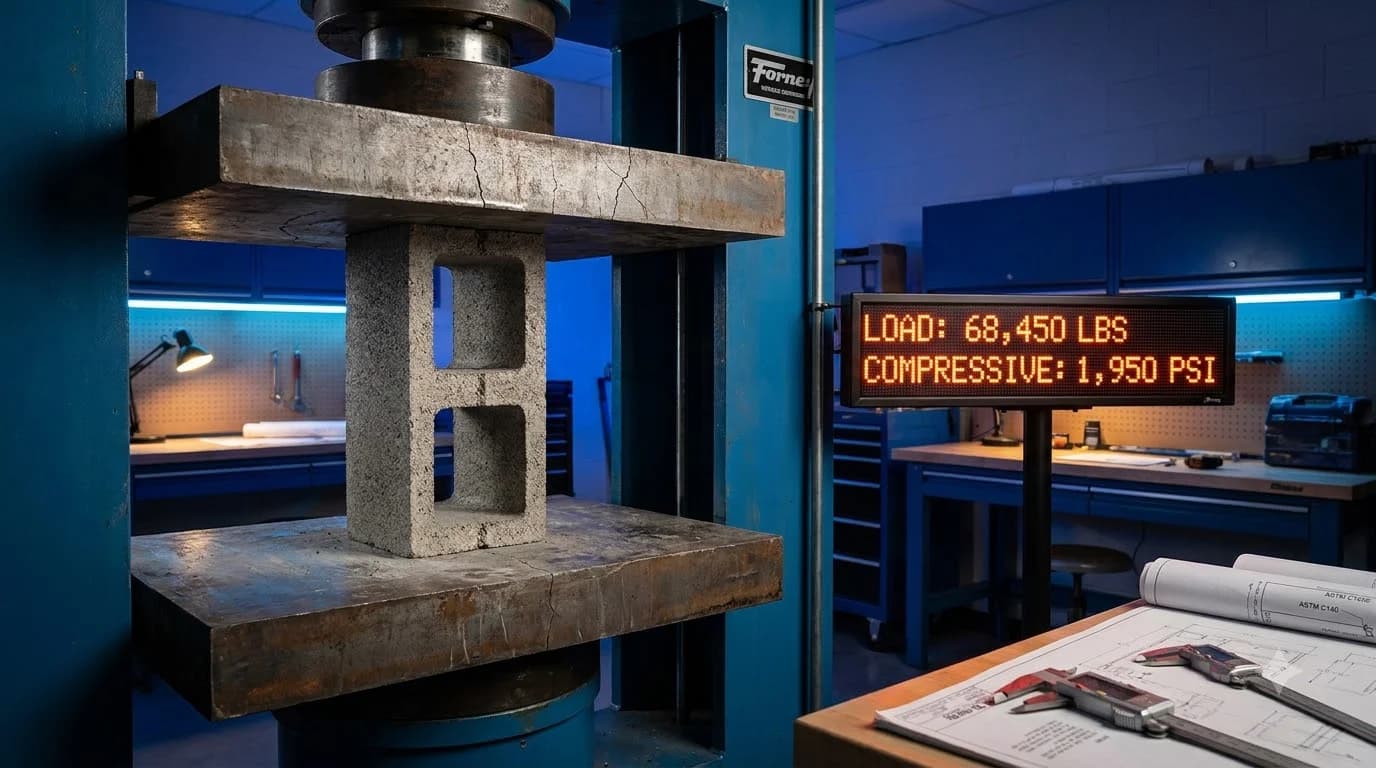
1. ASTM C90 Standards & The Math of Block Strength
In the United States, commercial concrete masonry units must satisfy ASTM C90 (Standard Specification for Loadbearing Concrete Masonry Units). The standard mandates:
2. Load Capacity Comparison: Hollow vs. Filled vs. Orientation
How a block is positioned and whether its hollow cells are filled completely dictates how much load it can carry:
| Block Configuration | Net Solid Area | Ultimate Lab Failure | Safe Working Limit (SF 3.5:1) | Primary Engineering Use |
|---|---|---|---|---|
| Hollow 8x8x16 (Vertical) | ~60 sq. in. | 114,000 lbs (57 tons) | 28,000 – 35,000 lbs | Standard house stem walls, privacy fences, garage walls |
| Solid Grout-Filled (Vertical) | ~119 sq. in. | 285,000 lbs (142 tons) | 75,000 – 95,000 lbs | Retaining walls, multi-story commercial buildings, bridge abutments |
| Hollow 8x8x16 (On Its Side) | ~20 sq. in. (webs) | 3,000 – 6,000 lbs | 1,000 lbs (Dangerous) | Garden decorative planters only; NEVER structural load |
| 16x16 Interlocking Pier (Pair) | ~120 sq. in. | 228,000 lbs (114 tons) | 60,000 – 70,000 lbs | Shed footings, cabin posts, heavy deck beam supports |
3. Point Loads vs. Uniformly Distributed Loads
The massive 100,000-lb compressive rating of a concrete block assumes the load is evenly distributed across the entire upper surface of the block via mortar or a heavy beam:
Uniformly Distributed Load
When an 8x8x16 block supports a solid 2x8 wood beam or a 3/4-inch plywood top cap, the vertical force distributes equally across both exterior face shells and center webs. Under these conditions, the block behaves with maximum structural efficiency.
Concentrated Point Load
When a narrow steel post, hydraulic jack, or equipment leg rests directly on a hollow block's thin 1-1/4" face shell without a spreader plate, local tensile stresses exceed the shear capacity of the unreinforced concrete. The face shell punches through and shatters instantly.
4. Safe DIY Applications: Aquariums, Sheds & Workbenches
When designed with proper vertical orientation and load-distributing caps, cinder blocks make exceptional budget-friendly structural supports:
Heavy Aquarium Stands (55 to 150 Gallons)
Water weighs 8.34 lbs per gallon. A 120-gallon tank weighs ~1,300 lbs total. Four vertical cinder block pillars topped with 3/4-inch exterior-grade plywood provide over 100,000 lbs of load capacity—more than 70 times the required safety factor.
Shed & Cabin Foundation Piers
Stacking two 8x8x16 blocks side-by-side in alternating courses creates a 16x16-inch pier with a massive 256 sq inch footprint. Topped with a solid concrete cap block (4x8x16) and steel mudsill anchor, each pier safely supports 30,000+ lbs of roof and framing load.
Contractor Heavy Workbenches
Pairing vertical block columns with laminated 2x10 wooden benchtops creates an immovable workbench capable of holding metal lathes, engine blocks, and heavy machinery without flexing or vibrating.
Calculate Block Weight & Core Grout
Calculate total dry block weight, pallet hauling loads, and core-fill concrete volume in seconds.
Frequently Asked Weight Capacity Questions
How much weight can a single standard 8x8x16 cinder block hold?
Under ASTM C90 standards, an 8x8x16 hollow concrete block has an ultimate lab crushing strength of approximately 100,000 to 120,000 lbs (50 to 60 tons) when loaded vertically under uniformly distributed axial pressure. In real-world construction, structural engineers apply a safety factor of 3 to 4, yielding a safe working load limit of 24,000 to 35,000 lbs per block.
Can you use cinder blocks as jack stands to support a car or truck?
NO! NEVER use cinder blocks to support an elevated vehicle. Concrete masonry units are brittle. A concentrated metal point load (like a steel vehicle frame or hydraulic jack base) focuses hundreds of pounds onto a tiny 1-inch area, causing sudden explosive shearing without warning. Always use certified steel jack stands rated for vehicle weight.
How much weight can a cinder block hold when laid on its side?
When laid on its side (with core holes facing horizontally), a cinder block's weight capacity plummets by 80% to 90%, failing at as little as 3,000 to 6,000 lbs. Concrete has high compressive strength but very low tensile flexural strength; side-loading forces the thin 1-1/4-inch face shells to bend and snap.
Can cinder blocks support a large 100-gallon fish tank or aquarium?
Yes, exceptionally well if configured correctly. A 100-gallon aquarium weighs approximately 1,000 to 1,100 lbs with water, gravel, and glass. Stacking cinder blocks with core holes facing vertically and topping them with a 3/4-inch plywood board to evenly distribute the load creates a rock-solid stand capable of supporting over 20,000 lbs.
Building Codes & Primary Standards Cited
Standard Specification for Loadbearing Concrete Masonry Units
Specifies minimum average net compressive strength of 1,900 psi and minimum individual unit strength of 1,700 psi.
Standard Test Methods for Sampling and Testing Concrete Masonry Units
Standardized industrial testing procedures for compression, absorption, moisture content, and dimensional tolerances.
Building Code Requirements for Masonry Structures
Defines allowable axial compressive stress, safety factors (3.5 to 4.0), and slenderness reduction factors for masonry columns and piers.
Estimations adhere to standard North American modular 3/8-inch mortar joint physics and 5% to 10% material waste factors. Local municipal building inspectors, stamped architectural blueprints, and local frost depth requirements supersede general reference guidelines.
Popular Quick Estimates
Pre-engineered takeoffs & benchmarks matched to this project
Related Calculators
Specialized tools for foundation, core fill, and budgeting
Dry block weight, filled core weight and hauling loads
Straight and multi-wall runs with mortar and waste allowances
Standard 8-inch series wall and reinforcement estimates
Cell fill requirements for low-lift and high-lift grouting
Blogs & Construction Guides
Technical articles, IRC code standards, rebar schedules & freight logistics
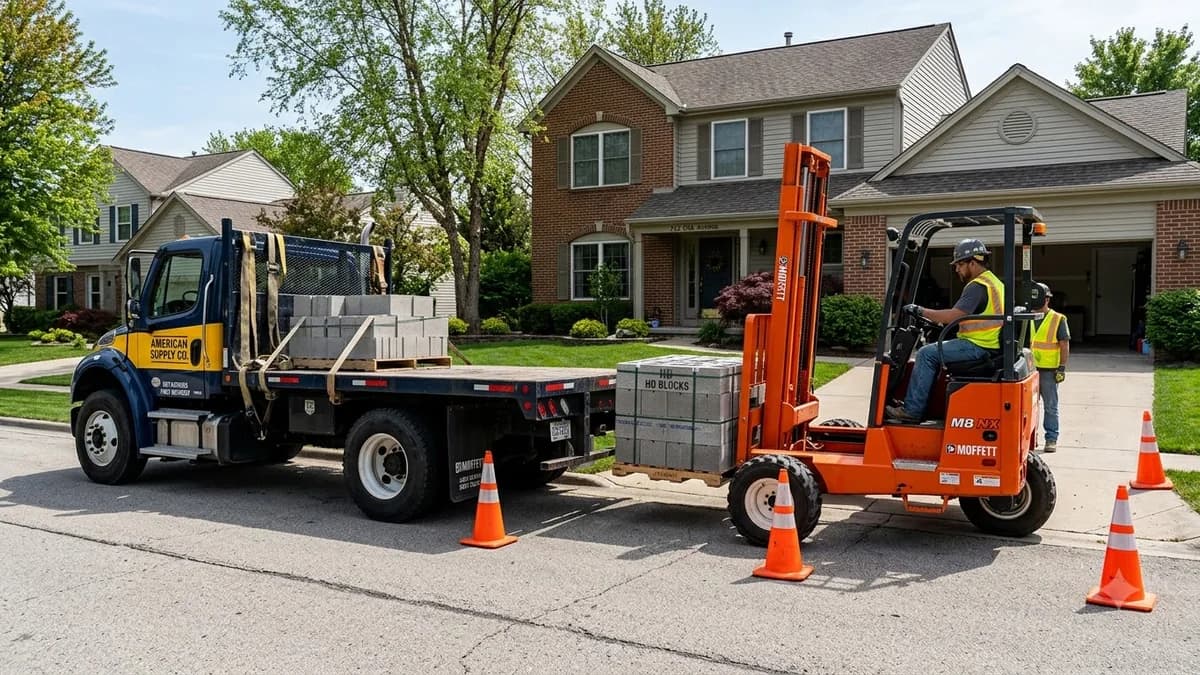
Cinder Block Pallet Weight & Truck Hauling Guide
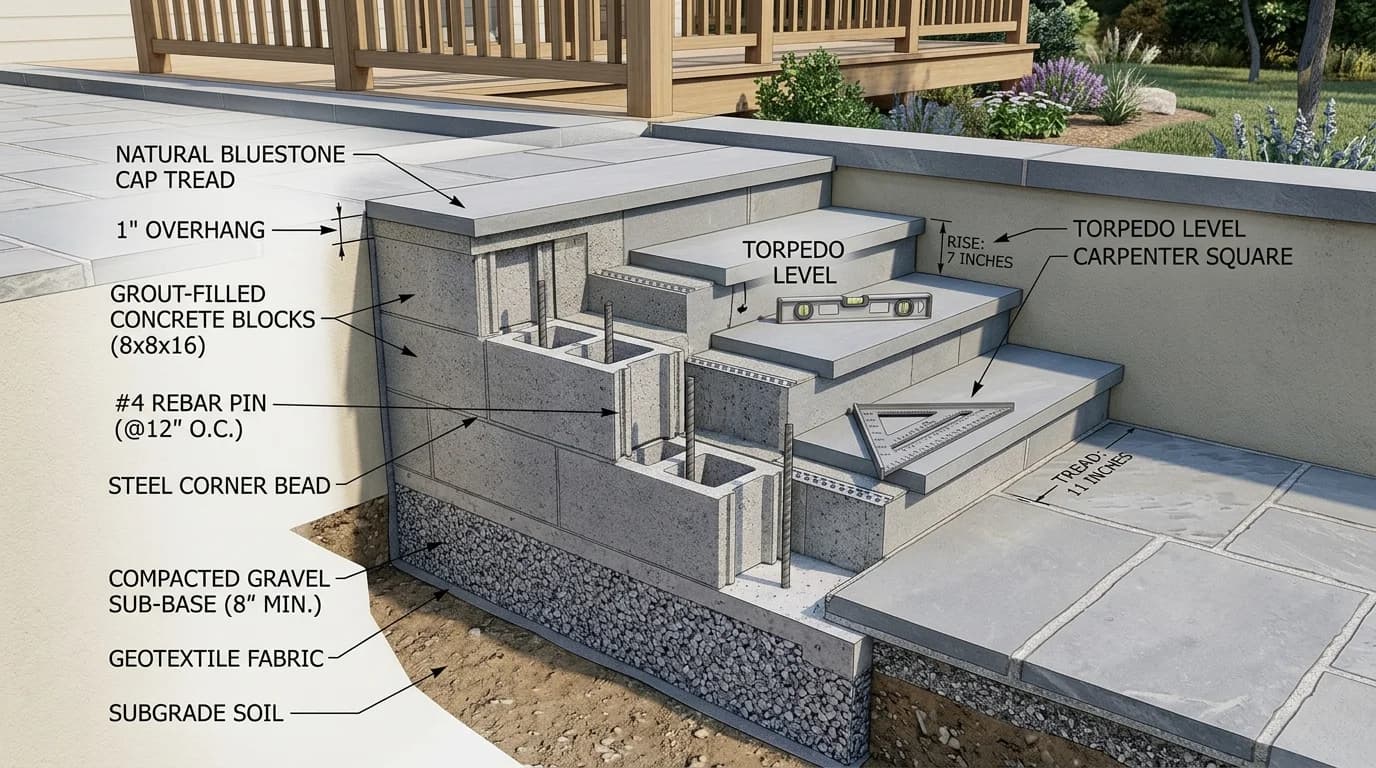
How to Build Outdoor Cinder Block Steps & Stairs

Cinder Block Raised Garden Beds: Are They Food Safe?