1. Step Zero: Moisture Testing & Surface Remediation
Before spending a dime on drywall, wood planks, or tile, you must ensure the cinder block wall is completely dry. Covering an actively leaking or damp masonry wall traps water, causing framing lumber to rot and wall coverings to fail within 12 to 24 months:
ASTM D4263 Plastic Sheet Test
Tape a 2x2-foot sheet of clear 6-mil polyethylene plastic to the block face using duct tape on all four edges. Leave for 24 hours. If water droplets bead on the underside, your wall suffers from capillary ground moisture and must be sealed with crystalline waterproofing before proceeding.
Efflorescence Removal & Crack Sealing
Scrape away white crystalline powder (efflorescence) using a stiff wire brush and dilute masonry acid cleaner. Inspect mortar joints for stair-step or horizontal cracks; chisel them into an inverted "V" profile and pack with hydraulic cement (read crack repair guide).
2. The 5 Best Ways to Cover Interior Cinder Block Walls
Floating 2x4 Wood Stud Wall with Drywall
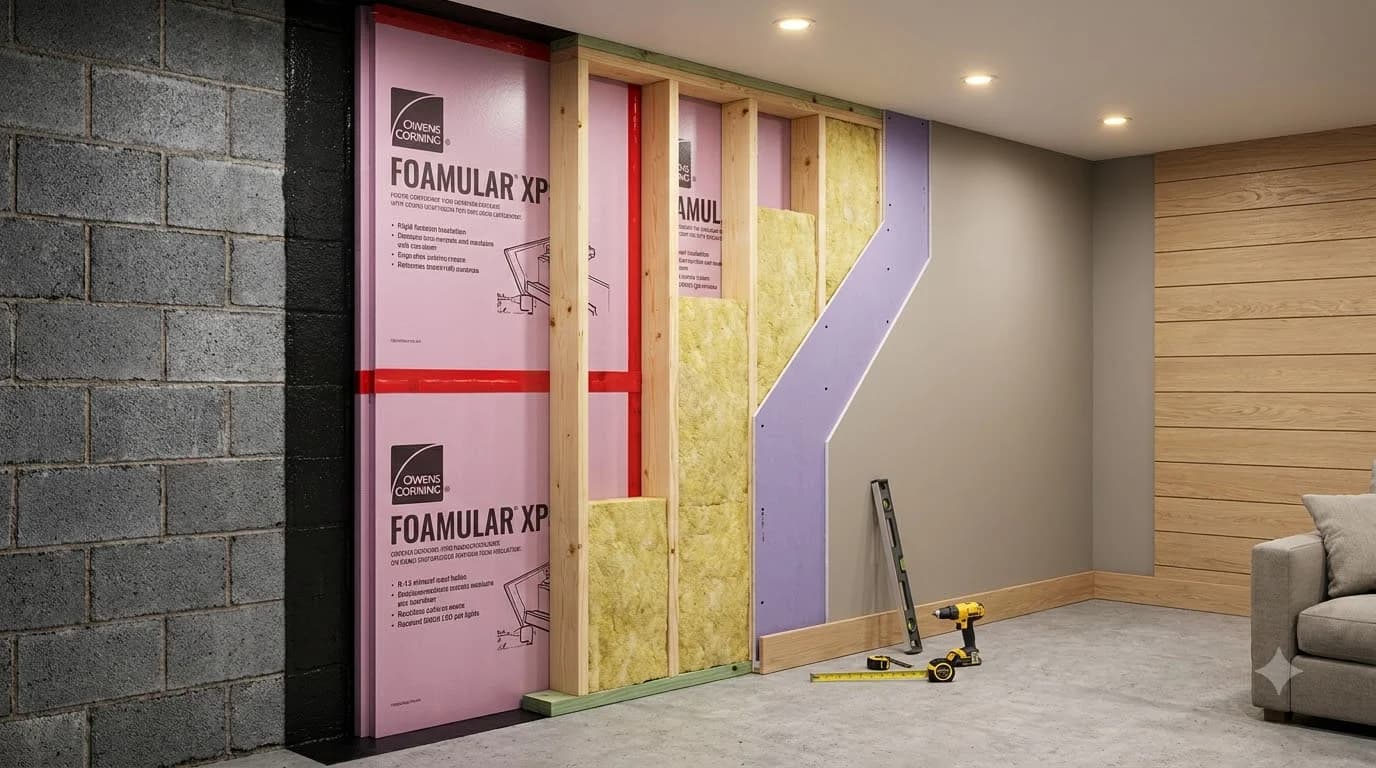
Fasten 1.5-inch continuous XPS rigid foam board directly against the block wall, tape the seams, and frame a non-loadbearing 2x4 wood stud wall 1/2-inch in front of the foam (detailed framing tutorial). Finish with 1/2-inch purple mold-resistant gypsum drywall.
Horizontal Wood Shiplap or Tongue-and-Groove Planks
Screw 1x3 pressure-treated furring strips vertically to the cinder block wall at 16 inches on center using Tapcon screws. Place 3/4-inch foil-faced polyiso or XPS foam boards between the strips as a thermal break. Blind-nail pine, cedar, or MDF shiplap planks horizontally into the furring strips.
Thin Brick or Manufactured Stone Veneer
If your cinder block wall is structurally sound and above grade (or 100% dry), you can apply real clay thin brick tiles (1/2" thick) or manufactured stone veneer directly over the masonry using modified polymer-fortified thinset mortar (ANSI A118.4) and a 1/2-inch notched trowel.
German Smear Whitewash or Direct Stucco Parge
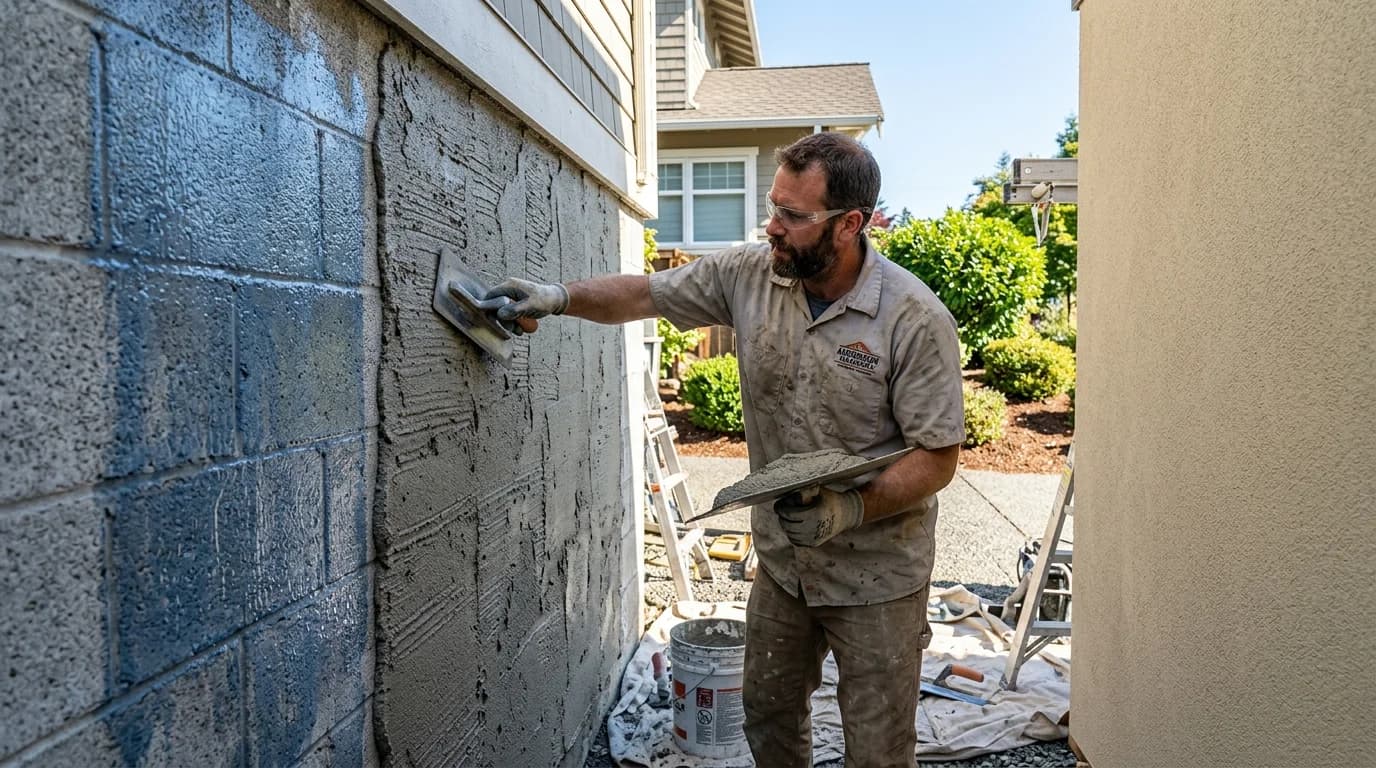
Apply a thin 1/8 to 1/4-inch coat of Type S white mortar or Portland cement parge over the block face with a flat steel trowel (view stucco parging guide). Use a damp sponge to wipe back portions of the mortar for a trendy European "German smear" look, or float smooth with a sponge float.
Fabric Acoustic Felt Slat Panels
Modern wood-veneer acoustic slat panels mounted on recycled black polyester felt (e.g. WoodUpp or Art3d) attach quickly over bare block walls using masonry construction adhesive (Loctite Power Grab Express) and black-head Tapcon screws.
3. Cost & Performance Comparison Matrix (2026 Rates)
| Covering Method | DIY Material Cost | Space Lost | Moisture Tolerance | Insulation R-Value |
|---|---|---|---|---|
| Drywall on 2x4 Framed Wall | $3.50 – $5.00 / sq ft | 4.5 – 5.0 Inches | High (with XPS Foam) | R-18 to R-23 |
| Shiplap on Furring Strips | $4.00 – $6.50 / sq ft | 1.5 – 2.0 Inches | Moderate | R-4 to R-5 |
| Thin Brick / Stone Veneer | $8.00 – $14.00 / sq ft | 0.75 – 1.25 Inches | Maximum (100% Mineral) | R-0.8 (Thermal Mass) |
| German Smear / Parge Coat | $0.80 – $1.50 / sq ft | 0.25 Inches (Zero Lost) | Maximum | R-0.2 |
| Acoustic Felt Slat Panels | $3.00 – $5.50 / sq ft | 0.85 Inches | Moderate | R-1.5 (Acoustic NRC 0.85) |
Calculate Square Footage & Paint Primer
Calculate wall square footage and material estimates for block filler primer, paint, and room framing in seconds.
Frequently Asked Covering Questions
Can you glue drywall directly to interior cinder block walls?
No. Never glue drywall sheets directly to bare interior cinder block walls. Concrete blocks continuously transmit ground moisture and remain cold (50°F to 55°F). Direct contact traps moisture behind the gypsum paper, leading to adhesive failure, crumbling gypsum, and hidden toxic mold colonies.
What is the cheapest way to cover interior cinder block walls?
The cheapest method is a masonry parge coat or hydrated lime whitewash (German smear), costing roughly $0.50 to $1.50 per square foot in raw materials. It fills porous block cavities, evens out mortar joints, and brightens up the room without sacrificing square footage or requiring wooden framing.
How do you attach wood shiplap or tongue-and-groove planks to block walls?
Install 1x3 or 2x2 pressure-treated furring strips vertically every 16 inches on center using Tapcon masonry screws, placing 1/2-inch rigid XPS foam board between the strips for a thermal break. Then blind-nail horizontal shiplap planks into the wooden furring strips.
Do you have to seal cinder block walls before covering them?
Yes. Any active hairline cracks must be sealed with hydraulic cement or polyurethane injection, and the entire wall should be treated with a penetrating silane-siloxane or crystalline waterproofing sealer to stop capillary vapor migration before installing any decorative wall coverings.
Building Codes & Primary Standards Cited
International Residential Code - Foam Plastics
Mandates continuous 1/2-inch gypsum board thermal barrier separation over rigid foam plastics in habitable areas.
Standard Specification for Application and Finishing of Gypsum Board
Specifies fastener spacing, screw embedment, and joint taping standards for interior drywall installations.
Standard Specification for Installation of Lathing and Furring
Governs mechanical anchor spacing and corrosion protection for metal and wood furring over concrete masonry.
Estimations adhere to standard North American modular 3/8-inch mortar joint physics and 5% to 10% material waste factors. Local municipal building inspectors, stamped architectural blueprints, and local frost depth requirements supersede general reference guidelines.
Popular Quick Estimates
Pre-engineered takeoffs & benchmarks matched to this project
Related Calculators
Specialized tools for foundation, core fill, and budgeting
Straight and multi-wall runs with mortar and waste allowances
Dry block weight, filled core weight and hauling loads
Standard 8-inch series wall and reinforcement estimates
Core grout volume in cubic yards and 80-lb pre-mix bags
Blogs & Construction Guides
Technical articles, IRC code standards, rebar schedules & freight logistics
How to Stucco & Parge Over Cinder Block Walls
How to Paint Cinder Block Walls: Primer & Sealer Guide
How to Build Outdoor Cinder Block Steps & Stairs