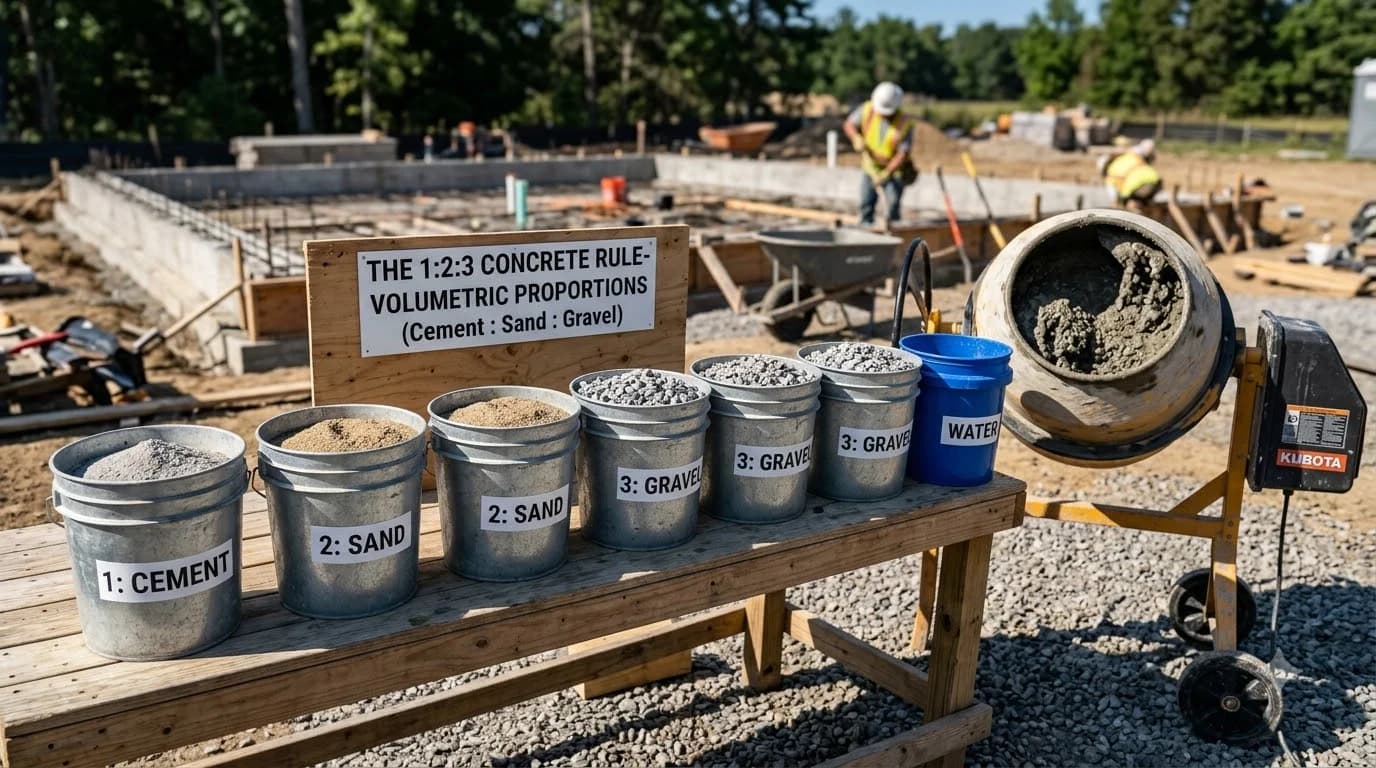
1. Master Concrete Compressive Strength (PSI) Specification Table
In North American construction, mix designs are engineered per ACI 211.1 to achieve specific compressive ratings at 28 days:
| Compressive Rating | Metric (MPa) | Max w/c Ratio | Cement Sacks/Yd | Target Slump | Primary Construction Use |
|---|---|---|---|---|---|
| 2,500 PSI | 17.2 MPa | 0.65 | 5.0 sacks | 4" – 5" | Fence post footings, unreinforced house footings, non-freeze pathways |
| 3,000 PSI | 20.7 MPa | 0.55 | 5.5 sacks | 4" – 5" | Residential basement floors, patio slabs, residential foundation walls |
| 3,500 PSI | 24.1 MPa | 0.50 | 6.0 sacks | 3" – 4" | Commercial slabs, mild freeze-thaw exterior sidewalks, garage aprons |
| 4,000 PSI | 27.6 MPa | 0.45 | 6.5 sacks | 3" – 4" | Heavy-duty driveways, cold-weather exterior slabs, parking lots |
| 5,000 PSI | 34.5 MPa | 0.40 | 7.5 sacks | 2" – 3" | Industrial warehouse slabs, bridge decks, heavy forklift loading, precast |
2. Abrams' Law: The Physics of Water-to-Cement Ratio
In 1918, Duff Abrams formulated the fundamental law of concrete technology: the compressive strength of fully compacted concrete is inversely related to the water-to-cementitious materials ratio (w/cm).
3. The Curing Curve: 3, 7, 14, and 28-Day Strength Gain
Concrete does not reach full strength instantly. Under standard ASTM C31 moist curing at 73°F (23°C), strength development follows this progressive curve:
4. Five Critical Mistakes in Concrete Strength Specification
1. Adding Hose Water for Workability
Adding 2 gallons of water per yard to make concrete flow faster reduces a 4,000 PSI design down to 3,400 PSI and causes severe drying shrinkage cracks. Use superplasticizers instead.
2. Omitting Air Entrainment in Winter Climates
A 4,000 PSI mix without ASTM C260 air entrainment will still spall and scale when exposed to winter freeze-thaw cycles and deicing road salts. Always specify 5% to 7% entrained air.
3. Confusing Compressive and Tensile Strength
Concrete tensile capacity is only 10% of its compressive PSI. Pouring an unreinforced 4,000 PSI driveway without steel rebar or wire mesh will still result in bending cracks under heavy trucks.
4. Stopping Moist Curing Prematurely
Allowing concrete to dry in hot windy weather stops chemical hydration. Concrete moist-cured for only 3 days achieves barely 60% of its potential 28-day design compressive strength.
5. Ready-Mix Order Specification Walkthrough
When ordering ready-mix concrete for an exterior driveway from a commercial batch plant, state this exact specification to dispatch:
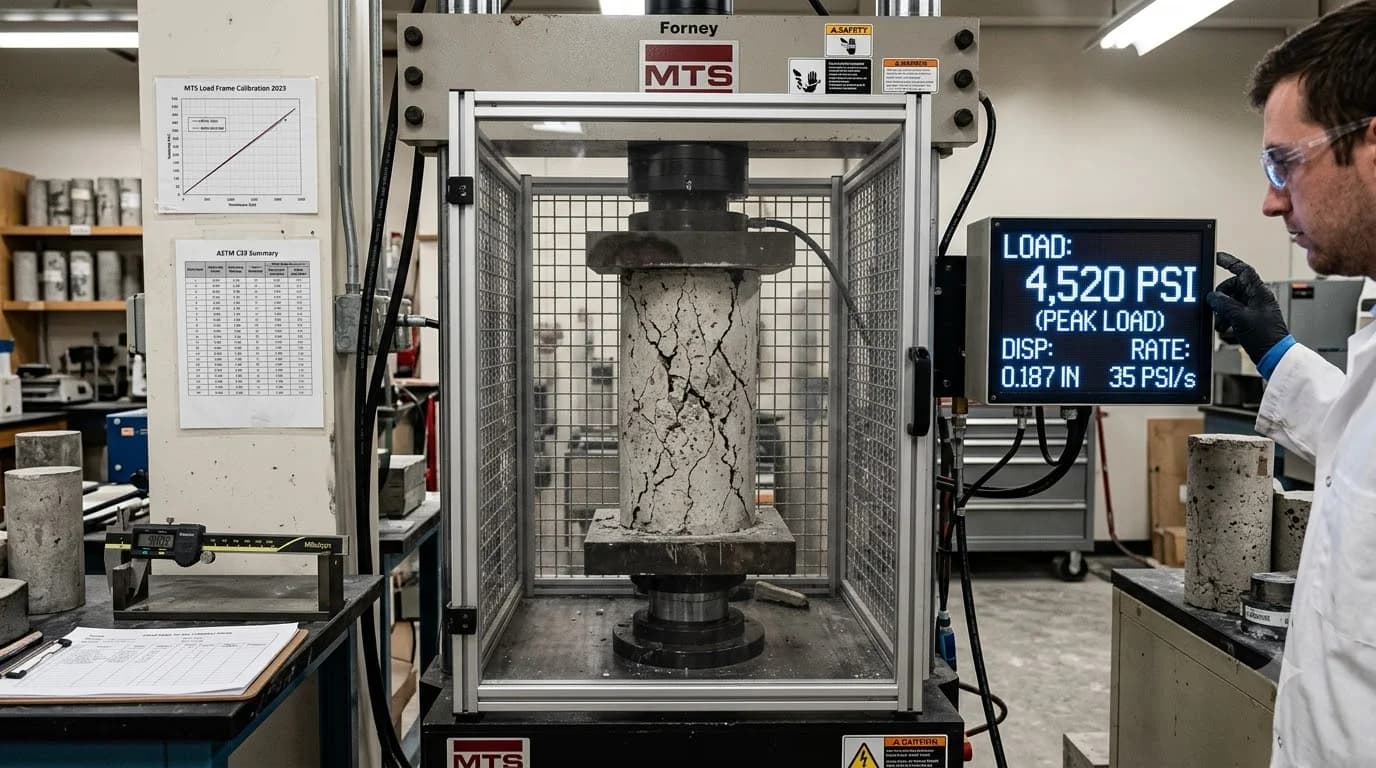
6. ASTM C39 Testing Protocol: How Laboratories Verify PSI
To officially verify that ready-mix concrete meets project specifications, an ACI-certified field technician casts standard 4" × 8" or 6" × 12" cylindrical specimens per ASTM C31:
Standard Curing (ASTM C511)
Test cylinders are stripped from plastic molds after 24 hours and submerged in saturated lime water bath tanks maintained at precisely 73.5°F ± 3.5°F (23°C ± 2°C) until the exact break date.
Neoprene End Caps (ASTM C1231)
Before placement into the hydraulic compression press, cylinders receive precision elastomeric neoprene caps inside steel retaining rings to ensure perfectly perpendicular compressive load distribution.
Controlled Loading Rate
The testing frame applies continuous hydraulic force at a prescribed rate of 28 to 42 PSI per second until structural failure, recording the exact peak compressive force in pounds.
7. Supplementary Cementitious Materials: Reaching 6,000 to 10,000+ PSI
To achieve compressive strengths exceeding 5,000 PSI without excessive cement heat or shrinkage cracking, structural engineers blend supplementary cementitious materials (SCMs):
- Fly Ash (ASTM C618 Class F): Replaces 15% to 25% of Portland cement. Spherical microscopic glass beads improve workability, lower water demand, and react with calcium hydroxide over 56 to 90 days to deliver ultra-dense concrete.
- Slag Cement (ASTM C989 Grade 100/120): Ground granulated blast-furnace slag replaces 30% to 50% of cement, providing extreme chemical resistance to sulfates and chlorides while boosting long-term compressive strength.
- Silica Fume / Microsilica (ASTM C1240): Extremely fine pozzolanic particles (100 times smaller than cement grains) that pack tightly into micro-pores. Silica fume mixes routinely achieve 8,000 to 14,000+ PSI for high-rise skyscraper columns and marine pilings.
Frequently Asked Questions
Is 3000 PSI concrete strong enough for a residential driveway?
In mild southern climates with zero freeze-thaw cycles, a 3000 PSI mix is acceptable for passenger cars. However, in regions subject to freezing winter temperatures and deicing chemicals, ACI 318 and modern building codes mandate a minimum of 4000 PSI with 5% to 7% entrained air. The higher density and lower permeability of 4000 PSI concrete prevents moisture absorption and winter freeze-thaw spalling.
How long does 4000 PSI concrete take to achieve full strength?
Concrete compressive strength is tested at standardized curing intervals under ASTM C39. A standard 4000 PSI mix reaches roughly 40% strength (~1,600 PSI) in 3 days, 70% strength (~2,800 PSI) in 7 days, and its full contractual design strength (4,000+ PSI) at the 28-day milestone under continuous moist curing.
What PSI is standard bagged concrete from Home Depot or Lowe's?
Standard general-purpose bagged concrete (such as Quikrete in the yellow bag or Sakrete in the black bag) is formulated to deliver 4,000 PSI at 28 days. High-performance commercial bag mixes (like Quikrete 5000 or Sakrete 5000 Plus) achieve 5,000 PSI at 28 days and reach 2,500 PSI in just 3 days.
How does adding water on site affect concrete PSI strength?
Adding excess water to ready-mix concrete to increase slump and workability dramatically destroys compressive strength. Governed by Abrams' Law, adding just one extra gallon of water per cubic yard beyond the mix design reduces compressive strength by 150 to 200 PSI, increases drying shrinkage, and promotes surface dusting.
What is the difference between compressive strength (PSI) and flexural strength?
Compressive strength (tested in standard ASTM C39 cylinders) measures resistance to downward crushing loads. Flexural tensile strength (modulus of rupture, ASTM C78) measures resistance to bending and cracking. Concrete is weak in tension—its flexural strength is typically only 10% to 15% of its compressive rating (a 4000 PSI slab has a flexural strength of roughly 400 to 550 PSI), which is why steel rebar or wire mesh is embedded in tension zones.
Building Codes & Primary Standards Cited
Standard Test Method for Compressive Strength of Cylindrical Concrete Specimens
The primary testing protocol for crushing standard 4x8-in and 6x12-in concrete test cylinders.
Building Code Requirements for Structural Concrete
Establishes minimum PSI ratings and maximum water-cement ratios across environmental exposure categories.
Standard Practice for Selecting Proportions for Normal, Heavyweight, and Mass Concrete
The authoritative engineering manual for proportioning aggregates, water, and cement.
Standard Specification for Ready-Mixed Concrete
Governs plant batching tolerances, slump verification, and delivery time limitations.
Estimations adhere to standard North American modular 3/8-inch mortar joint physics and 5% to 10% material waste factors. Local municipal building inspectors, stamped architectural blueprints, and local frost depth requirements supersede general reference guidelines.
Popular Quick Estimates
Pre-engineered takeoffs & benchmarks matched to this project
Related Calculators
Specialized tools for foundation, core fill, and budgeting
Cubic yards, bags, and slab volume for flatwork and footings
Heavyweight structural blocks and bond beam units
Core grout volume in cubic yards and 80-lb pre-mix bags
Cell fill requirements for low-lift and high-lift grouting
Blogs & Construction Guides
Technical articles, IRC code standards, rebar schedules & freight logistics
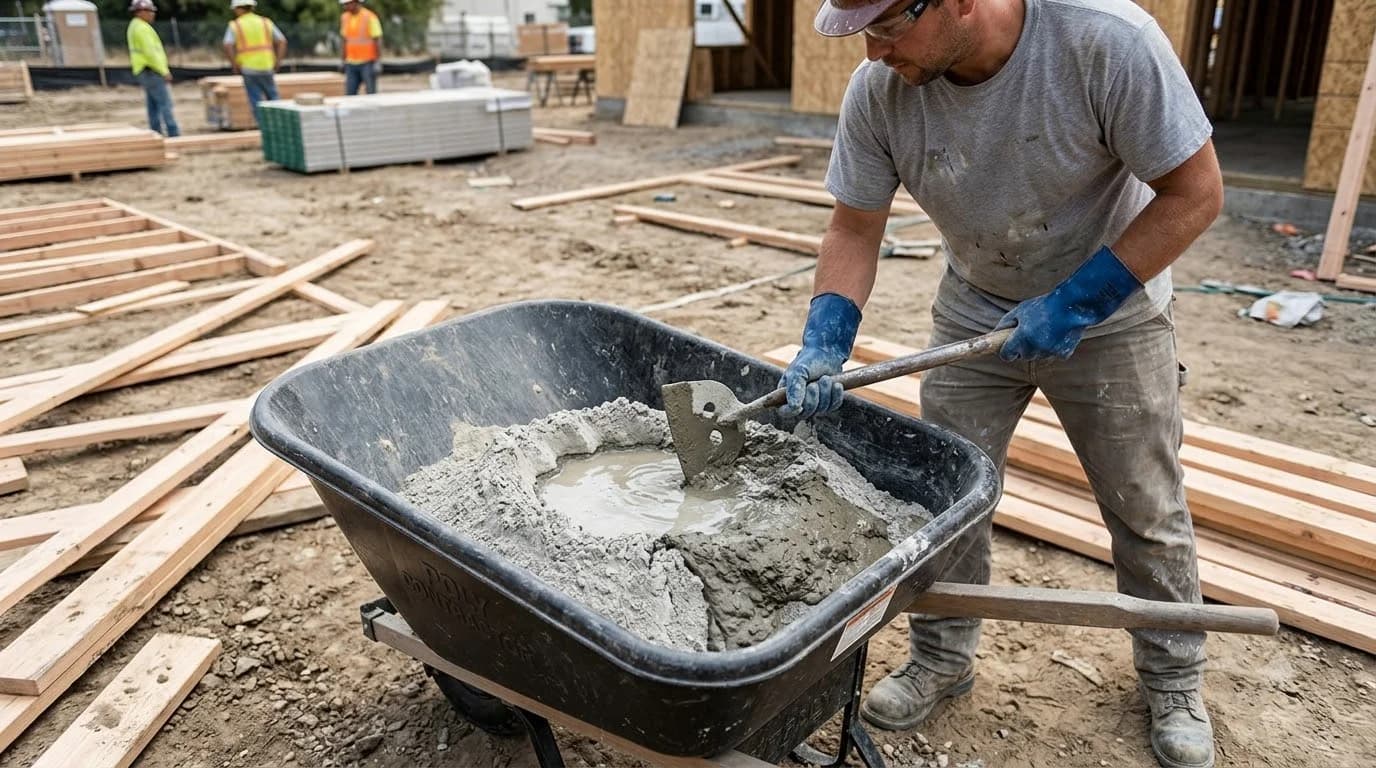
How to Mix Concrete by Hand: Wheelbarrow Water Ratio
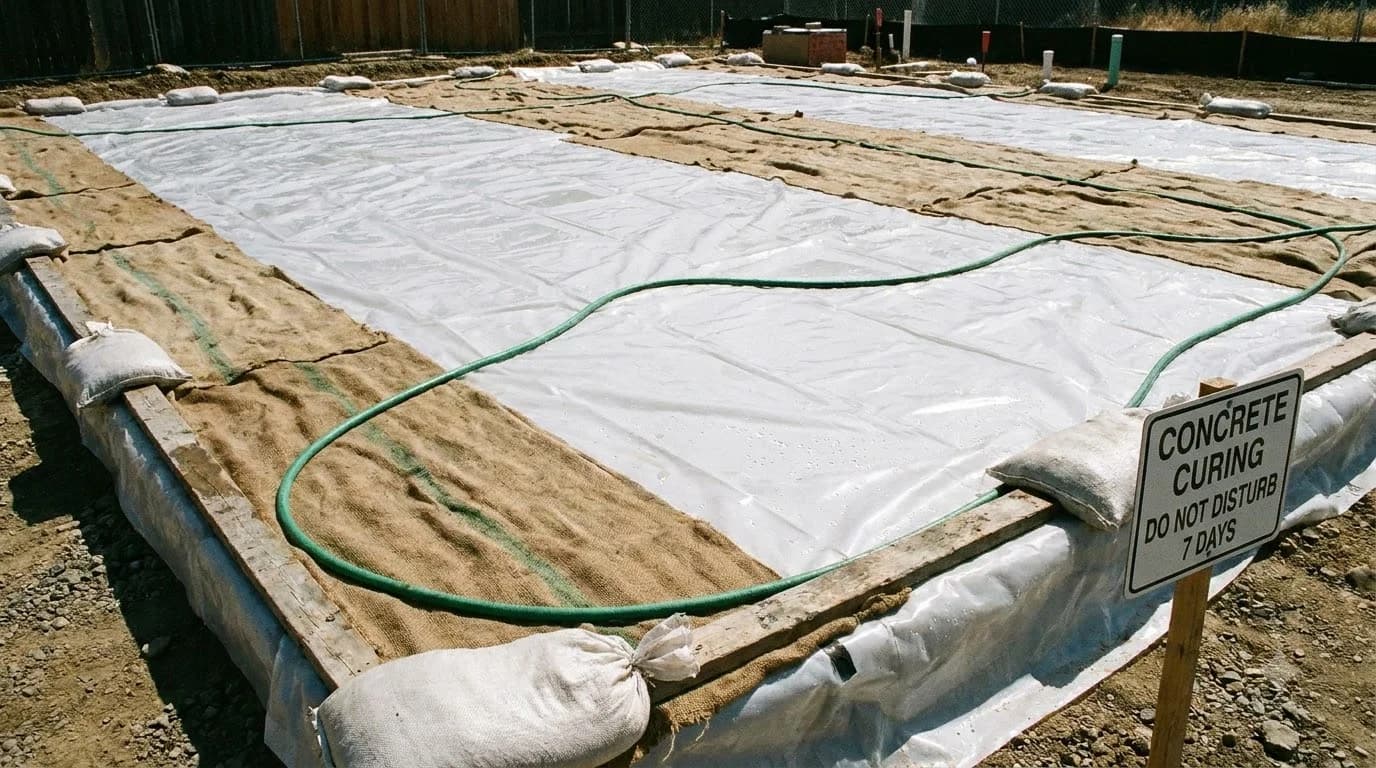
How to Cure Concrete: Wet Curing vs Curing Compounds
Concrete Slump Test: ASTM C143 Procedures & Values