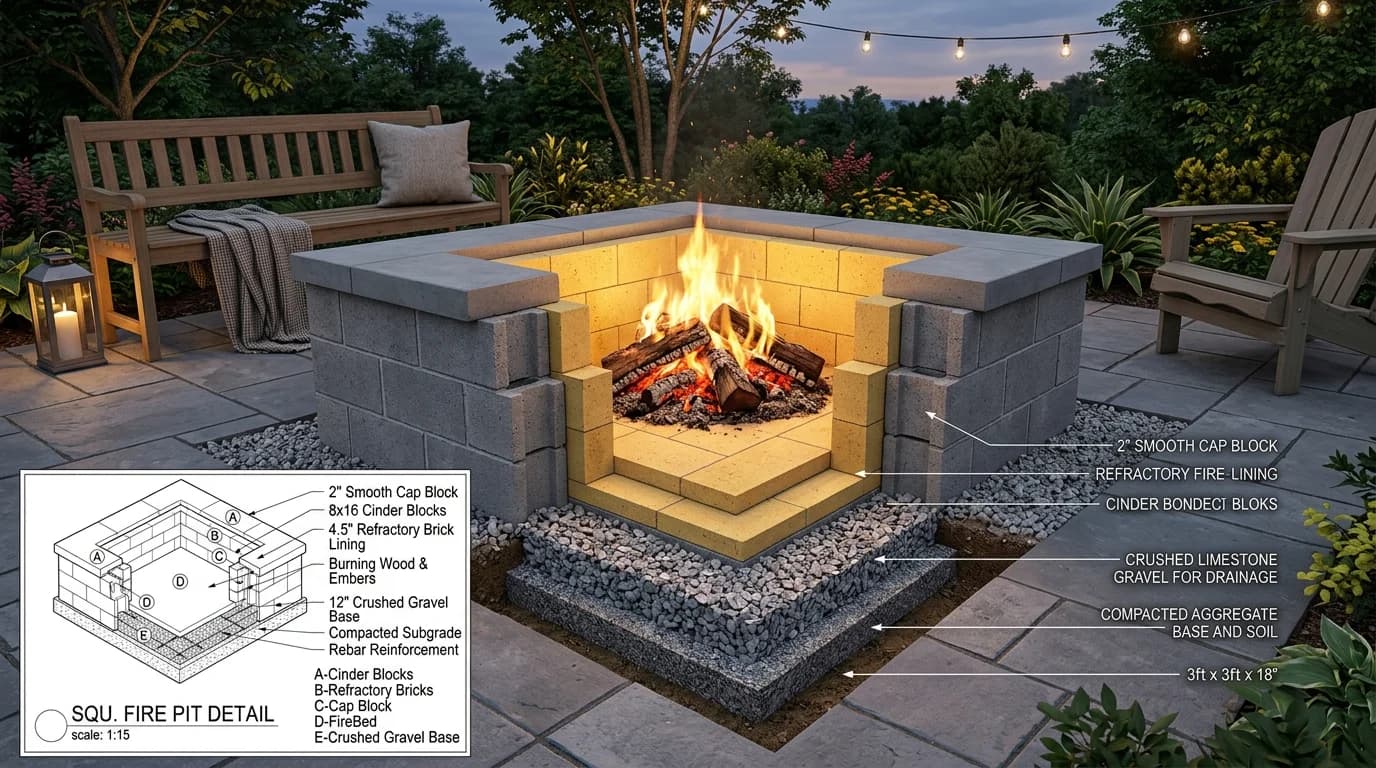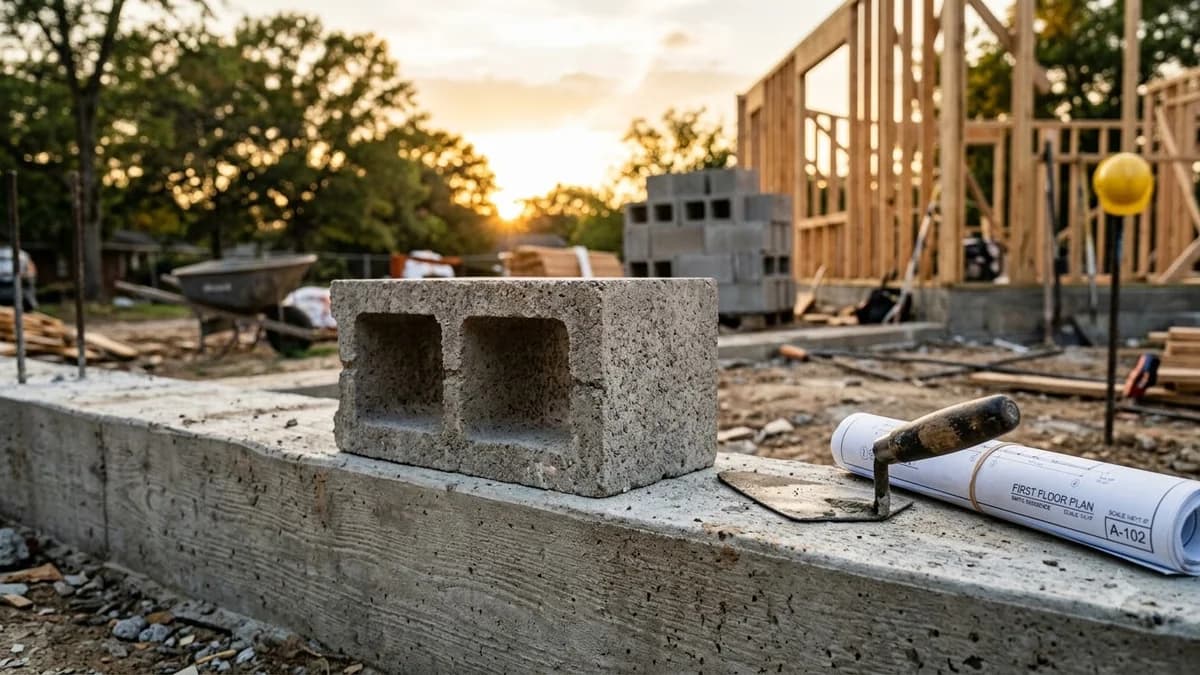
Quick Industry Fact: Real Cinder Blocks Are Extinct; You Are Buying Structural Concrete CMUs
Historic cinder blocks (1900–1960) were made with industrial coal cinders and bottom ash. They were lightweight, dark gray, weak (500-800 psi), and prone to sulfur corrosion. Every block sold today at Home Depot, Lowe's, or commercial masonry yards is a Concrete Masonry Unit (CMU) governed by ASTM C90. Modern CMUs are manufactured from 100% inert limestone, sand, and Portland cement, deliver 2,000+ psi compressive strength, and are completely non-toxic for vegetable garden beds.
1. The Industrial Origins of Cinder Blocks (1900 to 1960)
In 1900, American inventor Harmon S. Palmer patented the cast-iron hollow concrete block machine. This invention revolutionized building construction by replacing hand-laid brick masonry with large, modular, hollow masonry units that could be set rapidly with less mortar.
During the early 20th-century Industrial Revolution, steam locomotives, coal-burning power generating stations, and industrial blast furnaces produced mountain ranges of waste byproduct known as coal cinders (heavy bottom ash, vitrified clinker, and residue). Block manufacturers recognized that replacing heavy natural river gravel with coal cinders created a lighter block that was easier to haul and handle:
- Weight Advantage: A 1930s coal cinder block weighed only 22 to 26 lbs, compared to over 45 lbs for dense gravel concrete, dramatically speeding up mason installation rates.
- Nail-Holding Capacity: The porous, soft clinker matrix was soft enough that carpenters could hammer cut nails directly into the block to secure interior wood furring strips without drilling.
- Low Material Cost: Coal burning facilities were eager to give cinders away for free or at nominal cost to clear industrial rail yards.
However, true cinder blocks had fatal structural flaws: compressive strength hovered around only 500 to 800 psi, water absorption exceeded 25%, and unburned coal sulfides reacted with rain to create mild sulfuric acid that corroded steel lintels and reinforcing rebar. By the late 1960s, ASTM C90 standards and modern municipal building codes mandated high-strength Portland cement concrete blocks, rendering true coal-ash blocks obsolete.
2. Vintage Coal Cinder Block vs. Modern ASTM C90 CMU Matrix
Compare historical coal-cinder blocks against modern standardized concrete masonry units across physical, chemical, and structural metrics:
| Specification Parameter | Vintage Coal Cinder Block (1920-1960) | Modern ASTM C90 Standard CMU | Modern Lightweight CMU (ASTM C331) |
|---|---|---|---|
| Primary Aggregate | Industrial coal furnace bottom ash & clinker | Crushed limestone, silica sand, gravel | Rotary kiln expanded shale, clay, or slate |
| Compressive Strength | 500 to 800 psi (Non-loadbearing) | 2,000 to 4,500 psi net area | 2,000 to 3,500 psi net area |
| Unit Weight (8x8x16) | 22 to 26 lbs | 34 to 42 lbs | 25 to 29 lbs |
| Water Absorption Rate | Very High (> 25% by weight) | Low (≤ 13 lb/cu ft per ASTM C90) | Moderate (≤ 18 lb/cu ft per ASTM C90) |
| Vegetable Garden Safety | Avoid (Potential heavy metal traces) | 100% Food-Safe & Inert | 100% Food-Safe & Inert |
| 2026 Availability | Obsolete (Demolition salvage only) | Universal retail stock ($1.85 - $2.85) | Commercial supply yards ($2.40 - $3.40) |
3. The Raised Garden Bed Question: Are Blocks Safe for Food?
One of the most persistent internet myths claims that concrete cinder blocks are toxic and should never be used to build raised vegetable garden beds because they leach dangerous heavy metals into edible soil.
The Scientific Reality: This fear stems entirely from vintage coal cinder blocks manufactured before 1960. Coal fly ash and blast furnace clinkers can contain trace concentrations of heavy metals such as arsenic, lead, cadmium, and mercury. If you salvage crumbling, dark-gray blocks from the demolition of a 1930s coal cellar or industrial warehouse, do not use them around edible root vegetables.
However, 100% of modern concrete blocks purchased today from home improvement stores or masonry yards contain absolutely zero coal ash. Under ASTM C90 (Standard Specification for Loadbearing Concrete Masonry Units), modern blocks are made exclusively of:
- Portland Cement (ASTM C150): Ground limestone, clay, shale, and gypsum fired in a rotary kiln.
- Fine & Coarse Aggregates (ASTM C33): Clean washed river sand, gravel, or crushed virgin limestone stone.
- Clean Potable Water: Completely free of organic contaminants.
These components are completely inert minerals. Concrete blocks do not leach heavy metals. Concrete is slightly alkaline (pH 9 to 11) due to calcium hydroxide, which may slightly raise soil pH in acidic soils over several decades, but this is easily counterbalanced with organic compost or peat moss. Modern CMUs are completely safe, durable, rot-proof, and pest-proof for organic vegetable gardening.
4. Nominal vs. Actual Dimensions & Mortar Joint Physics
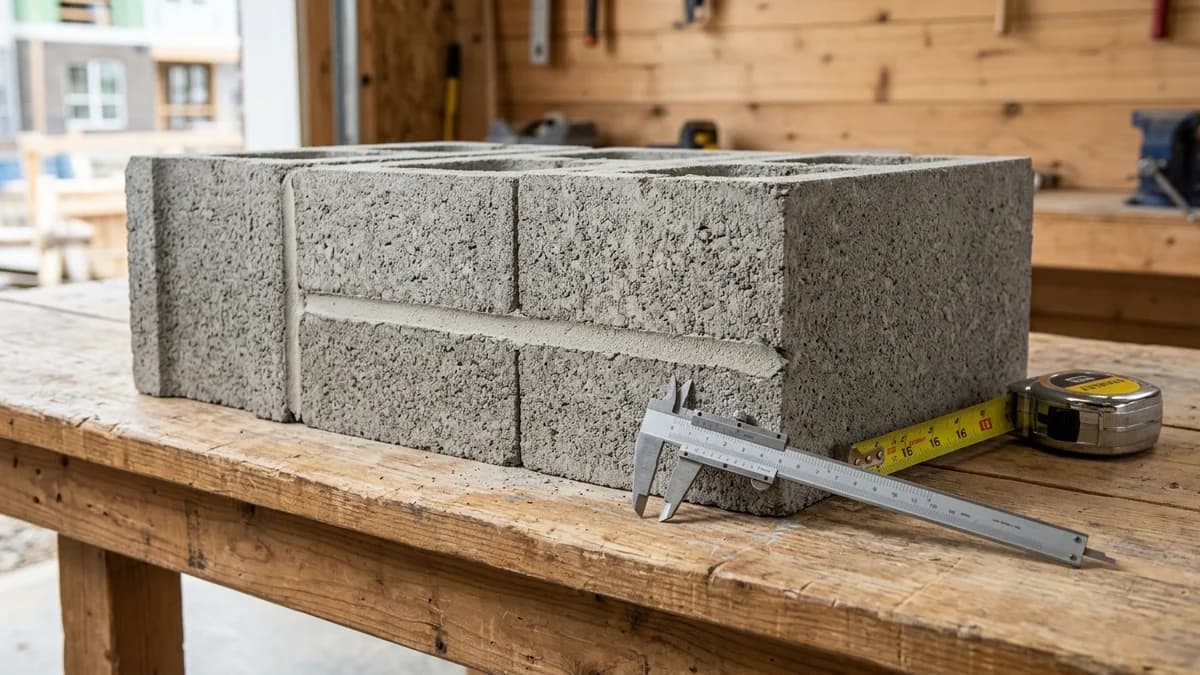
In construction engineering, confusion frequently arises regarding block sizing. Why is an "8x8x16" block not actually 8 inches by 8 inches by 16 inches?
The 3/8-Inch Mortar Joint Principle: Concrete masonry units are designed to be laid with a standardized 3/8-inch (9.5 mm) mortar joint (ASTM C270). To ensure that the finished wall aligns perfectly on an 8-inch modular grid (the universal North American architectural standard), the manufactured physical block must be exactly 3/8 inch smaller in each dimension:
Nominal Dimensions: 8 in × 8 in × 16 in (Width × Height × Length)
Actual Manufactured Size: 7-5/8 in × 7-5/8 in × 15-5/8 in (194 mm × 194 mm × 397 mm)
Actual + 3/8 in Mortar: 8 in × 8 in × 16 in Modular Footprint
Core Voids & Face Shell Geometry: A standard hollow CMU contains two large vertical cavities (cores) that reduce unit weight by approximately 50%. The outer perimeter walls are called face shells (typically 1-1/4 to 1-1/2 inches thick), and the cross-dividers are called webs.
Critically, the face shells are slightly tapered during molding so the steel mold can be stripped cleanly from the fresh block. The top edge of the face shell is wider than the bottom edge. When masons lay blocks, they always lay them with the wide, flared edge facing UP to provide a broader mortar bed for the troweled mortar joint.
5. Structural Codes (IRC R606) & 2026 Takeoff Logistics
Modern residential and commercial block construction is strictly regulated by IRC Section R606 (General Masonry Construction) and TMS 402/602. When engineering a loadbearing foundation, retaining wall, or home structure:
- Modular Block Coverage Rule: Every 100 square feet of wall surface area requires exactly 112.5 blocks (1.125 blocks per square foot). Always add an 8% to 10% allowance for straight walls (12% to 15% for walls with corners and window openings) to cover jobsite cuts and handling breakage.
- Mortar Consumption: Standard face-shell mortar bedding consumes approximately 3 to 3.5 bags (80 lb) of Type S or Type M mortar per 100 blocks laid.
- Core Grout & Reinforcement: Plain, unreinforced block walls lack tensile strength. IRC Section R606 mandates vertical steel rebar (#4 or #5 bars spaced 16, 32, or 48 inches on center) placed inside the hollow block cores. The cavities are then solid-grouted with coarse pea-gravel grout (ASTM C476), creating a monolithic reinforced concrete post within the block wall. Solid-grouting 8-inch CMUs requires approximately 0.74 cubic yards of grout per 100 blocks.
- 2026 Pallet Logistics: Blocks are delivered on wooden pallets containing 108 to 120 standard 8-inch units. A single pallet of standard medium-weight blocks weighs approximately 3,600 to 4,000 lbs. Verify that your delivery site has a firm, compacted gravel or concrete driveway that can support a 54,000-lb flatbed truck equipped with a moffett forklift.
5 Costly Cinder Block Construction Mistakes to Avoid
1. Using Salvaged Vintage Cinder Blocks for Foundations
Antique coal-cinder blocks from pre-1960 demolitions have low compressive strength (under 800 psi) and high porosity. Reusing them in structural retaining walls or basement foundations invites rapid water infiltration and catastrophic wall collapse.
2. Laying Concrete Blocks with Webs Upside Down
Concrete block face shells are manufactured with a slight draft taper. The wider edge must always face UP to provide a broad shelf for mortar bedding. Laying blocks upside down leaves a razor-thin mortar surface that weakens wall compressive strength.
3. Calculating Wall Lengths with Nominal Dimensions on Dry-Stack
If you dry-stack blocks without mortar, each block measures only 15-5/8 inches long rather than 16 inches. Across a 30-block run, your wall will finish nearly 11-1/4 inches shorter than planned if you forgot to account for absent mortar joints.
4. Rejecting Modern CMUs for Organic Raised Gardens
Passing up durable modern concrete blocks in favor of pressure-treated lumber due to outdated coal ash fears is an expensive mistake. Modern CMUs contain 100% natural limestone and sand, will never rot, and cannot leach harmful chemicals into garden soil.
5. Building Tall Retaining Walls Without Rebar and Grout
Hollow block walls laid without vertical steel rebar and solid core grout possess virtually zero lateral shear resistance. Saturated soil backfill will easily push an unreinforced hollow block wall over within its first heavy rainfall season.
Planning a Cinder Block Wall Project?
Calculate total CMU blocks, pallet counts, mortar bags, vertical rebar, and core grout volume with precision.
Frequently Asked Questions
What are cinder blocks made of, and why are true cinder blocks no longer made?
True historic cinder blocks were manufactured using industrial coal cinders (bottom ash and clinker from coal-fired blast furnaces) mixed with Portland cement and water. Commercial block plants ceased producing true coal cinder blocks decades ago because coal ash produced weak compressive strengths (500 to 800 psi), high moisture absorption, and contained sulfur impurities that corroded internal steel rebar.
Are modern concrete blocks sold at Home Depot safe for vegetable garden beds?
Yes, 100% safe. Modern concrete blocks purchased today from Home Depot, Lowe's, or local masonry supply yards contain zero coal ash. They are manufactured exclusively from clean natural minerals: Portland cement, graded silica sand, and crushed limestone aggregate. They do not leach heavy metals (such as lead, arsenic, or mercury) into organic soil.
How can you tell the difference between a historic cinder block and a modern CMU?
Historic cinder blocks are dark charcoal gray or blackish, feel lightweight (22 to 26 lbs), have a rough crumbly texture, and easily chip when tapped with a screwdriver. Modern ASTM C90 concrete masonry units (CMUs) are light ash gray, have sharp molded square edges, dense uniform texture, and weigh 34 to 42 lbs.
What is the actual physical size of a standard 8x8x16-inch cinder block?
While nominally called an 8x8x16 block, its actual manufactured dimensions are precisely 7-5/8 inches wide, 7-5/8 inches high, and 15-5/8 inches long. The missing 3/8 inch accommodates the standard 3/8-inch (9.5 mm) mortar joint specified in ASTM C270, ensuring modular wall dimensions align exactly on 8-inch horizontal and vertical grids.
How much does a standard concrete block cost in 2026?
In 2026, standard 8x8x16-inch hollow concrete masonry units cost between $1.85 and $2.85 per block at retail building supply centers. When purchased by the full pallet (typically 108 to 120 blocks), unit costs drop to $1.65 to $2.25 per block ($180 to $245 per pallet plus freight delivery).
Building Codes & Primary Standards Cited
Standard Specification for Loadbearing Concrete Masonry Units
Establishes minimum net-area compressive strength (2,000 psi), dimensional tolerances, and mineral aggregate standards for modern CMUs.
Concrete Masonry Unit Physical Properties
National Concrete Masonry Association technical guide defining modular nominal sizing, core void volumes, and face shell mortar bedding.
International Residential Code - General Masonry Construction
Governs wall thickness, grout core filling, vertical rebar spacing, and structural bonding rules for residential masonry construction.
Estimations adhere to standard North American modular 3/8-inch mortar joint physics and 5% to 10% material waste factors. Local municipal building inspectors, stamped architectural blueprints, and local frost depth requirements supersede general reference guidelines.
Popular Quick Estimates
Pre-engineered takeoffs & benchmarks matched to this project
Related Calculators
Specialized tools for foundation, core fill, and budgeting
Straight and multi-wall runs with mortar and waste allowances
Standard 8-inch series wall and reinforcement estimates
Dry block weight, filled core weight and hauling loads
Primer, acrylic block filler and topcoat paint gallons
Blogs & Construction Guides
Technical articles, IRC code standards, rebar schedules & freight logistics
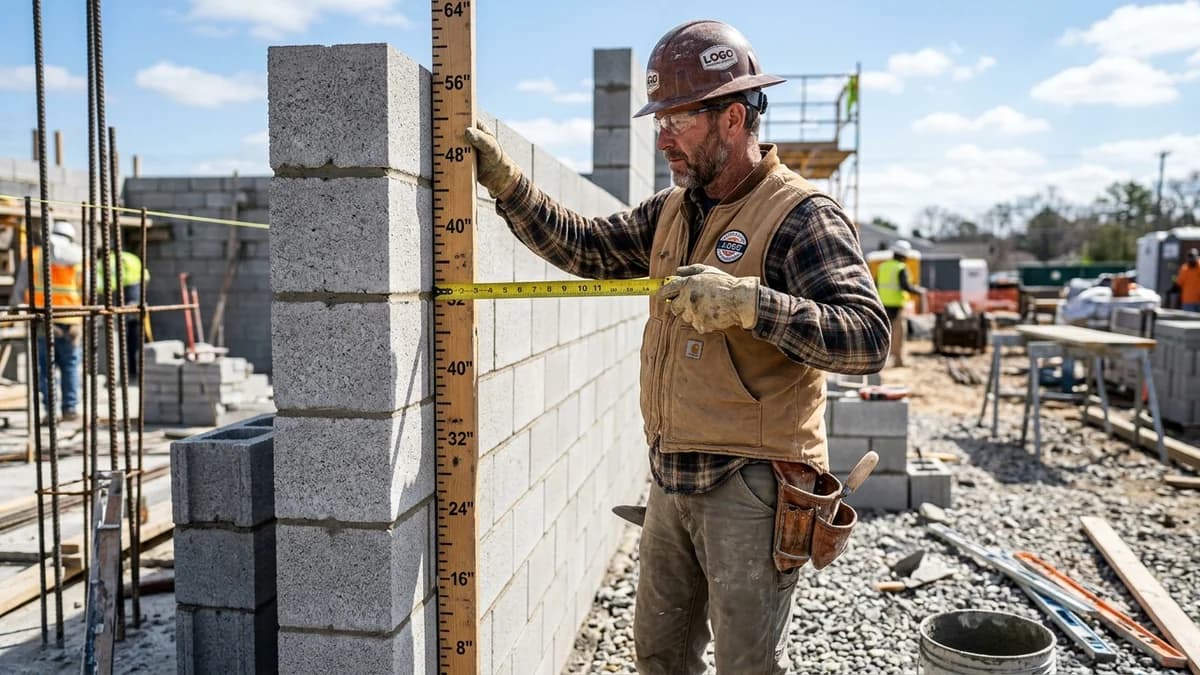
How Tall is a Cinder Block? (Actual vs. Nominal Height)
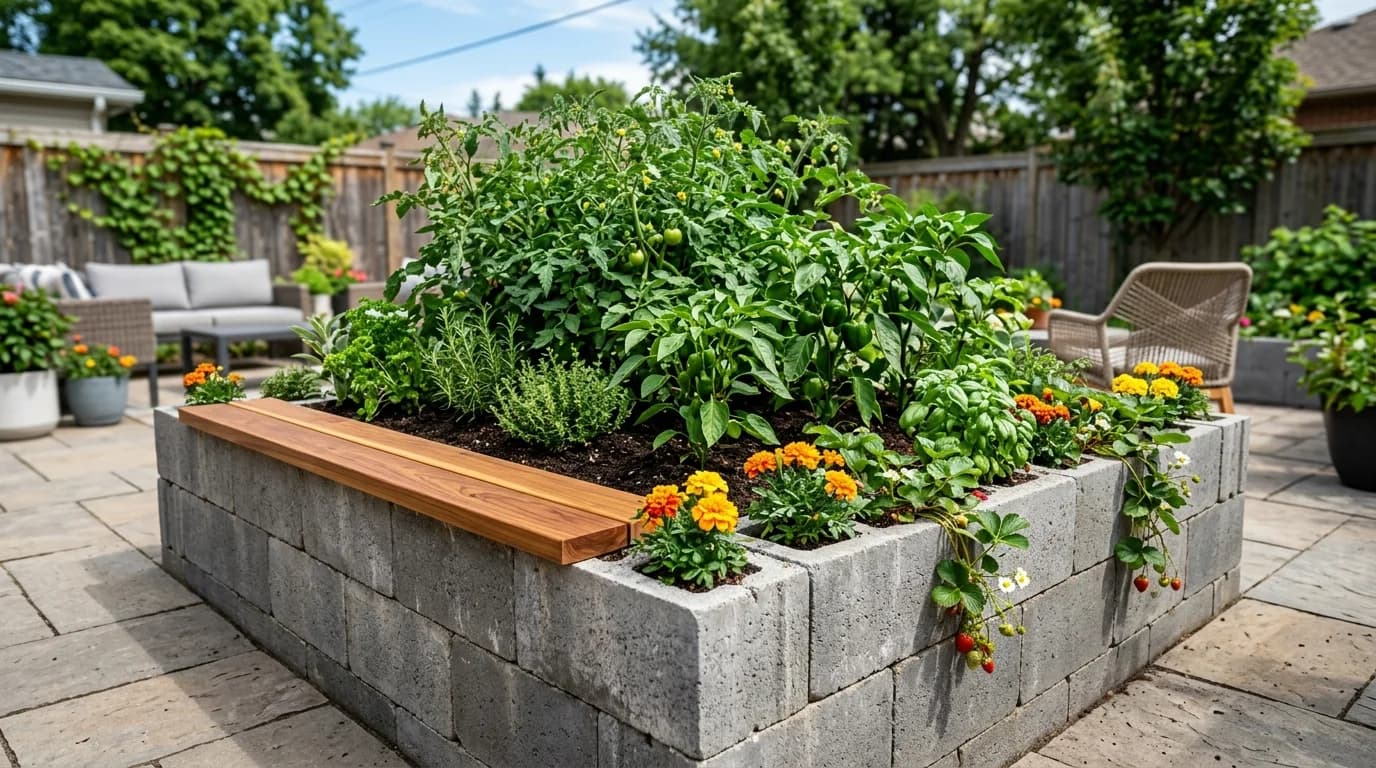
Cinder Block Raised Garden Beds: Are They Food Safe?
How Wide and Long is a Cinder Block?