1. The Raw Ingredients: Modern Concrete vs. Historic Cinders
While people colloquially call them "cinder blocks," modern building codes mandate high-purity engineered concrete (explore CMU vs cinder block differences). A commercial block batch consists of four primary components:
Portland Cement (ASTM C150 Type I/II)
Comprises roughly 8% to 12% of the mix. Ground limestone, clay, and gypsum fired in a rotary kiln at 2,700°F into calcium silicate mineral powder. Acts as the molecular hydraulic glue.
Graded Aggregates (Sand & Crushed Stone)
Comprises 80% to 85% of total volume. A precision blend of washed sharp masonry sand and 3/8-inch minus crushed limestone gravel. For lightweight blocks, expanded shale, clay, or slate (ASTM C331) is substituted.
Minimal Hydration Water
Unlike wet, soupy ready-mix concrete that slumps 4 to 6 inches, block concrete uses only 5% to 8% water. It feels like damp molding sand. If you squeeze a handful, it clumps together without dripping.
Chemical Admixtures
Plasticizers and polymeric water-repellents (e.g. Dry-Block) reduce friction during mold stripping and lower water absorption rates in finished exterior wall installations.
2. The 5-Step Factory Manufacturing Workflow
Computerized Batching & Pan-Mixing
Aggregate bins and cement silos drop measured raw ingredients onto conveyor weigh-belts. Materials drop into a massive counter-current planetary pan mixer. Rotating steel blades blend the dry sand, stone, and cement for 60 seconds before automated moisture sensors spray the exact volume of water required.
Hydraulic Press & Harmonic Vibration
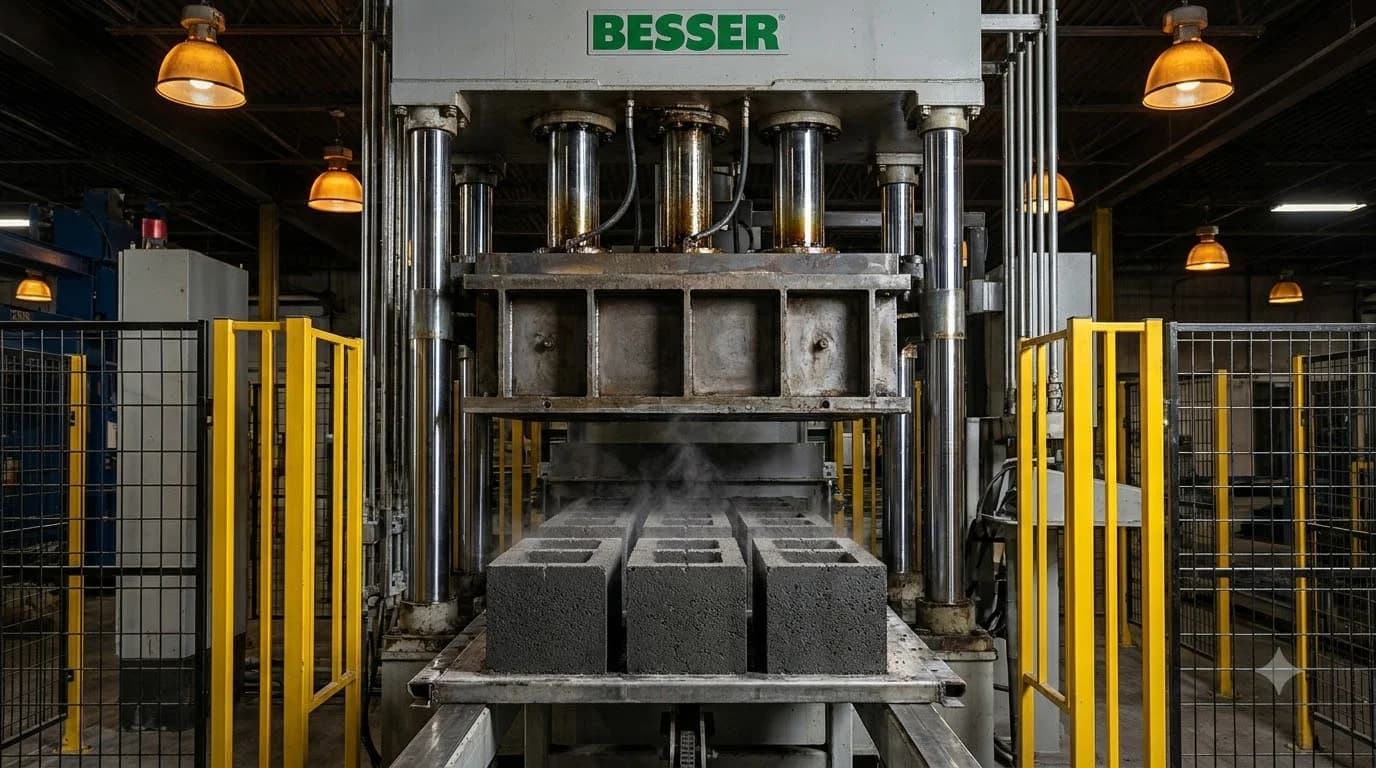
The damp zero-slump mix is augered into the hopper of a multi-million-dollar block machine. A steel production pallet slides beneath a hardened tool-steel mold containing the hollow core shoes. A feeder drawer fills the mold boxes in 1.5 seconds. Massive eccentric electric motors spin at 3,000 RPM, fluidizing the dry mix while a hydraulic compression head exerts over 2,000 PSI down onto the block top.
Instant De-Molding of "Green Blocks"
Because the concrete has zero slump and was compacted into dense mechanical aggregate interlock, the outer steel mold lifts straight up while the tamper head holds the blocks in place. Three perfectly formed 8x8x16 "green" (uncured) blocks emerge resting on the steel pallet without slumping, sagging, or bulging.
Steam Curing Kiln (18 to 24 Hours)
Automated elevator racks load the steel pallets into insulated steam curing kilns. Live steam is injected, maintaining 140°F to 165°F (60°C to 74°C) and 100% relative humidity. In high-pressure autoclave plants, steam reaches 350°F at 150 PSI. The heat accelerates the tricalcium silicate hydration reaction, allowing blocks to reach 1,900+ PSI compressive strength in just 24 hours.
Cubing, Banding & Yard Stacking
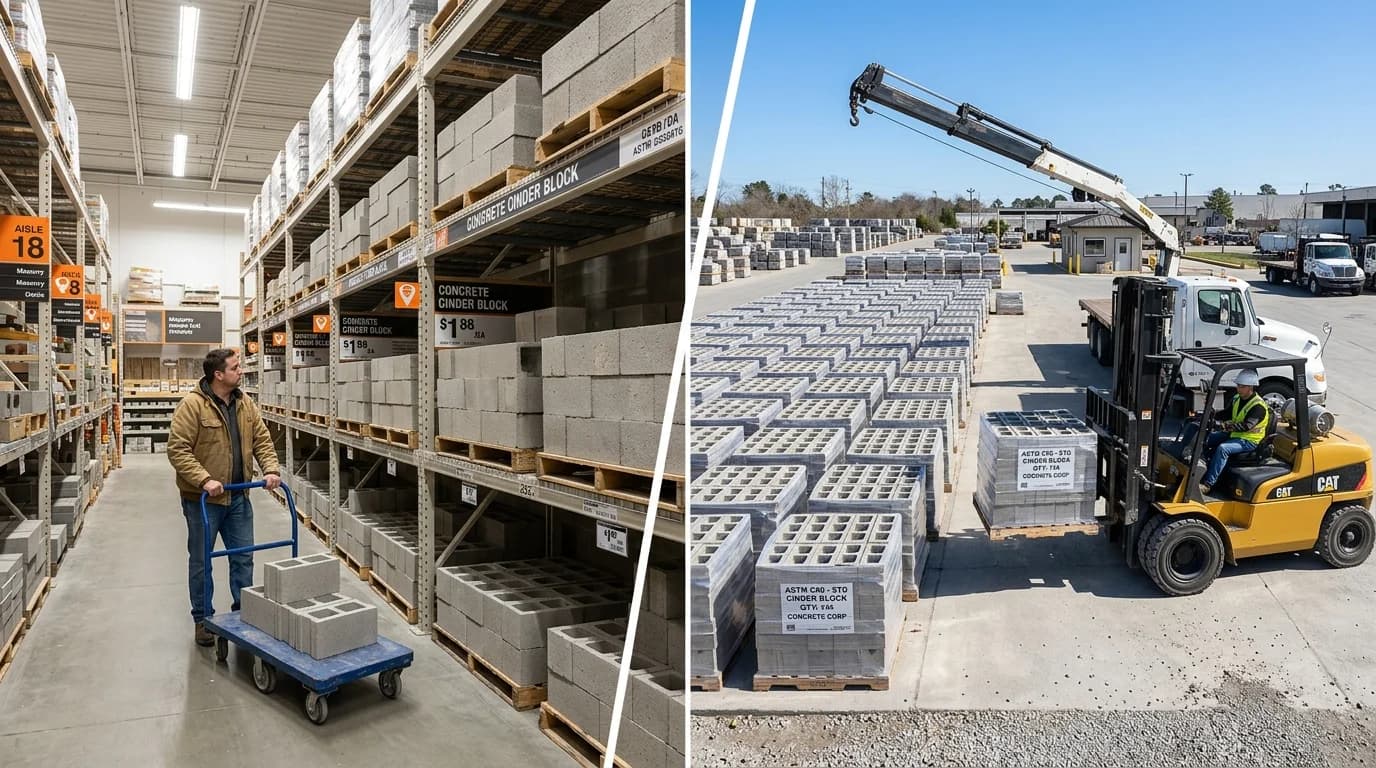
A robotic clamp grabs layers of cured blocks from the pallets and stacks them into interlocking cubes (typically 3 blocks wide by 6 blocks long by 6 courses high = 108 units) (view pallet count guide). Heavy polypropylene plastic bands wrap the cube for forklift transport to the outdoor shipping yard.
3. Quality Control: ASTM C140 Testing Protocol
Before blocks are loaded onto flatbed delivery trucks for Home Depot or commercial jobsites, certified quality technicians test sample batches under ASTM C140 (Sampling and Testing Concrete Masonry Units):
| ASTM Test Property | ASTM C90 Standard Limit | Testing Method (ASTM C140) |
|---|---|---|
| Compressive Strength (Net Area) | 1,900 PSI average (1,700 PSI min individual) | Hydraulic compression press caps block with sulfur compound and crushes to structural failure (view load limits). |
| Water Absorption | Max 13 to 18 lb/cu ft (varies by density) | Block is baked bone-dry, weighed, submerged in water for 24 hours, and weighed again to measure porosity. |
| Dimensional Tolerances | ± 1/8 inch (3.2 mm) from nominal spec | Digital Vernier calipers measure length, height, face-shell thickness (1-1/4" min), and web thickness. |
Check Block Weight & ASTM Density Tiers
Calculate lightweight, medium weight, and normal weight concrete block specs and pallet weights in seconds.
Frequently Asked Manufacturing Questions
Are modern cinder blocks still made with real coal cinders?
No. In the early 20th century (1900 to 1960s), manufacturers used industrial coal bottom ash ('cinders') from coal-fired power plants. Today, commercial CMUs are strictly manufactured under ASTM C90 using Portland cement (ASTM C150 Type I), clean washed masonry sand, crushed limestone or pea gravel, and water. True coal cinder blocks have not been commercially manufactured for decades.
Why don't freshly pressed concrete blocks collapse when removed from the mold?
Modern CMU plants use 'zero-slump' dry-cast concrete with very low water-to-cement ratio (roughly 0.30 to 0.35). The mix has the damp, cohesive consistency of packed beach sand. Under 2,000+ PSI hydraulic compaction and intense harmonic vibration (3,000 RPM), the aggregate particles interlock tightly, allowing the mold to lift off immediately while the 'green block' stands unsupported.
How fast can an automated concrete block plant produce blocks?
A modern automated block machine (such as a Besser or Columbia machine) produces three standard 8x8x16-inch blocks per cycle on a single steel pallet. With machine cycle times operating at 5 to 7 seconds, a single automated manufacturing line produces over 1,500 to 2,000 blocks per hour, or roughly 15,000 to 20,000 units per shift.
Why are concrete blocks cured with steam instead of open air?
Steam curing in sealed kilns or pressurized autoclaves (at 140°F to 180°F and 100% relative humidity) accelerates the chemical hydration of Portland cement without letting water evaporate from the green concrete. Steam curing achieves 70% to 80% of the block's 28-day ASTM C90 compressive strength in just 18 to 24 hours, eliminating drying shrinkage cracks.
Building Codes & Primary Standards Cited
Standard Specification for Loadbearing Concrete Masonry Units
Industrial manufacturing standard governing compressive strength, dimensional tolerances, and core volume minimums.
Standard Test Methods for Sampling and Testing Concrete Masonry Units
Standardized quality testing protocols for axial compression crushing, water absorption, and unit density tiers.
Standard Specification for Portland Cement
Chemical and physical specifications for hydraulic cements used in commercial masonry unit manufacturing.
Estimations adhere to standard North American modular 3/8-inch mortar joint physics and 5% to 10% material waste factors. Local municipal building inspectors, stamped architectural blueprints, and local frost depth requirements supersede general reference guidelines.
Popular Quick Estimates
Pre-engineered takeoffs & benchmarks matched to this project
Related Calculators
Specialized tools for foundation, core fill, and budgeting
Direct wall dimensions with window and door deductions
Step-by-step masonry formulas and corner waste rules
Primer, acrylic block filler and topcoat paint gallons
Reinforced cinder block swimming pool shell construction
Blogs & Construction Guides
Technical articles, IRC code standards, rebar schedules & freight logistics
Where to Buy Cinder Blocks: Big Box vs Masonry Yards
How to Lay Cinder Blocks: Masonry Guide for Beginners
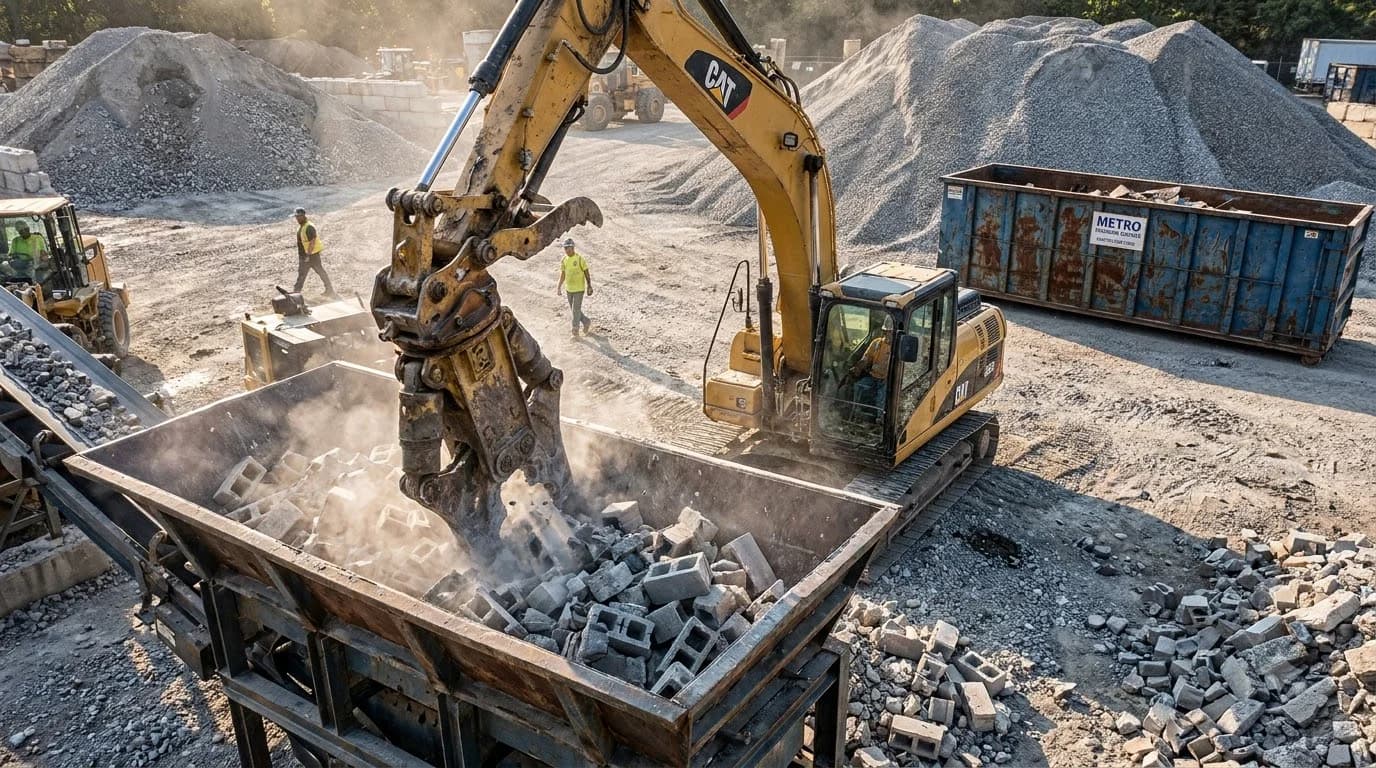
How to Dispose of Cinder Blocks: Free Recycling & Waste