1. The Thermal Science: Why Unlined Cinder Blocks Crack
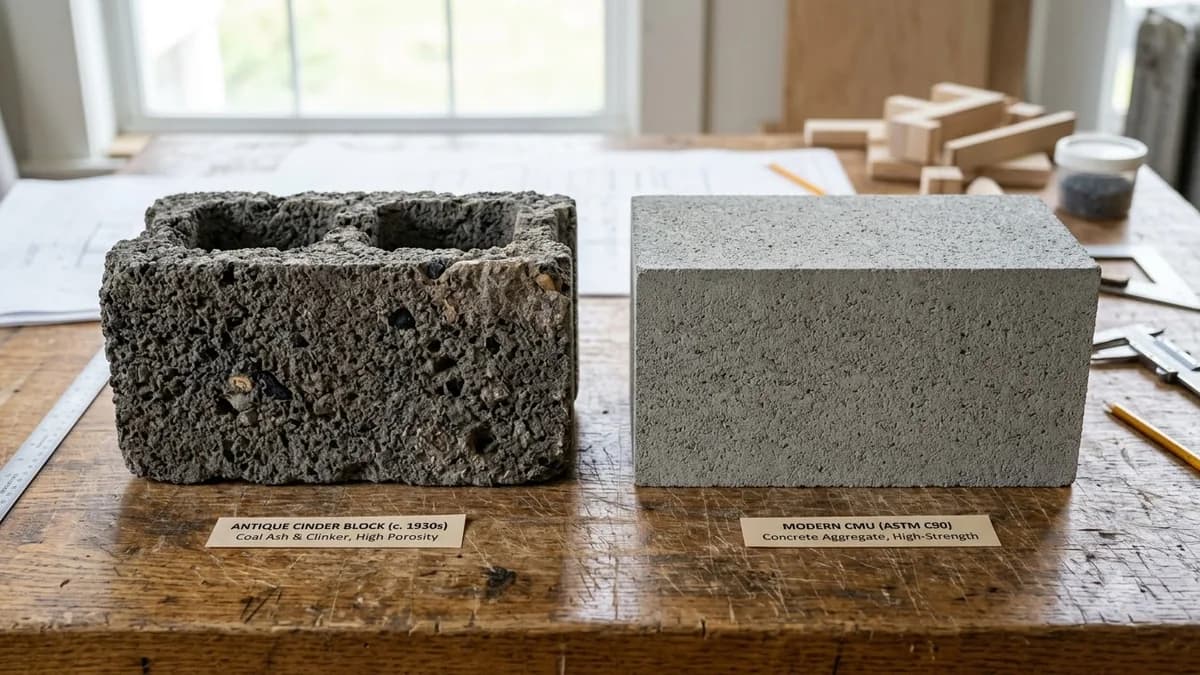
Standard concrete masonry units (ASTM C90) are manufactured from Portland cement, sand, water, and coarse gravel or expanded shale aggregates. They are engineered for high compressive loadbearing strength (1,900+ PSI), not for refractory heat resistance:
Moisture Flash-Boiling (Explosive Spalling)
Concrete is porous and naturally retains atmospheric moisture. When a wood campfire generates temperatures between 800°F and 1,200°F, water inside the concrete matrix flash-boils into high-pressure steam. Because the concrete is dense, the steam cannot escape quickly enough, causing the block surface to blow off in sharp fragments.
Hydration Bond Breakdown (Dehydration)
Above 572°F (300°C), calcium silicate hydrate (the chemical glue holding Portland cement together) chemically decomposes. The concrete loses its structural cohesion, resulting in crumbly, crumbling block walls that fail after just two or three fires.
2. How to Build a Safe Cinder Block Fire Pit
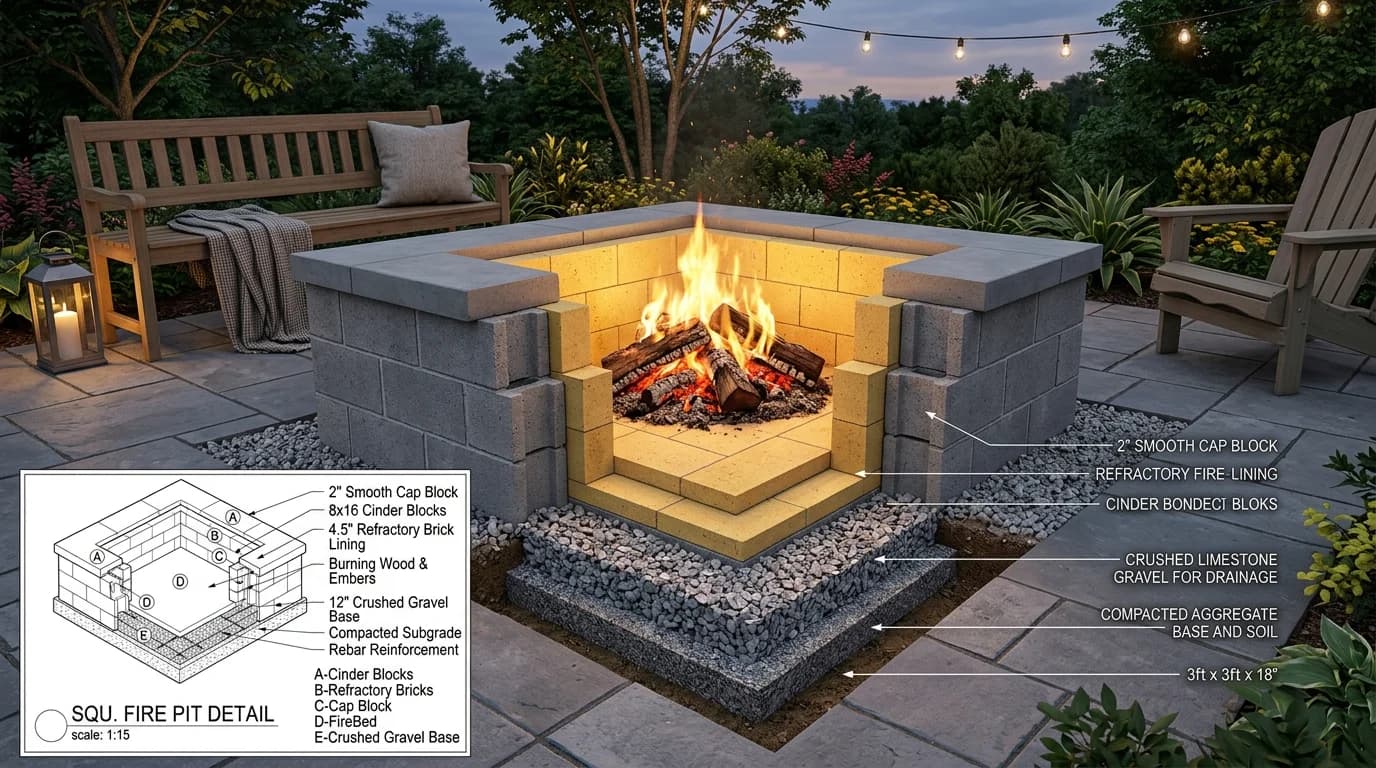
You can safely use cinder blocks for your fire pit, provided you use the blocks strictly as an outer decorative and structural retaining ring while shielding them from direct flame exposure:
Inner Firebrick Liner
Line the interior perimeter with true ASTM C27 refractory firebricks(9" x 4.5" x 2.5"). Firebricks are fired in industrial kilns at 2,000°F+ and absorb thermal shock without expanding or cracking. Bed them in heat-resistant refractory mortar (such as Rutland or Sakrete Refractory Mortar).
Heavy-Gauge Steel Fire Ring
Insert a 10-gauge or 12-gauge rolled steel campfire ring inside the cinder block perimeter. Maintain a 1-inch to 2-inch air gap between the steel insert and the cinder blocks. The air gap acts as an insulator and allows ambient air circulation to keep the blocks cool.
3. Materials List & Cost Breakdown (4x4 Ft Square Pit)
| Material | Quantity Needed | Unit Cost (2026) | Total Budget |
|---|---|---|---|
| Standard 8x8x16 CMU Cinder Blocks | 16 blocks (2 courses high) | $2.25 – $2.65 each | $36 – $42 |
| Solid 2x8x16 Cap Blocks | 8 cap units | $2.10 – $2.40 each | $17 – $19 |
| ASTM C27 Refractory Firebricks | 24 to 28 bricks | $2.50 – $3.25 each | $60 – $91 |
| Crushed Drainage Gravel (#57 Stone) | 3 to 4 bags (0.5 cu ft) | $4.75 per bag | $15 – $19 |
| Landscape Masonry Construction Adhesive | 2 tubes (exterior polyurethane) | $7.50 per tube | $15 |
| Total DIY Turnkey Budget | Full Kit | — | $143 – $186 |
4. Step-by-Step Construction Guide
Site Selection & Clearance (NFPA 211 Code)
Choose a location at least 15 to 25 feet away from your home, wooden fences, shed, and overhanging tree canopies. Check local municipal burn ordinances for clearance requirements.
Excavate & Install Gravel Drainage Bed
Dig down 6 to 8 inches across a 5x5-foot footprint. Tamp the subsoil until firm. Pour 4 to 5 inches of angular #57 crushed drainage stone (or crushed granite) and tamp flat with a hand tamper. Never pour solid concrete on the pit floor; gravel lets rainwater drain away so your fire pit doesn't turn into a muddy pond.
Lay the 1st Cinder Block Base Course
Set 8 cinder blocks to form a 4x4-foot perimeter on top of the gravel bed (two blocks per side). Use a 4-foot torpedo level across each block and diagonally across corners. Tap blocks with a rubber mallet until the entire square is perfectly level.
Stagger the 2nd Course & Leave Air Vents
Overlap the 2nd course in a running bond pattern so vertical joints don't align. On two opposing sides, turn one block so its hollow core faces outward; this creates passive air draft intake vents that feed oxygen to your wood fire, virtually eliminating excess smoke.
Install Firebrick Liner & Solid Cap Blocks
Stand your refractory firebricks vertically against the inside face of the cinder blocks. Finally, glue 2-inch solid cap blocks across the top course using high-temperature exterior polyurethane landscape adhesive to cover the block core holes and provide a clean bench top.
Need to calculate total block counts for outdoor builds?
Use our instant estimator for square footages, courses, and pallet requirements.
Frequently Asked Questions
Will cinder blocks explode in a fire pit?
Yes, unlined cinder blocks can crack violently or 'explode' (known as thermal spalling). Standard concrete masonry units contain microscopic moisture pockets within their aggregate. When exposed to direct campfire heat exceeding 500°F to 900°F, trapped water flash-vaporizes into high-pressure steam, violently blowing off concrete shards.
How can you safely use cinder blocks for a fire pit?
To build a safe cinder block fire pit, you must install an internal barrier between the flames and the concrete blocks. You can line the interior with ASTM C27 refractory firebricks using heat-resistant refractory mortar (ASTM C199), or insert a heavy-gauge galvanized or rolled steel fire ring with a 1-inch air gap.
How many cinder blocks do I need for a standard backyard fire pit?
A standard 4x4-foot square fire pit requires 16 to 24 standard 8x8x16 cinder blocks (2 to 3 courses high), plus 8 solid 2-inch cap blocks to seal the top core holes, and approximately 25 to 30 refractory firebricks for the inner combustion chamber.
Can you use mortar on a cinder block fire pit?
Standard Type N or Type S Portland cement mortar will crumble and crack under direct fire pit temperatures. For the exterior structure, dry-stacking or landscape masonry adhesive works well; for any joint in direct contact with heat, you must use high-temperature refractory mortar rated for 2,000°F+.
Building Codes & Primary Standards Cited
Standard Specification for Loadbearing Concrete Masonry Units
Specifies aggregate composition and moisture limits; standard CMUs are non-refractory materials.
Standard Classification of Fireclay and High-Alumina Refractory Brick
Defines temperature tolerance classes for refractory firebricks rated for open flame exposure exceeding 2,000°F.
Standard for Chimneys, Fireplaces, Vents, and Solid Fuel-Burning Appliances
Governs outdoor clearance zones (minimum 15-25 ft from combustible structures) and fire pit floor construction.
Estimations adhere to standard North American modular 3/8-inch mortar joint physics and 5% to 10% material waste factors. Local municipal building inspectors, stamped architectural blueprints, and local frost depth requirements supersede general reference guidelines.
Popular Quick Estimates
Pre-engineered takeoffs & benchmarks matched to this project
Related Calculators
Specialized tools for foundation, core fill, and budgeting
Straight and multi-wall runs with mortar and waste allowances
Dry block weight, filled core weight and hauling loads
Standard 8-inch series wall and reinforcement estimates
Direct wall dimensions with window and door deductions
Blogs & Construction Guides
Technical articles, IRC code standards, rebar schedules & freight logistics
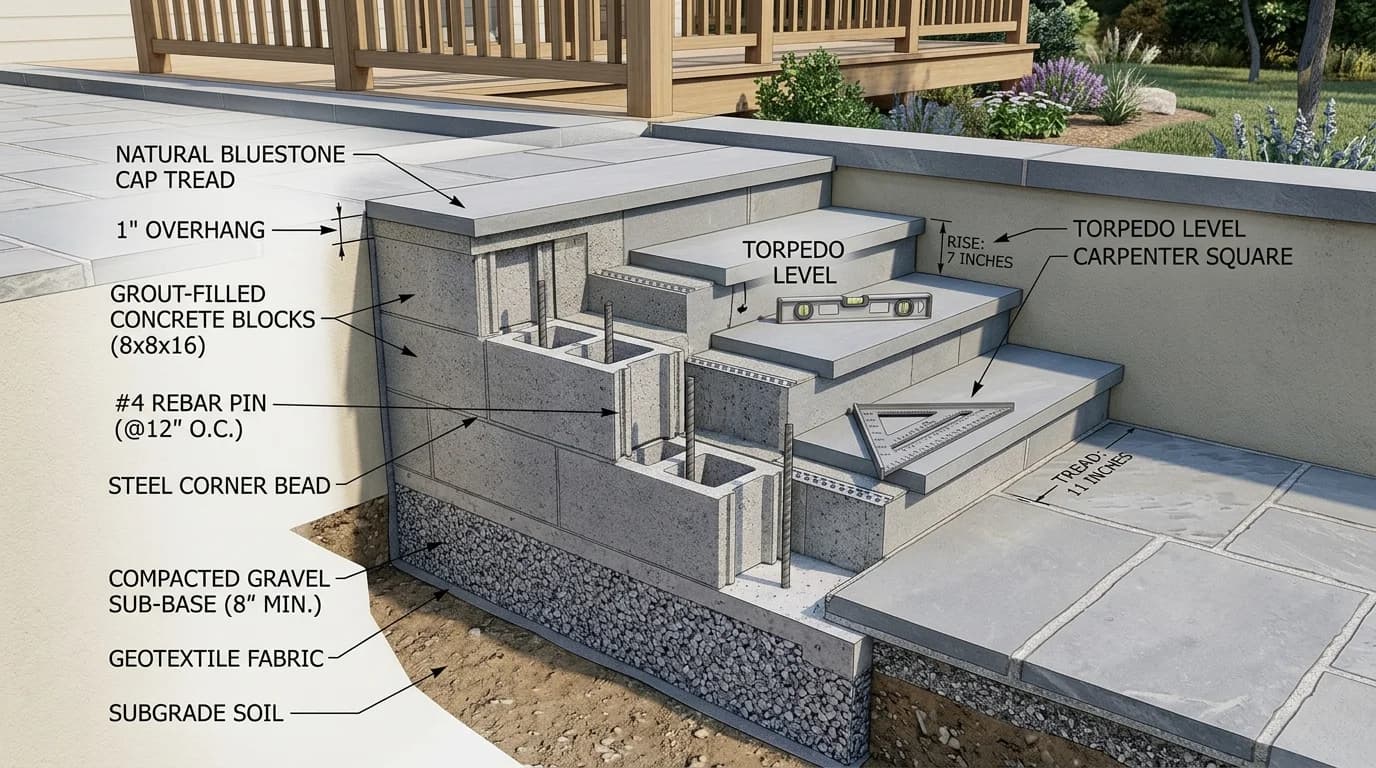
How to Build Outdoor Cinder Block Steps & Stairs
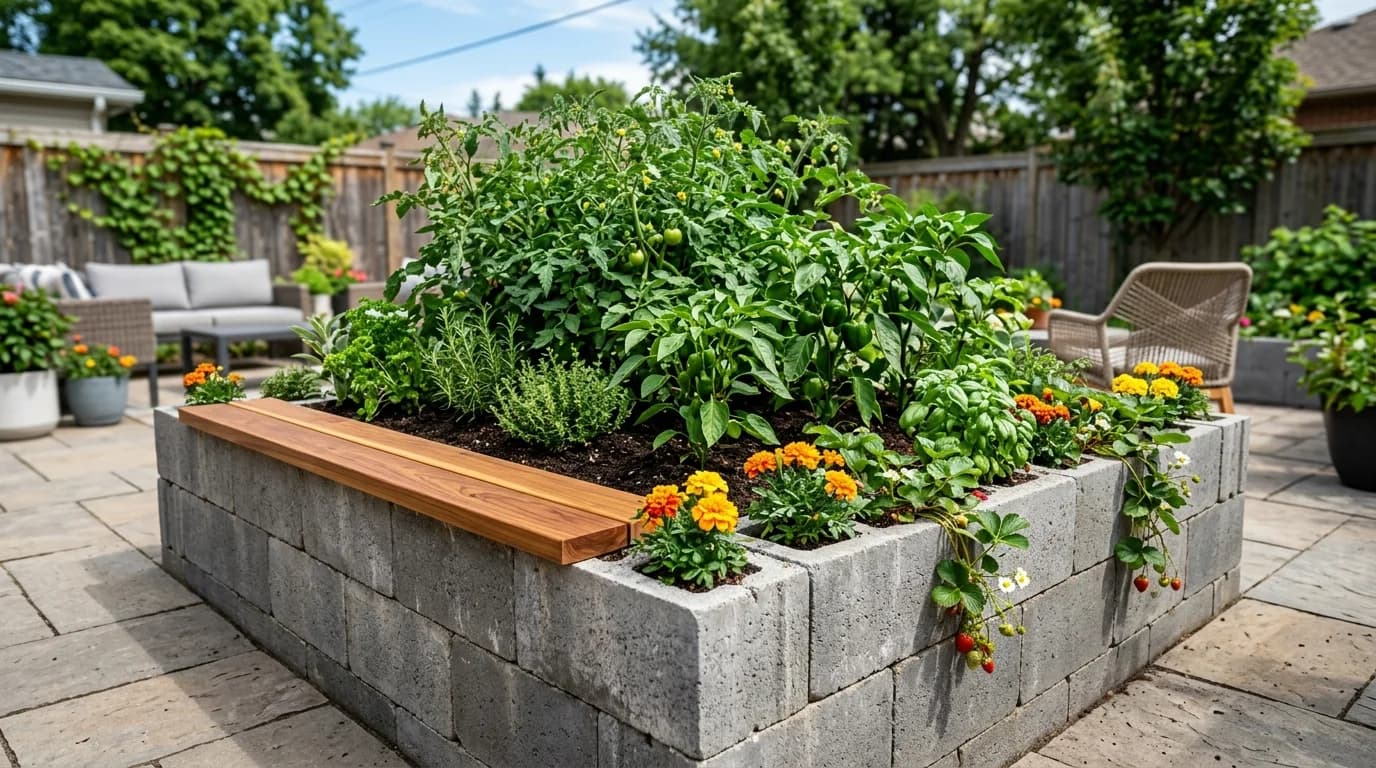
Cinder Block Raised Garden Beds: Are They Food Safe?
CMU vs Cinder Block vs Concrete Block