1. The Chemistry of Efflorescence: Why Cinder Blocks Turn White
Seeing a chalky white film spread across your basement, retaining wall, or foundation stem wall is alarming, but understanding the chemistry reveals exactly how to eradicate it. Efflorescence is not mold, rot, or cement disintegration—it is the crystallization of water-soluble mineral salts deposited on the face shell of masonry as internal moisture evaporates.
For efflorescence to occur on concrete masonry units (CMU), three specific environmental conditions must simultaneously exist:
- Soluble mineral salts present within the cinder block cellular matrix, mortar joints, or surrounding backfill soil.
- Liquid water or moisture vapor migrating through the wall to dissolve those salts.
- An open capillary path and evaporative boundary at the wall surface where moisture evaporates into the atmosphere, leaving dry salt crystals behind.
During the hydration of Portland cement, tricalcium silicate reacts with water to yield calcium silicate hydrate (C-S-H) binder and free calcium hydroxide [Ca(OH)₂], also known as Portlandite or slaked lime. While Ca(OH)₂ is moderately water-soluble (1.7 g/L at 20°C), when capillary moisture carries it to the outer block surface, it reacts with atmospheric carbon dioxide [CO₂]. This reaction precipitates calcium carbonate [CaCO₃]—an insoluble mineral identical to limestone. Once this reaction completes, simple water washing will never dissolve the crust.
Primary vs. Secondary Efflorescence
In concrete masonry construction, engineers categorize salt deposits into two distinct types based on their timeline and moisture source:
Appears during initial construction or within weeks of laying blocks. Driven by the residual water of convenience added to batch mixes and mortar joints. As this initial mix water leaves the wall, it brings loose alkali salts to the surface. It is typically soft, powdery, and easily wiped away.
Develops months or years after construction. Fueled by recurring exterior moisture intrusion—such as high groundwater tables, missing weep holes in retaining walls, gutter downspout pooling, or poor surface grading. This deposit consists of dense, bonded calcium carbonate crusts.
Common Salt Minerals Found on Concrete Block Walls
| Mineral Compound | Chemical Formula | Water Solubility | Physical Appearance | Removal Strategy |
|---|---|---|---|---|
| Calcium Carbonate | CaCO₃ | Insoluble (0.013 g/L) | Dense, hard, chalky white crust | Diluted sulfamic acid wash |
| Sodium Sulfate | Na₂SO₄ | High (195 g/L) | Fluffy, powdery white crystals | Dry stiff-bristle brushing |
| Calcium Sulfate (Gypsum) | CaSO₄ • 2H₂O | Low (2.4 g/L) | Thin white-gray hazy haze | Warm sulfamic acid + scrubbing |
| Potassium Sulfate | K₂SO₄ | High (111 g/L) | Fine granular crystalline dust | Dry wire-free brushing + vacuum |
2. Why Muriatic Acid Is Dangerous for CMU Walls (And What to Use Instead)
Historically, masons reached for raw muriatic (hydrochloric, HCl) acid to blast away efflorescence. While muriatic acid dissolves calcium carbonate rapidly, it introduces four severe hazards when applied to concrete masonry units:
Muriatic acid volatilizes instantly, emitting choking hydrogen chloride gas. In confined basement or crawl space environments, these corrosive fumes destroy lung tissue, rust steel furnace heat exchangers, eat copper pipe fittings, and corrode sensitive home electrical panels.
Raw hydrochloric acid does not discriminate between surface salt and the cement paste binding your wall together. It attacks mortar beds, stripping the cement cream, softening joints, and exposing porous sand aggregate to accelerated freeze-thaw decay.
Muriatic acid leaches iron minerals from aggregates in standard ASTM C90 concrete blocks, oxidizing into unsightly, permanent rusty-yellow streaks across previously uniform gray masonry.
Free chloride ions (Cl⁻) seep into hollow block cores, depassivating the protective alkaline layer around embedded structural steel rebar, causing rust expansion and internal spalling.
Modern masonry restoration contractors rely on sulfamic acid crystals (H₃NSO₃) or buffered organic acid cleaners. Sulfamic acid is a dry, odorless crystalline solid that safely dissolves in warm water. It selectively attacks calcium carbonate:
The reaction converts hard calcium carbonate into water-soluble calcium sulfamate, producing zero toxic fumes, zero yellow iron staining, and virtually zero degradation of sound ASTM C270 Type M or Type S mortar joints.
Efflorescence Cleaner Chemistry Comparison
| Cleaner Type | Active Chemical | Fume Hazard | Mortar Impact | Indoor Suitability |
|---|---|---|---|---|
| Mechanical Dry Brush | None (Physical) | None | Zero damage | Excellent (Step 1) |
| Sulfamic Acid Wash | H₃NSO₃ (Solid crystals) | Odorless / Zero fumes | Gentle on joints | Recommended (Contractor choice) |
| Buffered Phosphoric Acid | H₃PO₄ + surfactants | Minimal odor | Safe when diluted | Good for finished spaces |
| Household White Vinegar | 5% CH₃COOH | Mild vinegar odor | None | Only for light powdery film |
| Muriatic Acid (Raw) | 20°–22° Baumé HCl | Severe toxic gas | Pits & eats mortar | Prohibited Indoors |
3. Step-by-Step Efflorescence Removal Protocol (Contractor-Grade)
Follow this sequential five-step contractor protocol to permanently clean concrete block walls without scratching face shells, dissolving mortar joints, or trapping moisture inside the cores.
Step 1: Mechanical Dry Brushing & Vacuum Extraction
Never spray water on fresh efflorescence. Water instantly dissolves loose sodium and potassium sulfates, allowing liquid to wick them back into the block's capillary matrix where they will dry and reappear.
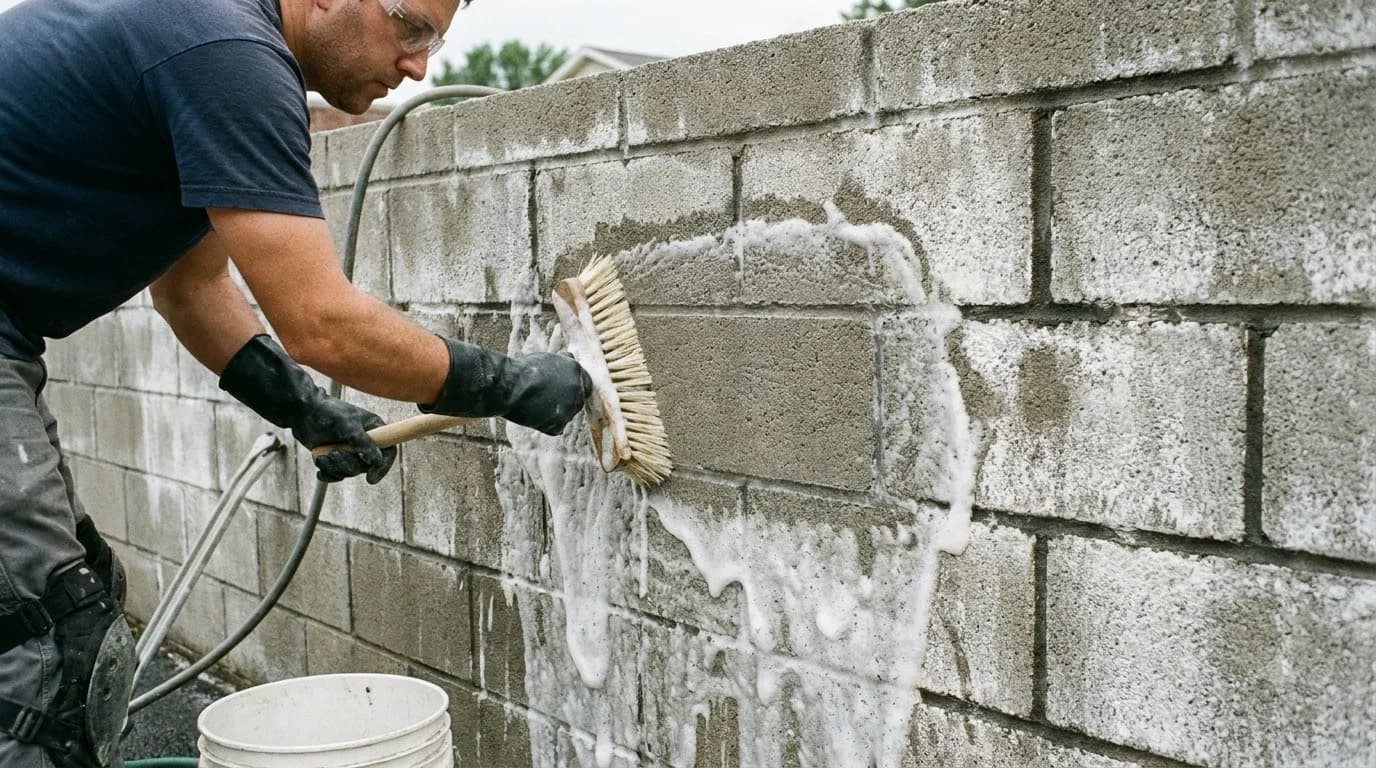
- Use a stiff polypropylene, tampico, or nylon masonry brush to vigorously sweep away loose salt powder.
- For stubborn crystalline patches, use a stiff brass-wire brush.
- Crucial Warning: Never use a carbon steel wire brush. Steel bristles break off and lodge in the porous CMU surface, rusting into orange iron streaks within 48 hours.
- Capture falling salt dust with a shop vacuum equipped with a HEPA filter to keep airborne minerals out of your lungs and finished floor areas.
Step 2: Saturated Surface Dry (SSD) Water Pre-Wetting
Before applying any chemical cleaner or acid wash, thoroughly pre-wet the concrete block wall with clean tap water until the masonry reaches a Saturated Surface Dry (SSD) condition.
Dry cinder blocks act like cellular sponges. If you spray acid directly onto a dry wall, capillary suction pulls the acid deep into the CMU core cavities where it cannot be flushed away, weakening internal concrete bonds. Pre-wetting fills the deep micro-pores with water, forcing the acid to remain on the exterior surface where the calcium carbonate crust lives.
Step 3: Sulfamic Acid Cleaning Application (H₃NSO₃)
For bonded calcium carbonate crusts that resist dry brushing, mix a gentle sulfamic acid solution:
- Mixing Ratio: Dissolve 0.5 to 1.0 pound of sulfamic acid crystals per 1 gallon of warm water (approx. 6% to 10% concentration) in a clean plastic 5-gallon pail.
- Application: Apply the solution using an acid-resistant plastic compression sprayer or an acid-resistant tampico masonry brush.
- Direction: Always apply from bottom to top. Applying from the top down causes acidic runs that streak into dry block below, creating permanent discoloration lines.
- Dwell Time: Allow the solution to react on the wall for 3 to 5 minutes. You will see gentle foaming as carbon dioxide gas bubbles off.
- Agitation: Scrub stubborn areas with a stiff-bristle nylon brush. Do not allow the acid solution to dry on the wall surface.
Step 4: Neutralization and Copious Flood Rinsing
Once the calcium carbonate has dissolved into soluble calcium sulfamate, thoroughly neutralize and rinse the masonry:
- Neutralizing Wash: Spray the wall with a mild alkaline solution consisting of 1 cup of household baking soda (sodium bicarbonate) dissolved in 2 gallons of water. This terminates all residual acid action instantly.
- High-Volume Flush: Flood the wall with copious fresh water working from top to bottom to flush all salts and neutralized acids down to floor drains or outdoor drainage swales.
- Pressure Washer Rules: If using a pressure washer on exterior walls, keep the pressure strictly below 1,000–1,500 PSI with a wide 40-degree fan nozzle held at least 14 inches from the block face. Excessive pressure damages the concrete aggregate cream and strips mortar joints.
Step 5: Full Drying & Penetrating Silane-Siloxane Sealer
Cleaning removes today's salts; sealing prevents tomorrow's return. However, sealing must be executed with precision:
- Moisture Testing (ASTM D4263): Allow the cinder block wall to dry for a minimum of 48 to 72 hours with good cross-ventilation or industrial dehumidification. Tape a 16x16-inch clear plastic sheet to the block. If moisture droplets condense beneath it within 24 hours, wait another 48 hours before sealing.
- Avoid Topical Paints/Epoxies: Film-forming paints (including heavy acrylics and elastomeric coatings) trap vapor drive, leading to blistering, white hazing, and peeling sheets.
- Use Penetrating Silane-Siloxane: Apply a breathable penetrating sealer containing 7% to 10% active silane/siloxane solids. The tiny silane molecules penetrate 1/8 to 3/8 inch into the porous concrete, crosslinking with silicates to create an invisible hydrophobic barrier that repels liquid water while remaining 100% vapor permeable.
4. Eliminating the Root Moisture Source (Permanent Prevention)
Chemical removal without moisture mitigation is an exercise in futility. Efflorescence is merely a symptom; water infiltration is the underlying structural disease. To ensure efflorescence never reappears on your cinder block wall, inspect and correct the following five water entry pathways:
1. Surface Grading & Soil Slope (IRC Section R401.3)
Building codes require exterior soil to fall at least 6 inches within the first 10 feet away from foundation walls. Flat or negative-slope flowerbeds trap storm runoff against basement cinder blocks, generating hydrostatic pressure that forces moisture through CMU cells.
2. Roof Gutter & Downspout Discharge
Clogged gutters or downspouts that discharge within 2 to 3 feet of the foundation saturate the ground directly adjacent to below-grade blocks. Install rigid 4-inch PVC underground drain extensions discharging at least 10 feet away from the structure.
3. Subsurface French Drains & Exterior Waterproofing
For continuous efflorescence on basement foundation walls, excavate the exterior perimeter to the footing, apply a cold-applied rubberized asphalt membrane, install rigid dimpled drainage board, and bed a perforated Schedule 40 French drain wrapped in non-woven geotextile fabric.
4. Wall Cap Flashing & Retaining Wall Weep Holes
Exterior freestanding and retaining walls must feature sloped capstones or sheet metal coping to prevent rainwater from infiltrating hollow CMU cores from the top. For earth-retaining walls, install 2-inch PVC weep holes every 4 to 6 feet along the bottom course bedded in clean crushed drainage stone.
5. Interior Humidity & Dehumidification
Basement cinder block walls naturally permit slow water vapor migration from damp soil. If ambient indoor relative humidity exceeds 60%, moisture condensation accelerates surface salt crystallization. Maintain basement relative humidity below 50% using an automatic commercial-grade dehumidifier.
5. Diagnostic Guide: Efflorescence vs. White Mold vs. Spalling
Homeowners frequently confuse white efflorescence salts with hazardous white mold (*Aspergillus* or *Penicillium*) or structural masonry spalling. Use this field diagnostic checklist to accurately identify the condition:
| Diagnostic Trait | Efflorescence | White Mold | Concrete Spalling |
|---|---|---|---|
| Substance Nature | Inorganic mineral salt crystals | Organic living fungal organism | Physical breakage of concrete face |
| Water Dissolution Test | Dissolves or wicks (sodium/potassium) | Does not dissolve; floats or smears | Not applicable (hard stone) |
| Tactile Texture | Chalky, gritty, crumbles to dry dust | Soft, velvety, fibrous, or slimy | Hard, jagged, brittle concrete fragments |
| Odor Profile | Odorless mineral deposit | Musty, earthy, pungent odor | Odorless stone dust |
| Host Substrates | Only on porous masonry, stone, concrete | Grows on wood, drywall, carpet, dust | Concrete, brick, or mortar face shells |
| Structural Threat | Aesthetic warning sign of moisture | Respiratory allergen health hazard | Direct loss of structural wall section |
When salt crystallization occurs below the surface within internal concrete pores rather than on the face shell, it is called subflorescence or cryptoflorescence. As expanding salt crystals grow under confined osmotic pressures exceeding 2,000–4,000 psi, they exceed the tensile strength of the concrete matrix, blowing off the outer 1/8 to 1/2 inch of the block face shell (spalling). Immediate treatment with penetrating water repellents is essential to halt this cycle.
Frequently Asked Questions
What causes white efflorescence powdery deposits on cinder block walls?
Efflorescence forms when liquid water migrates through the porous cellular matrix of concrete masonry units (CMU), dissolving water-soluble mineral salts—primarily free calcium hydroxide leached from hydrating Portland cement. As the moisture evaporates at the block face shell, the dissolved salts crystallize. The calcium hydroxide reacts with atmospheric carbon dioxide (Ca(OH)2 + CO2 -> CaCO3 + H2O) to precipitate insoluble calcium carbonate crusts.
Why does efflorescence return after power washing with water?
Blasting efflorescence with plain water simply dissolves the surface salt crystals and drives them back into the block's open capillary pores. As the concrete block wall dries over the next 48 to 72 hours, capillary suction and moisture vapor drive pull those dissolved mineral salts right back to the exterior face shell, where they recrystallize in an identical chalky white pattern.
Why should you avoid using muriatic acid on interior cinder block walls?
Muriatic (hydrochloric) acid off-gasses severe, toxic hydrogen chloride fumes that accumulate in enclosed basements or crawlspaces, corroding copper plumbing, electrical panels, and HVAC heat exchangers. Furthermore, aggressive muriatic acid attacks ASTM C270 mortar binders, strips aggregate cream, stains gray masonry yellow, and drives corrosive chloride ions inward toward embedded steel rebar.
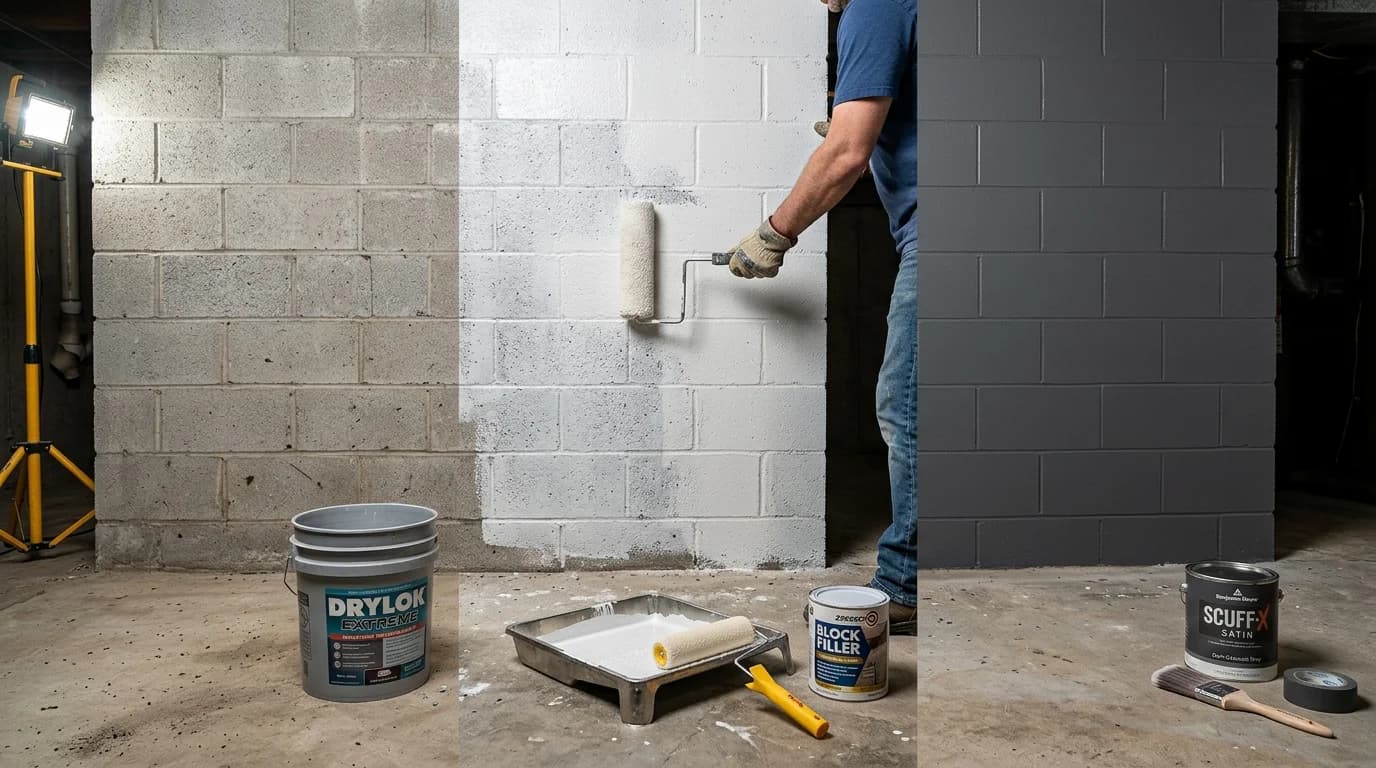
Can I paint or apply Drylok over active efflorescence on cinder blocks?
Never apply waterproof paint, Drylok, or film-forming acrylic sealers over active efflorescence. Topical coatings trap internal moisture vapor behind a plastic film. As continuous vapor drive pushes water against the back of the coating, hydrostatic pressure causes catastrophic blistering, chalky hazing, and delamination within 6 to 18 months.
What is the best type of sealer to prevent efflorescence on cinder blocks?
The industry standard is a 100% breathable penetrating silane-siloxane sealer (typically 7% to 10% active solids). Unlike topical film-formers, silane-siloxane penetrates 1/8 to 3/8 inch into the concrete block pores, chemically crosslinking to internal silicates to create a deep hydrophobic barrier. It stops exterior liquid rain from entering while leaving capillary pores open to allow internal moisture vapor to safely escape.
How do I test if my concrete block wall is completely dry before sealing?
Perform the ASTM D4263 standard plastic sheet test: cut a 16-by-16-inch square of clear 4-mil polyethylene plastic, tape all four perimeter edges airtight to the bare cinder block wall with heavy vapor-barrier tape, and wait 24 hours. If any condensation droplets form on the plastic underside or the block turns darker with dampness, the wall contains too much residual moisture to safely seal.
Reference Standards & Source Catalogs
Standard Specification for Loadbearing Concrete Masonry Units
Defines compressive strength, absorption limits, and density classifications for loadbearing hollow and solid concrete blocks.
ASTM standards catalogStandard Specification for Mortar for Unit Masonry
Specifies proportion and property specifications for Type M, S, and N cement-lime mortars, including durability and joint performance.
ASTM standards catalogStandard Test Method for Indicating Moisture in Concrete by the Plastic Sheet Method
Standardized protocol using clear polyethylene sheet and moisture-barrier tape to verify masonry dryness prior to sealer or coating application.
ASTM standards catalogControl and Removal of Efflorescence on Concrete Masonry
Concrete Masonry & Hardscapes Association authoritative technical guide on efflorescence chemistry, preventative design, and chemical cleaning protocols.
CMHA technical resourcesInternational Residential Code: Drainage and Surface Grading
Mandates minimum slope requirements for surface drainage away from foundation walls to prevent subterranean water intrusion.
ICC code libraryPublisher links identify where to find the applicable standard; they do not establish certification or confirm every statement on this page. Check the edition, manufacturer data, and local adoption. Material takeoffs are planning estimates, and structural dimensions and reinforcement must come from the project design.
Popular Quick Estimates
Illustrative takeoffs with stated assumptions; verify project quantities
Cinder Blocks for a 10x10 Wall: Exact Count & Mortar Math
Standard residential yard & garden wall run
Cinder Block Grout Calculator: Cubic Yards & Bag Math
Example: 0.22 ft³ cores × 1/6 fill; excludes waste
20x20 Wall Estimate
Large perimeter enclosure or garage structure
100 Sq Ft Sizing
Standard 8x8x16 nominal coverage benchmark
Related Calculators
Specialized tools for foundation, core fill, and budgeting
Estimate CMU blocks, mortar bags, rebar, and core-fill grout for detached sheds, garages, and commercial outbuildings. Deduct doors and window openings.
Subgrade walls, soil retention, waterproofing and grout
Calculate cinder block fence materials: 6-ft and 8-ft privacy walls, footing concrete yardage, bond beam rebar, mortar bags, and cost per linear foot.
Straight and multi-wall runs with mortar and waste allowances
Blogs & Construction Guides
Practical guides to block sizing, material estimates and project planning
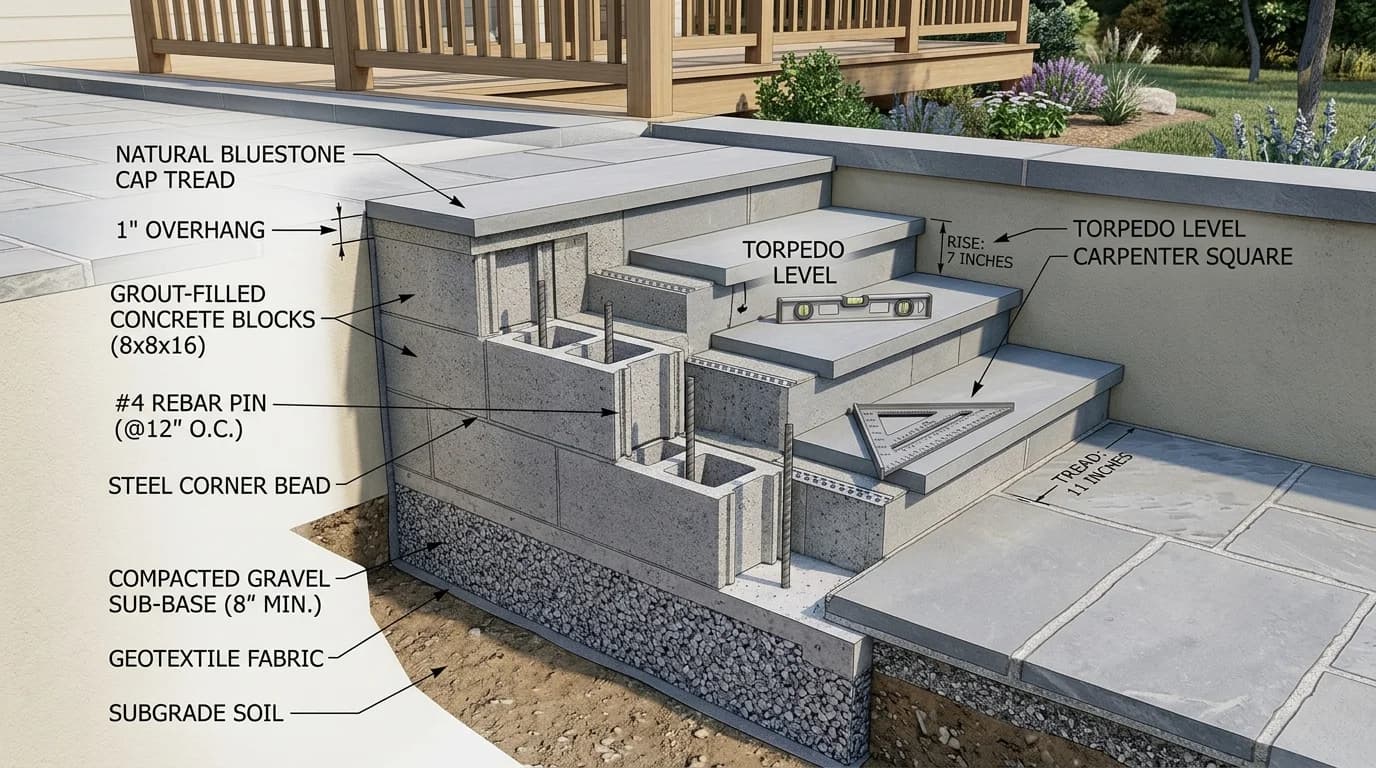
How to Build Outdoor Cinder Block Steps: DIY Step Math
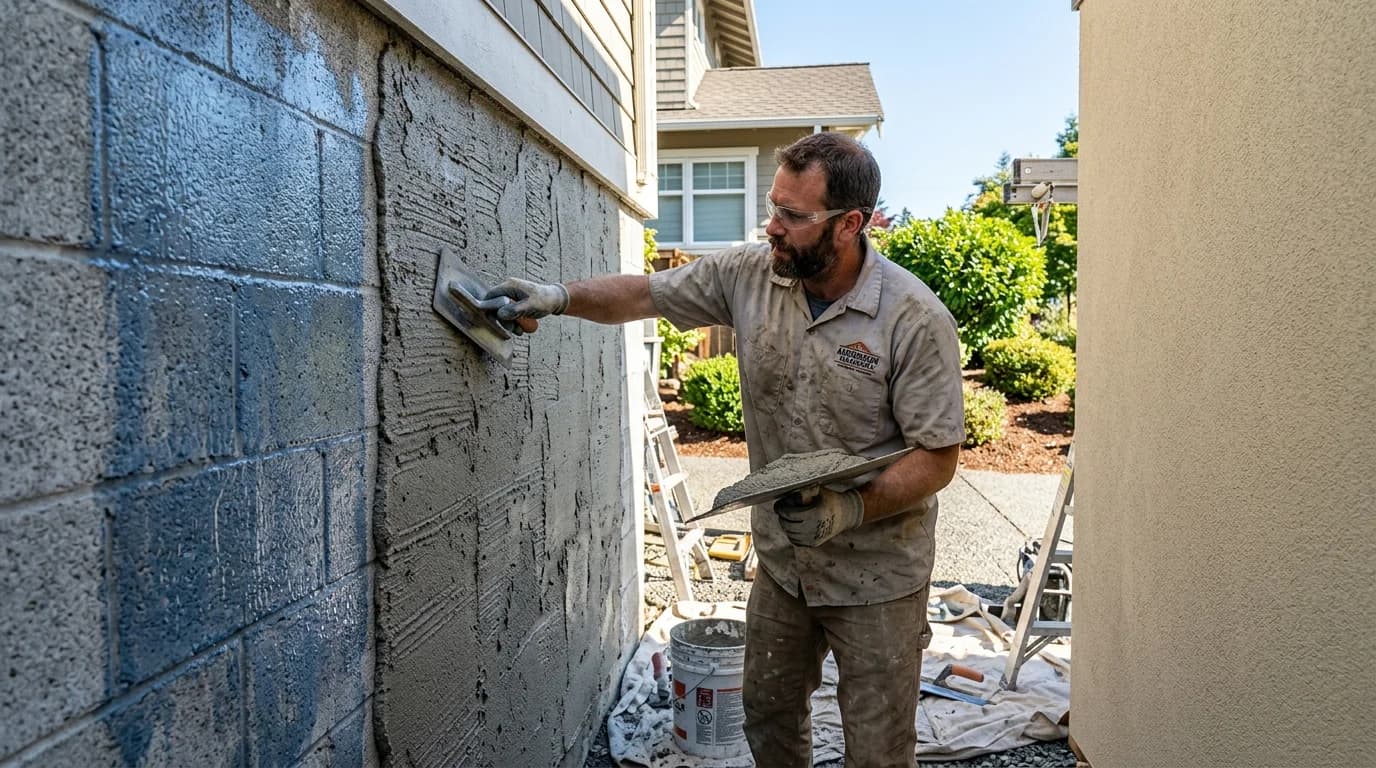
How to Stucco & Parge Over Cinder Block Walls
How to Cover Interior Cinder Block Walls (Top 5 Ways)