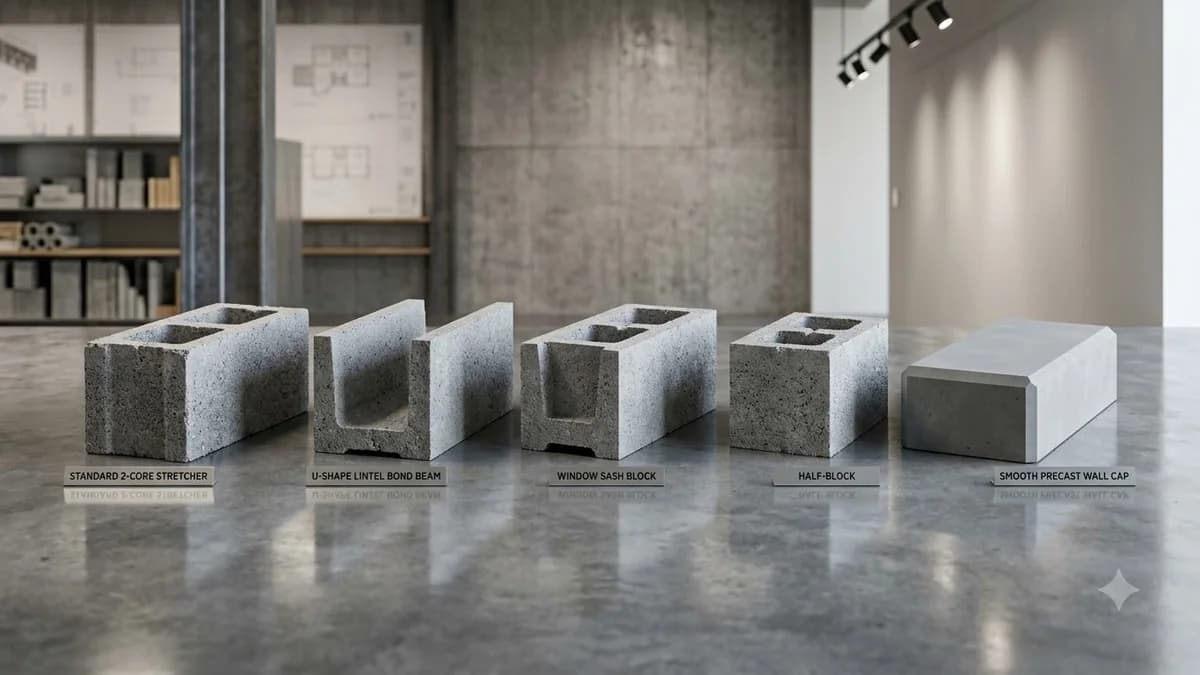
Architectural Fluted Rib & Sound-Absorbing Acoustic CMU Blueprint
Review 8×8×16 split-rib fluted architectural walls and slotted resonator cavity blocks engineered for school gyms and auditoriums.
Architectural Fluted & Acoustic CMU Estimator
Calculate 8×8×16 split-rib architectural face blocks, fiberglass acoustic inserts, and pigment mortar.
Nominal vs. Actual Fluted & Scored CMU Dimensions (4" to 12")
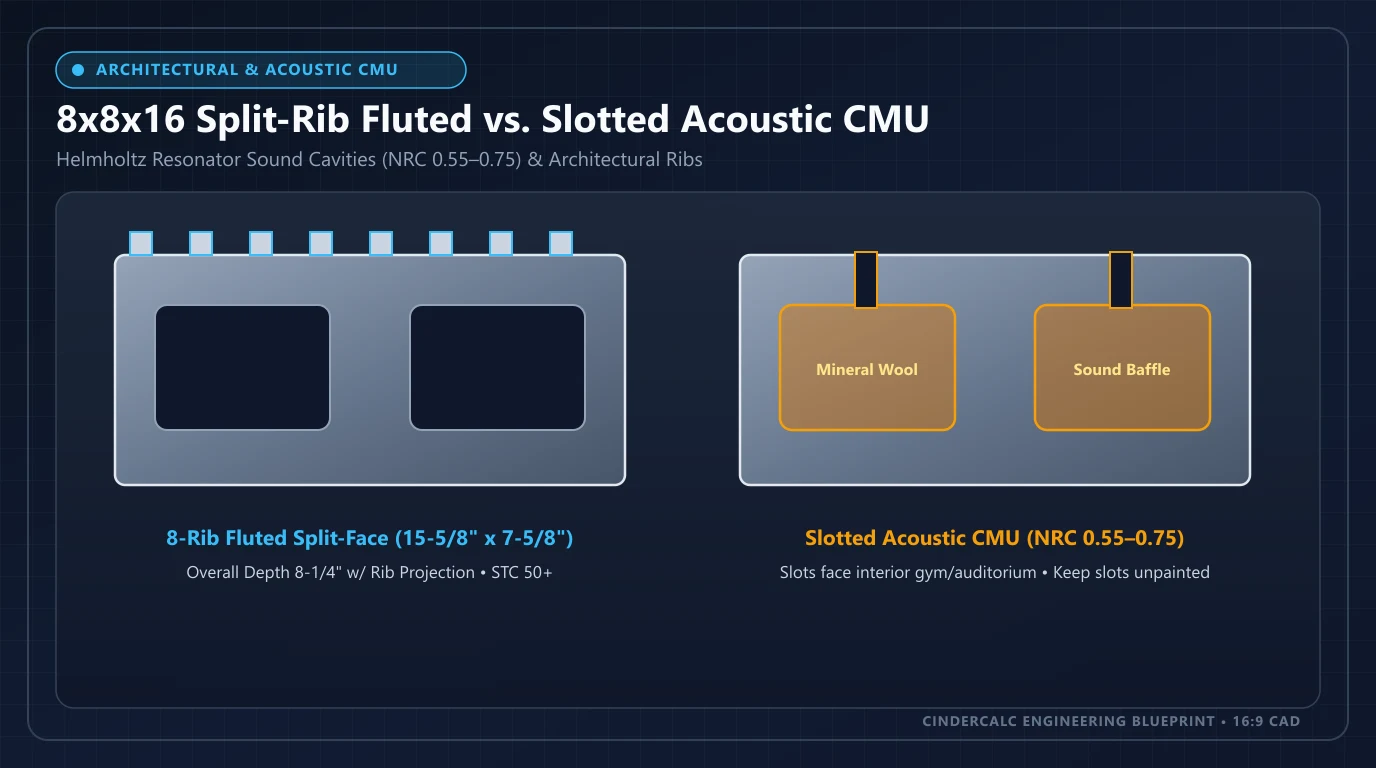
ASTM C90 Modular Grid + Architectural Rib DepthArchitectural fluted and scored concrete masonry units (CMUs) preserve the universal 7-5/8" height × 15-5/8" length modular grid (194 × 397 mm) so they course cleanly with standard 3/8-inch mortar joints at 1.125 units per square foot. Where smooth or scored blocks stay flush at the nominal minus 3/8-inch structural thickness, 4-flute, 8-flute, and 12-flute split-rib units are molded two-to-a-pallet and split down the middle, leaving rough vertical ribs projecting roughly 1/2" to 3/4" beyond the structural face-shell plane.
| Nominal CMU Size | Structural Bed Actual | Flute / Rib Projection | Overall Over-Rib Width | ASTM C90 Min Net Shell | Typical Architectural Role |
|---|---|---|---|---|---|
| 4" × 8" × 16" Partition / Liner | 3-5/8" × 7-5/8" × 15-5/8" | +1/2" to 5/8" (4- or 8-rib) | ~4-1/8" to 4-1/4" | 1.00" (25 mm) behind flute root | Acoustic wall liners, interior lobby partitions & masonry wainscot |
| 6" × 8" × 16" Medium Acoustic | 5-5/8" × 7-5/8" × 15-5/8" | +1/2" to 3/4" (4-, 6-, or 8-rib) | ~6-1/8" to 6-3/8" | 1.00"–1-1/8" behind flute root | Corridor partitions, band rooms & mechanical enclosures |
| 8" × 8" × 16" Standard Architectural | 7-5/8" × 7-5/8" × 15-5/8" | +1/2" to 3/4" (4-, 8-, or 12-rib) | ~8-1/8" to 8-3/8" | 1.25" (32 mm) behind flute root | School gyms, retail facades, auditoriums & rated party walls |
| 12" × 8" × 16" Heavy Structural | 11-5/8" × 7-5/8" × 15-5/8" | +1/2" to 3/4" (8- or 12-rib) | ~12-1/8" to 12-3/8" | 1.50" (38 mm) behind flute root | Highway sound barriers, tall gym walls & industrial plants |
Note: Overall over-rib wall thickness increases by the projecting rib height (~1/2" to 3/4" on single-faced blocks, or twice that on double-faced partition units). Confirm door frame throat widths and flashing overhangs against the overall dimension.
Slotted Acoustic CMUs: Type A/A-1 vs. Type Q Helmholtz Resonators (NRC vs. STC)
While solid and standard fluted CMUs reflect most high-frequency sound, slotted acoustic CMUs convert each hollow block cell into a tuned Helmholtz resonator. Narrow vertical slots cut into the room-facing shell connect to an enclosed cavity backed by a factory-installed mineral wool or fiberglass insert (and often a thin sheet-metal septum divider), dissipating sound waves as thermal friction inside the porous core.
| Acoustic / Fluted Profile | Face Slot / Rib Geometry | Internal Core Insert | Illustrative NRC (ASTM C423) | Illustrative STC (ASTM E90) | Best Room & Acoustic Application |
|---|---|---|---|---|---|
| Type A / A-1 (Single or Double Straight Slot) | ~1/8"–1/4" straight vertical face slots | Optional 1"–2" mineral wool / fiberglass baffle | 0.45 – 0.65 NRC | STC 46 – 52 (8" unit) | Cafeterias, gymnasiums & multipurpose halls (mid/high speech control) |
| Type Q (Flared Funnel-Slot Resonator) | Tapered wide-mouth funnel slots + metal septum | Factory mineral wool / fiberglass + tuned air gap | 0.70 – 0.85 NRC | STC 48 – 55 (8" unit) | Auditoriums, music rooms & mechanical equipment rooms (broadband) |
| 8-Rib / 12-Rib Split Fluted (Non-Slotted) | No open core slots; 1/2"–3/4" fractured ribs | Solid grout or loose-fill cores (no resonator) | 0.05 – 0.15 NRC (diffusive) | STC 50 – 58+ (grouted) | Exterior retail walls, sound-barrier fences & high-STC demising walls |
| Dual-Cell Groutable Acoustic CMU (8"–12") | Slotted front acoustic face + isolated rear core | Mineral wool insert in front acoustic chamber | 0.55 – 0.75 NRC | STC 54 – 60 (rear grouted) | Seismic/wind-load gyms & fire-rated exterior acoustic envelopes |
NRC (Echo Control Inside the Room)
Noise Reduction Coefficient (NRC) averages sound absorption across 250 Hz, 500 Hz, 1,000 Hz, and 2,000 Hz bands. Plain painted CMU absorbs only ~5% of incident sound (NRC 0.05). Slotted Type A / A-1 blocks raise absorption to NRC 0.45–0.65, while flared Type Q funnel-slot blocks with fiberglass inserts and internal septa reach NRC 0.70–0.85.
STC (Blocking Sound Between Spaces)
Sound Transmission Class (STC) depends on continuous airtight wall mass rather than surface slots. Hollow 8-inch CMUs typically test near STC 45–50, whereas solid-grouted or sand-filled 8-inch and 12-inch CMUs reach STC 54–58+. To size complete wall mass and STC targets, run your wall through our CMU Acoustic STC Calculator.
ASTM C90 Face-Shell Deductions & Grout Core Restrictions
Designing structural masonry walls with fluted, scored, or slotted acoustic units introduces two critical detailing constraints under ASTM C90 and TMS 402/602 that standard stretcher walls do not encounter:
Architectural score grooves (typically 3/8" to 1/2" deep) and split-flute valleys reduce local shell thickness. Under ASTM C90, the minimum structural shell (1-1/4" on 8" CMU, 1-1/2" on 12" CMU) must remain intact behind the deepest groove or flute valley—never deduct score depth from minimum structural width.
Never pump ASTM C476 grout into slotted Helmholtz chambers or soak the mineral-wool baffles; grouting turns an acoustic cavity into a hard reflective wall. Use dual-cell rear-groutable acoustic CMUs or alternate reinforced solid-face bond/pilaster units per your structural engineer's rebar schedule.
Slotted blocks open into hollow cells, so mortar head joints on the back face must be fully bedded (avoiding daylight pinholes) and wall tops/deflection gaps must be sealed with non-hardening acoustical caulk so sound does not flank around the STC barrier.
Illustrative Pallet Counts, Pigmented Mortar & Field Detailing Matrix
Because split-rib CMUs carry extra face-shell mass and projecting flutes, they weigh roughly 10%–20% more than standard smooth hollow CMUs and pack fewer units per cube to stay within forklift and flatbed weight limits. The figures below are illustrative planning examples (typical regional quotes range roughly $4.50–$9.50 per architectural fluted unit and $7.50–$14.00+ per slotted acoustic block with factory insert); confirm exact cube counts and unit pricing with your block plant.
| Architectural / Acoustic Unit | Actual Thickness | Illustrative Unit Weight | Example Pallet / Cube | 80-lb Type S Mortar Yield | Core Grouting Restriction |
|---|---|---|---|---|---|
| 8" Scored / 4-Flute Smooth-Bed | 7-5/8" (194 mm) | ~36–40 lb / unit | ~90–108 units / skid | ~30 units / 80-lb bag | All open vertical cores groutable per TMS 402/602 |
| 8" 8-Rib Split-Fluted CMU | ~8-1/4" w/ ribs (210 mm) | ~42–46 lb / unit | ~72–90 units / skid | ~28 units / 80-lb bag | Bed mortar on structural shell; strike ribs cleanly |
| 8" Slotted Acoustic (Type A / Q) | 7-5/8" (194 mm) | ~34–38 lb / unit | ~90–96 units / skid | ~28 units / 80-lb bag | Keep resonator cells dry; grout only non-slotted/rear cells |
| 12" Slotted / Fluted Heavy CMU | 11-5/8" to ~12-1/4" | ~52–58 lb / unit | ~54–72 units / skid | ~20 units / 80-lb bag | Rear-cell grouting preserves NRC while supporting tall spans |
Planning formula example: Wall Area (L × H) × 1.125 blocks/sq ft × 1.10 (10% trim/corner waste) = Total Units; Total Units ÷ 28 ≈ 80-lb pigmented Type S mortar bags. Example (50 × 12 ft gym wall): 600 sq ft × 1.125 × 1.10 = 743 acoustic blocks, ~27 mortar bags (80 lb), and ~675 factory mineral-wool inserts for net area.
Corner Returns, Pigmented Mortar & Acoustic Paint Precautions
On 8-rib and 12-rib fluted facades, always order dedicated flat-end corner/jamb units (with ribs ending smoothly before a squared corner return) and 8×8×8 half-fluted units so vertical ribs align in running or stack bond without mitered saw cuts. Tool concave mortar joints slightly recessed behind the rib root—never smear excess mortar across the split flutes, as dried residue is difficult to brush off fractured aggregate. For slotted acoustic blocks, use integral iron-oxide pigment matched to the mortar instead of heavy architectural coatings; thick elastomeric or bridged latex paint seals off the 1/8"–1/4" resonator slots and drops effective NRC toward bare concrete (~0.05). Verify all seismic reinforcement, lintel bearing, and fire-resistance ratings against your project structural drawings and locally adopted building codes.
Explore Related Architectural CMU & Acoustic Guides
Calculate STC ratings, NRC absorption, and mass per sq ft for hollow and grouted walls.
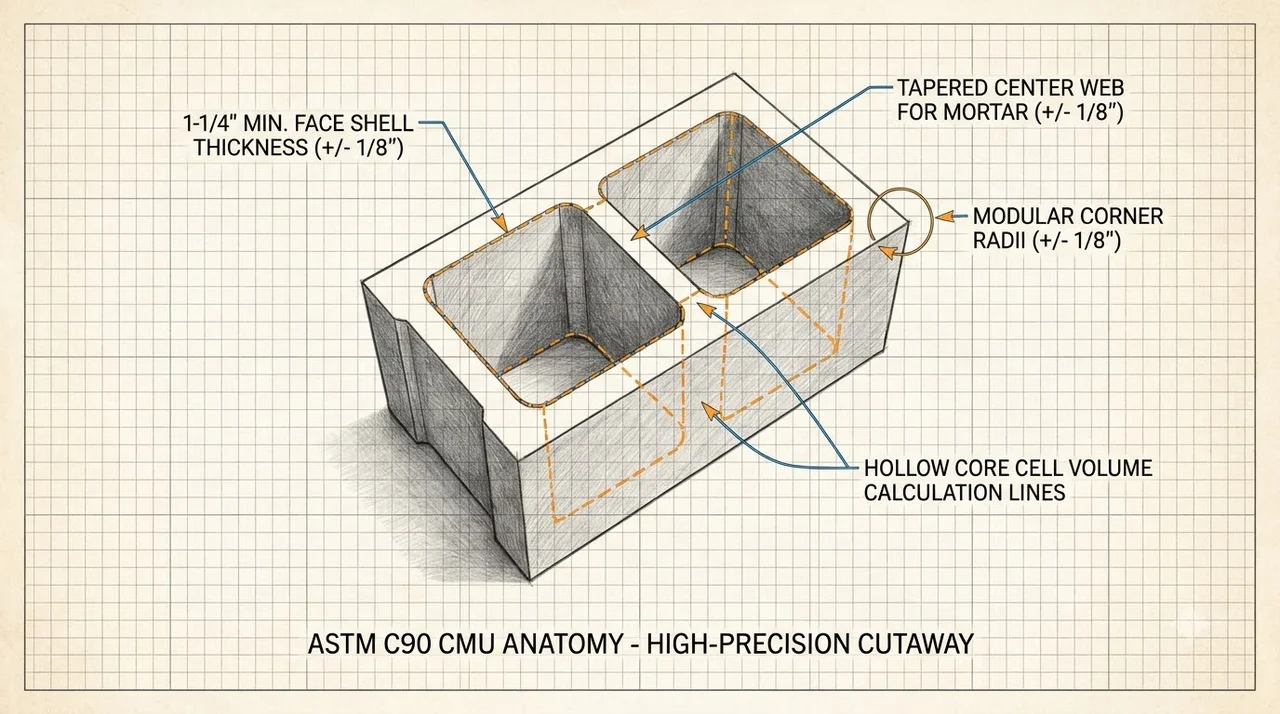
Complete 4-inch through 12-inch ASTM C90 modular CMU dimensions and grout tables.
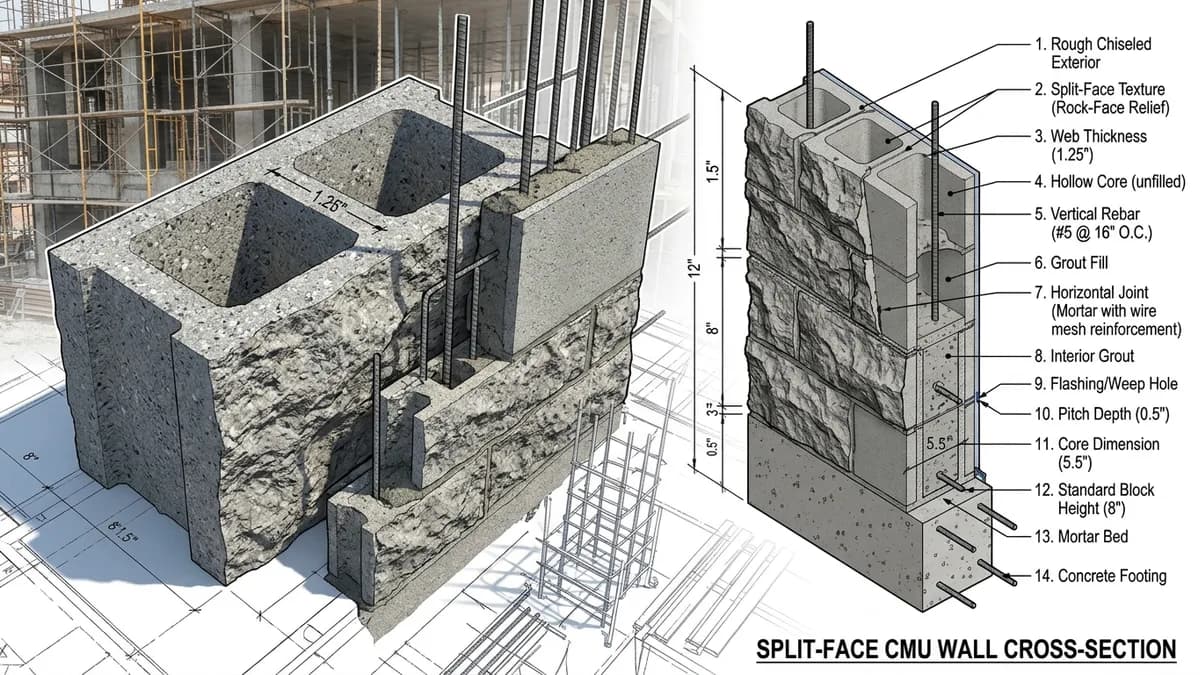
Fractured rock-face architectural CMU pitch projections, 90-unit pallets, and sealers.
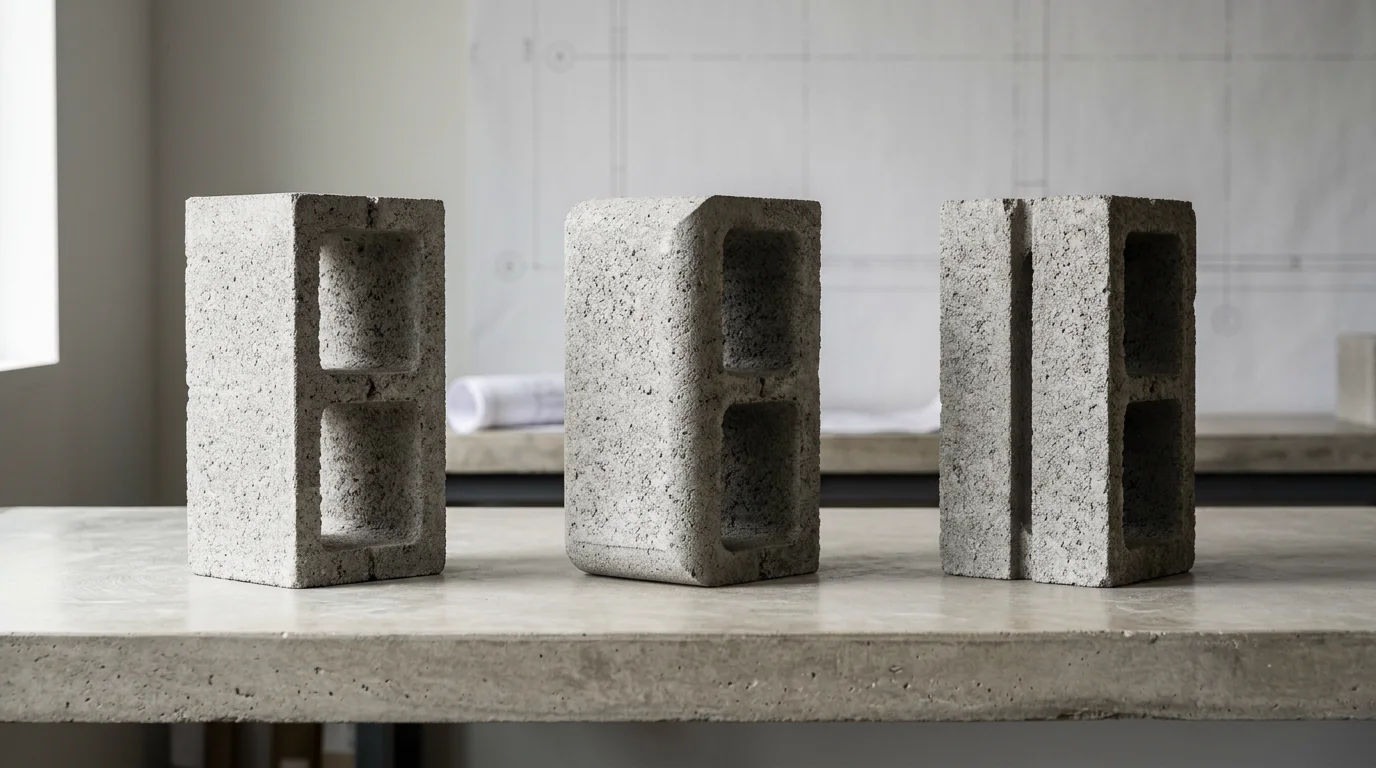
Size flat-end corner returns, bullnose blocks, and grooved window sash jamb units.
Material estimates depend on the selected dimensions, product yields, and waste allowance.
Fluted & Acoustic CMU Block Dimensions FAQ
Verified technical guidance on split-rib projections, Type A/Q resonator slots, NRC vs. STC ratings, and grout restrictions.
Popular Quick Estimates
Illustrative takeoffs with stated assumptions; verify project quantities
1000 Sq Ft Sizing
High-volume logistics & bulk pallet freight
20x20 Wall Estimate
Large perimeter enclosure or garage structure
Standard CMU Weight
Illustrative hollow-unit range; check supplier specs
Block Material Cost
Editable block prices; add delivery and installation
Related Calculators
Specialized tools for foundation, core fill, and budgeting
Sound Transmission Class ratings, wall mass, and core grouting acoustic isolation
Equivalent thickness, hourly fire resistance ratings and core fill
Heavyweight structural blocks and bond beam units
Series-parallel thermal R-value and U-factor comparison for hollow, perlite & CI CMUs
Blogs & Construction Guides
Practical guides to block sizing, material estimates and project planning
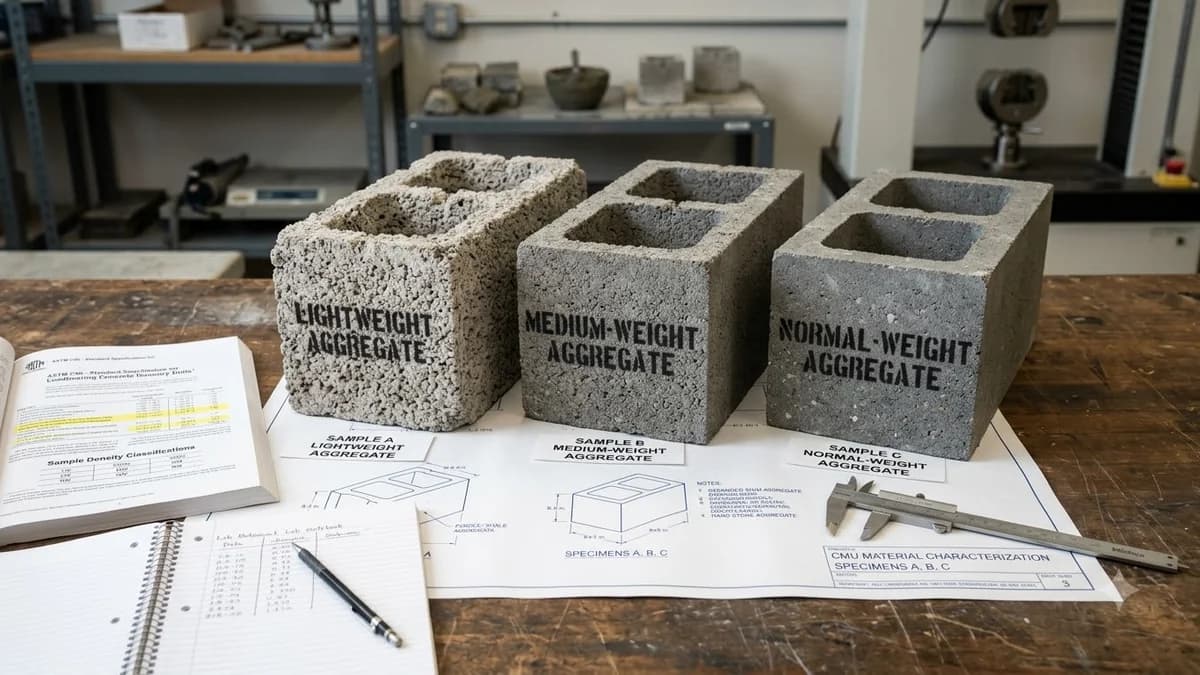
CMU Weight & Density Classes: ASTM C90 Concrete Blocks
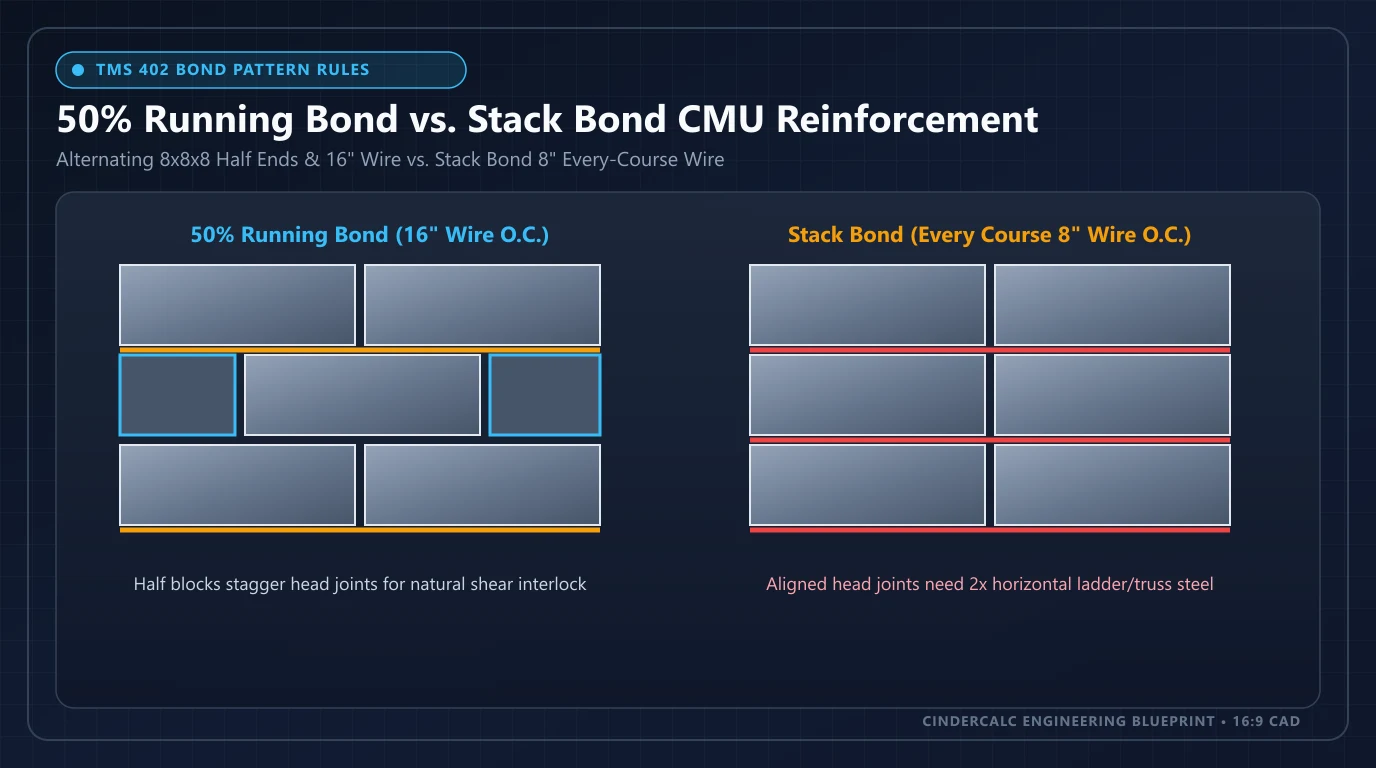
Running Bond vs Stack Bond CMU: TMS 402 & Rebar Guide
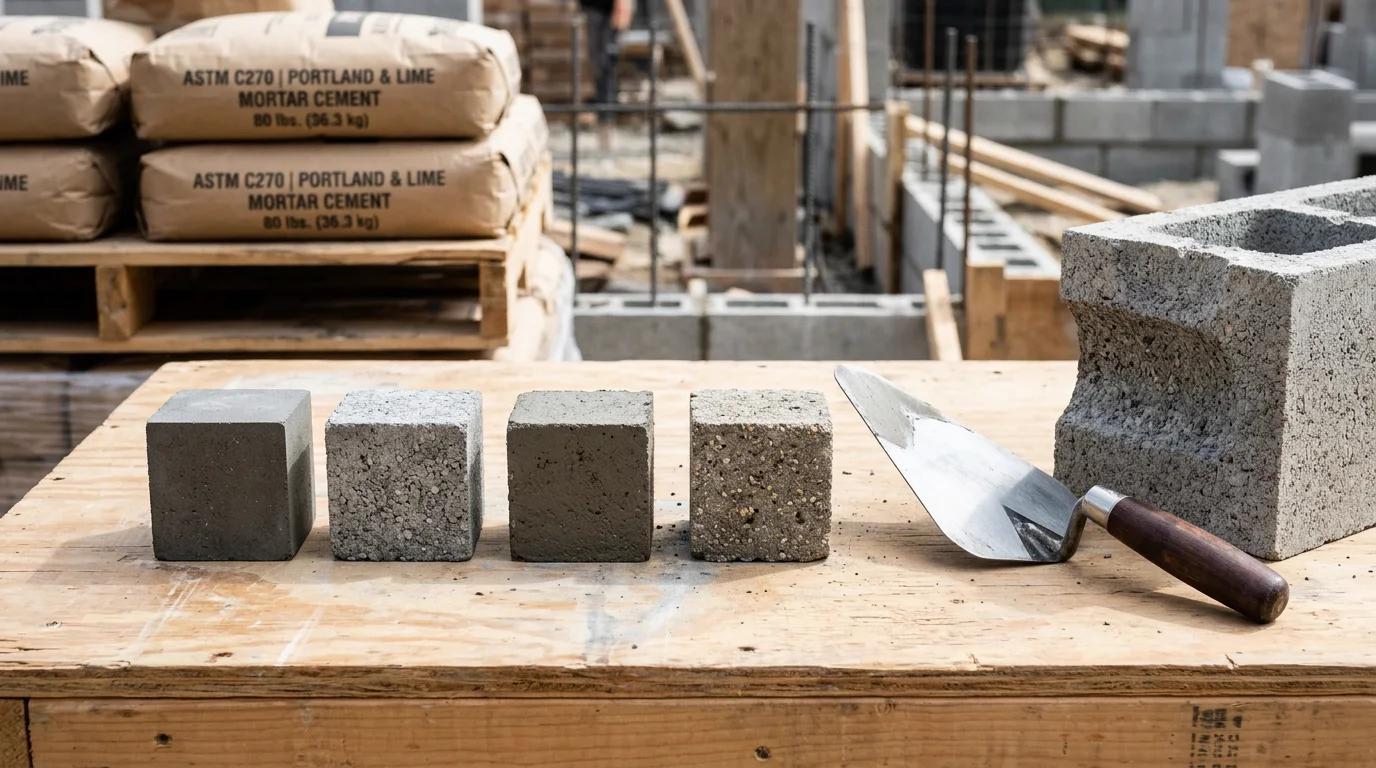
Mortar Types M, S, N, and O Guide: Strength & Mix Ratios