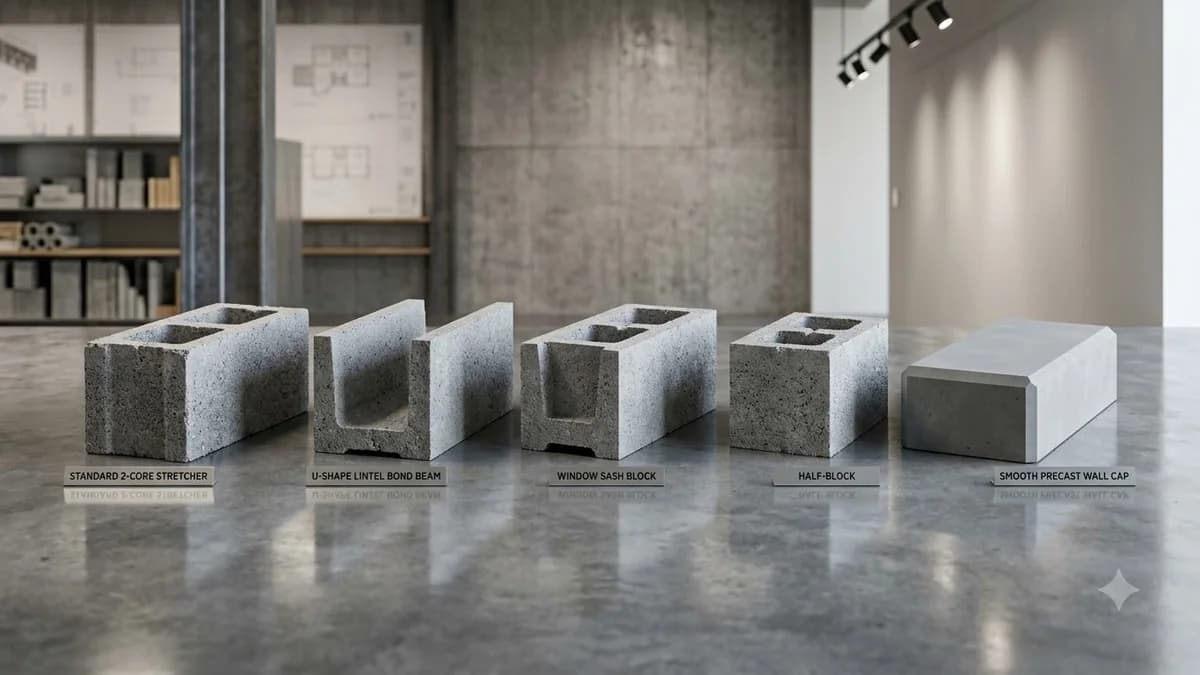
8×8×8 Half Cinder Block & Corner Jamb Blueprint
Inspect actual factory-molded 7-5/8" × 7-5/8" × 7-5/8" single-core half blocks used on every alternating course to maintain 50% running bond.
Half Cinder Block (8×8×8) Jamb & Corner Course Estimator
Calculate 7-5/8" × 7-5/8" × 7-5/8" half-length cinder blocks needed for alternating running-bond wall ends, piers, and window/door jambs.
8×8×8 Half Cube vs. 4×8×8 Partition Half vs. 8×4×16 Half-High Stretcher
ASTM C90 Modular FamilyMasonry yards stock several different units colloquially called "half blocks," and ordering the wrong geometry stalls a wall layout immediately. A true 8×8×8 half cinder block keeps the full 8-inch nominal wall thickness and full 8-inch course height while cutting the length in half from 16 inches to 8 inches. By contrast, a 4×8×8 partition half is only 3-5/8 inches thick, and an 8×4×16 half-high block is 15-5/8 inches long by only 3-5/8 inches tall.
| Block Variant | Nominal (W × H × L) | Actual Size (in) | Metric Size (mm) | Core & Face Area | Primary Masonry Function |
|---|---|---|---|---|---|
| 8×8×8 Half Cinder Block | 8" × 8" × 8" | 7-5/8" × 7-5/8" × 7-5/8" | 194 × 194 × 194 mm | 1 core (~0.11 ft³) • 0.444 ft² | Alternating running-bond wall ends, piers & opening jambs |
| 6×8×8 Half-Length Block | 6" × 8" × 8" | 5-5/8" × 7-5/8" × 7-5/8" | 143 × 194 × 194 mm | 1 core (~0.08 ft³) • 0.444 ft² | Alternating ends and jambs in 6-inch screen or garage walls |
| 4×8×8 Partition Half | 4" × 8" × 8" | 3-5/8" × 7-5/8" × 7-5/8" | 92 × 194 × 194 mm | Solid or narrow slot • 0.444 ft² | Interior 4-inch partition wall terminations & closures |
| 12×8×8 Half-Length Block | 12" × 8" × 8" | 11-5/8" × 7-5/8" × 7-5/8" | 295 × 194 × 194 mm | 1 deep core (~0.17 ft³) • 0.444 ft² | Foundation stepped corners, thick retaining wall ends & jambs |
| 8×4×16 Half-High Stretcher | 8" × 4" × 16" | 7-5/8" × 3-5/8" × 15-5/8" | 194 × 92 × 397 mm | 2 shallow cores (~0.11 ft³) • 0.444 ft² | 4-inch vertical course height adjustments & ashlar bands |
All nominal dimensions include one 3/8-inch (9.5 mm) mortar joint per axis. A 100% solid 8×8×8 half-unit (zero hollow core) is also stocked by select yards for concentrated beam bearing pads.
Running-Bond Geometry: Why Alternating Courses Need Half Blocks
50% Stagger & Vertical Core Alignment
Standard load-bearing cinder block walls are built in a 50% running bond so every vertical head joint lands centered over the solid center web of the stretcher directly below it. Because each 8×8×16 stretcher contains two 8-inch nominal cells, shifting the wall by 8 inches (one 8×8×8 half block) on even-numbered courses keeps every vertical hollow cell stacked in an unbroken vertical shaft from footing to bond beam.
That vertical cell alignment is essential under IRC R606 and TMS 402/602 so #4 or #5 vertical rebar dowels and ASTM C476 grout flow cleanly down jamb edges and corners without hitting misaligned cross webs.
Worked Takeoff Example (8-ft Wall + 1 Doorway)
Consider a straight 20-foot-long, 8-foot-tall cinder block wall (12 courses high) with two freestanding vertical ends and one 3-foot-wide doorway (4 total vertical jamb/end edges). Every alternating course—6 of the 12 courses—requires 1 half block at each of those 4 edges:
- Net half-blocks:
ceil(12 ÷ 2) × 4 edges = 24 units - With 10% waste:
ceil(24 × 1.10) = 27 half-blocks - All-jamb grout (~0.11 ft³/unit):
24 × 0.11 × 1.10 ≈ 2.9 cu ft
Factory 8×8×8 Corner Half-Blocks vs. Field-Cut Stretchers
On small DIY garden beds, masons sometimes score and snap or wet-saw a full 8×8×16 stretcher across its middle cross web to yield two rough 8-inch halves. On exposed building corners, window jambs, and freestanding gate piers, however, dedicated factory-molded 8×8×8 units outperform field cuts on appearance, weather resistance, and labor speed.
Factory-Molded 8×8×8 Half-Corner Units
Factory half-blocks are pressed with at least one completely flat, smooth end shell (no recessed mortar ears/flanges). That closed outer skin leaves a crisp architectural edge at freestanding wall ends and door bucks, prevents rainwater wicking into open end cavities, and eliminates 14-inch wet-saw cutting labor and silica dust on the scaffold.
Field-Cutting 8×8×16 Stretchers (When Acceptable)
Because a standard stretcher's center cross web is only 1 inch thick, cutting straight down the centerline yields two ~7-5/8" halves with only a 1/2-inch end web—less than the 1-1/4" face shell thickness of a factory corner block—and leaves concave mortar flanges exposed on the original end. Reserve saw-cut halves for interior concealed ends or parged/stuccoed walls.
Illustrative Pallet Counts, Weights & Mortar Planning Examples
Actual block weight, cube packaging, and material pricing vary by local aggregate density (ASTM C90 lightweight, medium weight, or normal weight) and regional supplier yard. Treat the values below as illustrative planning examples and verify cube counts on your supplier's product sheet before scheduling delivery.
| Concrete Density Class (ASTM C90) | Illustrative Unit Weight (8×8×8) | Illustrative Pallet Pack | Est. Loaded Pallet (+40 lb Skid) | Planning Mortar Yield (80-lb Bag) |
|---|---|---|---|---|
| Lightweight (< 105 lb/ft³) | 15 – 17 lb / unit | 162 – 180 units | ~2,630 – 3,100 lb | ~55 – 60 half-blocks per 80-lb bag |
| Medium Weight (105–125 lb/ft³) | 18 – 20 lb / unit | 144 – 162 units | ~2,780 – 3,280 lb | ~55 – 60 half-blocks per 80-lb bag |
| Normal Weight (≥ 125 lb/ft³) | 21 – 23 lb / unit | 144 units | ~3,060 – 3,350 lb | ~50 – 55 half-blocks per 80-lb bag |
| 100% Solid 8×8×8 Half Unit | 32 – 36 lb / unit | 96 – 108 units | ~3,260 – 3,930 lb | ~40 – 45 solid half-units (full bed) |
Planning formula example: Pallet weight = (delivered half-blocks × unit weight) + 40-lb wood pallet. Typical illustrative material cost ranges from $1.50 to $2.75 per smooth gray 8×8×8 half-unit depending on region and order volume.
Explore Related Cinder Block & Specialty Dimensions
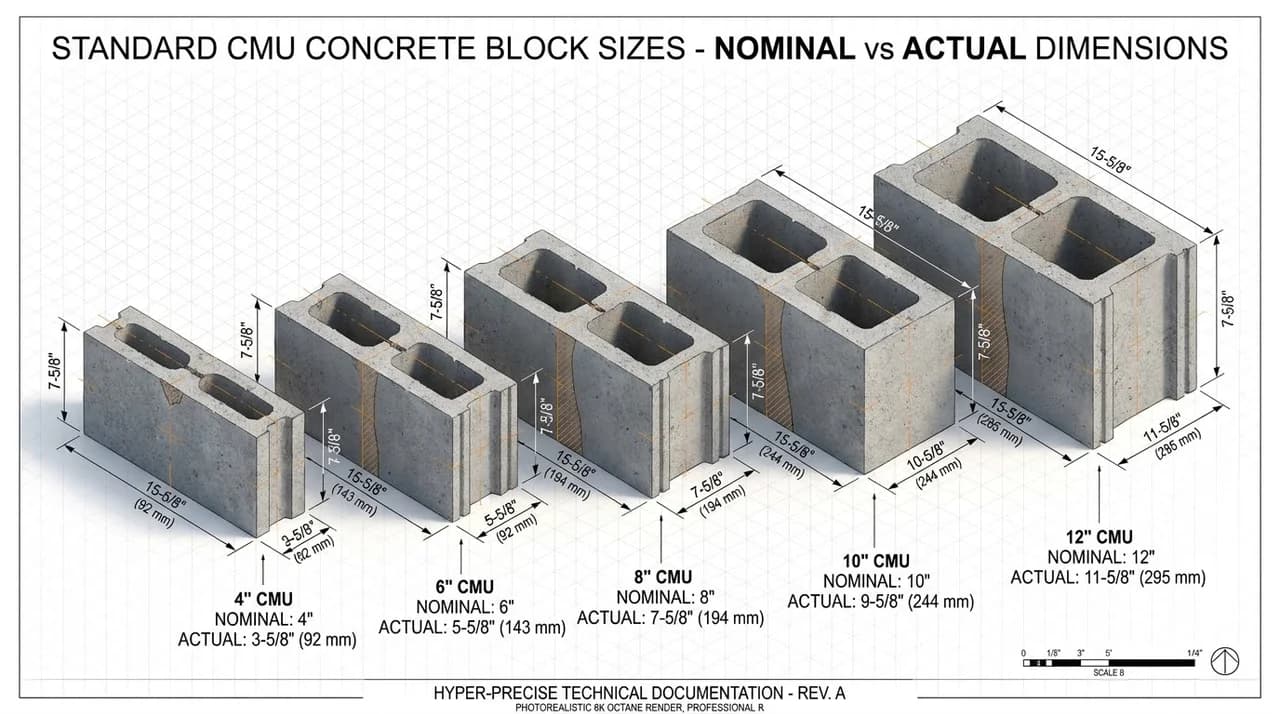
Master 8×8×16 actual vs. nominal sizes, face shells, and coverage math.
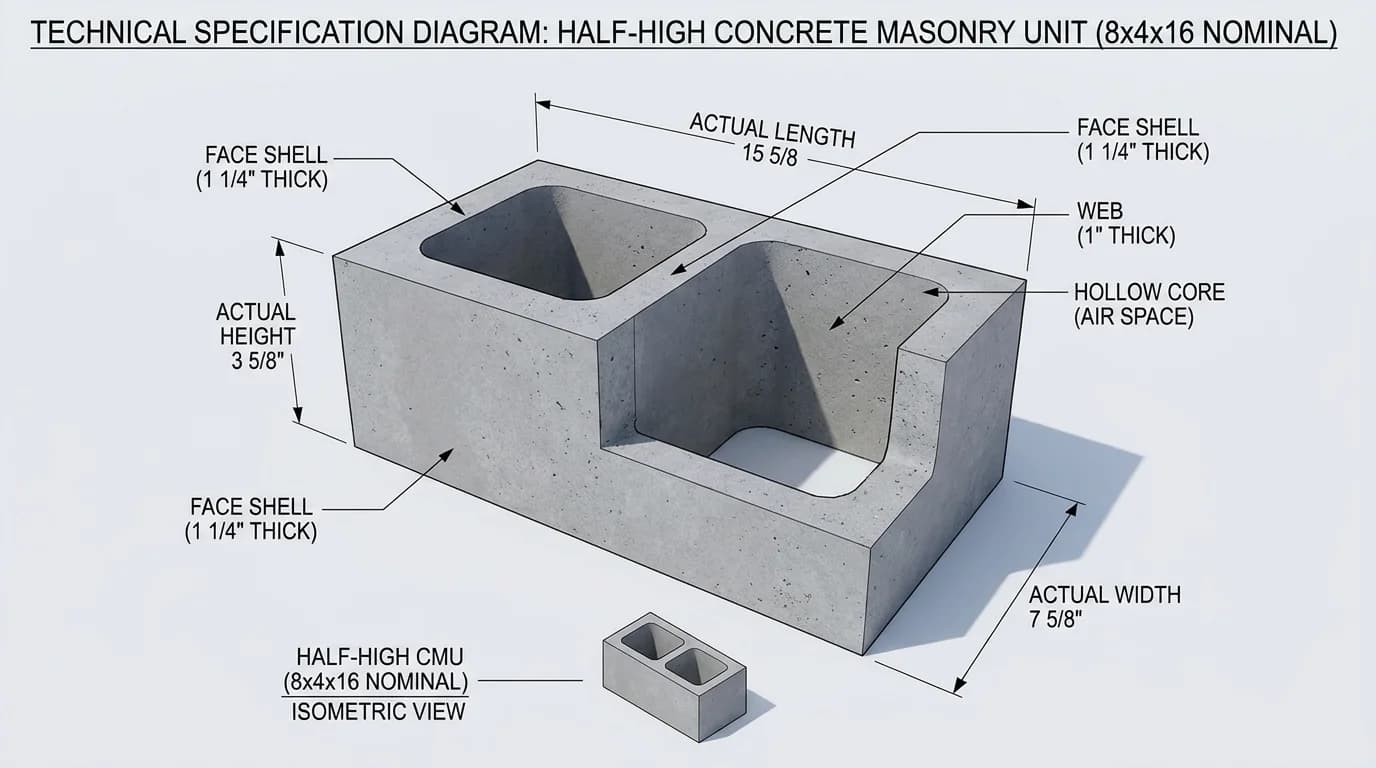
4-inch-tall modular units (2.25 blocks/sq ft) for vertical height control.
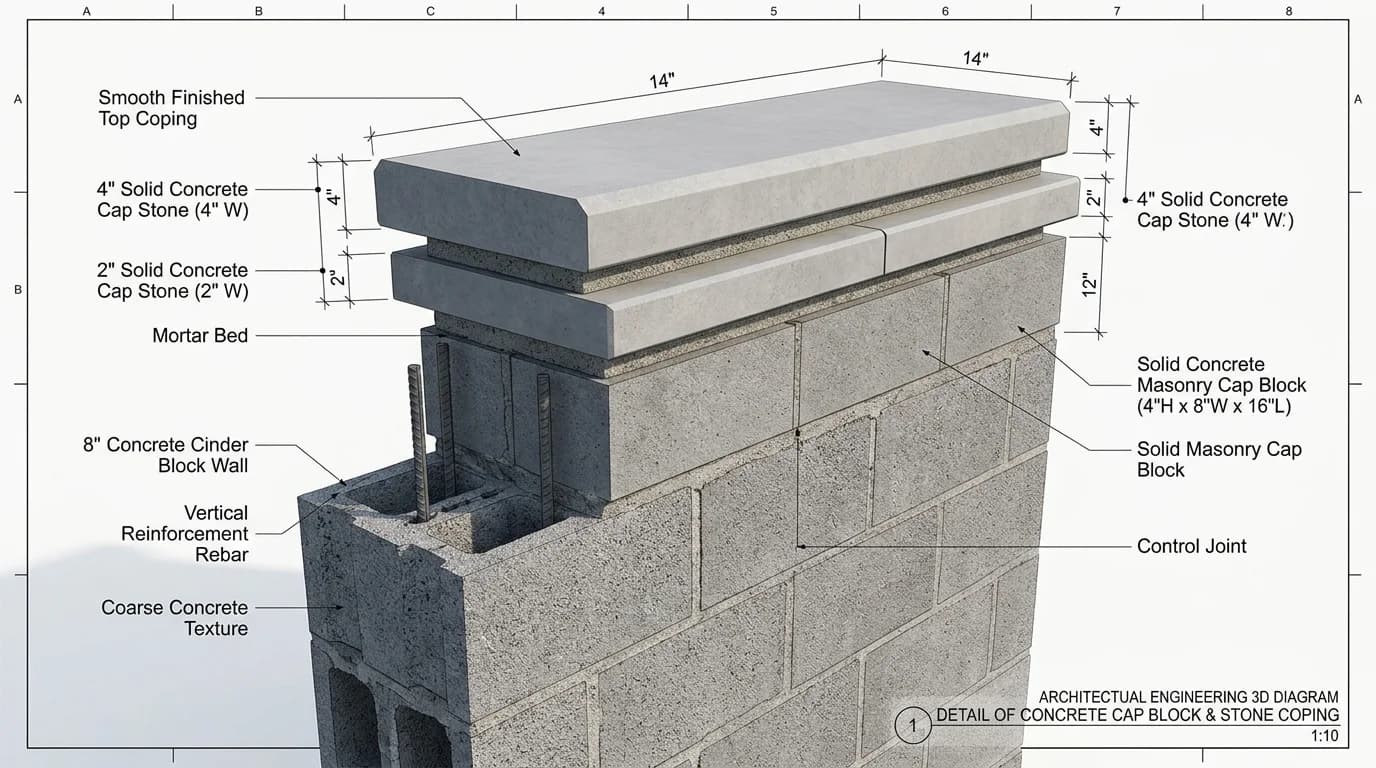
Solid 2-inch and 4-inch cap stones to seal exposed top cores.
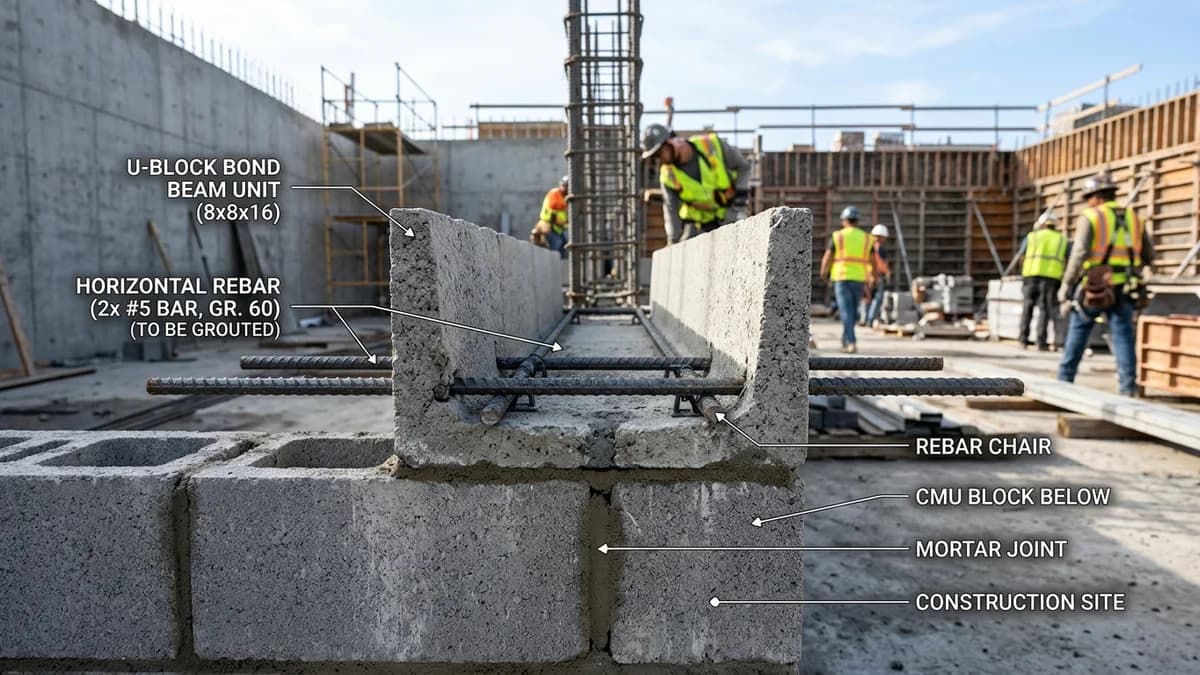
Horizontal U-channel blocks for continuous rebar and top-course tie beams.
Frequently Asked Questions About Half Cinder Blocks
What are the actual dimensions of an 8×8×8 half cinder block?
A standard 8×8×8 nominal half cinder block measures 7-5/8 inches wide by 7-5/8 inches tall by 7-5/8 inches long (194 × 194 × 194 mm). Each face is molded 3/8 inch under the 8-inch nominal module so that a 3/8-inch mortar bed and vertical head joint align it flush with full 8×8×16 stretchers.
How does an 8×8×8 half cinder block differ from a half-high block?
An 8×8×8 half cinder block is a half-length cube (7-5/8" tall × 7-5/8" long) used at wall ends, piers, and window or door jambs to offset alternating courses by 8 inches. A half-high block (8×4×16 nominal, 3-5/8" tall × 15-5/8" long) is a full-length unit cut to half height to create 4-inch horizontal courses.
How many half cinder blocks do you need for a wall corner or doorway?
In a 50% running bond, you need 1 half cinder block on every alternating 8-inch course for each exposed wall end, pier edge, or window and door jamb. For example, an 8-foot-tall wall (12 courses) with two freestanding ends and one doorway (4 total vertical edges) requires 6 × 4 = 24 net half-blocks, or 27 units with a 10% waste allowance.
What is the hollow core volume of a single 8×8×8 half cinder block?
A single-core 8×8×8 half cinder block contains one central rectangular cell measuring roughly 5-1/8" × 5-1/8" at the top, holding approximately 0.11 cu ft of ASTM C476 grout (half of the 0.22 cu ft combined void of a standard two-core 8×8×16 stretcher). When all alternating jamb cells are grouted, plan ~0.11 cu ft per half-unit plus 10% consolidation waste.
Should I buy factory 8×8×8 corner half-blocks or cut full 8×8×16 stretchers?
Factory-molded 8×8×8 corner or jamb half-blocks provide smooth, closed outer end shells that align cleanly at exposed wall terminations and window bucks without saw dust or chipped flanges. Sawing a 16-inch stretcher across its center web is practical for concealed ends or budget field fixes, but leaves an open flanged cut face and increases breakage waste.
How much does an 8×8×8 half cinder block weigh, and how many fit on a pallet?
As illustrative planning examples under ASTM C90 density classes, a single 8×8×8 half-block weighs roughly 15 to 17 lb (lightweight), 18 to 20 lb (medium weight), or 21 to 23 lb (normal weight). Suppliers typically band 144 to 162 half-blocks per pallet (roughly 3,000 to 3,500 lb total with a 40-lb wood skid), though local cube counts vary by plant.
How many 8×8×8 half cinder blocks does an 80-lb bag of mortar lay?
As an illustrative planning example, an 80-lb bag of Type S or Type N masonry mortar yields roughly 30 standard 8×8×16 stretchers. Because an 8×8×8 half block has half the horizontal bed length and the same vertical head joint height, one 80-lb mortar bag typically lays about 50 to 60 half-blocks with standard 3/8-inch face-shell bedding.
Popular Quick Estimates
Illustrative takeoffs with stated assumptions; verify project quantities
100 Sq Ft Sizing
Standard 8x8x16 nominal coverage benchmark
10x10 Wall Estimate
Standard residential yard & garden wall run
Type S Mortar Bags
Example 30 blocks per 80-lb bag; check product yield
Standard CMU Weight
Illustrative hollow-unit range; check supplier specs
Related Calculators
Specialized tools for foundation, core fill, and budgeting
Straight and multi-wall runs with mortar and waste allowances
Standard nominal 8x8x16 block takeoff with mortar joints
Surface area converted into standard 8x8x16 block totals
Type S and M bags, cubic feet and batching sand volume
Blogs & Construction Guides
Practical guides to block sizing, material estimates and project planning
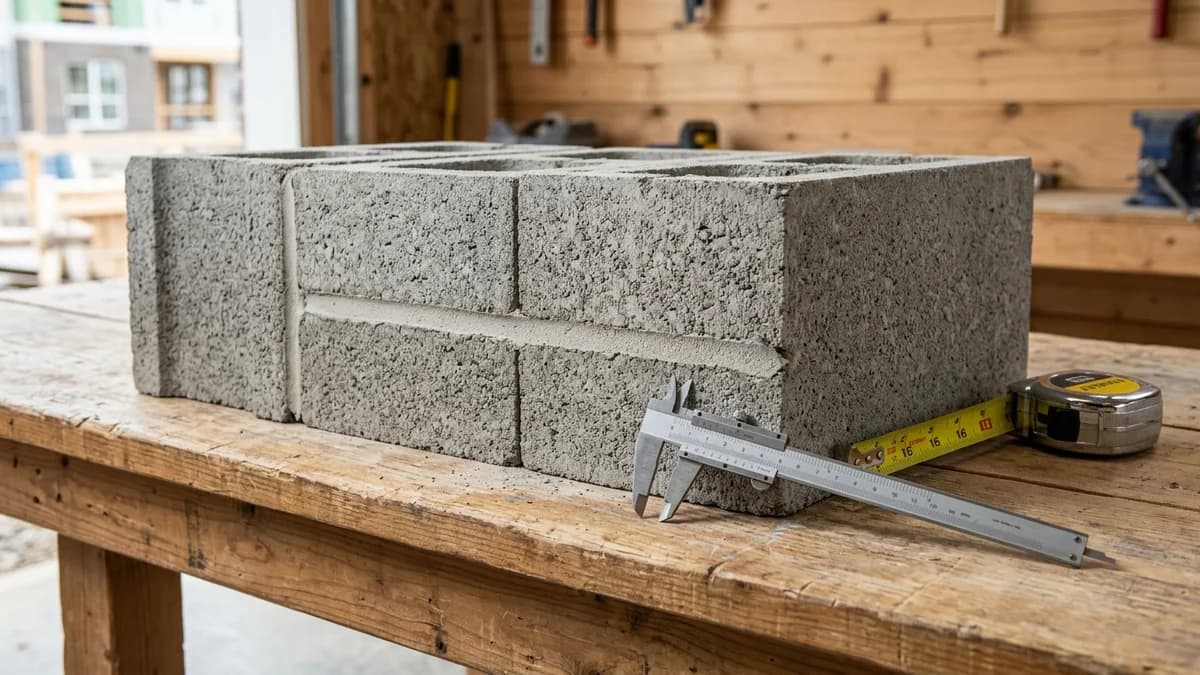
Cinder Block Dimensions: Width, Length & Height Chart
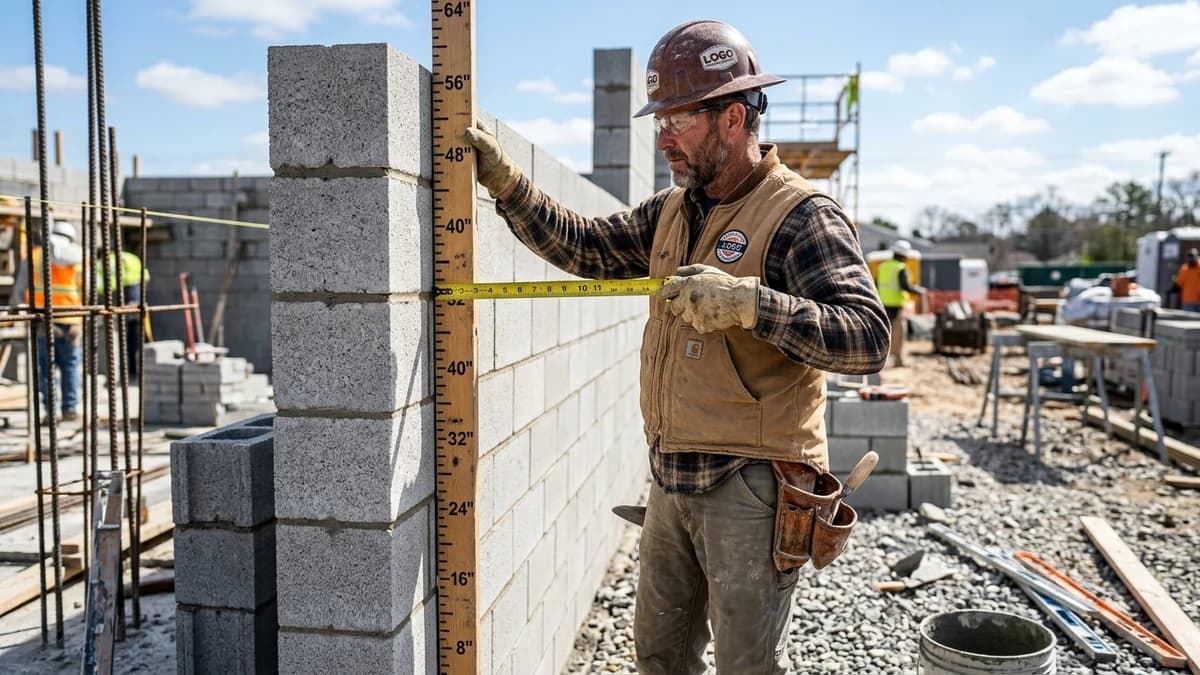
How Tall Is a Cinder Block? Actual Height (7-5/8 Inch)
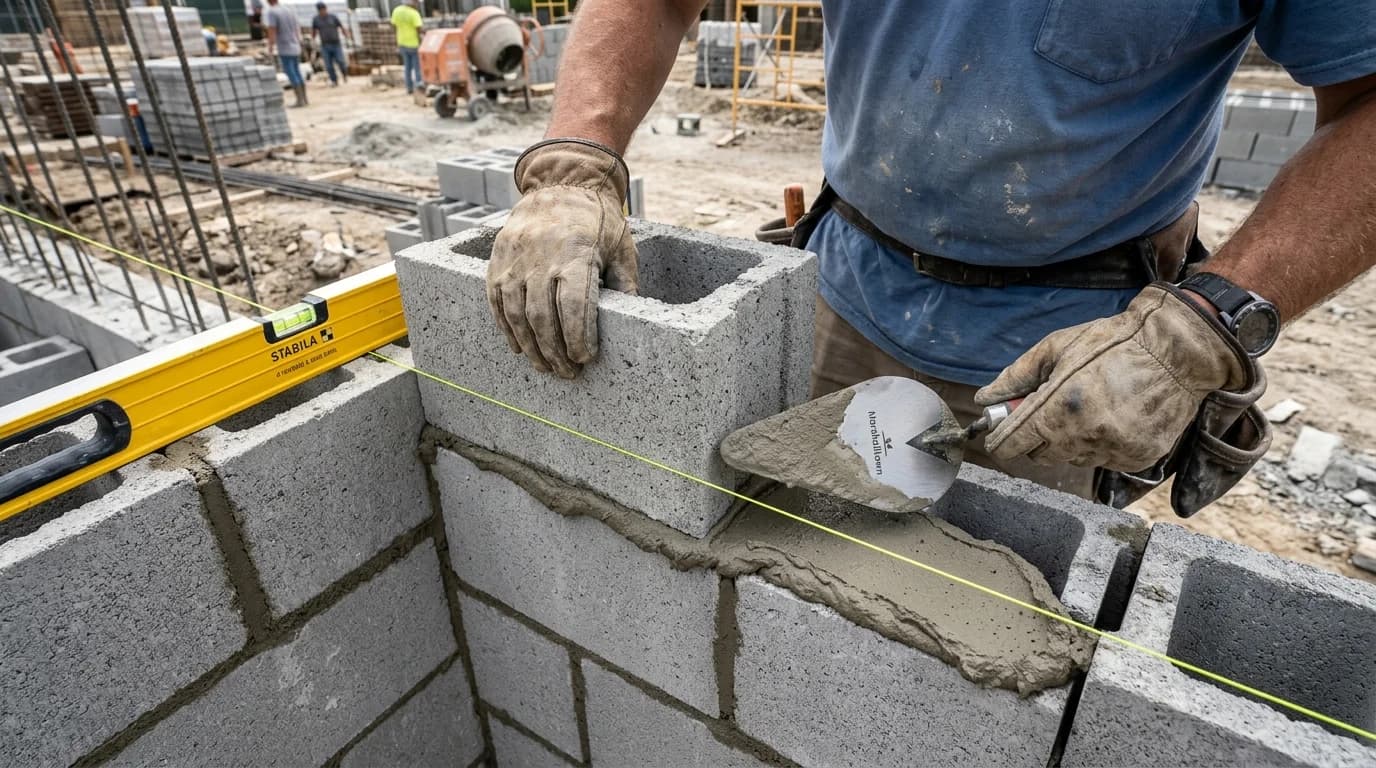
How to Lay Cinder Blocks: DIY First Course & Lead Corners