Cylindrical Concrete Form Tube Diameter & Concrete Yield Blueprint
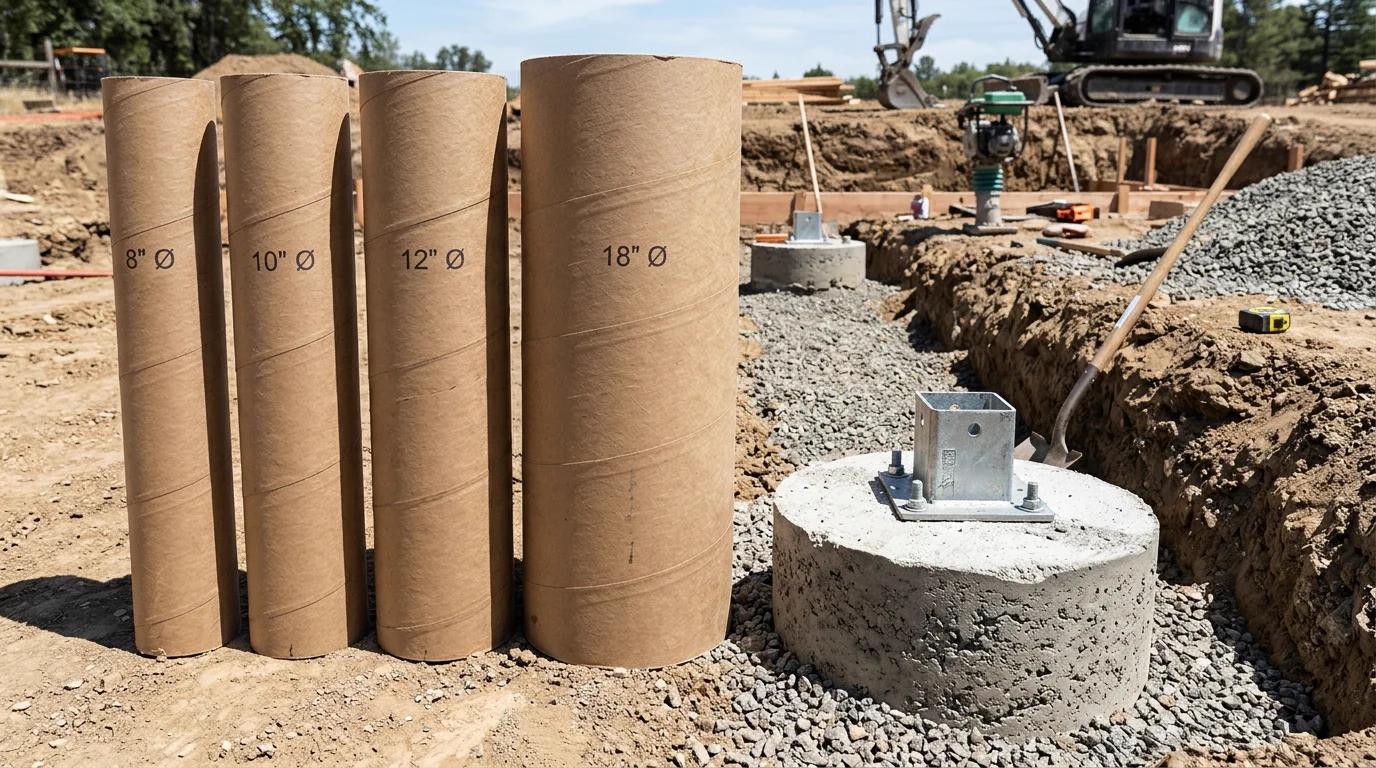
Standard 6" to 36" inside-diameter waxed cardboard deck-footing and pier forms sold in 4-ft, 8-ft, and 12-ft lengths.
Sonotube Form Tube Diameter & 80-lb Bag Estimator
Convert 8", 10", 12", 14", 16", and 18" tube diameters and pier depths into exact bags or yards.
Sonotube Form Sizes: Inside Diameter (ID), Outside Diameter (OD) & Concrete Per Foot
V = π × r² × h (0.60 cu ft / 80-lb bag)Every commercial spiral-wound concrete form tube is specified by its nominal inside diameter (ID)—meaning a 12-inch tube pours an exact 12-inch diameter concrete column. Because spiral fiberboard plies and moisture-barrier liners add roughly 0.125" to 0.300" per wall, the outside diameter (OD) runs 1/4" to 5/8" wider than the callout. The outside diameters, 4-ft concrete bag yields, and standoff post pairings below are illustrative planning figures; always check your local supplier's wall-thickness sheet and structural drawings.
| Tube Nominal ID | Metric ID | Typical OD (Wall) | Volume / Linear Ft | 4-ft Pier (cu ft / yd³) | 4-ft Net 80-lb Bags | Post / Structural Pairing |
|---|---|---|---|---|---|---|
| 6" Tube | 152 mm | ~6.25" (~0.125") | 0.196 cu ft / ft | 0.79 ft³ (0.03 yd³) | 2 bags | Light fence posts, mailbox bases & sign stanchions |
| 8" Tube | 203 mm | ~8.30" (~0.150") | 0.349 cu ft / ft | 1.40 ft³ (0.05 yd³) | 3 bags | 4×4 posts on light porches (tight margin; center carefully) |
| 10" Tube | 254 mm | ~10.35" (~0.175") | 0.545 cu ft / ft | 2.18 ft³ (0.08 yd³) | 4 bags | 4×4 standoff post bases & light residential deck footings |
| 12" Tube | 305 mm | ~12.40" (~0.200") | 0.785 cu ft / ft | 3.14 ft³ (0.12 yd³) | 6 bags | Standard 4×4 & 6×6 structural deck piers (2.1"+ edge cover) |
| 14" Tube | 356 mm | ~14.45" (~0.225") | 1.069 cu ft / ft | 4.28 ft³ (0.16 yd³) | 8 bags | 6×6 heavy deck girders, sunrooms & auger-tolerance margin |
| 16" Tube | 406 mm | ~16.50" (~0.250") | 1.396 cu ft / ft | 5.59 ft³ (0.21 yd³) | 10 bags | Multi-story decks, roofed pergolas & 6×6 / 8×8 columns |
| 18" Tube | 457 mm | ~18.55" (~0.275") | 1.767 cu ft / ft | 7.07 ft³ (0.26 yd³) | 12 bags | Carport canopies, heavy porch piers & light steel columns |
| 24" Tube | 610 mm | ~24.60" (~0.300") | 3.142 cu ft / ft | 12.57 ft³ (0.47 yd³) | 21 bags | Commercial light poles, heavy caissons & masonry piers |
Planning formulas: Volume per foot (cu ft) = π × (ID_in / 24)²; Cubic yards per foot = Volume_cu_ft ÷ 27; 80-lb bags = ceil(Total_cu_ft ÷ 0.60). Add 10% field waste when ordering concrete.
4-ft, 8-ft & 12-ft Tube Lengths, Auger Clearance & IRC R403.1.4 Frost Rules
Matching tube length to both soil frost depth and above-grade crown height prevents awkward field splicing. Under locally adopted IRC R403.1.4 provisions, footings supporting attached decks, ledgers, or roofed structures must bear on undisturbed soil below the regional frost line—typically 36" in temperate zones, 42"–48" across the Midwest and Northeast, and 60" in severe northern regions. Finish every pier crown 2" to 6" above finished grade to shed rainwater away from timber post bases.
The home-center standard for 36" to 42" frost footings with a 4"–6" above-grade crown. Easy to haul inside an SUV and trim cleanly with a reciprocating saw or circular saw.
Preferred for 48"–60" northern frost piers or elevated sloped-yard piers where a 4-ft tube falls short. One 8-ft form often yields two 48" frost piers when cut squarely at 48 inches.
Heavy-wall cylinders stocked by concrete supply yards for tall exposed round columns, carport piers, and deep grade-beam caissons requiring zero horizontal lap joints.
Auger Bit Clearance Rule: Never auger a 12" hole for a 12" Sonotube—the ~12.40" outside diameter and normal auger wobble will wedge the tube out of plumb. Drill at least 2 inches wider than the nominal ID (such as a 14" or 16" auger for a 12" straight tube) so you can shift the cylinder cleanly onto your batter-board strings before tamping backfill around the lower collar.
4×4 & 6×6 Post-Base Bearing Margins and Bigfoot Bell Footing Sizes
Soil Bearing & Edge Cover MatrixSelecting the right pier diameter requires checking two ends of the column: top hardware clearance around your wood post base and bottom soil bearing area at the footing pad. A nominal 4×4 post measures 3-1/2" × 3-1/2" (4.95" corner-to-corner diagonal), while a nominal 6×6 post measures 5-1/2" × 5-1/2" (7.78" diagonal). Placing a 6×6 standoff bracket onto an 8" cylinder leaves only ~0.11" of edge margin at the corners—inviting concrete spalling when anchor bolts are torqued. Aim for at least 2 inches of concrete edge cover outside the post base plate, making a 12" tube ID the practical floor for 6×6 framing.
Where clay soils (1,500–2,000 psf bearing capacity) or heavy roofed decks demand a wide footing pad without pouring huge 24" shafts all the way up, builders snap molded HDPE Bigfoot flared-footing bells onto standard 6" to 18" tubes. An illustrative bell cone widens the base to 20", 24", 28", or 36"—multiplying soil bearing footprint by up to 4× while shedding frost-heave uplift along the tapered cone walls.
| Bell / Straight Footing Option | Compatible Tube IDs | Bottom Pad Diameter | Soil Bearing Area | Area Multiplier vs. 12" Shaft | Illustrative Extra Concrete |
|---|---|---|---|---|---|
| Straight 10" Shaft (No Bell) | 10" ID | 10" (254 mm) | 78.5 in² (0.55 ft²) | 0.69× | Baseline shaft only (light decks) |
| Straight 12" Shaft (No Bell) | 12" ID | 12" (305 mm) | 113.1 in² (0.79 ft²) | 1.00× | Baseline 6×6 post shaft |
| 1.5× Flared Frustum Model (8" Tall) | 12" ID | 18" (457 mm) | 254.5 in² (1.77 ft²) | 2.25× | +0.31 cu ft (~1 extra 80-lb bag) |
| 20" Flared Bell (e.g., BF20) | 6", 8", 10" ID | 20" (508 mm) | 314.2 in² (2.18 ft²) | 2.78× | ~1.4–1.8 cu ft (~3 bags over shaft) |
| 24" Flared Bell (e.g., BF24) | 8", 10", 12" ID | 24" (610 mm) | 452.4 in² (3.14 ft²) | 4.00× | ~2.0–2.4 cu ft (~4 bags over shaft) |
| 28" Flared Bell (e.g., BF28) | 10", 12", 14" ID | 28" (711 mm) | 615.8 in² (4.28 ft²) | 5.44× | ~2.6–3.2 cu ft (~5 bags over shaft) |
| 36" Flared Bell (e.g., BF36) | 12", 14", 16", 18" ID | 36" (914 mm) | 1,017.9 in² (7.07 ft²) | 9.00× | ~3.8–4.8 cu ft (~7–8 bags over shaft) |
Note: Commercial flared bell forms vary in cone height (~15"–24") and step geometry by manufacturer; verify exact bell concrete volume and excavation width against the stamped form specification and local soil bearing report.
Worked Concrete Volume Example & Field Pier Bracing Rules
1. Single-tube radius: r = 12" ÷ 24 = 0.50 ft; height h = 4.0 ft.
2. Single straight pier volume: V = π × (0.50)² × 4.0 = 3.1416 cu ft.
3. Six-pier total + 10% field waste: 3.1416 × 6 × 1.10 = 20.73 cu ft (0.77 yd³).
4. 80-lb concrete bags (0.60 cu ft/bag): 20.73 ÷ 0.60 = 34.55 → 35 bags (or 47 bags of 60-lb mix at 0.45 cu ft/bag). Run custom diameters, bell options, and bag prices in the Sonotube Concrete Calculator or compare monolithic slab pours in the Concrete Volume Calculator.
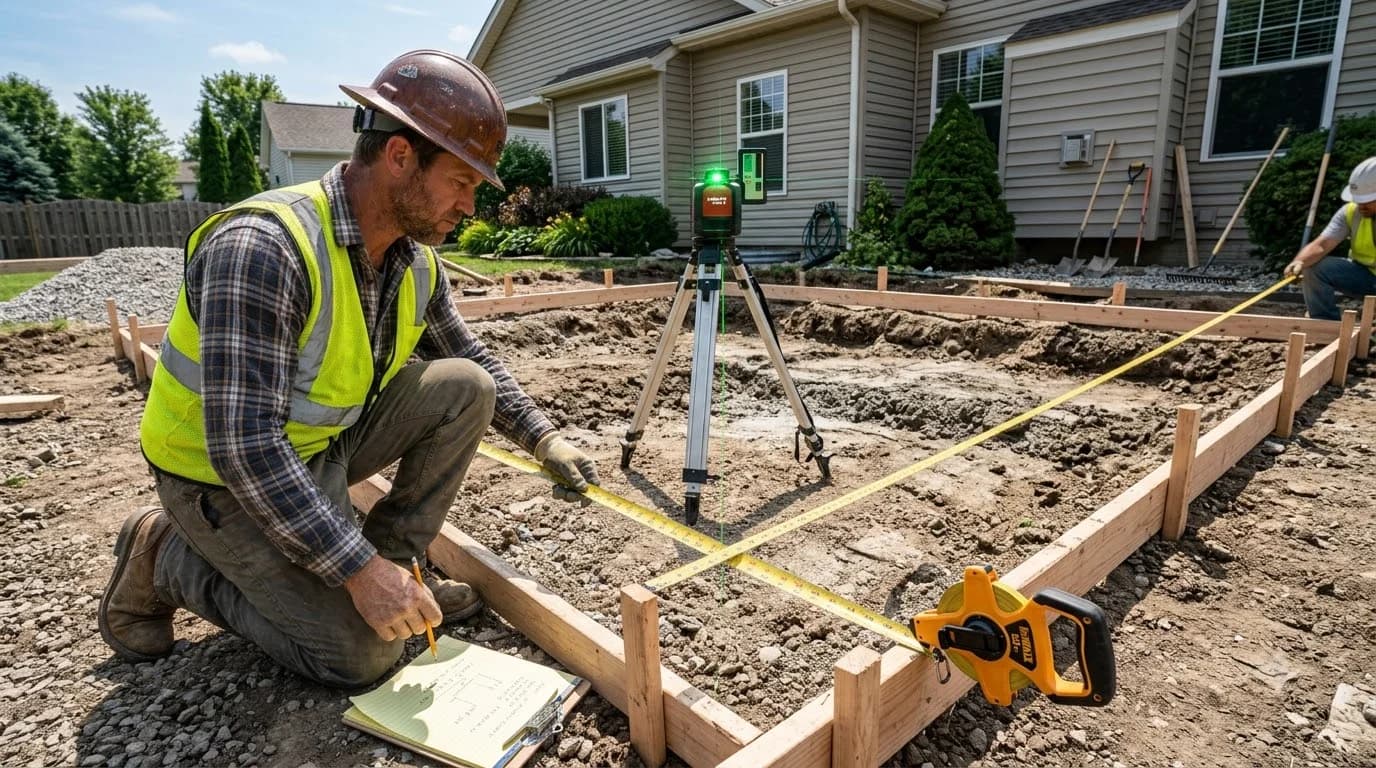
Fluid concrete pressure can float or tilt an unbraced cardboard cylinder. Screw 2×4 batter cleats to the top rim, plumb with a spirit level, and tamp 12"–18" of dry backfill around the lower base before pouring.
Rod or vibrate each 12-inch lift to expel trapped air along the waxed liner, screed the crown 2"–6" above finished grade, and bevel the perimeter slightly so rainwater drains away from wood posts.
Place 1/2" galvanized J-bolts or adjustable standoff post-base anchors on exact beam stringlines while the concrete remains plastic, keeping at least 2" of clear cover from the tube rim.
Explore Related Concrete & Structural Dimension Guides
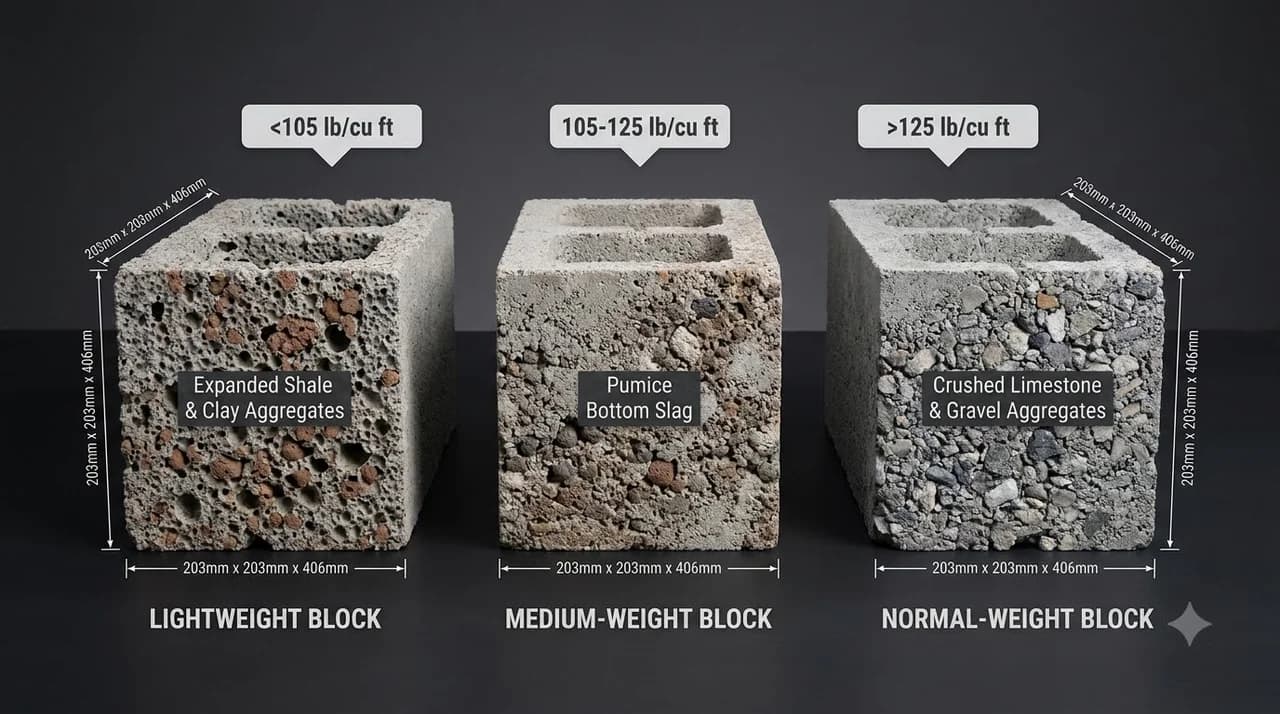
Standard hollow and solid concrete block sizes, tolerances, and weight classes.
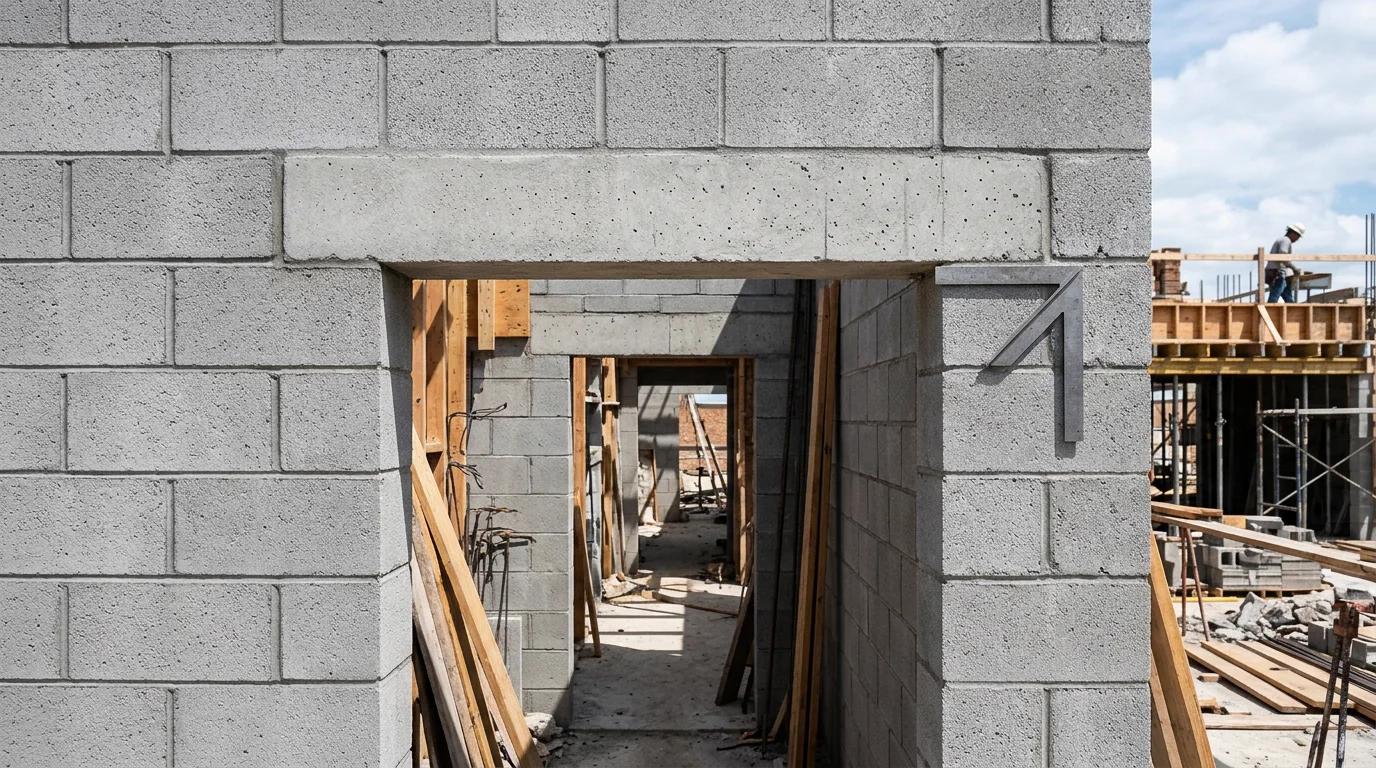
Modular 8-inch precast concrete beam lengths, jamb bearing, and hoist weights.
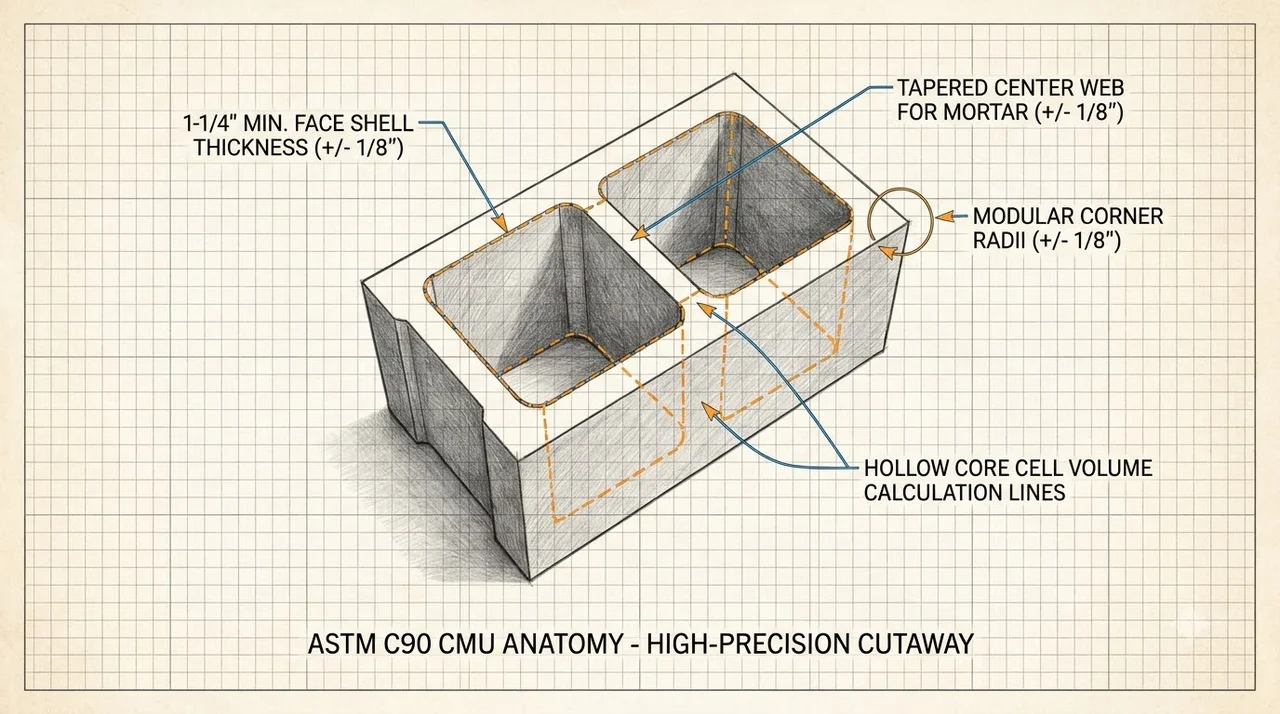
4-inch through 12-inch structural CMU foundation and stem-wall block dimensions.
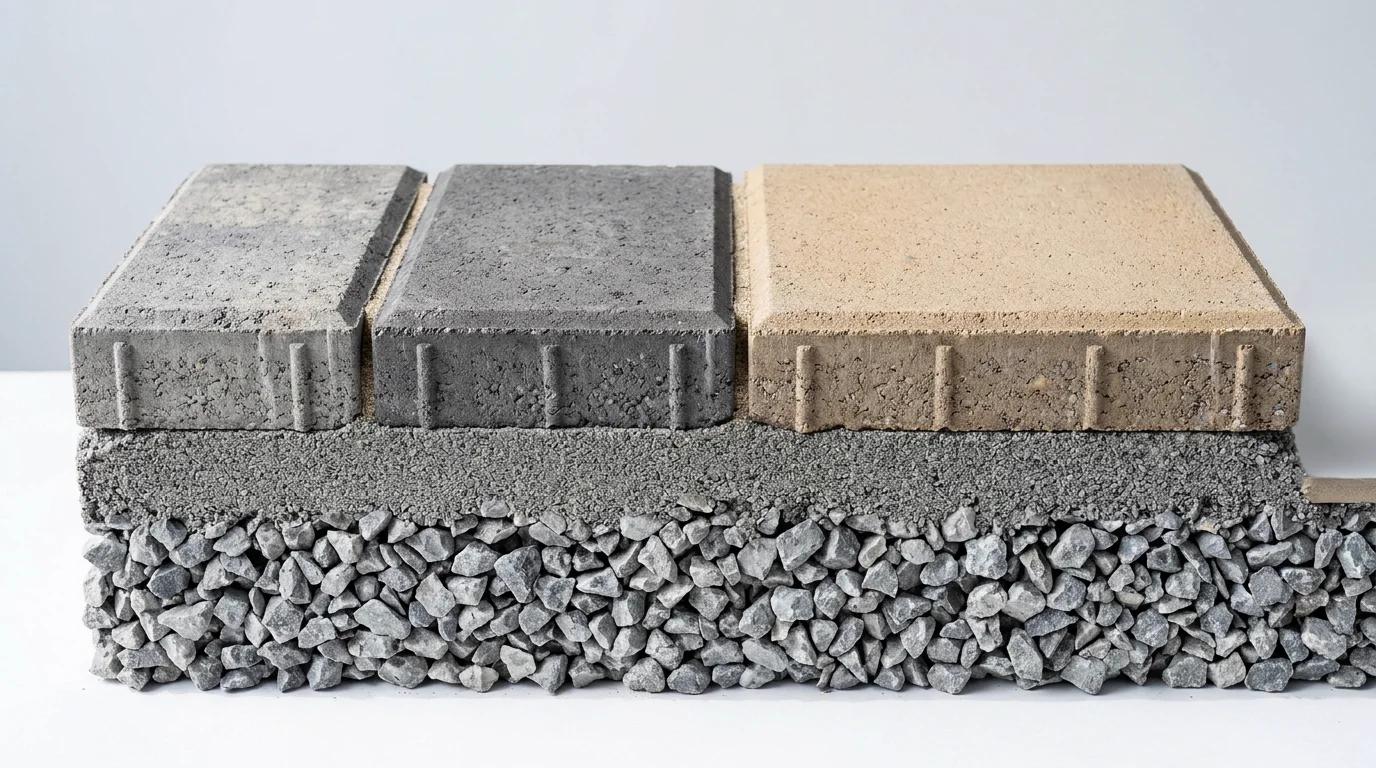
Interlocking 4×8 through 24×24 concrete paver dimensions and base depths.
Material estimates depend on the selected dimensions, product yields, and waste allowance.
Sonotube Concrete Form Sizes FAQ
Code-grounded answers on inside vs. outside tube diameters, 4-ft to 12-ft lengths, concrete bags per linear foot, 4×4 and 6×6 post clearance, and Bigfoot bell footings.
Popular Quick Estimates
Illustrative takeoffs with stated assumptions; verify project quantities
Crawlspace Stem Wall
Course-height example; footing design is site-specific
4-in Patio Slab Takeoff
Ready-mix yardage with 10% subgrade allowance
24x24 Garage Slab
576 ft² × 5/12 ft ÷ 27; excludes waste and design
Masonry Steps Riser
Check local stair rules and project-specific design
Related Calculators
Specialized tools for foundation, core fill, and budgeting
Cylindrical form tube pier concrete volume, 80-lb/60-lb bags, and bell bases
Cubic yards, bags, and slab volume for flatwork and footings
Volumetric 1:2:3 and 1:1.5:3 Portland cement, sand, #57 gravel, water, and 5-gal buckets
TMS 402 & ACI 318 tension splice lengths, 90° hooks, and 20-ft bar stock counts
Blogs & Construction Guides
Practical guides to block sizing, material estimates and project planning
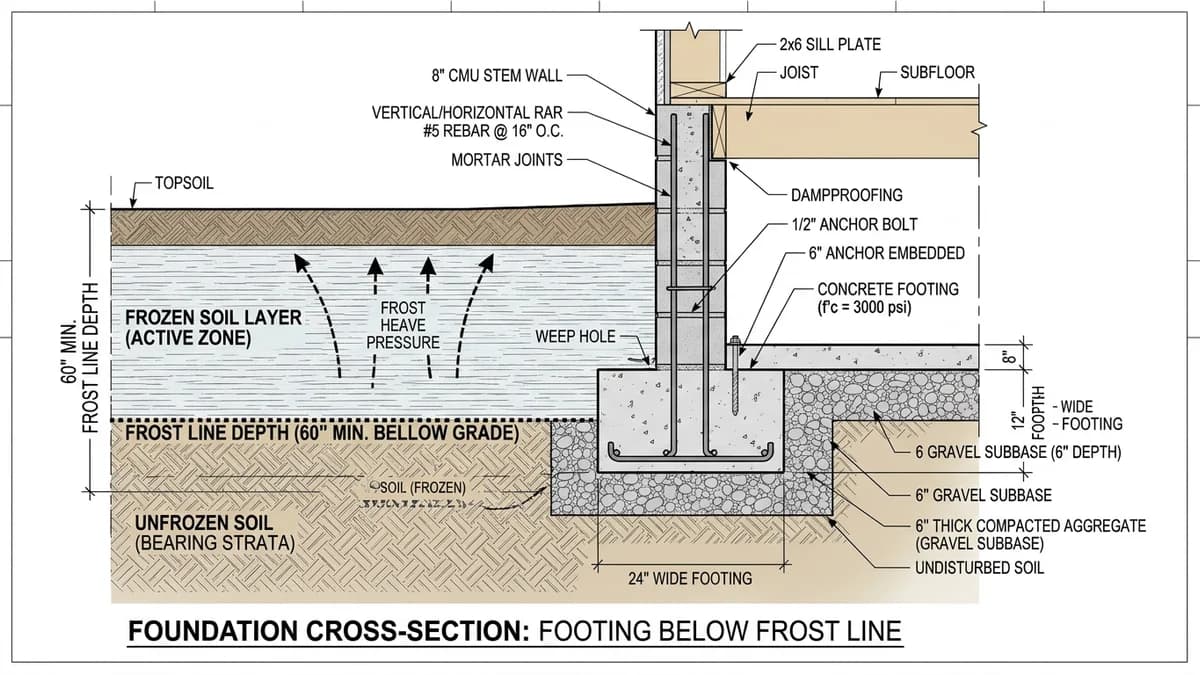
US Frost Line Depth by State: Footing Building Codes
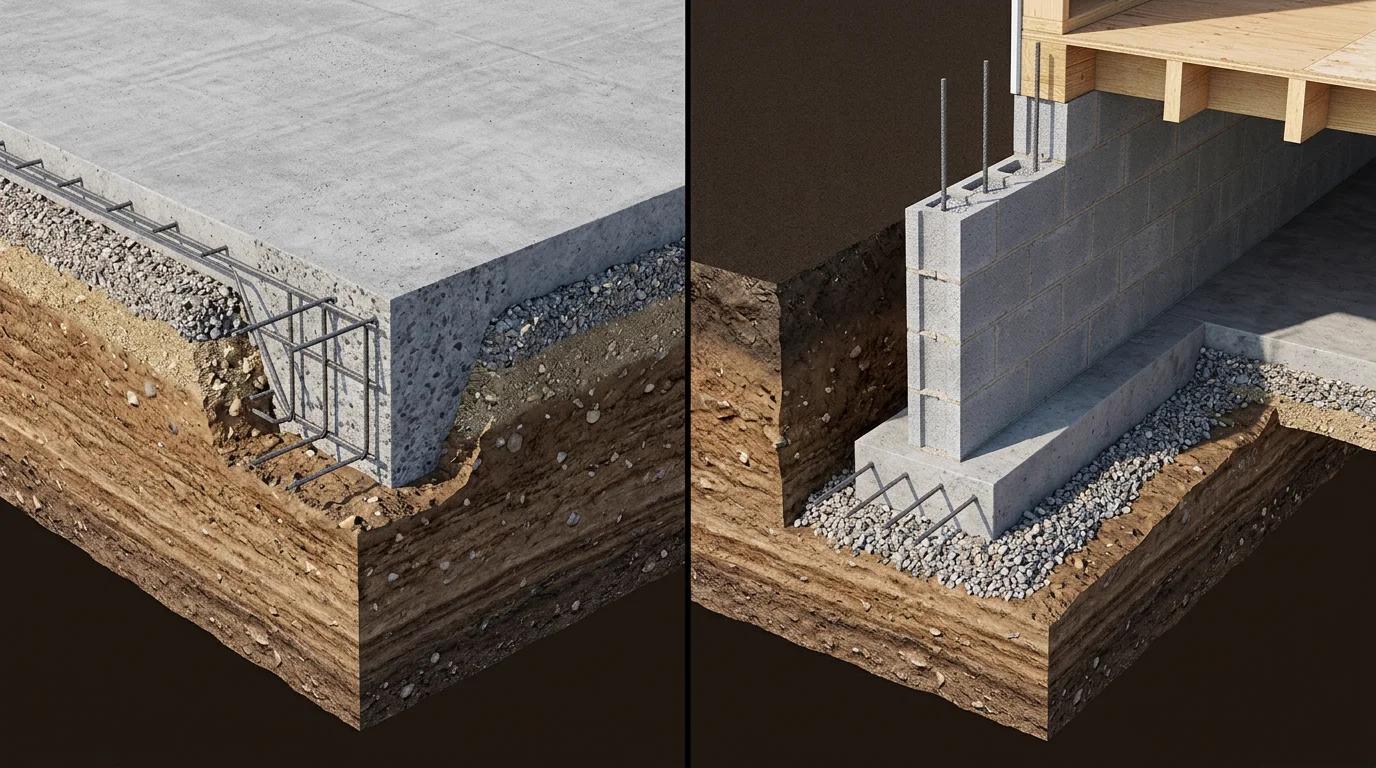
Monolithic Slab vs Stem Wall Foundation: Cost & Frost Guide
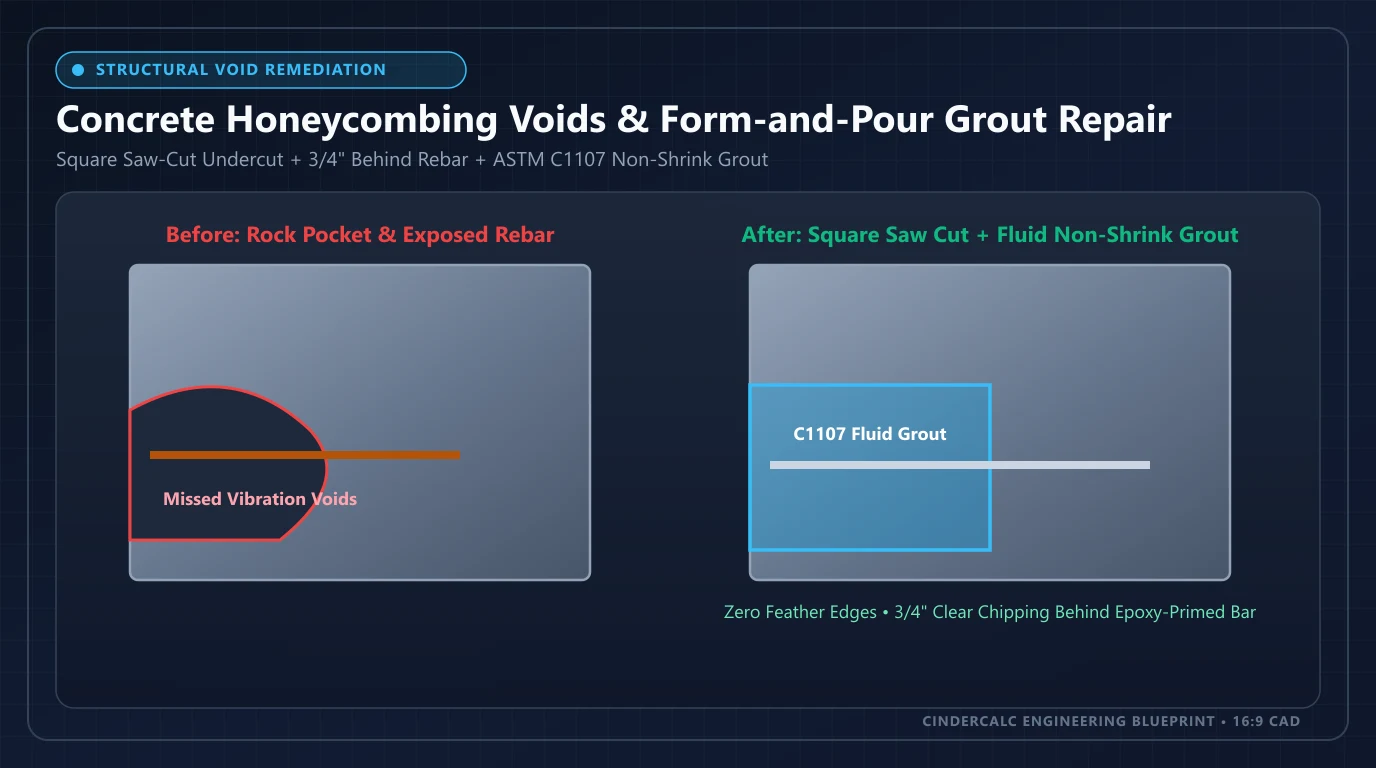
Concrete Honeycombing: Causes, Severity & Repair Guide